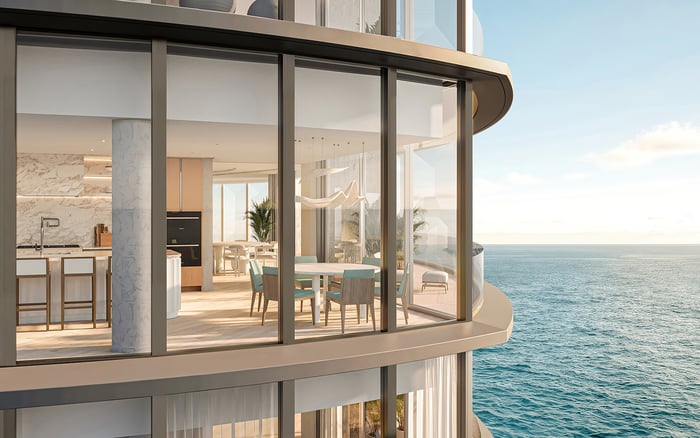
A discreet framework for Connecticut households weighing Bal Harbour through the connected lenses of residency planning, family routines, privacy, and property selection.

For Connecticut buyers considering Bal Harbour, the most consequential question is not simply which property to acquire. It is whether a South Florida home can support the legal, domestic, and personal realities of a carefully structured life.
Tax residency may begin the conversation, but it should not dominate it. A purchase is one component of a broader plan involving legal counsel, tax advisers, estate professionals, schools, household staff, business obligations, and patterns of daily use. The strongest decisions align those moving parts before design preferences narrow the field.
This Buyer's Guide approaches Bal Harbour first as a lifestyle decision, then as a property search. The objective is not to make assumptions about any household, but to identify the questions that distinguish a compelling address from a residence that functions gracefully throughout the year.
A home should never be expected to resolve a tax-residency question on its own. Connecticut buyers should establish an advisory framework before signing a contract, with guidance tailored to their personal, business, trust, and estate circumstances. The relevant analysis belongs with qualified legal and tax professionals.
That separation creates clarity. Advisers can address residency planning and documentation, while buyers determine whether Bal Harbour accommodates the life their family genuinely intends to lead. This helps avoid choosing a residence for a theoretical pattern of use that proves inconvenient in practice.
A useful exercise is to map a complete year. Mark business travel, family celebrations, medical appointments, school calendars, board obligations, and expected time in Connecticut or elsewhere. Then consider where important records, household operations, and personal routines will be managed. The goal is consistency between professional advice and actual behavior-not a cosmetic change of address.
Second-home ownership requires its own analysis. If the property will remain one home among several, buyers should determine who will manage it when vacant, how arrivals will be prepared, and which personal effects will remain in place. Those operational choices influence whether the residence feels established or merely occasional.
Family life is best evaluated through ordinary days. A dramatic arrival and an oceanfront outlook may be emotionally persuasive, but weekday logistics reveal whether the move is sustainable.
Parents can begin with a written schedule for every member of the household. Include school departures, extracurricular activities, work calls, exercise, appointments, entertaining, and travel days. Private-school decisions deserve particular care, including admissions advice, daily transportation planning, and the effect of different calendars on time spent in South Florida.
Multigenerational households should also consider how privacy and proximity coexist. A residence may need separate guest quarters, flexible rooms, quiet work areas, or an easy way to host grandparents and adult children without disrupting the primary household. Rather than assume more square footage solves every issue, buyers can study circulation, bedroom placement, acoustic separation, and the routes between private and social spaces.
The same discipline applies to staffing. Clarify which roles are full-time, seasonal, or shared among homes. Review storage, service access, deliveries, maintenance coordination, and the practical handoff between household teams. A polished residence is only as effortless as the operating plan behind it.
Privacy is not a single amenity. It is a sequence of moments, beginning at arrival and continuing through elevators, corridors, terraces, service visits, guest access, and departure. Each household should define which moments matter most.
For one buyer, privacy may mean minimizing shared transitions. For another, it may mean controlling sightlines, separating family and staff circulation, or entertaining without exposing private rooms. Families with public profiles may place additional weight on guest protocols and predictable building procedures. Others may care more about quiet interiors and visual distance from neighboring residences.
Property tours should therefore follow a repeatable privacy audit. Walk the entire arrival path, observe the transition from common areas to the front door, and consider how deliveries and vendors would be handled. Inside, stand where guests would gather and note what they can see. Review terrace relationships, window exposure, bedroom locations, and how the home feels after dark.
Privacy also has digital and administrative dimensions. Before committing, buyers can ask their advisers and building representatives how access, resident information, household personnel, and service requests are handled. Any answers should be measured against the family's own security standards, rather than accepted as universal assurances.
Once residency advice, household routines, and privacy priorities are defined, the property comparison becomes more precise. Within Bal Harbour, Oceana Bal Harbour and Rivage Bal Harbour can enter the same initial review set without presuming that either serves every buyer equally.
The comparison should be documented room by room and process by process. Buyers can score arrival, exposure, floor plan, guest separation, work-from-home capacity, storage, staffing logistics, terrace usability, and management expectations. Financial and legal reviews should proceed separately with the appropriate advisers.
A broader coastal comparison may sharpen preferences. The Surf Club Four Seasons Surfside offers another nearby project to evaluate, while The Well Bay Harbor Islands can help buyers test whether an island setting belongs in the conversation. These choices are not interchangeable. Their value is comparative: helping a family articulate what it wants from location, scale, service, and daily rhythm.
The final shortlist should remain small. Revisit finalists at different times, involve key family members in the decision, and test each residence against real routines rather than a staged tour. Bal Harbour works best as a considered choice, not as shorthand for a tax strategy.
Before proceeding, ask three direct questions. Does the intended use align with professional residency advice? Can the family conduct an ordinary week without avoidable friction? Does the residence deliver privacy in the specific moments that matter?
A confident yes to all three is more meaningful than a long amenity inventory. It indicates that legal planning, family life, and property selection are moving in the same direction. If one answer remains uncertain, pause the search and resolve it before allowing architecture, scarcity, or emotion to set the timetable.
Does buying in Bal Harbour establish tax residency? A purchase should not be treated as a substitute for individualized legal and tax advice about residency.
When should Connecticut buyers consult advisers? Ideally, the advisory framework should be established before a contract or any major change in living arrangements.
Can Bal Harbour work as a second-home base? It may, but buyers should test seasonal use, property management, staffing, and arrival routines against their needs.
How should families evaluate private-school logistics? Review admissions, calendars, transportation, and weekday timing with the relevant professionals and institutions.
What does daily privacy mean in a condominium? It can encompass arrival, elevator use, sightlines, guest access, deliveries, service circulation, and interior separation.
Should buyers prioritize amenities or floor plans? Begin with the floor plan and operating routine, then determine which amenities materially improve daily life.
Why visit a finalist more than once? Repeat visits help a household assess light, exposure, arrival patterns, and its own response beyond the first impression.
How should household staff factor into the search? Consider service access, storage, work areas, scheduling, vendor coordination, and privacy for everyone in the home.
Is an oceanfront residence automatically more private? No. Privacy should be assessed through the specific unit, circulation, neighboring exposure, and building procedures.
What is the clearest way to compare finalists? Use a single scorecard covering family routine, privacy, operations, layout, ownership goals, and adviser review.
To compare the best-fit options with clarity, connect with MILLION.
If branded residences are on your mind — as a home or as an allocation — we would be glad to share what we are seeing, privately.
Begin a quiet conversation