A discreet buyer’s comparison of wellness spa integration at Sixty Palm Beach and The Grand at Trump International Beach Resort, focused on privacy, service rhythm, daily usability, and long-term residential value.
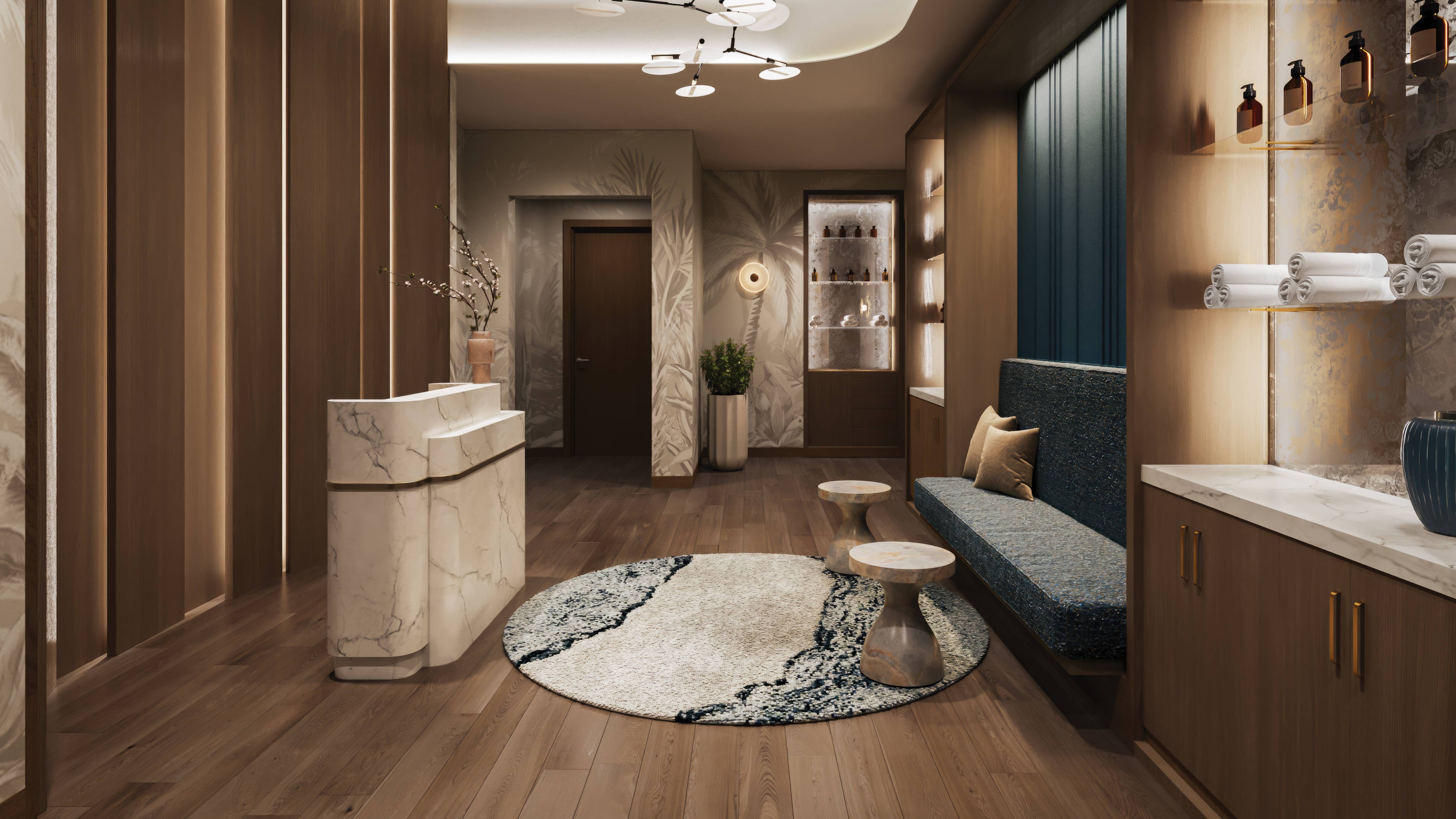
For South Florida’s top-tier buyer, “wellness spa” no longer describes a decorative amenity floor with a massage room and soft lighting. It signals a deeper residential proposition: how a building supports recovery, privacy, longevity, routine, and discretion without requiring the owner to leave the property or disrupt the cadence of daily life.
That is the useful lens for comparing Sixty Palm Beach and The Grand at Trump International Beach Resort. The decision is not simply which name implies the more indulgent spa experience. It is whether the wellness environment feels genuinely embedded in ownership, service, architecture, circulation, and maintenance. A spa that is difficult to access, socially exposed, overbooked, or treated as an afterthought may photograph beautifully yet underperform in daily use.
In the language of buyer filters, this comparison can touch Palm Beach preferences, Sunny Isles expectations, oceanfront priorities, pool programming, new-construction appetite, and exclusive-area sensibility. Sophisticated purchasers will look past labels and ask how each concept handles the unglamorous details that determine whether wellness becomes a habit or remains a novelty.
Sixty Palm Beach should be evaluated through the lens of residential calm. For many buyers drawn to Palm Beach, the emotional premium is privacy, quiet, and a sense of remove. A compelling wellness program in that context should feel composed rather than performative. The ideal spa sequence is intuitive: arrival, transition, treatment, relaxation, and return home without unnecessary exposure to public-facing activity.
The central diligence question is how deeply wellness is integrated into the building’s daily operating culture. A strong program should clarify how residents reserve treatments, how peak-hour demand is managed, how staff access is controlled, and how the spa experience remains consistent during high season. The more private the ownership profile, the more these operational details matter.
Buyers should also study whether wellness is presented as a true lifestyle layer or merely as a marketing overlay. The distinction shows up in circulation, acoustics, material durability, storage, service corridors, wet-area maintenance, and the relationship between spa amenities and fitness or outdoor spaces. In a refined residential setting, the best wellness environments do not announce themselves. They quietly remove friction from the owner’s day.
The Grand at Trump International Beach Resort calls for a different kind of diligence. Its name naturally brings resort expectations into the conversation, which can be attractive for buyers who want a more hospitality-inflected lifestyle. In that model, wellness may be valued not only for solitude but also for service breadth, energy, convenience, and the feeling of being part of a larger destination.
For some owners, that atmosphere is precisely the appeal. Resort-associated environments can feel animated, useful, and service-rich. The practical question is how private residential use is balanced against broader activity. A buyer should understand whether spa access, scheduling, guest policies, and resident priority are clearly defined. The more the setting feels like a destination, the more important the governance of wellness spaces becomes.
This is not a simple private-versus-social binary. Many luxury buyers want both. They want a place where a treatment can be arranged easily, where poolside recovery feels seamless, and where wellness is supported by hospitality standards. Yet they also want control. The Grand at Trump International Beach Resort should be assessed on whether it delivers that balance without making the resident feel like a transient guest in their own environment.
A serious wellness program must prove four things: access, privacy, consistency, and upkeep. Access means the spa can be used when residents actually need it, not only when the calendar allows. Privacy means the path to and from wellness spaces feels dignified, calm, and protected. Consistency means the service standard does not depend on seasonality or personality. Upkeep means wet areas, treatment rooms, relaxation zones, and adjoining facilities are maintained at a level worthy of the residence.
The best buyers now underwrite wellness spaces the way they underwrite kitchens, primary suites, views, parking, and building management. They ask whether the amenity will support value over time, whether it can evolve as wellness preferences change, and whether the association or operating structure has the discipline to maintain it.
In both Sixty Palm Beach and The Grand at Trump International Beach Resort, the spa conversation should extend well beyond massage and steam. It should include recovery, movement, hydration, light, air, sound, staff training, guest protocols, and the adjacency between indoor and outdoor life. South Florida’s climate makes that last point especially important. A wellness program that ignores the transition between spa, pool, terrace, and residence misses one of the region’s natural advantages.
The most expensive amenity is often the one an owner uses without thinking. A treatment room that requires multiple calls, a fitness space that feels exposed, or a relaxation area placed in a busy traffic path can lose relevance quickly. By contrast, a discreet, well-staffed, and well-maintained spa environment can become part of a weekly rhythm.
For Sixty Palm Beach, buyers may place special emphasis on whether the wellness experience supports a quieter residential identity. For The Grand at Trump International Beach Resort, buyers may focus on whether the resort sensibility enhances convenience without diluting privacy. Neither approach is inherently superior. Each serves a different ownership temperament.
The buyer who entertains often may value a broader hospitality setting. The buyer who uses the residence as a personal retreat may value stillness, separation, and fewer points of contact. The buyer who spends long stretches in South Florida may care most about maintenance discipline and everyday availability. The buyer who visits seasonally may prioritize ease, staffing, and the ability to resume a routine immediately upon arrival.
Wellness premiums should be treated with discipline. A buyer should request clear information on what is included, what is separately charged, how reservations operate, how staff are trained, and how the amenity is funded over time. The most beautiful spa concept can become a liability if service expectations, maintenance reserves, or access rules are vague.
It is also important to distinguish between wellness as a private amenity and wellness as a branded experience. Private amenity value is rooted in control, exclusivity, and daily use. Branded or hospitality-driven value may be rooted in service breadth, recognition, and lifestyle energy. The right choice depends on how the owner actually lives, not how the brochure reads.
For South Florida luxury real estate, wellness is no longer peripheral. It is part of the architecture of value. Sixty Palm Beach and The Grand at Trump International Beach Resort offer a useful contrast because they prompt buyers to define what restoration means to them: quiet continuity or resort fluency, private routine or serviced ease, sanctuary or destination.
What does wellness spa integration mean in a luxury residence? It means spa, fitness, recovery, privacy, and service are designed as part of daily living rather than treated as decorative amenities.
How should buyers compare Sixty Palm Beach and The Grand at Trump International Beach Resort? Buyers should focus on access, privacy, operating rules, service consistency, and how naturally the wellness spaces fit their routine.
Is a larger spa program always better? Not necessarily. A smaller, more private, better-managed wellness environment may be more valuable than a larger space that feels busy or difficult to use.
Why does privacy matter so much in spa amenities? Wellness depends on ease and comfort. If arrival, changing, treatment, or recovery areas feel exposed, the amenity may be used less often.
What should buyers ask before assigning value to a spa amenity? Ask how reservations work, who has access, what is included, what costs extra, and how the facilities are maintained over time.
Does a resort setting change the wellness analysis? Yes. Resort energy can add convenience and service depth, but buyers should understand how resident priority and privacy are protected.
Can wellness amenities support resale value? They can, especially when they are well maintained, easy to use, and aligned with the expectations of luxury buyers in the market.
What is the biggest red flag in a wellness program? Vague operating rules are a concern. Beautiful spaces need clear management, staffing standards, and maintenance discipline.
Should seasonal owners care about wellness integration? Yes. Seasonal owners often benefit from amenities that allow them to resume healthy routines immediately after arrival.
What is the best way to shortlist comparable options for touring? Start with location fit, delivery status, and daily lifestyle priorities, then compare stacks and elevations to validate views and privacy.
If you'd like a private walkthrough and a curated shortlist, connect with MILLION.
If branded residences are on your mind — as a home or as an allocation — we would be glad to share what we are seeing, privately.
Begin a quiet conversation