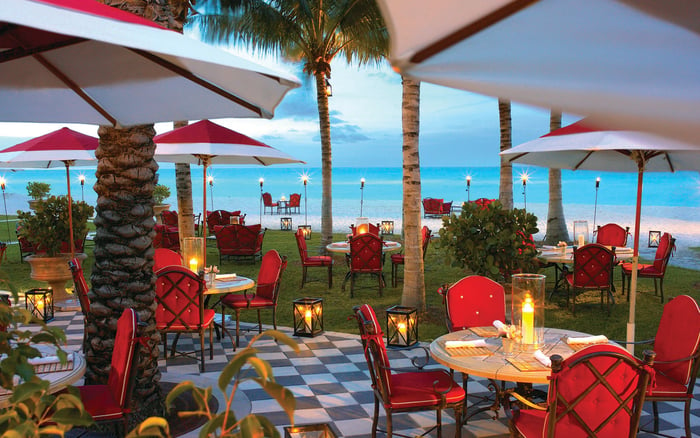
Sunny Isles Beach pairs Atlantic-front living with off-site yacht storage. Buyers comparing Jade Signature, The Estates at Acqualina, and Turnberry Ocean Club should focus on the full residence-to-marina routine, secure slip access, and vessel compatibility rather than proximity to water alone.

Sunny Isles Beach offers a compelling coastal proposition: a residence directly on the Atlantic and a yacht kept within the broader South Florida boating network. Yet oceanfront living and marina-integrated living are not interchangeable. For buyers considering three of the area’s prominent towers, the practical question is not whether the residence overlooks the water, but how efficiently, reliably, and contractually the owner can move between home and vessel.
Jade Signature Sunny Isles Beach, The Estates at Acqualina Sunny Isles, and Turnberry Ocean Club Sunny Isles all stand on the Atlantic side of Sunny Isles Beach. None should be evaluated as a canal-front residential marina development where a yacht is berthed at the tower itself.
That distinction belongs at the center of a sophisticated buyer’s guide. The right purchase can still be highly convenient for a yacht owner, but that convenience depends on a separate slip, the ground transfer to it, and the vessel’s route from the marina to open water.
At Jade Signature, the oceanfront setting offers beachside residential living rather than an integrated marina basin. A yacht owner would generally keep the vessel at a separate Intracoastal or mainland marina. The decisive variables, therefore, are the availability of a suitably sized berth and the real-world transfer between residence and marina.
The Estates at Acqualina follows the same fundamental geography. It is an oceanfront development, not a residence positioned directly on the Intracoastal. Buyers should expect to arrange off-site berthing and distinguish between a nearby marina that may be convenient and access secured through a binding agreement.
Turnberry Ocean Club is likewise an Atlantic-front tower rather than a canal-front marina property. Owners normally rely on a separate bayside or mainland facility and travel there by road. Here, as with the other two residences, secure long-term slip access and a dependable commute carry more practical weight than straight-line proximity to the water.
The comparison, then, does not produce a simple winner based on waterfront status. All three offer oceanfront positioning, while each requires the yacht owner to establish a separate shoreside operating plan.
For a yacht-owning household, marina convenience is best understood as a sequence rather than a single amenity. It begins upon leaving the residence, continues through the road transfer and marina arrival, and ends only when the vessel is ready to depart. The return journey matters equally, particularly when timing, guests, provisions, crew coordination, or changing weather are involved.
A short map distance can conceal friction. Peak traffic may alter the ground transfer, while gate procedures, parking arrangements, launch preparation, and access protocols can shape the experience after arrival. Reliable door-to-marina drive times and vessel-to-ocean travel times are not established for these towers, so buyers should test the routine personally at the hours they expect to use it.
This is especially important for spontaneous use. An owner planning frequent short outings may value a predictable transfer over marginal differences in residence location. An owner whose yacht is professionally managed and used for longer passages may place greater emphasis on berth security, marina operations, and vessel compatibility.
No exclusive yacht club, guaranteed slip program, or deeded off-site berth is established for any of the three developments. A residence purchase and marina arrangement should therefore be reviewed as separate commitments unless binding documents expressly connect them.
Start with the vessel itself. Confirm slip dimensions, allowable length and beam, draft restrictions, bridge clearance, and the marina’s rules for the relevant yacht. A berth that is geographically attractive but operationally unsuitable offers little genuine convenience.
Next, examine the quality and duration of access. Buyers should determine whether a berth is currently available, subject to a waitlist, offered under a long-term arrangement, or dependent on terms that may change. Any representation of preferred or convenient access should be tested against the governing contract rather than treated as equivalent to a guaranteed slip.
Storm planning is equally material. Review hurricane policies, required vessel movements, closure procedures, and the responsibilities assigned to owners, captains, and marina personnel. These details may not influence a residence’s visual appeal, but they can materially affect ownership logistics.
The residential decision should begin with the lifestyle desired at home, then incorporate the yacht as a parallel logistical requirement. Because all three properties occupy the oceanfront side, buyers can compare them on their residential merits while applying the same disciplined marina framework to each.
A useful test is to model several ordinary days: an early departure, an afternoon outing during heavier traffic, a guest arrival, and a return requiring secure late access. Drive the likely route, inspect the proposed berth, and confirm every vessel-specific limitation. This turns an abstract promise of proximity into an ownership routine that can be properly assessed.
For some buyers, separating residence and yacht may feel entirely natural. For others, direct dockside access is essential. The key is clarity before purchase. In Sunny Isles Beach, the most informed yacht owner is not choosing among three private marinas. The buyer is selecting an Atlantic-front home and independently securing the berth and transfer plan that make boating feel effortless.
Does Jade Signature have yacht slips at the tower? No. Its oceanfront setting does not include an integrated marina basin or slips at the building.
Does The Estates at Acqualina include a building-integrated marina? No. Yacht owners should expect to use a separate Intracoastal or mainland marina.
Can a yacht be kept at Turnberry Ocean Club itself? No. The tower’s beach location does not place a resident’s yacht at the building.
What matters most when comparing marina proximity? Evaluate actual road-transfer reliability and secure berth access, not straight-line distance alone.
Is a nearby slip guaranteed with any of these residences? No guaranteed slip program, deeded off-site berth, or exclusive yacht club is established here.
Which vessel measurements should a buyer verify? Confirm length, beam, draft, slip dimensions, and any bridge-clearance constraints.
Should buyers ask about marina waitlists? Yes. Current availability and waitlist conditions can determine whether a nearby berth is practical.
Why review hurricane procedures before choosing a marina? Storm policies can affect vessel movement, access, timing, and each party’s responsibilities.
Are reliable drive and cruising times available for comparison? No verified times are established here, so buyers should test likely routes personally.
Can oceanfront living still work well for a yacht owner? Yes. It can work elegantly when the slip, transfer routine, and vessel requirements align.
For a discreet conversation and a curated building-by-building shortlist, connect with MILLION.
If branded residences are on your mind — as a home or as an allocation — we would be glad to share what we are seeing, privately.
Begin a quiet conversation