A buyer-focused look at concierge package handling as a quiet luxury amenity at Porsche Design Tower and The Ritz-Carlton Residences, with emphasis on privacy, staffing, staging, accountability, and daily ease.

In South Florida’s ultra-premium condominium market, the most meaningful services are often the least theatrical. Package handling belongs in that quieter category. It rarely leads the sales conversation, yet it shapes the resident experience every day, particularly for owners who travel frequently, maintain multiple residences, or expect household operations to run without visible friction.
Porsche Design Tower and The Ritz-Carlton Residences offer useful reference points because both names occupy the realm of highly serviced residential living. The expectation is not simply that deliveries arrive. The expectation is that arrivals are received, identified, protected, communicated, staged, and released with discretion. For the buyer, the difference between a basic mailroom and a true concierge package protocol becomes clear after move-in, when retail deliveries, refrigerated goods, documents, luggage, wardrobe shipments, art crates, wine, gifts, and personal items begin arriving in volume.
The larger point is cultural. Luxury buyers are not only purchasing views, finishes, and address value. They are purchasing time. A polished package-handling system turns a routine errand into an invisible layer of service.
Porsche Design Tower is frequently understood through the lens of precision, privacy, and resident autonomy. In that context, package handling should be assessed as part of a broader lifestyle promise: the home should function with clarity and responsiveness.
For residents who value control, the key questions are practical. Where are packages received? Who logs them? How are residents notified? Are oversized items separated from standard parcels? Can staff hold deliveries during travel? How are perishables treated? Is there a documented chain of custody for sensitive items? These questions may sound operational, but in a building of this caliber, operations are part of the design experience.
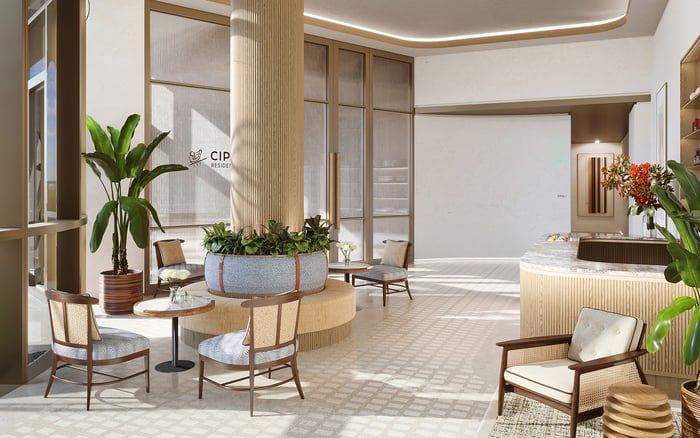
A buyer touring any ultra-luxury tower should watch the lobby and service areas as closely as the residence itself. The best systems feel calm. Staff know the difference between a courier drop-off, a floral delivery, a garment shipment, and a confidential envelope. Nothing appears improvised. Nothing sits in public view longer than necessary. The result is not spectacle. It is the absence of inconvenience.
The Ritz-Carlton Residences carry an especially clear implication: residential service should borrow from hospitality without making the owner feel like a hotel guest. Package handling becomes one of the daily tests of that balance. Residents want recognition and responsiveness, but also privacy. They want help, but not intrusion. They want systems, but not bureaucracy.
In practice, the most valuable package protocols are layered. There is front-of-house reception, back-of-house staging, resident communication, release authorization, and follow-up when needed. A refined building does not treat every parcel the same way. It distinguishes between items that can wait, items that require temperature sensitivity, items that should be delivered only to an authorized person, and items that may need coordination with a house manager or assistant.
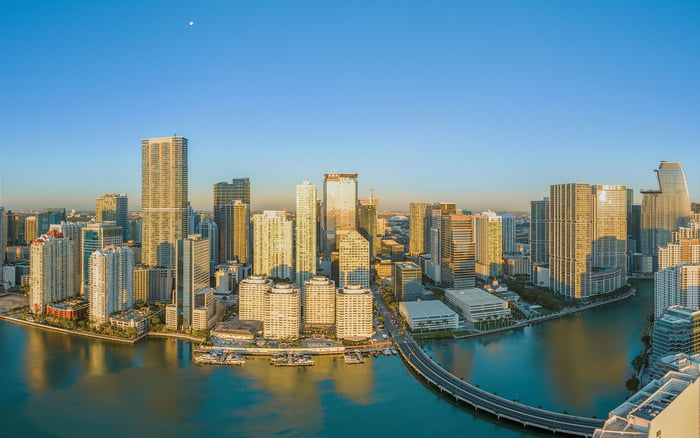
This matters across the South Florida landscape. Buyers may compare Miami Beach, Sunny Isles, and Palm Beach through the lens of view corridors, club access, and neighborhood character, yet the service spine of a residence determines how easily the home performs when the owner is away. In a seasonal market, that is not a secondary issue. It is central to the ownership experience.
Package handling deserves specific due diligence. A sales gallery may describe concierge service broadly, but buyers should ask for the actual resident process. The answer should be clear, not vague. If the process depends entirely on a single staff member remembering a preference, the system may be too informal. If every step is documented but feels rigid, the experience may become cumbersome.
The strongest buildings blend human judgment with repeatable standards. They can accommodate a resident who wants all deliveries held until arrival, another who prefers immediate in-residence placement when authorized, and another who routes certain items through a personal assistant. The building should also clarify how it handles high-volume retail periods, holidays, storms, owner travel, and vendor coordination.
For a second-home owner, the most revealing scenario is absence. What happens when the owner is out of state for three weeks and several deliveries arrive? Is there a storage limit? Can the concierge coordinate with an authorized representative? Are perishables refused, refrigerated, or flagged immediately? A beautiful residence loses some of its appeal if the service model creates anxiety from a distance.
At the top end of the market, privacy is not a preference. It is a requirement. Package handling intersects with names, addresses, purchase habits, travel patterns, family routines, and vendor relationships. A discreet residence understands that the information attached to a parcel can be as sensitive as the item inside it.
That is why buyers should consider the route of a delivery from curb to residence. Public-facing stacks of boxes are inconsistent with a polished luxury environment. So are unclear sign-out procedures, casual third-party access, and crowded package rooms that require residents to sort through labels. In a well-run building, the resident does not become the last-mile logistics manager.
Oceanfront living intensifies the need for order because buildings often balance resident arrivals, valet movement, beach access, maintenance teams, and service deliveries within limited circulation space. In an oceanfront setting, the best package systems protect the serenity of the lobby while keeping service traffic discreetly separated from the owner experience.
Package handling is similar to climate control, elevator dispatch, or valet choreography. When it works, it disappears. When it fails, it becomes a daily irritant. That is why the service standard should be understood before the contract feels emotional. New-construction buyers, in particular, should ask how the building intends to scale staffing once residents move in and delivery volume becomes real.
Ultra-modern architecture can create dramatic arrival moments, but service design must support those moments behind the scenes. A pristine lobby loses its composure if the operational plan is underbuilt. Conversely, a building with a modestly described concierge program may feel exceptional if staff are trained, storage is sufficient, and communication is seamless.
These operational details belong within any serious assessment of long-term property quality. They influence how residents feel returning home, how easily seasonal ownership functions, and how confidently an owner can entrust daily logistics to the building team. In the luxury tier, convenience is not casual. It is engineered.
Why does concierge package handling matter in a luxury residence? It protects time, privacy, and convenience by keeping deliveries organized, secure, and out of the owner’s daily path.
Is package handling different from a standard mailroom? Yes. A true concierge protocol includes intake, logging, staging, resident notification, authorization, and discreet release.
What should Porsche Design Tower buyers focus on? They should evaluate whether delivery handling feels precise, private, and consistent with a high-control ownership lifestyle.
What should The Ritz-Carlton Residences buyers ask? They should ask how hospitality-style service is adapted for private residential living without becoming intrusive.
How important is package storage capacity? It is very important, especially during holidays, seasonal occupancy, and periods when owners are traveling.
Should buyers ask about refrigerated deliveries? Yes. Perishables, wine, flowers, and specialty food items require clear handling expectations before they arrive.
Can a concierge release packages to an assistant? Many luxury residents expect this flexibility, but authorization procedures should be confirmed in writing.
Does package handling affect privacy? Yes. Labels, purchase patterns, and delivery frequency can reveal personal information if not handled discreetly.
Is this more important for second-home owners? Often, yes. Absentee ownership requires reliable communication, storage, and release procedures while the owner is away.
Should package handling influence a purchase decision? It should be part of the service review because daily operations shape how luxurious the residence actually feels.
For a tailored shortlist and next-step guidance, connect with MILLION.
If branded residences are on your mind — as a home or as an allocation — we would be glad to share what we are seeing, privately.
Begin a quiet conversation