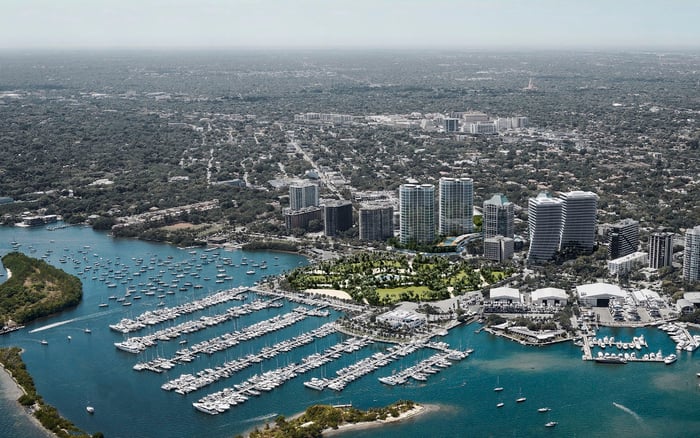
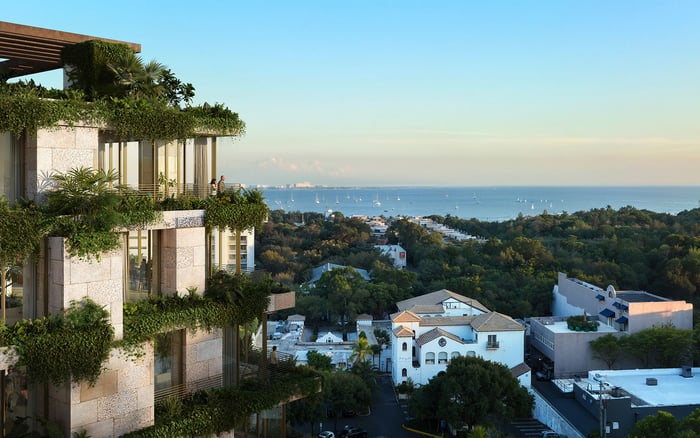
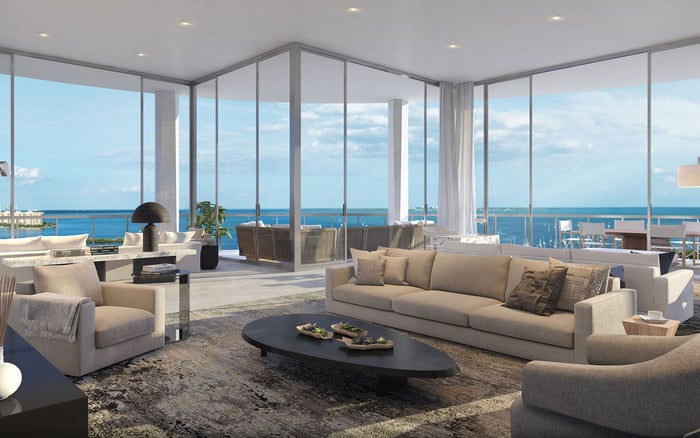
Coconut Grove’s luxury market is increasingly defined by wellness that is designed in, not merely added on. From the sculptural terraces of Grove at Grand Bay to the brand-led, programmatic approach at The WELL Coconut Grove, buyers are prioritizing air, light, landscape, movement, recovery, and everyday ritual as core components of value.
In South Florida, luxury has long been measured in views, privacy, and access. In Coconut Grove, that hierarchy is being refined. The neighborhood’s most sophisticated buyers are seeking homes that protect time and energy, not just capital. Wellness is no longer a sidebar amenity-it is the organizing principle shaping daily life: how you wake, how you recover, how you move, and how seamlessly the building supports those routines.
This shift matters because it redefines what “best-in-class” looks like. A rooftop pool is no longer just a pool when it’s paired with movement space, quiet zones, and shade planning that keeps it usable year-round. A gym is no longer a checkbox when it’s sized, positioned, and conceived to encourage habit rather than occasional use. Even landscape becomes more functional, operating as a buffer, a microclimate strategy, and a sensory cue that signals the body to exhale.
For buyers evaluating Coconut-grove inventory, the strongest properties tend to share one trait: wellness is integrated into architecture, interiors, and operations. That can appear as legacy luxury executed at a high level, or as a newer, brand-led model built around services and recovery.
Coconut Grove offers a rare opportunity to compare two distinct expressions of wellness-led luxury within the same coastal, cultural context.
One is a modern icon: Grove at Grand Bay, designed by Bjarke Ingels Group and completed in 2016. Its form is not a styling exercise. The towers twist a total of 38 degrees, a move intended to optimize views and terraces. That geometry also required serious structural problem-solving, including measures such as a hat truss concept to manage torsion and shear at the cores. In a market where “signature architecture” can read as marketing shorthand, this is architecture that materially changes the lived experience-especially through outdoor space.
The other is a newer paradigm: The WELL Coconut Grove, a wellness-centered residential concept being developed by Terra in partnership with THE WELL brand. The project is designed by Arquitectonica with interiors by Meyer Davis. Rather than treating wellness as a set of rooms, the concept is positioned around resident wellness programming and spaces oriented to movement and recovery, alongside in-residence features that emphasize air, lighting, and materials.
Both approaches can serve the same buyer. The difference is where wellness is expected to come from: the building’s physical advantages and classic amenities, or an integrated lifestyle model that extends into programming and brand infrastructure.
The luxury market has learned-sometimes the hard way-that the word “wellness” is easy to apply and harder to deliver. A buyer-focused evaluation is more exacting. Look for three tiers.
First, the space itself. Grove at Grand Bay’s on-site Wellness and Fitness Center is approximately 2,500 square feet-large enough to function as a true facility rather than an afterthought. It also includes a full-service spa of about 1,700 square feet with private treatment rooms and a Jacuzzi. These dimensions signal intention: enough area for circulation, privacy, and a calmer experience during peak hours.
Second, recovery and variety. The building offers five pools, including two rooftop pools. Multiple pools matter because they allow different moods and uses to coexist-quiet immersion, social time, and routines that shift with the day.
Third, the operational layer. The WELL Coconut Grove is positioned around resident wellness programming, with spaces designed around fitness or movement and recovery. In a brand-led model, the promise is consistency: a resident experience guided by a system, not improvisation. The broader positioning around membership-based wellness clubs also underscores how this ecosystem can extend beyond a single building’s four walls.
For buyers, the practical takeaway is straightforward: ask not only what exists, but how it’s meant to be used on a Tuesday morning. Wellness that holds up in real life is wellness that has been planned.
In Coconut Grove, the most persuasive wellness features are often the least obvious.
Terraces and balconies change how you live. When a tower’s geometry is engineered to expand and optimize outdoor space, the terrace becomes an everyday extension of the home-not seasonal décor. It’s where you stretch, take calls, read, dine, and decompress. In a coastal climate, that outdoor room can function as daily “recovery time” without requiring a schedule.
Landscape is equally powerful when executed by a true specialist. Grove at Grand Bay’s landscape architect is Raymond Jungles, and the landscape concept emphasizes lush subtropical planting, including extensive planting and preservation of mature trees. That decision supports more than visual beauty. Mature canopy and dense planting influence shade, perceived temperature, privacy, and sound. The result is a calmer arrival and a more enveloping atmosphere that feels distinct from Miami’s sharper edges.
If you want to see how the Grove’s residential identity broadens beyond a single address, consider nearby lifestyle-driven options such as Park Grove Coconut Grove, where the neighborhood’s preference for indoor-outdoor living continues to shape buyer expectations. Or, for those who prioritize a newer boutique sensibility, Opus Coconut Grove offers another lens on how Grove living is being curated.
The WELL Coconut Grove reflects a growing preference among high-net-worth buyers: outsourcing complexity. True wellness takes time to coordinate, and time is the one asset no market can manufacture.
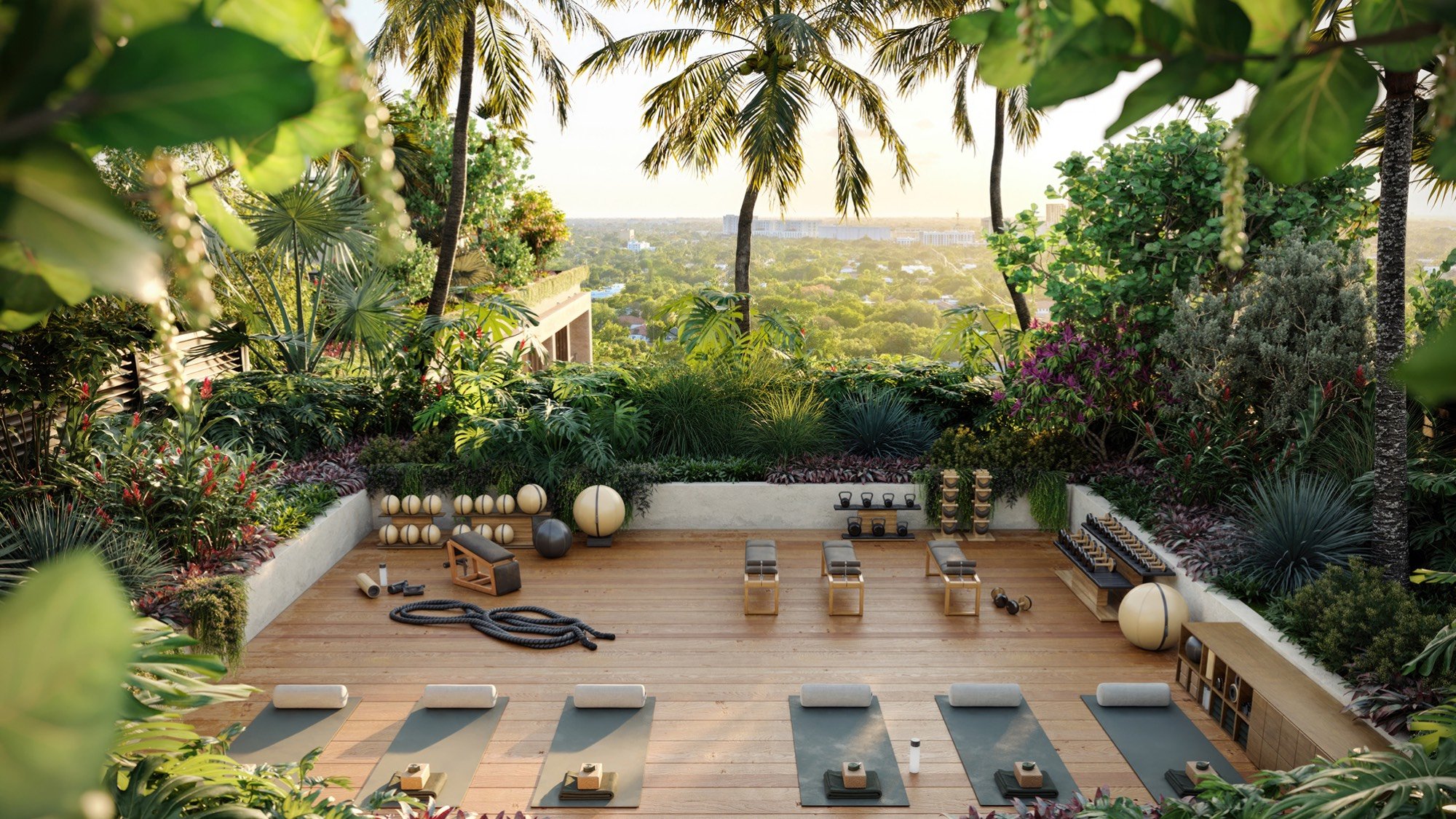
Here, wellness is framed as both space and service. The publicly disclosed concept includes resident wellness programming and a design approach organized around fitness or movement and recovery. A rooftop environment is also part of the story, with outdoor lifestyle and fitness elements, including pools and activity areas. That is a subtle but meaningful distinction from the traditional rooftop deck: it’s designed to be used, not simply photographed.
Inside the residences, marketing materials position features such as air, lighting, and material choices as wellness-supportive. Whether a buyer views those features as performance-driven or preference-driven, the impact can be immediate: a home that feels calmer, sleeps better, and reduces friction.
For a buyer comparing wellness styles within the neighborhood, it can be useful to weigh The WELL’s program-forward model against the Grove’s architecture-and-amenities approach. And for those who want a different expression of Grove luxury, Four Seasons Residences Coconut Grove can be a helpful reference point for service expectations in the area.
Wellness can be deeply personal, but evaluation can still be disciplined.
Start with circulation. Does the fitness and spa component feel separated from high-traffic social spaces? In buildings with a serious spa footprint, privacy and acoustic calm are part of the product.
Then look for variety and redundancy. Five pools, including rooftop options, isn’t about excess-it’s about choice and the ability to keep routines without negotiating for space.
Next, ask about programming and cadence. In a brand-led building, the promise is a rhythm: classes, recovery modalities, and services designed to show up consistently. That consistency can be worth more than a larger room with no operational plan behind it.
Finally, consider the “quiet infrastructure” of wellness: terraces that invite daily outdoor time, and landscape that softens the body’s stress response before you even reach your front door.
If your lifestyle requires locking and leaving, or you value a newer building narrative within the same neighborhood, Arbor Coconut Grove offers another contemporary point of comparison for Grove buyers.
Coconut Grove’s wellness-led luxury isn’t built for a single type of owner. It serves several, simultaneously.
There is the design collector who values landmark architecture and the long-term cultural value of a building recognized for its form and engineering. There is the family buyer who wants outdoor space and landscape that feels protective. There is also the modern achiever who wants a home that functions like a private wellness club, with the programming layer handled by professionals.
The unifying thread is discretion. Wellness isn’t being sold as spectacle. At its best, it reads as ease: a place where your schedule can be ambitious-and your home can still feel restorative.
What makes Coconut Grove different for wellness-focused buyers? The neighborhood pairs lush landscape and walkable living with luxury buildings that increasingly design for daily recovery.
Is Grove at Grand Bay considered a signature-architecture building? Yes. It was designed by Bjarke Ingels Group and completed in 2016 with a distinctive twisting form.
How much does Grove at Grand Bay twist, and why does it matter? The towers twist a total of 38 degrees, intended to optimize views and terraces for indoor-outdoor living.
What wellness facilities are confirmed at Grove at Grand Bay? It includes an approximately 2,500-square-foot Wellness and Fitness Center and an approximately 1,700-square-foot spa.
How many pools does Grove at Grand Bay have? The building offers five pools, including two rooftop pools.
Who is behind the landscape concept at Grove at Grand Bay? The landscape architect is Raymond Jungles, with an emphasis on lush subtropical planting and mature trees.
What is The WELL Coconut Grove in simple terms? It is a wellness-centered residential concept developed by Terra in partnership with THE WELL brand.
Who designed The WELL Coconut Grove? It is designed by Arquitectonica with interiors by Meyer Davis.
Does The WELL Coconut Grove emphasize programming or just amenities? It is positioned around resident wellness programming alongside spaces for movement and recovery.
How should buyers compare a brand-led wellness building to a classic luxury tower? Focus on how you will actually use the space: daily routines, recovery options, and whether services are built into operations.
For a tailored shortlist and next-step guidance, connect with MILLION Luxury.
If branded residences are on your mind — as a home or as an allocation — we would be glad to share what we are seeing, privately.
Begin a quiet conversation