Waterfront lighting is becoming a more visible design consideration for luxury residences around Biscayne Bay, influencing exterior architecture, amenity planning, landscape strategy, marina edges, and the way buyers evaluate nighttime privacy and environmental stewardship.
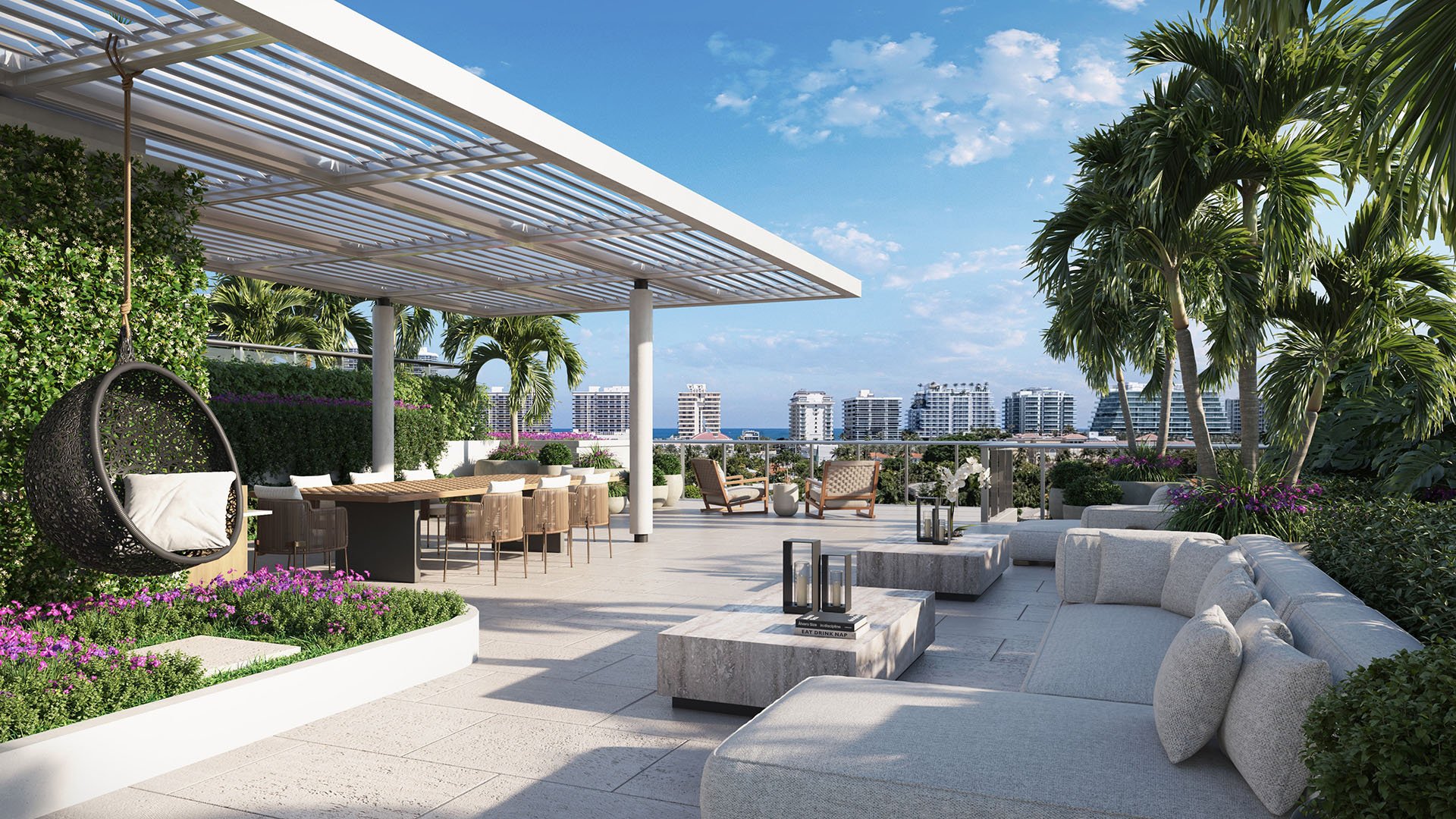
For decades, the South Florida waterfront was marketed through spectacle: illuminated towers, glowing pools, dramatic porte cochères, and terraces designed to sparkle against Biscayne Bay. That visual language is evolving. Across the bayfront, lighting is no longer a simple question of brightness or branding. It is becoming a design discipline that touches architecture, environmental sensitivity, privacy, and the daily experience of residents who expect their homes to feel serene after sunset.
For luxury buyers, this shift is not only about compliance. It is about quality. A well-lit waterfront property should guide arrival, protect views, soften edges, and preserve the theater of the bay without overwhelming it. The most sophisticated developments are beginning to treat darkness as an amenity in itself: an element that frames water, sky, skyline, and garden with intention.
In the Biscayne Bay Area, where residential towers, low-rise islands, marinas, and historic neighborhoods meet the shoreline, light pollution concerns are shaping design conversations earlier in the process. The result is a quieter, more precise form of luxury, where the best buildings glow from within rather than shout across the water.
Light pollution is often discussed as a technical issue, but for homeowners it is deeply experiential. It can influence how a terrace feels at night, whether a bedroom achieves true darkness, how reflections move across the water, and whether outdoor spaces feel intimate or exposed. On the waterfront, poorly controlled light travels farther than many buyers expect. It reflects off glass, pale stone, pools, seawalls, and the bay itself.
The most relevant design questions are practical. Are exterior fixtures shielded? Are landscape lights aimed downward? Do amenity decks create glare for neighboring residences? Are marina and dock lights functional without becoming intrusive? Does the building maintain a calm nighttime profile when viewed from the water?
Waterview value is increasingly tied to these nuances. A residence that preserves moonlight, skyline contrast, and bay reflections can feel more private and more expensive than one surrounded by excessive illumination. For buyers comparing new construction, lighting strategy belongs beside floor plan, ceiling height, parking, wellness programming, and service culture.
Luxury development around Biscayne Bay is responding with more layered lighting plans. Instead of relying on broad washes of illumination, thoughtful projects use lower-intensity fixtures, warmer tones, recessed sources, and careful placement. Balconies, pool decks, pathways, and entry sequences are treated as distinct lighting environments rather than one continuous glow.
This approach also changes architecture. Deep terraces can help reduce spill. Overhangs can conceal light sources. Textured materials can absorb rather than amplify glare. Landscape design becomes more important because planting can soften brightness and create shadow. Even glass selection and interior lighting matter, since a tower’s nighttime presence is shaped as much by private residences as by common areas.
In Brickell, the challenge is urban intensity. A bayfront or near-bay residence such as Una Residences Brickell sits within a skyline where reflection, height, and density make nighttime design especially visible. Here, the luxury question is not whether the building can be seen. It is whether it can create calm within a luminous district.
The Biscayne Bay Area is not one uniform market. Each shoreline has its own lighting personality. Brickell and Downtown are vertical, reflective, and metropolitan. Coconut Grove is more gardened and residential, with a softer relationship to the water. Miami Beach carries the tension between resort energy and private sanctuary. Bay Harbor Islands and North Bay Village are defined by narrower waterways, where light can travel quickly from one property to another.
That geography matters to buyers. In Coconut Grove, residences such as Vita at Grove Isle point toward a quieter waterfront experience, where landscaping, arrival sequence, and the transition from indoor to outdoor living are central to the value proposition. The expectation is not theatrical brightness. It is seclusion, proportion, and a sense that the bay remains the focal point.
In Miami Beach, projects like The Ritz-Carlton Residences® Miami Beach operate in a different context, where the heritage of hospitality meets the priorities of private residential life. The most successful lighting strategies in this environment feel polished but never harsh, allowing outdoor amenities to function elegantly while preserving residential calm.
Farther north, Continuum Club & Residences North Bay Village reflects the appeal of island living between major urban centers. In North Bay Village, where water surrounds much of the residential experience, nighttime lighting becomes part of the neighborhood’s shared atmosphere. A single overlit edge can affect more than one view corridor.
Bay Harbor is similarly sensitive. With La Baia North Bay Harbor Islands, buyers are looking at a waterfront setting where discretion, boating culture, and residential scale are closely linked. In this type of market, restrained lighting can support the feeling of an enclave rather than a resort stage.
The next generation of luxury buyers is increasingly fluent in environmental design. They may not ask first about fixture temperature or shielding, but they understand the difference between a terrace that feels tranquil and one that feels exposed. They notice whether a pool deck overwhelms the waterline, whether a marina feels elegant after dark, and whether the building respects its neighbors.
This is where light pollution standards and expectations can become value-protective. Buildings that anticipate tighter scrutiny are less likely to feel dated as tastes evolve. They may also be better positioned for residents who prioritize wellness, sleep quality, natural rhythms, and privacy. In ultra-premium markets, these are not niche preferences. They are part of the broader movement toward homes that support a more composed daily life.
For developers, restraint is not a reduction in luxury. It is a refinement of it. The goal is to create drama through contrast, not glare. A softly lit lobby framed by dark water can feel more cinematic than a brightly lit facade. A pathway illuminated just enough for comfort can feel more exclusive than a promenade washed in light.
Buyers evaluating waterfront residences should ask direct questions about nighttime conditions. Request to see the property or sales environment after sunset. Study the amenity deck from within the residence and from the water-facing edge. Ask how exterior lighting is controlled, whether dimming systems are in place, and how private terraces interact with the building’s overall nighttime expression.
It is also worth considering neighboring properties. Even a beautifully designed residence can be affected by adjacent glare, marina lighting, or commercial brightness across the water. In compact waterfront districts, the view is a shared composition.
The most desirable Biscayne Bay residences will likely be those that balance security, beauty, and ecological sensitivity without making any one element feel compromised. The future waterfront buyer is not simply purchasing light-filled interiors. They are purchasing the right kind of darkness.
Why does waterfront light pollution matter to luxury buyers? It affects privacy, nighttime views, terrace comfort, and the overall calm of a waterfront residence.
Are light pollution rules the same across Biscayne Bay? No. Expectations can vary by municipality, waterfront condition, building type, and neighborhood context.
What lighting details should I review in a new development? Look at exterior fixture placement, balcony glare, amenity deck brightness, landscape lighting, and dock illumination.
Can restrained lighting still feel luxurious? Yes. In high-end design, controlled light often feels more refined than excessive brightness.
Does light pollution affect Waterview quality? Yes. Glare and reflection can alter how water, skyline, and sky are experienced after sunset.
Is Brickell more challenging for lighting control? Brickell’s density and reflective skyline make nighttime lighting especially important for privacy and comfort.
Why are island markets sensitive to lighting? Narrow waterways can carry light between properties, making restraint important for the entire setting.
Should I visit a property at night before buying? Yes. A nighttime visit can reveal glare, privacy conditions, and the true atmosphere of outdoor spaces.
Can building design reduce unwanted light spill? Yes. Overhangs, recessed fixtures, landscaping, and careful terrace design can all help control light.
What is the luxury takeaway for Biscayne Bay buyers? The best waterfront residences use light sparingly, preserving the bay as the main event.
If you'd like a private walkthrough and a curated shortlist, connect with MILLION.
If branded residences are on your mind — as a home or as an allocation — we would be glad to share what we are seeing, privately.
Begin a quiet conversation