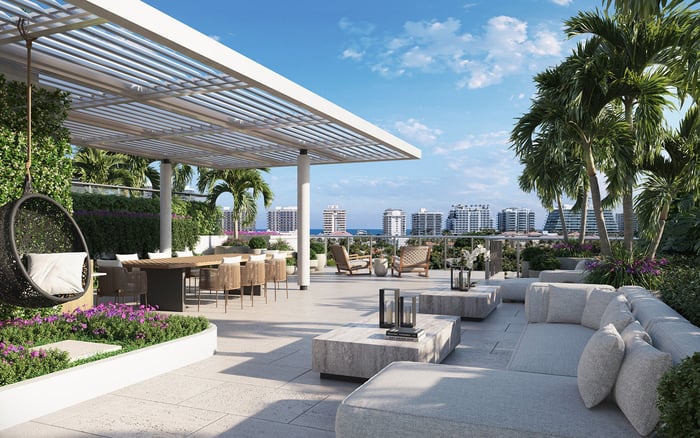
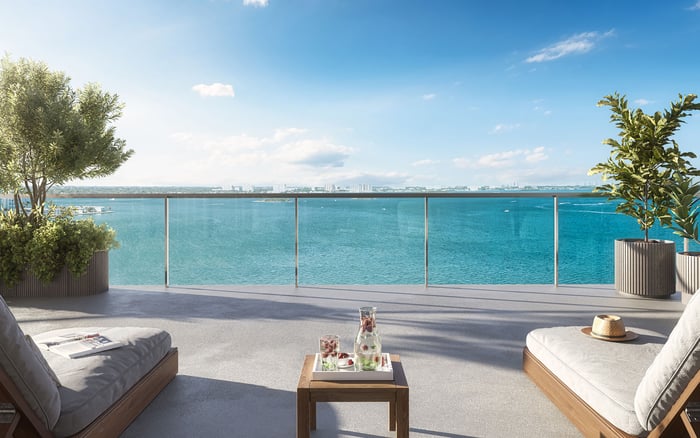
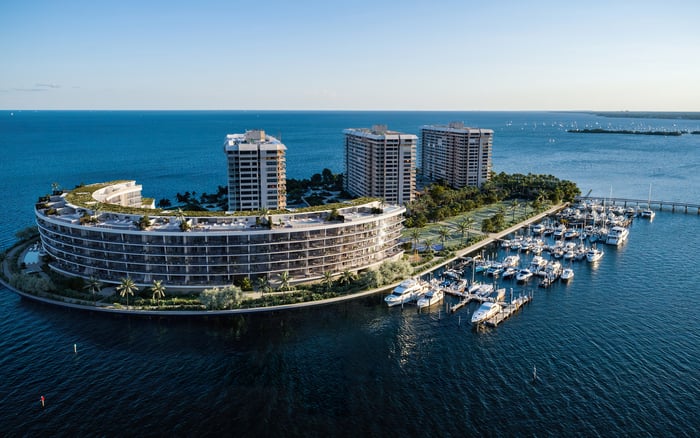
A discreet buyer’s guide to South Florida bayfront residences where wellness programming, waterfront calm, and service discipline matter as much as design and address.
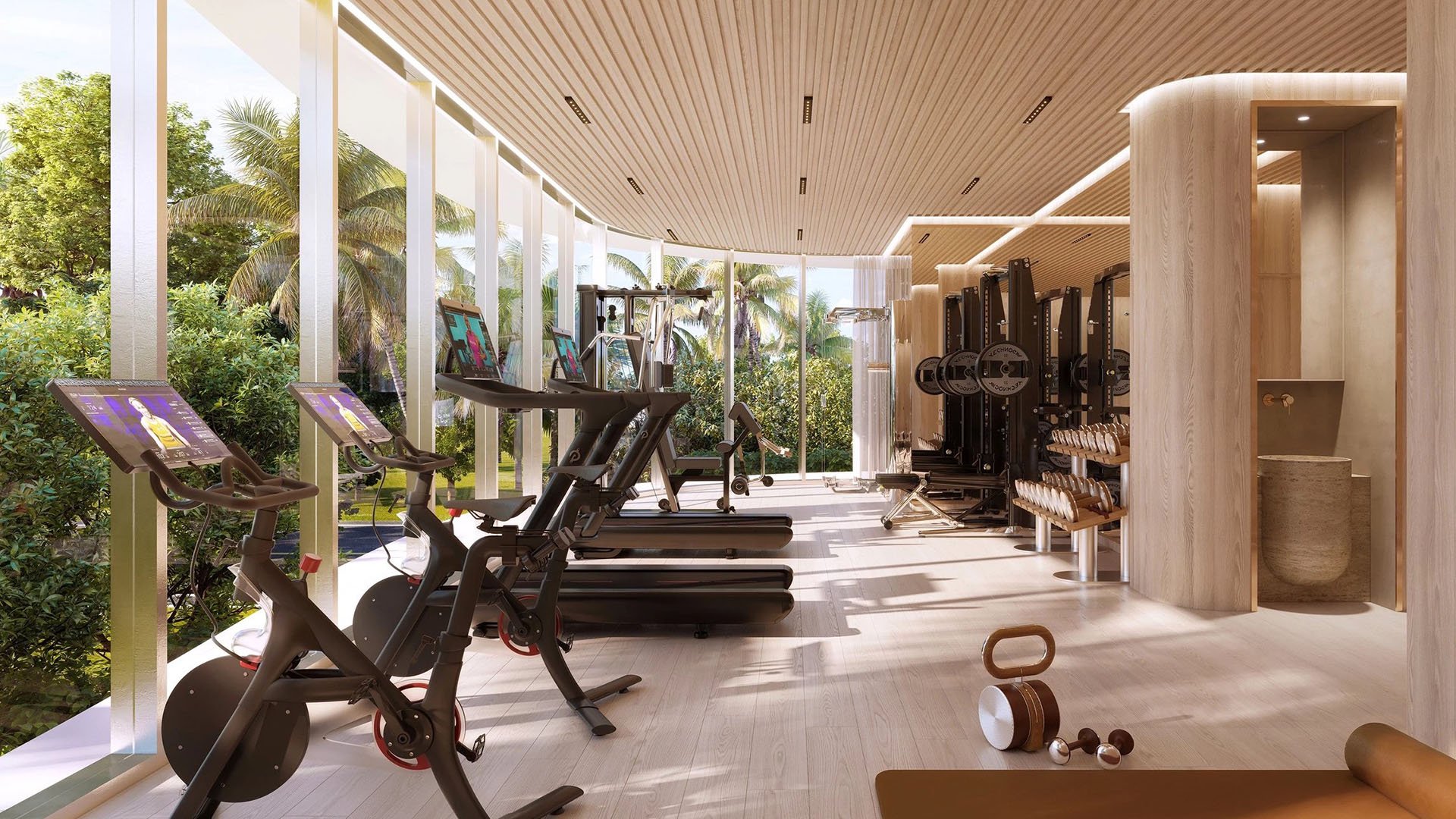
For the most selective South Florida buyer, wellness has moved well beyond a gym, a treatment room, or a pool deck with attractive furniture. It has become part of the residential thesis: how a building supports sleep, movement, recovery, nutrition, privacy, and the simple ritual of stepping outside to water and sky. In that context, bayfront living has a distinct advantage. It offers light without the full intensity of oceanfront exposure, water views with a softer rhythm, and a setting that can feel restorative before the amenity program even begins.
The best bayfront wellness residences are not necessarily those with the longest amenity menu. They are the buildings where programming feels coherent, arrival is calm, outdoor space has purpose, and the residence itself reinforces the wellness promise. A buyer comparing Brickell, Edgewater, Bay Harbor Islands, North Bay Village, Coconut Grove, or Grove Isle should ask a sharper question: does this building make a healthy daily routine easier, or does it merely market one?
A serious wellness amenity program begins with access. If the best spaces are difficult to reserve, overcrowded during peak hours, or treated as decorative rather than operational, value diminishes quickly. Buyers should study how a building manages resident flow, guest policies, treatment scheduling, staff presence, and the relationship between indoor and outdoor wellness spaces.
The second test is integration. A strong program should support multiple kinds of residents: the early-morning swimmer, the strength-training executive, the buyer who wants quiet recovery, the family that values outdoor time, and the seasonal owner who expects the building to function without friction. Wellness is not a single room. It is a system of convenience, privacy, air, water, programming, and service.
The third test is longevity. Amenity programs can feel impressive in renderings, but long-term value depends on staffing, maintenance, governance, and a resident culture that actually uses the spaces. For buyers spending at the upper end of the South Florida market, those operational details are not secondary. They are part of the asset.
Brickell offers the appeal of waterfront urban life, especially for buyers who want a wellness routine without leaving Miami’s financial and dining core. Una Residences Brickell belongs in that conversation for buyers drawn to a residential format that pairs a recognized Brickell address with a water-oriented lifestyle. The value proposition is not seclusion in the traditional sense, but the ability to move between city energy and private residential calm.
Bay Harbor Islands attracts a different buyer. The pace is quieter, the scale is more residential, and the surrounding water creates a softer daily rhythm. The Well Bay Harbor Islands is a natural reference for buyers who want the wellness idea to be central rather than incidental. Its name signals a clear positioning, but the prudent buyer should still evaluate the actual program, daily access, and service model before assigning premium value.
North Bay Village is increasingly relevant for buyers who want bay views, centrality, and a less conventional Miami address. Continuum Club & Residences North Bay Village speaks to those seeking a club-oriented residential environment with water as part of the lifestyle setting. For wellness buyers, the question is how the club promise translates into daily movement, recovery, privacy, and ease.
Coconut Grove and Grove Isle appeal to buyers who put landscape, walkability, and a quieter form of luxury ahead of overt spectacle. Vita at Grove Isle is especially relevant for buyers who want an island-like residential atmosphere close to the Grove’s mature, established character. In this part of the market, wellness often reads as discretion: fewer transitions, more greenery, calmer water, and a residence that feels removed without feeling remote.
Edgewater is another compelling option, particularly for buyers who want wide bay exposure with immediate access to Miami’s cultural and design corridors. Aria Reserve Miami fits the profile for those seeking a high-rise bayfront lifestyle with a strong water-view orientation. The area is more urban than Bay Harbor or Grove Isle, so buyers should weigh the trade-off between energy, convenience, and serenity.
A buyer who sees wellness as structured programming may gravitate toward a residence where the concept is explicit, visible, and central to the building identity. A buyer who sees wellness as privacy may prefer a quieter island or low-friction bayfront setting. A buyer who sees wellness as performance may prioritize fitness access, recovery spaces, and scheduling discipline. A buyer who sees wellness as emotional reset may care most about views, air, terraces, and the ability to decompress after a long day.
That distinction matters because two buildings can both be marketed around wellness while serving entirely different lives. One may feel social and club-like. Another may feel quiet and residential. Another may use water, scale, and arrival sequence as the wellness experience itself. The strongest purchase is the one where the building’s rhythm matches the owner’s actual day, not an imagined version of it.
The right diligence is practical. Visit at the time you would actually use the amenities. Ask how spaces are reserved, whether private training or treatments are available, how guest access is controlled, and how the association or operator plans to maintain the program over time. Review the relationship between wellness areas and residences: Are they easy to reach? Do they feel private? Are they positioned to take advantage of light, water, and outdoor air?
Buyers should also examine the residence itself. A bayfront wellness purchase is stronger when the private home supports the public amenity story. Terraces, natural light, quiet bedrooms, flexible rooms, and water-facing living spaces can matter as much as branded programming. The best South Florida bayfront residences for wellness buyers are those where the building and the private residence reinforce each other.
What makes a bayfront residence better for wellness buyers? Bayfront settings often offer calmer water views, softer light, and a quieter daily rhythm than more exposed locations.
Is a large amenity list enough to prove a serious wellness program? No. Buyers should focus on staffing, access, privacy, maintenance, and whether residents can actually use the spaces consistently.
Which South Florida areas are most relevant for bayfront wellness living? Brickell, Edgewater, Bay Harbor Islands, North Bay Village, Coconut Grove, and Grove Isle all offer distinct buyer profiles.
Should wellness buyers prioritize branded residences? Branding can help define expectations, but the operating model and day-to-day resident experience are more important.
How important are water views to a wellness purchase? Water views are not the entire story, but they can materially improve the sense of calm, light, and daily restoration.
What should seasonal owners ask before buying? They should ask how amenities are managed while they are away and how easily services can be accessed when they return.
Can an urban bayfront tower still feel wellness-oriented? Yes, if the building creates privacy, efficient amenity access, and meaningful separation from the intensity of the city.
Are quieter bayfront neighborhoods better than central ones? Not always. The better choice depends on whether the buyer values seclusion, convenience, dining access, or daily mobility.
What is the biggest mistake wellness buyers make? They assume renderings equal experience. The better test is how the program functions on an ordinary weekday.
How should buyers compare two wellness-focused residences? Compare the lifestyle rhythm first, then evaluate amenities, governance, service depth, privacy, views, and resale logic.
For a confidential assessment and a building-by-building shortlist, connect with MILLION.
If branded residences are on your mind — as a home or as an allocation — we would be glad to share what we are seeing, privately.
Begin a quiet conversation