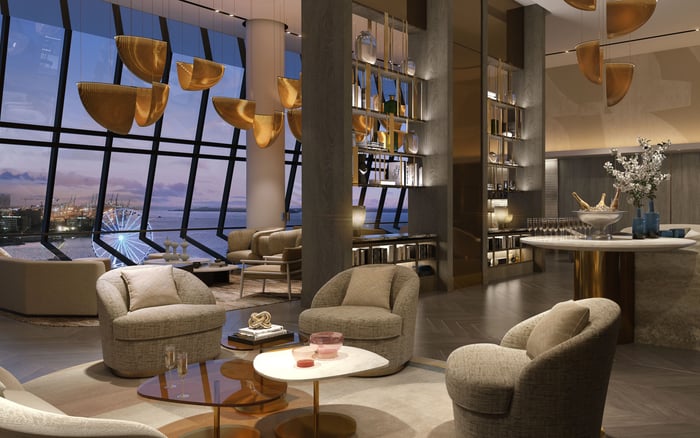
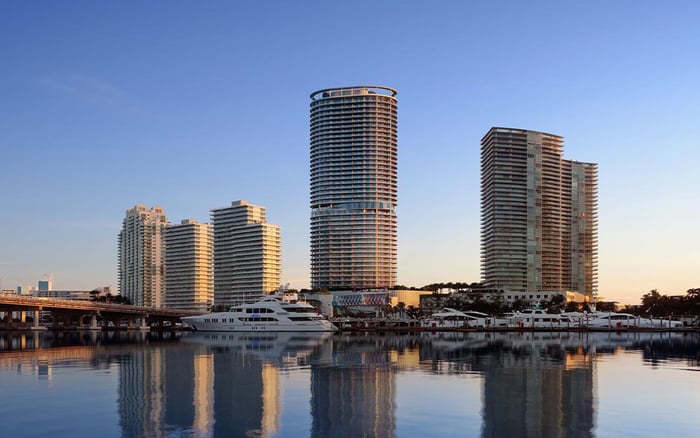
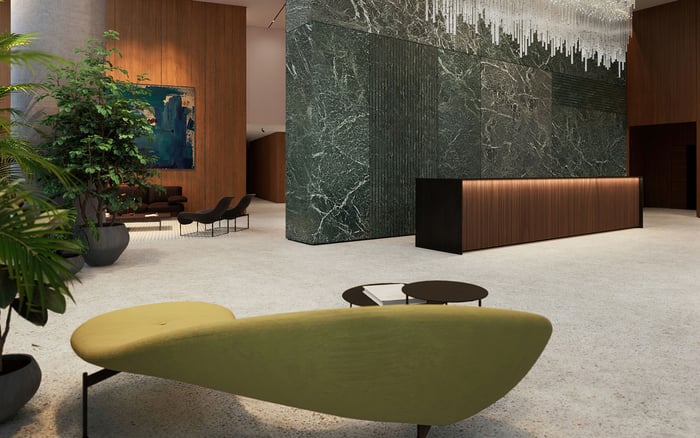
A discreet buyer’s guide to Miami’s most anticipated branded supertall, from architecture and services to how it fits within South Florida’s luxury residential landscape.
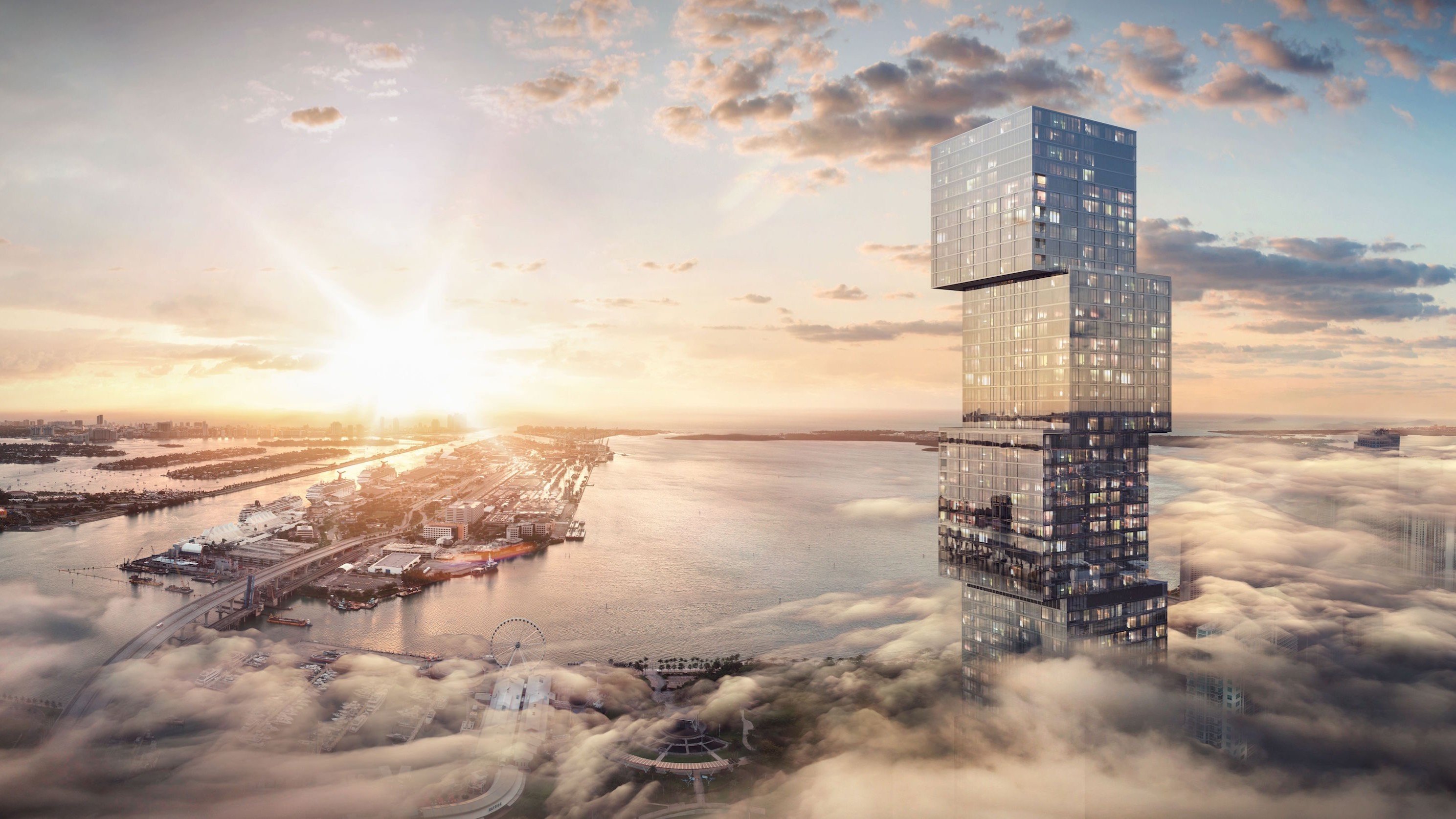
For many luxury buyers, Miami’s skyline is not a backdrop - it’s a signal. It reveals where capital is concentrating, which neighborhoods are becoming genuinely walkable, and which addresses are likely to retain relevance through market cycles. Waldorf Astoria Residences Downtown Miami is planned as a 100-story, 1,049-foot supertall at 300 Biscayne Boulevard - rare company by any measure, and poised to become a defining vertical marker for the city.
What elevates this beyond a simple height story is how the tower is intended to register from multiple vantage points: approaching along Biscayne Boulevard, reading its composition from Bayfront Park and the bay, or using it as a navigational reference from the causeways. The site sits directly on Biscayne Boulevard in Downtown Miami, across from the Bayfront Park and Biscayne Bay area. For end users, that geography is not incidental - it connects daily life to the bayfront promenade, the cultural core of Downtown, and straightforward north-south movement without needing to “leave the city” to feel open air.
In a market where trophy inventory is increasingly defined by brand, service, and architectural clarity, a true supertall with a hotel flag is a distinct proposition from a conventional condominium tower. This is not simply about buying square footage; it’s about buying into a system designed to perform.
Miami has no shortage of glass, but not all glass is memorable. Here, the design is defined by nine offset stacked glass cubes - a compositional move that creates terraces, shifts view corridors, and gives the tower an instantly legible profile. The architect is Carlos Ott, working with Sieger Suarez Architects as architect of record and local partner.
For buyers, architecture isn’t abstract. It shapes resale narratives, dictates how light moves through a residence, and anchors the building’s long-term identity in the city’s mental map. A distinctive silhouette also tends to hold marketing durability: it remains recognizable in photography, in skyline views, and in the shorthand locals use to reference “that building” years later.
The cube offsets signal something else as well: discipline in massing. Rather than reading as a single monolithic extrusion, the form presents as a series of stacked moments. In practice, that can translate to homes that feel less standardized and more intentionally considered - especially at upper levels, where geometry becomes part of the lifestyle, not just the envelope.
This is a mixed-use Waldorf Astoria hotel and residences development under Hilton’s luxury flag. The project is planned to include 360 condominium residences, paired with a hospitality-forward model that sits at the center of branded demand.
The appeal is straightforward: a well-run hotel doesn’t just provide amenities - it brings operational discipline. Here, the services and amenities program is positioned around hospitality-style offerings such as concierge and lifestyle services, designed to translate luxury-hotel cadence into everyday living.
Within that brand universe, Peacock Alley is marketed as a signature Waldorf Astoria experience within the building. For residents, signature spaces like this often become the social center - but in a more controlled, curated way than a typical residents’ lounge. That nuance matters for buyers who want access to community without sacrificing discretion.
Interiors are by BAMO, aligning the residences with a studio known for translating hospitality cues into residential comfort. In a true mixed-use tower, the best outcome is when hotel-grade execution complements - rather than overwhelms - the residential side. The objective is a home-first residence, with service available when desired.
Public materials position the residences as luxury condos with floor-to-ceiling glass and curated finishes, paired with a branded luxury service model. In a market where view corridors and daylight directly drive value, floor-to-ceiling glass isn’t merely aesthetic - it’s functional, particularly in a bayfront Downtown setting where water, park, and skyline interplay becomes a daily asset.
When evaluating a branded high-rise at this level, a sophisticated buyer typically prioritizes four things:
Privacy engineering. Elevator strategy, arrival sequence, and how residential circulation is separated from hotel operations.
Service clarity. A concierge promise is only as good as its staffing philosophy and operating culture. The advantage of an established hotel brand is that service is part of the product definition, not an add-on.
Lifestyle redundancy. Top buildings provide multiple options for the same need: more than one place to work, to entertain, to decompress. This improves livability and supports resale.
Finish integrity. In a supertall, the best residences feel composed rather than over-styled. A design studio with hospitality expertise can help maintain that restraint.
At the top end of the market, buyers look for more than renderings. They look for momentum, underwriting, and visible progress. The project publicly announced a record $668 million construction loan in 2024 - an important indicator of institutional commitment at scale.
Construction updates have also highlighted a major structural milestone: the tower reached a halfway mark on its path to becoming Florida’s tallest, with the superstructure passing the 50th floor. For buyers weighing a primary residence or a long-hold investment, milestones like these can narrow the psychological gap between signing today and moving in later - without relying on specific delivery timelines.
In practical terms, steady vertical progress also influences how the market prices future views. Once a supertall asserts itself in the skyline, competing projects and resale inventory begin to recalibrate around the new reference point.
Waldorf Astoria Residences Downtown Miami represents a specific kind of luxury: urban, vertical, and culturally adjacent. It is for buyers who value being at the center of movement - where an evening can pivot from waterfront air to a dining reservation without a car-centric routine.
By contrast, Miami Beach offers luxury that is more sensory and leisure-coded, often defined by sand-to-lobby proximity and a slower tempo. For those who want a park-and-ocean lifestyle with modern design language, Five Park Miami Beach speaks to a different rhythm. For an owner who prioritizes the gravitas of a legacy hospitality name and a refined residential experience, The Ritz-Carlton Residences® Miami Beach is a natural point of comparison.
For buyers who want a more overtly resort-integrated environment, Setai Residences Miami Beach offers another lens on branded living. The decision is less about which is “better” and more about whether you want your home to feel like a city apartment with hotel options, or a coastal retreat with a city within reach.
South Florida’s luxury market has become more segmented at the top: oceanfront sanctuaries, boutique beachfront residences, and urban branded towers each draw distinct buyer profiles.
If you are drawn to tranquility and a direct relationship to the Atlantic, oceanfront product continues to command its own premium logic. 57 Ocean Miami Beach, for instance, sits in a world where the horizon is the primary amenity. If your lifestyle is more club-oriented and service-driven, Casa Cipriani Miami Beach represents a different kind of membership-inflected residential promise.
Against that landscape, Waldorf Astoria Residences Downtown Miami is best understood as a flagship urban residence: a tall, legible symbol with a service platform built into the identity. It is positioned to appeal to global buyers who want a Miami base that feels unmistakably Miami, yet operationally consistent with luxury hospitality.
This building is designed for buyers who value three things simultaneously: architectural statement, branded service, and a Downtown address tied to the bayfront core.
Before committing, an experienced buyer will typically pressure-test the following:
The broader thesis is clear: Miami’s future trophy addresses are the ones that combine skyline identity with service infrastructure. Waldorf Astoria Residences Downtown Miami sits squarely in that category.
Where is Waldorf Astoria Residences Downtown Miami located? It is planned for 300 Biscayne Boulevard in Downtown Miami, directly along the bayfront corridor.
How tall is the building planned to be? The tower is planned as a 100-story, 1,049-foot supertall.
What is the signature architectural concept? The design is composed of nine offset stacked glass cubes, giving it a distinct skyline silhouette.
Who is the architect? The architect is Carlos Ott, with Sieger Suarez Architects serving as architect of record and local partner.
Is this a hotel, residences, or both? It is a mixed-use development combining a Waldorf Astoria hotel with branded condominium residences.
How many residences are planned? The project is planned to include 360 condominium residences.
What does the branded service model include in general terms? It is positioned around hospitality-style offerings such as concierge and lifestyle services.
What is Peacock Alley in this context? Peacock Alley is presented as a signature Waldorf Astoria brand experience within the building.
Has construction reached a major milestone yet? The superstructure has passed the 50th floor, marking a notable halfway construction milestone.
Who is developing the project? Property Markets Group (PMG) is the developer, with Greybrook Realty Partners disclosed as a partner.
For a confidential assessment and a building-by-building shortlist, connect with MILLION Luxury.
If branded residences are on your mind — as a home or as an allocation — we would be glad to share what we are seeing, privately.
Begin a quiet conversation