A buyer-focused editorial on how library and study placement at Vita at Grove Isle should be read through the lens of lock-and-leave living, privacy, routine, and resale discipline.
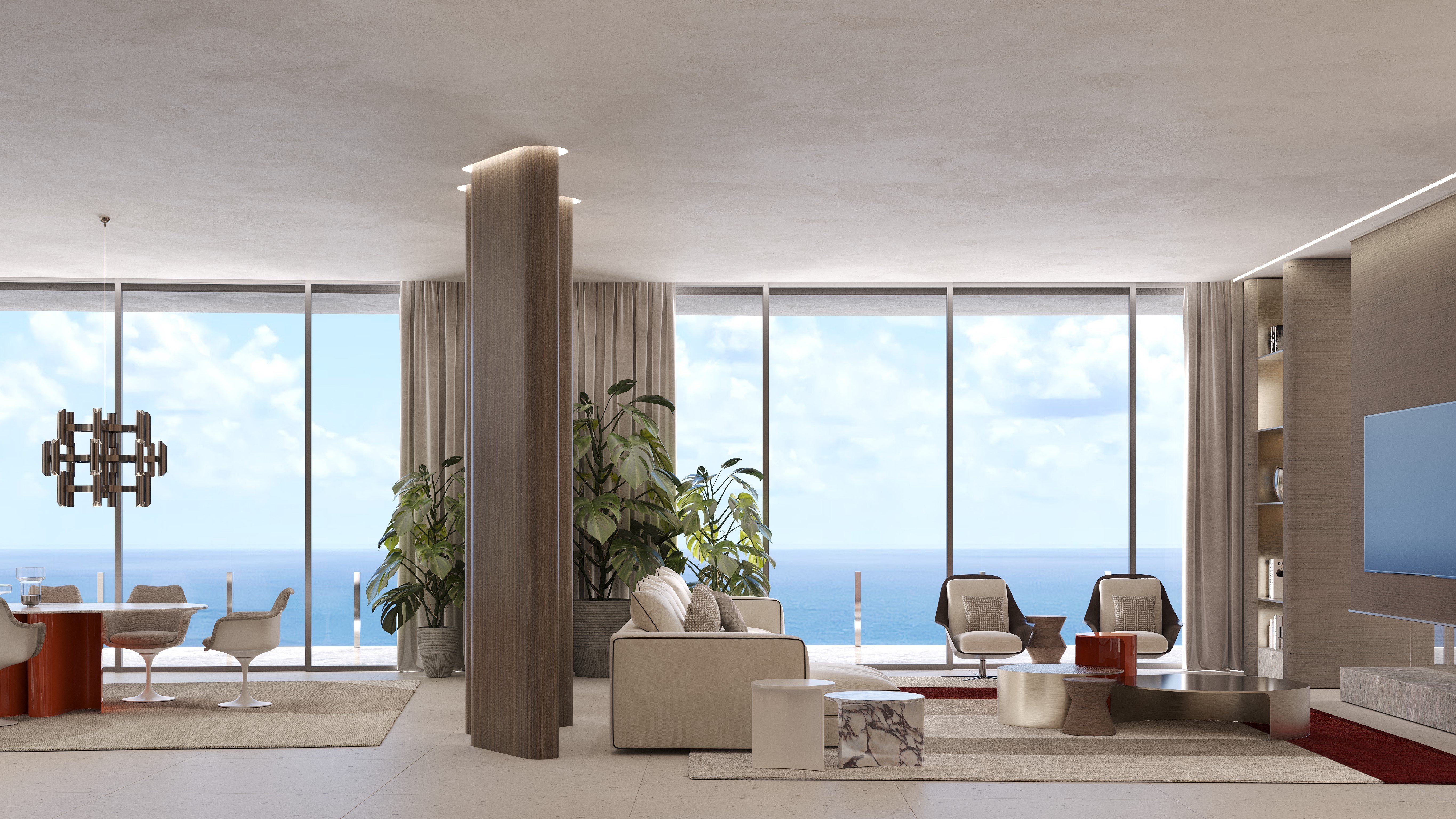
At Vita at Grove Isle, the library or study is not a decorative afterthought. For a lock-and-leave buyer, it is one of the most revealing rooms in the residence, because it shows how the home performs between arrivals, departures, work calls, family visits, and quiet evenings when the formal entertaining spaces are not in use.
The strongest buyers in South Florida’s upper tier rarely ask only whether a floor plan includes a den. They ask where that room sits, how it is approached, what it borrows from adjacent spaces, and whether it supports a private rhythm or interrupts it. That is the lock-and-leave question behind library and study placement: can the residence remain elegant, usable, and composed when life is moving quickly?
A study placed too visibly can become a stage set. A study tucked too deeply away can become forgotten square footage. The ideal answer is more nuanced. It should feel connected enough to belong to the daily life of the home, yet insulated enough to function when the rest of the residence is open, social, or in transition.
Lock-and-leave ownership rewards plans that reduce friction. The residence must be easy to close, easy to reopen, and easy to inhabit without a long reset. In that context, the study often becomes the command room: a place for travel documents, remote work, household administration, reading, calls, and the small decisions that accumulate around a second residence.
If the library is placed near the entry sequence, it can serve as a polished arrival point. A buyer may step in, drop the week’s paperwork, take a call, review calendars, or settle into the home before moving into the principal living spaces. This placement can be especially useful for owners who come and go frequently, or who want a discreet buffer between the elevator arrival and the private family quarters.
If the study sits closer to bedrooms, it becomes more intimate. This can suit buyers who value morning privacy, late-night reading, or a workspace that does not need to be displayed. The tradeoff is that guests may feel farther from the room, and the study may be less useful as a shared household hub.
If it is adjacent to the living and dining area, the room can become part of the home’s social architecture. That can be beautiful when millwork, art, and lighting are handled well. Yet it also raises questions about acoustics, privacy, and whether work can continue while the residence is active.
In a primary residence, a study may absorb daily professional life. In a lock-and-leave residence, its role is often more fluid. It may be a quiet library one week, a private call room the next, then a place for a visiting relative to read while the rest of the home is animated. Flexibility is valuable, but only if the room has enough identity to avoid becoming storage.
Buyers should read the study as a signal. A room near the public sequence suggests a more formal, entertaining-oriented residence. A room closer to the private wing suggests domestic retreat. A room with strong visual connection to views or terraces may emphasize contemplation. A room without a clear door, wall discipline, or acoustic separation may function better as a lounge than as a true work setting.
This is where design language matters. Shelving, concealed storage, integrated lighting, pocket doors, and wall proportions can make the difference between a nominal den and a room that feels essential. The luxury buyer does not need more square footage for its own sake. The luxury buyer needs rooms with a reason to exist.
The first test is privacy. Can a confidential call happen while guests are in the living room? Can a family member work while another watches a film, hosts drinks, or returns from the pool? A study that looks perfect in plan may disappoint if sound travels too easily or if circulation cuts through the room.
The second test is light. A library does not need to compete with the main view, but it should have a considered atmosphere. Natural light can make the room desirable during the day, while controlled lighting determines whether it works after sunset. If the study is windowless or internal, the quality of artificial light, ceiling height, and finishes becomes even more important.
The third test is storage. Lock-and-leave buyers often underestimate the practical side of elegance. A home used seasonally or intermittently needs places for chargers, files, stationery, reading materials, keys, devices, and personal effects. If the study cannot absorb these items gracefully, they will migrate to the kitchen, dining table, or primary bedroom.
The fourth test is adjacency. A study near a powder room, bar, or entry may serve entertaining beautifully. A study near the primary suite may serve personal routine. A study near a secondary bedroom may become flexible for guests. None is universally superior. The correct answer depends on the owner’s pattern of use.
For the Vita at Grove Isle buyer, the lock-and-leave lens should be applied with particular discipline. This is not simply about choosing a pretty room for books. It is about deciding whether the residence will support arrival, departure, privacy, and ease without requiring constant adjustment.
Second-home ownership has a different psychology from full-time occupancy. The owner may arrive after travel and want the home to feel immediately settled. The owner may leave with little notice and want confidence that the residence can be closed without a trail of unfinished domestic tasks. The library or study can either support that serenity or undermine it.
In search language, the relevant lifestyle conversation often clusters around Vita at Grove Isle, Coconut Grove, second-home, new-construction, waterview, and terrace priorities. Those labels point to a buyer who is not merely acquiring space, but composing a way of living that must feel effortless from the first hour of arrival.
The most compelling study placement is therefore the one that protects routine. It should let the owner step away without disappearing, work without taking over the residence, and store life’s small necessities without cluttering the public rooms.
Begin with the arrival. Imagine entering the residence with luggage, a phone call pending, and guests arriving later that evening. Where would you naturally place documents, devices, and keys? If the study is positioned to receive those items gracefully, it becomes operationally valuable from the first moment.
Then test the morning. If one person wakes early and wants to read or work, can the study be used without disturbing others? If the answer is yes, the room gains daily relevance. If not, it may be more ceremonial than practical.
Next, test hosting. During a dinner or weekend stay, does the study provide a place for retreat, or does it become part of the performance of the living area? Some buyers want a library that guests admire. Others want one guests barely notice. Both can be luxurious, but they produce different lives.
Finally, test resale clarity. A well-placed study is easy to understand. Future buyers can immediately see why the room exists and how it improves the plan. Ambiguous rooms can still be beautiful, but they require more explanation. In the luxury market, clarity often carries its own premium.
The best library or study at Vita at Grove Isle will not necessarily be the most dramatic. It may be the room that makes the residence feel calm, complete, and prepared. It may be the place where a buyer can handle the practicalities of ownership without diluting the beauty of the home.
That is the understated luxury of good placement. It does not shout. It simply removes compromise. In a lock-and-leave residence, that kind of intelligence matters because the owner is often measuring the home not by how it photographs, but by how quickly it restores a sense of order.
A library can be a jewel box, a retreat, a working room, or a threshold between public and private life. The right version depends less on fashion than on use. At this level, the question is not whether a residence has a study. The question is whether the study understands the owner.
Why is study placement important at Vita at Grove Isle? Placement shapes privacy, routine, arrival flow, and how naturally the residence supports lock-and-leave living.
Is a study near the entry a good choice? It can be, especially for owners who want a polished command point for calls, documents, and transition after arrival.
Is a study near the bedrooms more private? Usually, yes. It may work better for quiet reading, early work hours, and a more personal daily rhythm.
Should a library connect to the main living area? It depends on lifestyle. Connection can feel elegant and social, but buyers should test acoustics and visual privacy.
What should lock-and-leave buyers prioritize? They should prioritize easy arrival, concealed storage, privacy for calls, reliable lighting, and a room that stays orderly.
Can a study improve resale appeal? A well-placed study can strengthen clarity and usefulness, particularly when future buyers immediately understand its purpose.
Does a study need direct views to be valuable? Not always. Atmosphere, proportion, lighting, and separation can matter as much as view orientation.
What makes a library feel luxurious rather than leftover? Intentional millwork, controlled lighting, acoustic comfort, storage, and a clear relationship to the rest of the plan can help it feel purposeful.
Is the best study always the largest one? No. The best study is the one with the strongest combination of privacy, usability, and placement within the residence.
How should buyers evaluate the room in person? They should walk through arrival, morning use, hosting, and departure scenarios to see whether the study supports real life.
For a discreet conversation and a curated building-by-building shortlist, connect with MILLION.
If branded residences are on your mind — as a home or as an allocation — we would be glad to share what we are seeing, privately.
Begin a quiet conversation