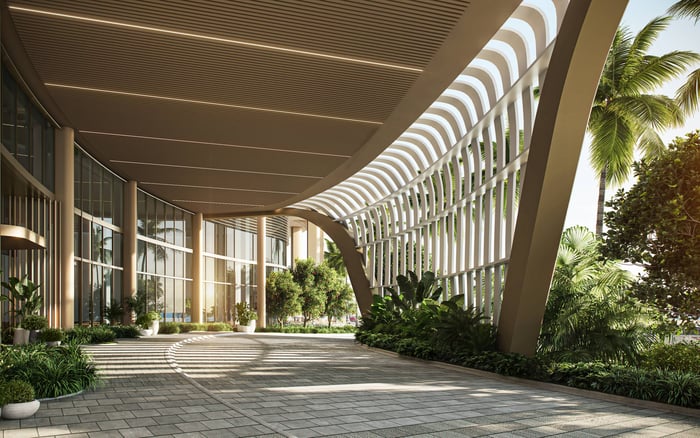
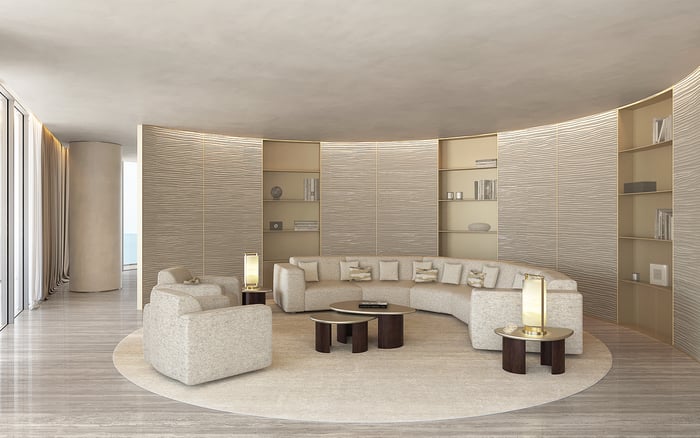
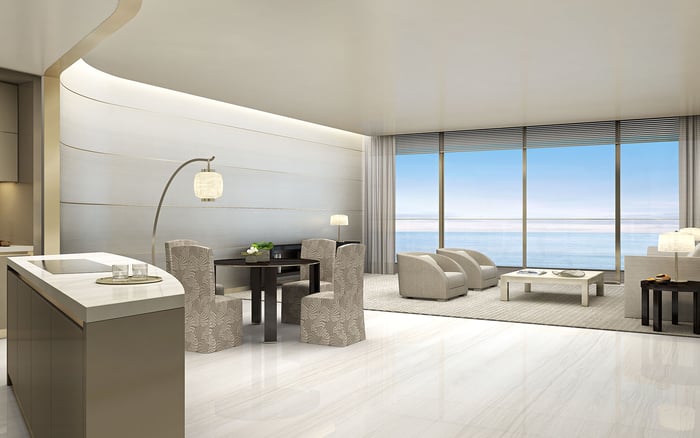
A discreet, buyer-oriented comparison of two Pompano Beach lifestyle plays: the hotel-anchored energy of W versus the design-first calm of Armani/Casa.
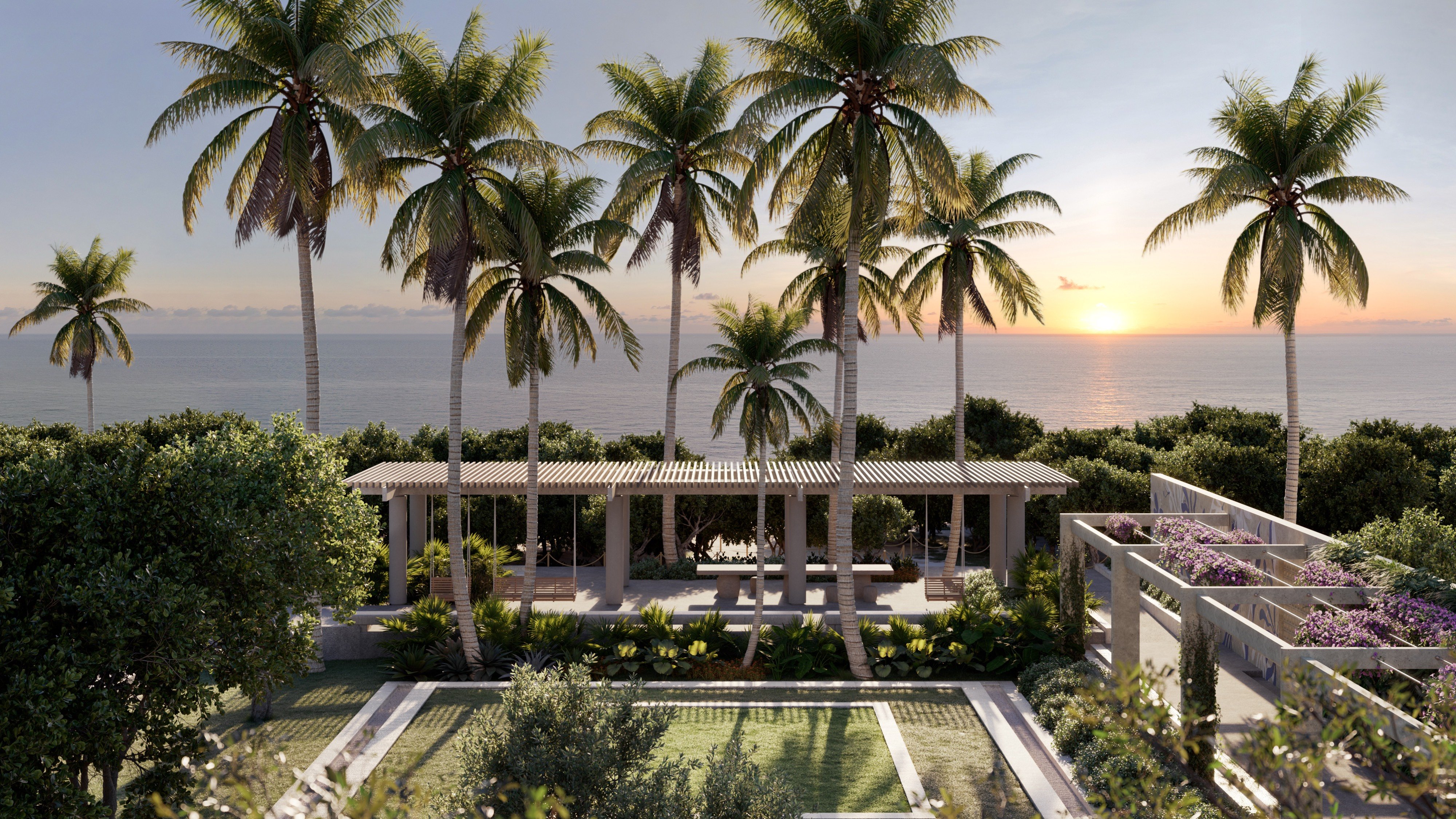
Choosing between W Pompano Beach Hotel & Residences and Armani Casa Residences Pompano Beach is less about ticking off amenities and more about the tempo you want to live with: W’s hotel-anchored, socially fluent energy versus Armani/Casa’s design-led, quiet-luxury posture.
Both sit within the same broader narrative: Pompano-beach is evolving from a value alternative into a branded, oceanfront destination where lifestyle is engineered, not improvised. For buyers who measure real estate by how it feels at 7:30 a.m., 2:00 p.m., and 10:30 p.m., this comparison ultimately comes down to identity and use.
In the ultra-premium segment, “lifestyle” is not a marketing phrase. It is an operating system defined by four fundamentals:
Arrival and ritual: how it feels to come home, and how your guests experience the threshold.
Service model: whether you live inside a hotel ecosystem or beside it, and how much assistance is embedded into the ordinary.
Social permeability: how public or private the building feels, from lobby to pool deck.
Aesthetic authority: the degree to which design direction is curated and consistent, from shared spaces to in-residence finishes.
W and Armani/Casa answer these fundamentals differently, which is precisely why the “better” choice depends on your rhythm.
W, as a brand, is built around momentum. In residence form, that momentum typically translates into a setting where hospitality becomes the backdrop to daily life: arrivals feel eventful, common areas read as active, and the building naturally supports a “ready when you are” lifestyle.
For a buyer, the lifestyle proposition at W often looks like this:
Turnkey orientation: a home that can be switched on quickly for weekends, entertaining, or spontaneous escapes.
Hosting ease: an address that makes it simple to welcome friends without turning your private residence into the entire evening’s stage.
An extrovert’s comfort: the quiet relief of being in a place where activity is expected, not disruptive.
This can be especially compelling for second-home owners and international buyers who want the emotional lift of a resort cadence with the control of ownership. It also fits owners who treat their residence as an extension of their social life-where meeting for a drink, stepping out, or simply being around energy is part of the appeal.
In the context of Pompano-beach, W’s proposition also tracks with the market’s broader maturation into a destination: a coastline that increasingly serves buyers who want oceanfront living without the intensity of Miami-beach.
Armani/Casa, by contrast, tends to communicate lifestyle through restraint. The value is less about what is happening at the property and more about how coherently it is composed. Design becomes the service, in a sense: finishes, proportions, and visual calm do the work of making everyday life feel elevated.
For buyers, the Armani/Casa lifestyle proposition often centers on:
Visual discipline: a consistent, intentional aesthetic that reduces noise and decision fatigue.
Privacy as default: the sense that the building is a home first, and a destination second.
A “retreat” mood: the feeling that the best part of the day begins when you close the door.
This appeals to primary-residence owners who want their home to function as a restorative environment, and to second-home owners who do not want to feel like they are living inside someone else’s vacation.
The nuance: quiet does not mean sparse. It means the building’s tone is curated. When the aesthetic is authoritative, the lifestyle can feel more personal because it is less reactive to the comings and goings around you.
Rather than forcing a winner, evaluate each property through the lens of use.
A frequent-use owner typically prioritizes consistency, privacy, and a sense of “my home.” Armani/Casa’s design-first approach can translate into a calmer week-to-week experience, especially for buyers who work remotely or entertain in smaller, more deliberate settings.
W can absolutely work for frequent use, but it tends to suit those who enjoy a more kinetic environment or prefer the convenience of hospitality adjacency. If you like living where a sense of occasion is baked in, W’s energy can be a feature, not a compromise.
Weekend owners often value speed and simplicity: lock-and-leave confidence, frictionless arrival, and the ability to host without overplanning. W’s hotel-forward posture typically supports this with ease.
Armani/Casa can be equally turnkey, but the emotional payoff is different. You arrive for quiet, for design, for the feeling of stepping into a composed environment that resets you.
W naturally supports entertaining because the social architecture is already there. You can keep your residence private while still meeting friends in shared spaces that feel like an extension of the neighborhood’s best venues.
Armani/Casa supports entertaining of a different kind: smaller dinners, longer conversations, a more intimate “home as salon” energy. The lifestyle is curated around your interior world rather than the building’s public one.
Both can be discreet in the practical sense, but Armani/Casa generally signals discretion as an ethos. If you prefer a low-friction, low-visibility life where the building itself does not announce your movements, the design-led quiet can feel more aligned.
Pompano-beach is increasingly evaluated as a coastal alternative that sits between the cultural intensity of Miami-beach and the traditional polish of Palm-beach. The buyer profile here often wants oceanfront air, newer product, and a more relaxed social contract.
This corridor is also being reshaped by a broader branded-residence wave across South Florida. If you are comparing Pompano options, it can be useful to calibrate them against other branded or design-led benchmarks in the region, even if you have no intention of buying there.
For example, the hospitality-residence model finds a parallel in The Ritz-Carlton Residences® Pompano Beach, where service expectations become part of value. Meanwhile, if your north-south search expands, the design-and-wellness sensibility some buyers seek can be explored in other submarkets such as Four Seasons Hotel & Private Residences Fort Lauderdale.
The point is not equivalence. It is clarity: you are not only buying a view-you are buying a behavioral pattern.
With the Fact Table empty, it is smarter to avoid specific amenity claims and focus on what sophisticated buyers actually experience: how amenities choreograph your day.
At W, amenities typically function as social infrastructure. You use them as a bridge between private life and public enjoyment. The building’s shared spaces become part of your lifestyle toolkit for spontaneity.
At Armani/Casa, amenities tend to feel like extensions of the home’s composure. You use them to protect your calm, preserve routines, and elevate simple rituals. The shared spaces support continuity rather than buzz.
A practical way to test the difference is to imagine a normal Saturday:
At W: you might feel pulled outward, toward the shared realm, toward a sense of scene.
At Armani/Casa: you might feel pulled inward, toward a quieter sequence-coffee, ocean air, clean lines, and a slower pace.
Neither is better. They are different expressions of luxury.
Many buyers arrive at this comparison with mixed intent: personal use plus optional rental income or future flexibility. Without verified rental policy details, the most responsible guidance stays conceptual.
Primary residence: Armani/Casa often resonates when you want “home” to be the headline, with lifestyle as a quiet multiplier.
Second-home escape: W often resonates when you want your building to deliver an immediate vacation-state without needing to curate it yourself.
Portfolio logic: branded residences can hold value through recognizability and consistent positioning, but your best hedge is always alignment with real use. Misalignment is where regret forms.
If you are actively comparing additional Pompano new-construction options, a third reference point can help sharpen your preferences: Ocean 580 Pompano Beach offers another lens on how the market is expressing “new coastal luxury” beyond the major brand narratives.
In private showings, the decision often becomes obvious in a surprisingly small moment. It can be the lobby temperature, the sound profile, the pace of movement at the entrance, or the way you imagine returning after travel.
Ask yourself three questions:
Do I want my building to energize me or quiet me?
Do I want my social life to be supported by the property’s ecosystem or contained within my residence?
Do I want my home to feel like a destination or a sanctuary?
Answer these cleanly, and W versus Armani/Casa becomes less of a comparison and more of a self-portrait.
Which is better for a second home in Pompano-beach? W often suits a “switch-on weekend” rhythm, while Armani/Casa favors a quieter reset.
Which feels more private day to day? Armani/Casa generally reads as more sanctuary-oriented, with a calmer social profile.
Is W Pompano Beach more hotel-like? Yes-its lifestyle proposition typically leans into hospitality energy and shared-space buzz.
Does Armani/Casa mean the interiors are more design-driven? The brand positioning is design-led, and the daily experience tends to emphasize visual calm.
Which is better for entertaining guests? W supports hosting through a more social building rhythm; Armani/Casa suits intimate gatherings.
How should I compare them if I also like Miami-beach? Use Miami-beach as a lifestyle benchmark, then decide if you want that intensity or less of it.
What if I want a similar service-forward feel elsewhere in Broward? Consider how other branded options like Fort-lauderdale offerings express hospitality-adjacent living.
Are branded residences always a safer investment? Branding can support positioning, but long-term satisfaction tracks most closely to lifestyle fit.
Should I also look at other Pompano new-construction? Yes-touring a third project can clarify whether you prefer brand energy or a quieter profile.
What is the fastest way to decide between the two? Visit at the time of day you most live your life, then choose the place that matches your pace.
For a discreet conversation and a curated building-by-building shortlist, connect with MILLION Luxury.
If branded residences are on your mind — as a home or as an allocation — we would be glad to share what we are seeing, privately.
Begin a quiet conversation