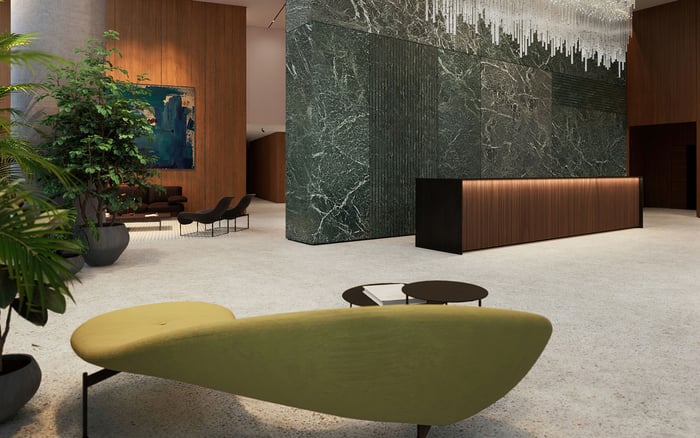
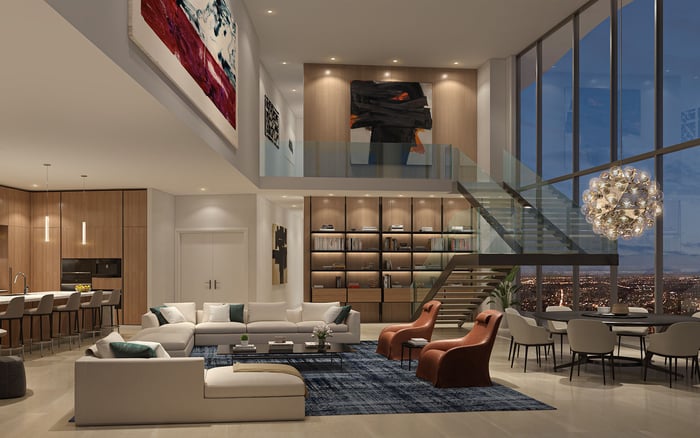
A buyer-oriented comparison of Villa Miami and Casa Bella by B&B Italia Downtown Miami, framed around design appetite, neighborhood rhythm, and the social energy discerning residents may want from downtown-adjacent living.
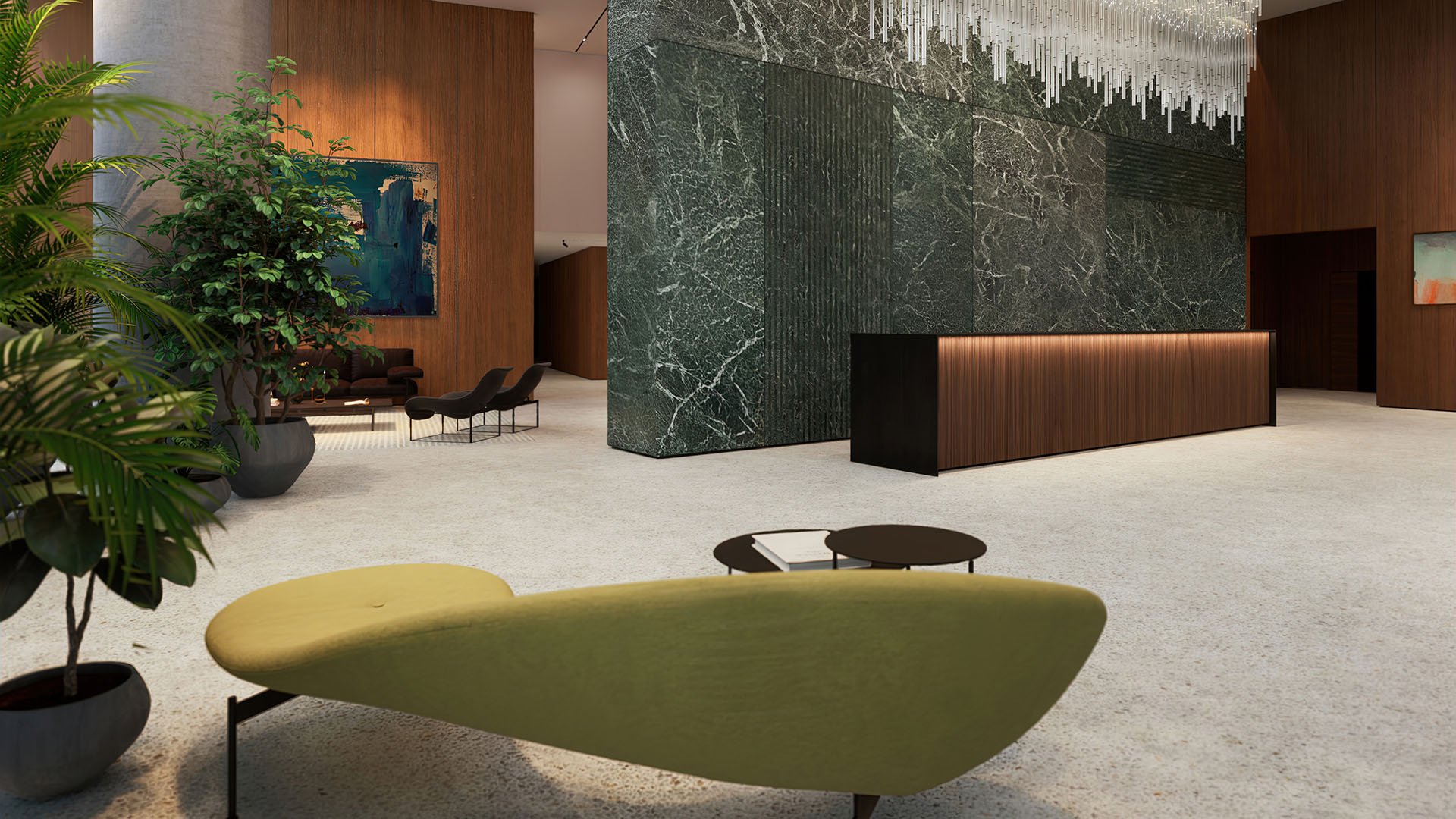
For buyers studying Miami’s most design-conscious residential offerings, the question is not simply which tower is more beautiful. It is which social mood feels more livable. Villa Miami enters the conversation from Edgewater, a neighborhood that has become one of Miami’s most closely watched residential corridors for buyers who want proximity to the city without giving up the softer rhythm of bay-facing living. Casa Bella by B&B Italia Downtown Miami, by contrast, carries a name that places design identity immediately at the center of the buyer’s imagination.
That distinction matters. At the upper tier of Miami real estate, the most sophisticated purchasers are rarely choosing by floor plan, amenity count, or skyline height alone. They are choosing the texture of daily life. How formal is the arrival? How active does the lobby feel? Does the building encourage sociability, privacy, cultural access, or retreat? These are not decorative questions. They determine whether a residence remains satisfying after the initial excitement of acquisition fades.
The fairest way to frame Villa Miami vs Casa Bella by B&B Italia is through lifestyle temperament. One reads as Edgewater’s polished, residentially grounded proposition. The other, represented by Casa Bella by B&B Italia Downtown Miami, belongs to the broader Downtown design conversation, where architecture, cultural access, restaurants, and city energy are often part of the appeal. Both can attract buyers who care deeply about aesthetics. They simply suggest different ways of being at home in Miami.
Edgewater has a distinct appeal for buyers who want a central Miami address with a less corporate cadence than Brickell and a more residential mood than the densest pockets of Downtown. It is close to the urban core, yet often feels more connected to water, horizon, and the private rituals of high-rise living. For that reason, Villa Miami’s location under the Edgewater banner is not a minor detail. It is a signal about lifestyle.
The buyer drawn to Villa Miami may be seeking balance: city access paired with personal decompression. The neighborhood can support a daily routine that moves easily between private residence, waterfront outlook, design district adjacency, and downtown engagements, without feeling fully absorbed by office-tower intensity. This is where the project’s appeal becomes emotional as much as geographic.
In this context, comparison with Aria Reserve Miami is useful not because the buildings should be reduced to the same proposition, but because both sit within the Edgewater conversation that has elevated the neighborhood among luxury buyers. Edgewater is no longer merely an alternative to established prime districts. It is a preference for those who like Miami at a slightly more contemplative angle.
Casa Bella by B&B Italia Downtown Miami speaks to a different instinct. Its name foregrounds design and Downtown, a pairing that appeals to buyers who want their residence to feel plugged into the city’s cultural and architectural momentum. This is not necessarily a louder lifestyle, but it is a more urban one. The buyer here may place a premium on immediacy, restaurants, performance venues, business access, and the sensation of living within a vertical city.
Because the comparison is design-led, it is tempting to focus on brand language alone. A more useful lens is how design functions socially. Some buildings use design to create calm. Others use it to create presence. A Downtown design residence can feel like an extension of a collector’s life, a place where art, interiors, wardrobe, hospitality, and view converge into a curated urban identity.
That same Downtown buyer may also be studying Aston Martin Residences Downtown Miami or Waldorf Astoria Residences Downtown Miami, not because these projects are interchangeable, but because they occupy the same mental map of branded, skyline-conscious living. The common thread is not a single aesthetic. It is the desire for a residence that feels internationally legible the moment one arrives.
The phrase “social mood” may sound intangible, but experienced buyers recognize it quickly. It is the difference between a building where residents pass through with discretion and one where the public rooms become a stage for recognition. It is the difference between a home that feels like a private salon and one that feels like an address with a pulse.
Villa Miami’s Edgewater positioning suggests an owner who wants access without constant exposure. The appeal is not withdrawal from Miami, but a more measured relationship with it. Dinner, art, business, and airport movement remain within reach, while home can still read as refuge.
Casa Bella by B&B Italia Downtown Miami suggests a buyer more comfortable with the Downtown rhythm, especially when design is part of personal identity. For some, the ideal residence is not only a retreat. It is a statement about taste, cultural confidence, and urban fluency. This is the buyer who may prefer the city’s energy just below the elevator bank.
Neither mood is superior. The more relevant question is how often one entertains, how much anonymity one wants, how sensitive one is to neighborhood intensity, and whether the home is meant to be a primary residence, seasonal base, or part of a broader portfolio.
High-end buyers often receive abundant visual material, but the strongest comparison starts with personal use. Walk through a normal week. If the residence is primarily for quiet mornings, family visits, wellness routines, and measured evenings, Edgewater may feel naturally aligned. If the residence is meant to support business dinners, cultural outings, late arrivals, and a stronger city cadence, Downtown may be more compelling.
Arrival sequence should be studied closely. In luxury buildings, the experience from curb to elevator often reveals the true personality of the address. A buyer should consider whether the building feels ceremonial, private, social, or highly serviced. Those impressions are difficult to change later.
Views also need to be considered as lifestyle, not just scenery. Some buyers want expansive water and sky as a daily reset. Others prefer skyline drama, city lights, and the sense of Miami in motion. The difference can shape everything from furniture planning to sleep quality.
Finally, consider resale psychology. New-construction buyers in Miami are increasingly attentive to identity. A project with a clear design language, neighborhood thesis, and buyer profile can be easier to understand in the future than one that feels generic. Ultra-modern finishes alone are not enough. The building must have a coherent social and architectural point of view.
Villa Miami may be the better fit for the buyer who wants centrality without the full intensity of the urban core. It suits the person who values design, but also wants the residence to feel composed, personal, and slightly removed from Downtown’s constant movement. Its Edgewater context gives it a softer residential argument while keeping the city close.
Casa Bella by B&B Italia Downtown Miami may resonate with a buyer who wants design identity to be immediately apparent and who likes the cultural charge of Downtown living. It can appeal to someone who sees the residence as part of a larger urban lifestyle, shaped by dining, art, business, and the choreography of a highly visible city center.
The decision should not be reduced to which name carries more cachet. At this level, cachet is expected. The better question is whether the buyer wants home to quiet the city or amplify it. That answer will usually point more clearly than any brochure language.
Is Villa Miami in Edgewater? Yes. Villa Miami is positioned as an Edgewater Miami residential project.
Is Casa Bella by B&B Italia Downtown Miami a design-focused option? Its name places design identity at the center of the conversation, especially for buyers comparing Downtown residences.
Which project is better for a quieter lifestyle? Villa Miami may feel more aligned for buyers seeking a central address with a more residential Edgewater mood.
Which project is better for a more urban rhythm? Casa Bella by B&B Italia Downtown Miami may suit buyers who prefer a Downtown setting and a design-forward urban identity.
Should buyers compare amenities first? Amenities matter, but buyers should first understand privacy, arrival sequence, neighborhood rhythm, and daily use.
Does Edgewater feel different from Downtown? Yes. Edgewater is often chosen for central access with a softer residential atmosphere, while Downtown tends to feel more active.
Is this mainly a primary-residence decision? Not always. The right fit depends on whether the home will serve as a primary base, seasonal residence, or portfolio asset.
How important is the building’s social mood? Very important. Social mood affects privacy, entertaining, daily comfort, and long-term satisfaction.
Should design branding drive the purchase? It should inform the decision, but the building’s actual lifestyle fit should carry more weight than branding alone.
What should buyers do before choosing? They should compare the neighborhood cadence, arrival experience, view orientation, and how each residence supports a normal week.
For a confidential assessment and a building-by-building shortlist, connect with MILLION.
If branded residences are on your mind — as a home or as an allocation — we would be glad to share what we are seeing, privately.
Begin a quiet conversation