A buyer-focused guide to evaluating view premiums at Viceroy Brickell before signing, with emphasis on sightline durability, floor value, contract review, and disciplined resale thinking.
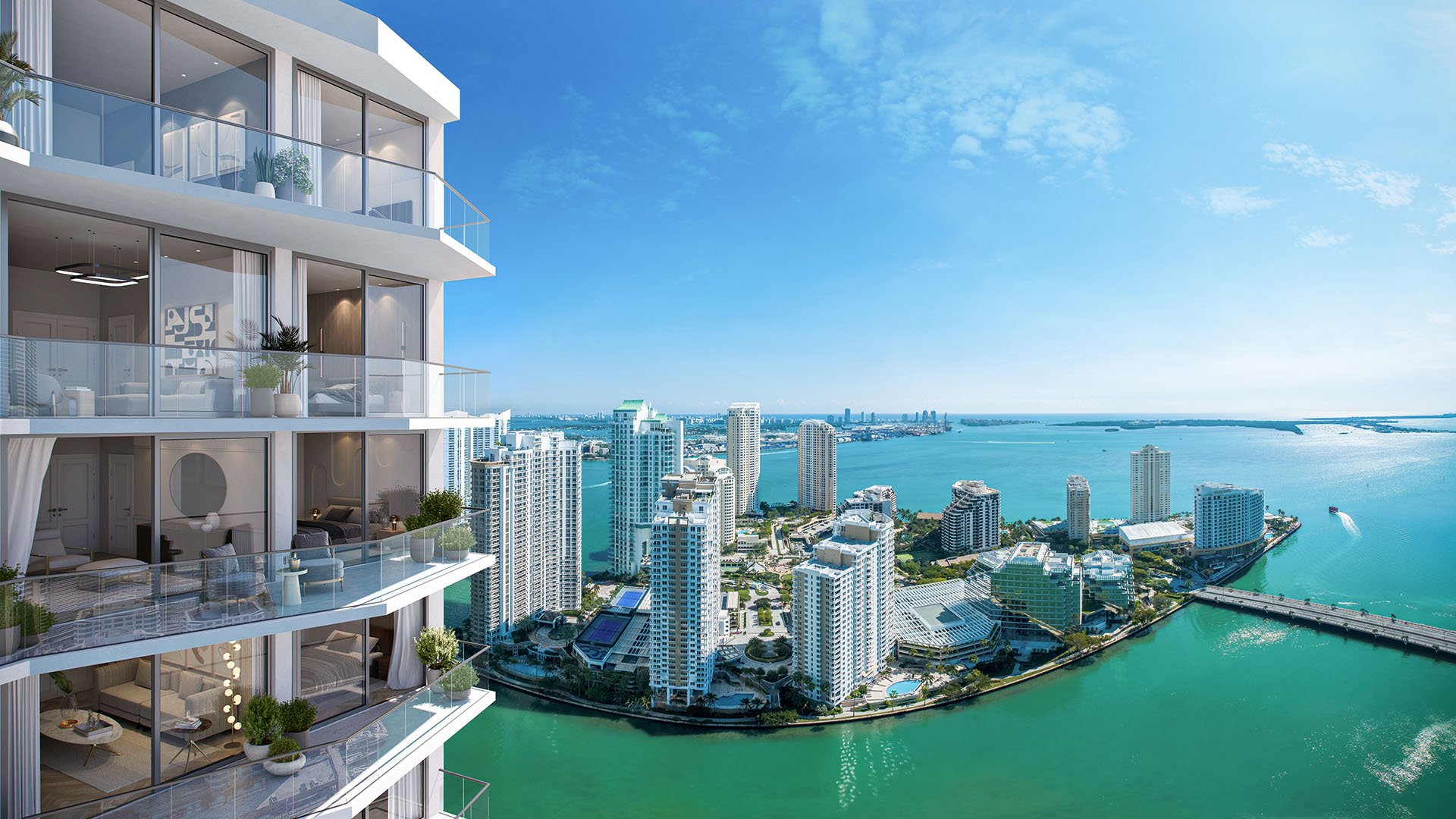
At the top end of Brickell, a view is rarely just scenery. It is part architecture, part liquidity, part daily ritual, and part future resale narrative. For a buyer considering Viceroy Brickell, the essential question is not simply whether a residence has a compelling outlook. It is whether the premium attached to that outlook is disciplined enough to hold through the full ownership cycle.
View premiums can become emotional quickly. A sunset angle, a sweep of water, a glowing skyline, or the impression of height can create urgency before the practical review is complete. That is exactly when the strongest buyers slow down. Before contract, the view should be evaluated as its own asset within the purchase, distinct from finishes, amenities, brand, floor plan, parking, and the broader appeal of Brickell.
This matters even more in Pre-construction and New-construction conversations, where buyers may be making decisions from renderings, sales materials, floor plans, and site context rather than the final lived experience. The premium must be tested against durability, comparability, and exit value, not personal preference alone.
The first step is to assign mental value to two separate components: the home itself and the view condition. A beautifully planned residence can justify a strong price without the most dramatic exposure, while a visually exciting outlook may not overcome a layout that feels compromised. In a disciplined review, the buyer asks what portion of the price is being paid for the view and whether that portion is defensible.
This is not a purely mathematical exercise. Luxury real estate is intimate, and the best residences often have qualities that resist simple calculation. Still, the view premium should be clearly identified. If two comparable floor plans differ meaningfully in price because of orientation, elevation, or outlook, the buyer should understand what is being purchased: open water, skyline drama, privacy, light, height, or simply a more marketable story.
For an Investment-minded buyer, that distinction is critical. A view that photographs beautifully may help future marketing, but a view that also feels private, quiet, and enduring can support broader buyer confidence. The most resilient premiums tend to be attached to views that are difficult to replicate and easy to understand.
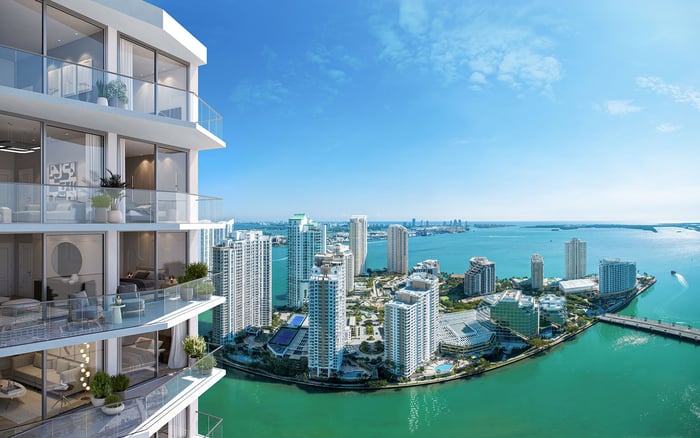
A strong Waterview at one moment of the day may perform differently at another. Morning brightness, afternoon glare, evening reflection, neighboring window exposure, and the rhythm of surrounding buildings all shape the lived experience. Buyers should ask how the outlook functions in actual use: from the primary bedroom at dawn, from the living room in full sun, from the terrace at dinner, and from the main entertaining space after dark.
The distinction between a beautiful view and a livable view is subtle but important. Some outlooks are cinematic yet harsh. Others are quieter, more layered, and more valuable over time because they support daily comfort. In Brickell, where vertical living is central to the residential identity, a buyer should consider how the view interacts with glass, ceiling height, balcony depth, privacy, and furniture placement.
A view premium also needs a hierarchy. Direct, protected, and wide views generally feel different from partial, angled, or corridor views. Skyline energy is not the same as water openness. Height is not the same as privacy. A disciplined buyer does not collapse all premium exposures into a single category.
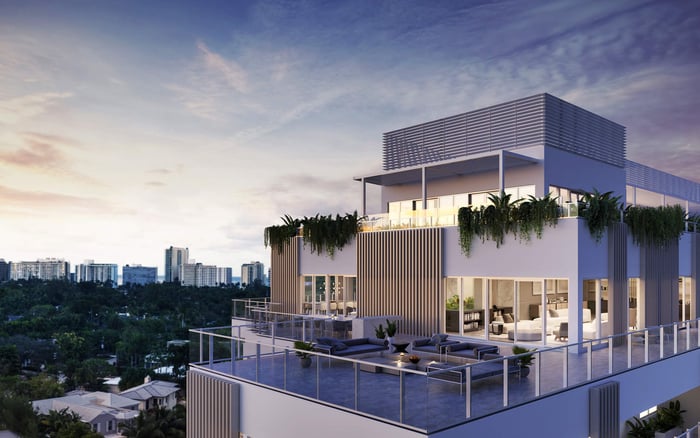
High-floors often command attention because height suggests prestige, light, and openness. Yet elevation alone does not guarantee the strongest premium. The correct question is whether the higher position materially improves the outlook, privacy, sound profile, and future resale story enough to justify the added cost.
In some cases, High-floors may offer a broader horizon and a cleaner sense of separation from the street. In others, the difference between a middle elevation and a higher elevation may be less meaningful than the price gap suggests. Buyers should compare not only what changes upward, but also what remains essentially the same.
Low-floors deserve the same thoughtful review. They may provide a stronger relationship to the urban fabric, a more grounded sense of place, or a price position that improves the overall value equation. The concern is not that Low-floors are automatically inferior. The concern is whether their view limitations are already reflected in the price and whether future buyers will understand the residence on its own merits.
The most disciplined outcome is not always the highest floor. It is the floor where the view, floor plan, price, and future audience align cleanly.
Before contract, a buyer should examine the language and materials that define what is actually being purchased. If the view is central to the decision, the buyer should understand what is fixed, what is illustrative, and what remains subject to change. Rendered impressions, model experiences, and general orientation descriptions should be treated differently from binding contract terms.
The goal is not to eliminate every uncertainty. In new development, some uncertainty is part of the purchase. The goal is to avoid paying a premium for an assumption that has not been adequately tested. Buyers should focus on the plan, line, elevation, exposure, terrace condition, adjacent context, and any language that addresses changes in design, materials, or surrounding conditions.
This is also where a buyer should separate brand appeal from view discipline. A compelling hospitality or lifestyle association can elevate the ownership experience, but it should not blur the analysis of a specific residence. The view premium must stand on its own.
Luxury purchases are personal, but resale is comparative. The next buyer will not pay for the emotion of the original selection. They will compare the residence against competing inventory, alternative buildings, newer offerings, and other view conditions available at that time.
That future buyer will likely ask direct questions. Is the view immediately legible? Does it feel private? Does the premium make sense compared with similar residences? Does the floor plan let the view dominate the most important rooms? Is the terrace usable or merely decorative? Does the outlook enhance the sense of arrival each time the door opens?
If the answer to those questions is consistently yes, the view premium has a better chance of holding its place in the value stack. If the premium depends on explanation, optimism, or narrow personal taste, the buyer should be more cautious.
For Viceroy Brickell, the disciplined approach is to begin with the desired lifestyle, then test whether the specific residence supports it without overpaying for visual drama. A buyer who entertains often may prioritize the view from the living room and terrace. A buyer who uses the residence as a primary home may place greater weight on bedroom privacy, glare control, storage, and daily comfort. A second-home buyer may care most about instant arrival impact and low-friction ownership.
The cleanest decisions usually follow a layered review: first plan quality, then exposure, then elevation, then view durability, then price. If the sequence begins with the view alone, the buyer risks rationalizing weaknesses elsewhere. If the sequence ignores the view, the buyer may miss the emotional feature that drives future demand.
Brickell rewards precision. The neighborhood’s appeal is not only vertical glamour, dining, offices, and water proximity. It is the ability to choose a residence that feels both connected and private. Before contract, view premium discipline is the difference between buying a beautiful outlook and buying the right residence.
What is a view premium in a luxury condo purchase? It is the added value attributed to outlook, exposure, elevation, privacy, and visual quality beyond the residence itself.
Should I pay more for High-floors at Viceroy Brickell? Only if the higher elevation creates a clearly better view, stronger privacy, and a resale story that justifies the added cost.
Are Low-floors always less desirable in Brickell? No. Low-floors can be compelling if the price reflects the view condition and the residence has strong layout, light, and usability.
How should I evaluate a Waterview before contract? Consider openness, angle, privacy, glare, room placement, terrace usability, and whether the view feels durable over time.
Is Pre-construction view analysis different from resale analysis? Yes. Pre-construction often requires closer attention to plans, orientation, contract language, and assumptions about the completed experience.
Can a strong view compensate for a weaker floor plan? Sometimes, but only to a point. The best premiums are supported by both a compelling outlook and a residence that lives well.
What role does Brickell play in the premium? Brickell adds lifestyle value, but neighborhood appeal should be evaluated separately from the specific premium attached to a view.
Should an Investment buyer prioritize views? A clear and marketable view can help, but price discipline and broad future buyer appeal remain essential.
What is the biggest mistake buyers make with view premiums? They fall in love with a single visual moment and fail to test whether the premium is justified across daily life and resale.
When should I make the final decision? Make it only after comparing the residence, view, floor, exposure, contract terms, and likely future buyer response together.
To compare the best-fit options with clarity, connect with MILLION.
If branded residences are on your mind — as a home or as an allocation — we would be glad to share what we are seeing, privately.
Begin a quiet conversation