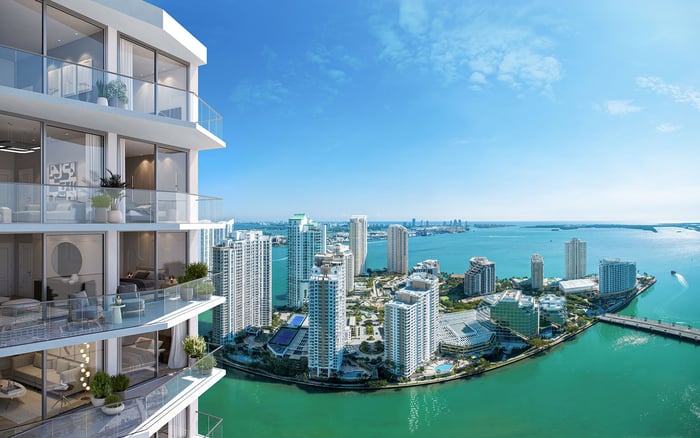
In Brickell, the difference between paying for prestige and paying for actual long-term value often comes down to one deceptively technical question: which line are you buying? For sophisticated buyers, the best purchase is rarely the highest floor at any price. It is more often the right line, with the right exposure, at a floor height that preserves sightlines without forcing an unnecessary premium.
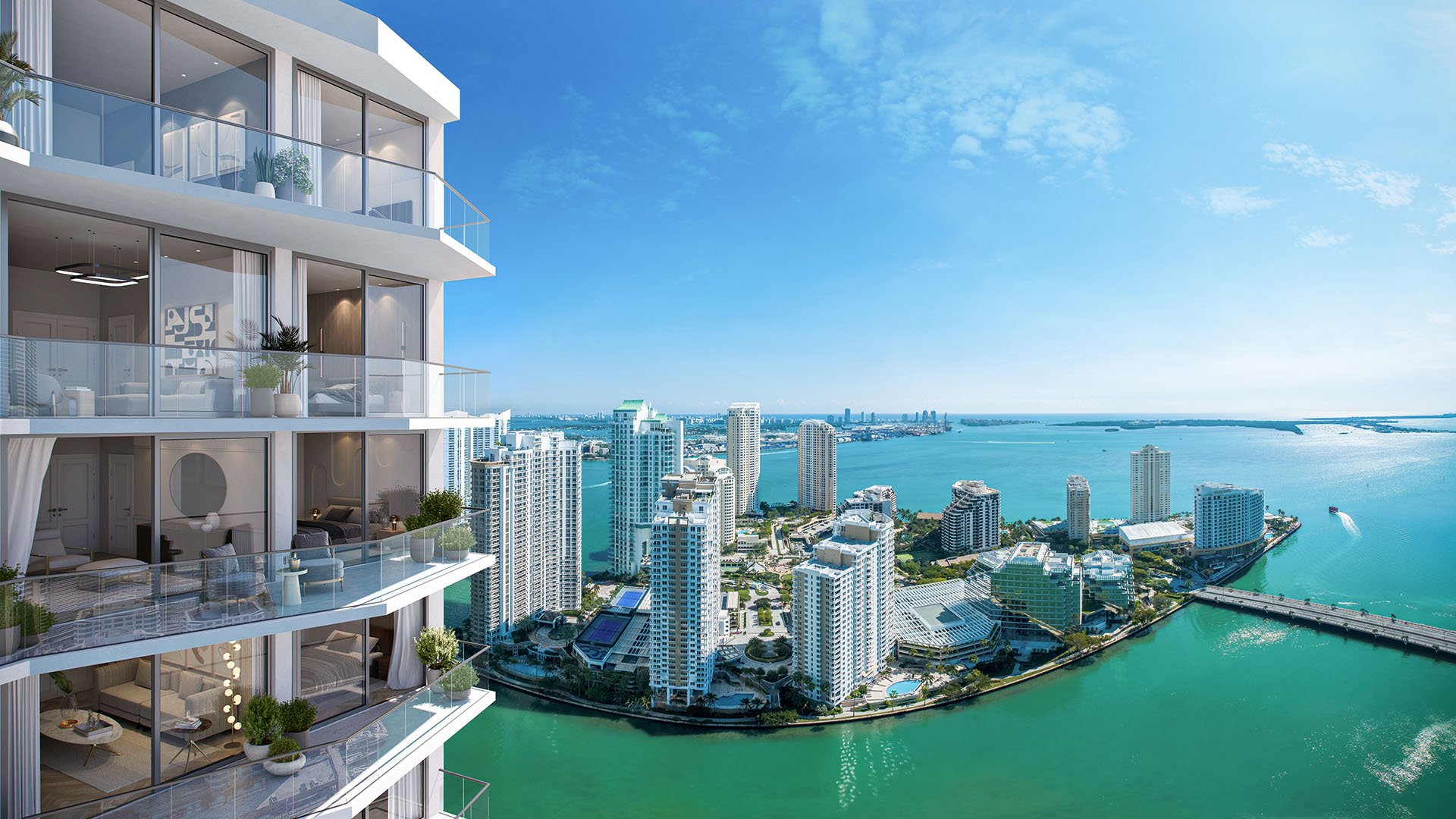
In Brickell, buyers often talk about floor level first and exposure second. In practice, that order should usually be reversed. A line is the unit’s fixed position on each floor, and that position determines whether the living room opens toward Biscayne Bay, the river, the skyline, a neighboring tower, or an amenity deck. Once that line is set, floor height refines the experience, but it does not fully rescue a compromised orientation.
That distinction matters because unobstructed bay views can command a meaningful premium over units facing streets, garages, or more internal urban outlooks. At the top of the market, fully open east-facing penthouse exposure can trade dramatically above a comparable west- or street-facing residence. Yet for many buyers, the biggest mistake is not underestimating the premium. It is paying it for a view that is partial, temporary, or overstated in listing language.
In dense Brickell, the sharpest buyers do not ask whether a residence is simply east-facing. They ask whether that specific line preserves open water, how high the unit must be to clear neighboring massing, and whether the premium being charged is justified by actual day-to-day livability.
The market generally rewards east and northeast exposure because those orientations combine the most desirable water outlooks with cooler afternoon light. They also tend to feel more removed from the street intensity that defines much of Brickell at ground level. For owner-occupants, that can mean a calmer indoor atmosphere. For investors, it often translates into broader tenant appeal and stronger resale liquidity.
South-facing units can still be beautiful, but they often come with a comfort tradeoff. Stronger sun load can affect temperature, glare, and energy use, particularly in residences with generous glass. West-facing units usually trade at a discount for a reason. Afternoon heat can be substantial, and in-person tours held in the morning rarely reveal what the apartment feels like at 4:30 p.m. in August.
North-facing homes are the market’s most interesting compromise. Along Brickell Avenue, they can offer river or skyline outlooks while preserving the district’s walkability and service profile at a lower entry point than true bay-front exposure. For buyers focused on value rather than bragging rights, a north-facing line can be an especially intelligent choice.
That logic is especially relevant in towers where layout, finish quality, and amenities already deliver the broader luxury proposition, such as Baccarat Residences Brickell, Cipriani Residences Brickell, or St. Regis® Residences Brickell, where line choice can have an outsized effect on value relative to headline pricing.
Many buyers arrive believing the highest available floor is automatically the right answer. In Brickell, that assumption can be expensive. Floor height certainly matters, and exposure premiums tend to strengthen once a residence rises above the lower obstruction band. But there is often a sweet spot where the line has already captured the meaningful view while the price has not yet entered trophy territory.
For many towers, that value zone sits around the 12th to 18th floors, assuming the line clears adjacent structures. In some premium east-facing buildings, even the 8th to 12th floors can work as a deliberate buy-down strategy, offering meaningful water presence at a materially lower basis than a much higher unit in the same stack. Above roughly the 20th floor, pricing often accelerates faster than practical lifestyle improvement.
The smarter comparison is not floor 16 versus floor 40 in the abstract. It is whether floor 16 in the superior line delivers 85 to 90 percent of the experience for a significantly lower acquisition cost. In many cases, it does.
This is particularly true when evaluating newer product such as Una Residences Brickell or The Residences at 1428 Brickell, where architectural positioning and neighboring towers can make mid-floor distinctions far more consequential than a brochure suggests.
Post-2015 density has changed the meaning of view language in Brickell. “Partial bay view” may be exactly that: a sliver. Even “east exposure” does not guarantee a clean open-water panorama. Inter-tower obstruction is now one of the most important variables in pricing, and it is often underappreciated until closing is near.
The issue is not only what stands outside today. It is also how the tower’s own parking podium, mechanical levels, and amenity decks alter effective elevation. The same numbered floor can perform very differently from one building to another. A 14th-floor apartment in one address may already clear the visual clutter. In another, it may still look directly into the massing of an adjacent structure.
This is why floor plates matter. A refined buyer should review exactly where the line sits, what direction the principal rooms face, and whether the terrace angle widens or narrows sightlines. Marketing materials often emphasize waterfront positioning while downplaying the less photogenic reality of side-angle obstructions.
If possible, tour a west-facing comparison residence late in the day and request current visual media from the actual line under consideration, not just a model unit or generic stack imagery. In Brickell, small orientation differences can create large pricing consequences.
There are times when the premium is justified. If a residence has truly open east or northeast exposure, strong privacy, and a floor height that secures permanent visual dominance, paying more can be rational. These units tend to lease faster, hold broader appeal, and see fewer price cuts in active marketing than weaker west-facing peers.
For investors, the case can be even clearer. Smaller east- or bay-facing units often outperform comparable west- or street-facing residences on both monthly rent and gross yield. East exposure can also modestly improve cap rates relative to west-facing equivalents. In a market where many buyers scrutinize carrying cost, that difference matters.
Still, not every premium is smart. A buyer should hesitate when the seller is charging open-bay pricing for a partial view, when the unit sits just below a clean sightline threshold, or when the only distinction is a higher floor in an otherwise interchangeable supertall inventory profile. Larger towers often create more negotiating leverage because similar lines repeat at scale. Mid-rises, by contrast, may have tighter supply and fewer interchangeable options.
That is one reason some buyers also explore lower-scale or less obstructed alternatives in the broader new-development conversation, from 2200 Brickell to 888 Brickell by Dolce & Gabbana, depending on whether their priority is skyline cachet, bay orientation, or long-term resale positioning.
Start with line, not floor. Identify the stacks with the cleanest relationship to the bay, river, or skyline. Then determine the lowest floor where that line truly clears nearby obstructions.
Next, compare three values: the compromised low floor, the efficient mid-floor, and the aspirational high floor. In many Brickell buildings, the middle option is where pricing discipline and visual reward align most effectively.
Then assess livability beyond the photograph. Consider afternoon heat, glare, street noise, and privacy. A discounted west-facing unit is not necessarily a bargain if it feels warmer, louder, and harder to lease. Likewise, a north-facing residence may be a stronger long-term buy than a poorly angled east-facing one that only gestures toward the bay.
Finally, treat exposure premiums as building-specific, not universal. North Brickell can present clearer sightlines than denser southern pockets. A line that is worth a premium in one tower may be only average in another. The luxury move is not paying the most. It is understanding exactly what the premium is buying.
What is a line in a Brickell condo? A line is the unit’s fixed position on each floor, which determines its orientation, sightlines, and relative privacy.
Which exposure is usually best in Brickell? East and northeast exposure are generally the most sought-after because they combine water views with cooler afternoon light.
Are west-facing units always a bad idea? No, but they are usually more niche. Some high-floor west units appeal for skyline and sunset views, though heat and glare remain concerns.
Is the highest floor always the best buy? Not necessarily. A mid-floor in the right line often delivers similar visual impact for meaningfully less money.
What floor range can offer the best value? In many cases, floors 12 through 18 are a strong value play if the line already clears nearby obstructions.
Do partial bay views deserve the same premium as open bay views? Usually not. The largest premiums are typically reserved for truly unobstructed water outlooks.
Why should I tour at different times of day? Afternoon visits reveal heat, glare, and lighting conditions that a morning showing may completely hide.
Can north-facing units still be desirable? Yes. They can offer river or skyline views and a lower purchase price while keeping you in a highly walkable Brickell location.
Does exposure affect rental performance? It can. East and northeast-facing units often attract stronger tenant demand and can support better leasing velocity.
What is the smartest way to avoid overpaying for a view? Verify the exact line, confirm the sightline in person, and pay for a proven mid-floor view before stretching for a trophy floor on assumption alone.
To compare the best-fit options with clarity, connect with MILLION Luxury.
If branded residences are on your mind — as a home or as an allocation — we would be glad to share what we are seeing, privately.
Begin a quiet conversation