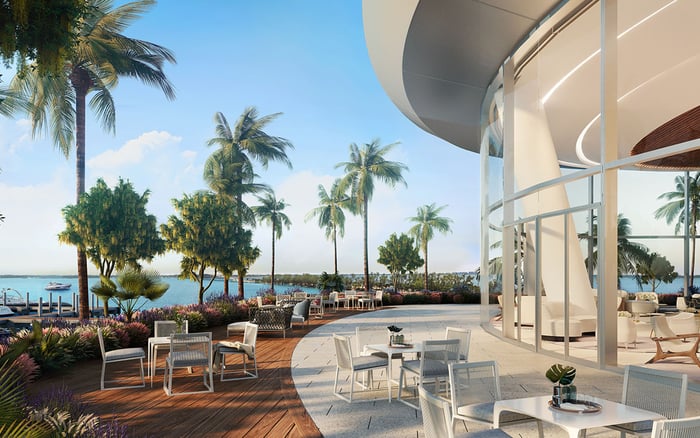
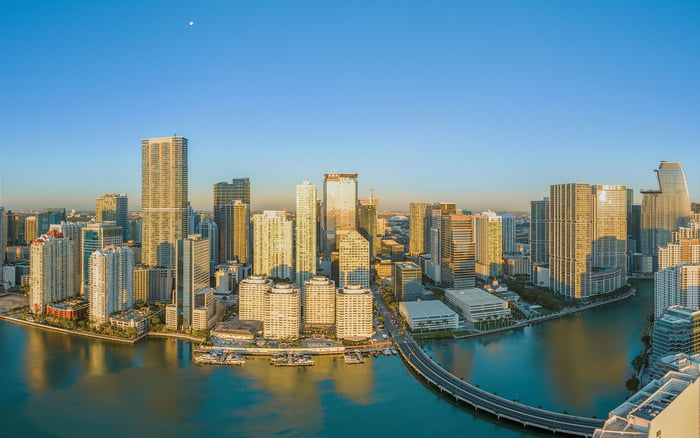
A branded residence is not automatically a single asset class. When one brand appears across fully serviced hotel residences, lighter lifestyle offerings, and more private residential formats, buyers should value the operating model as carefully as the architecture, location, and finish level.
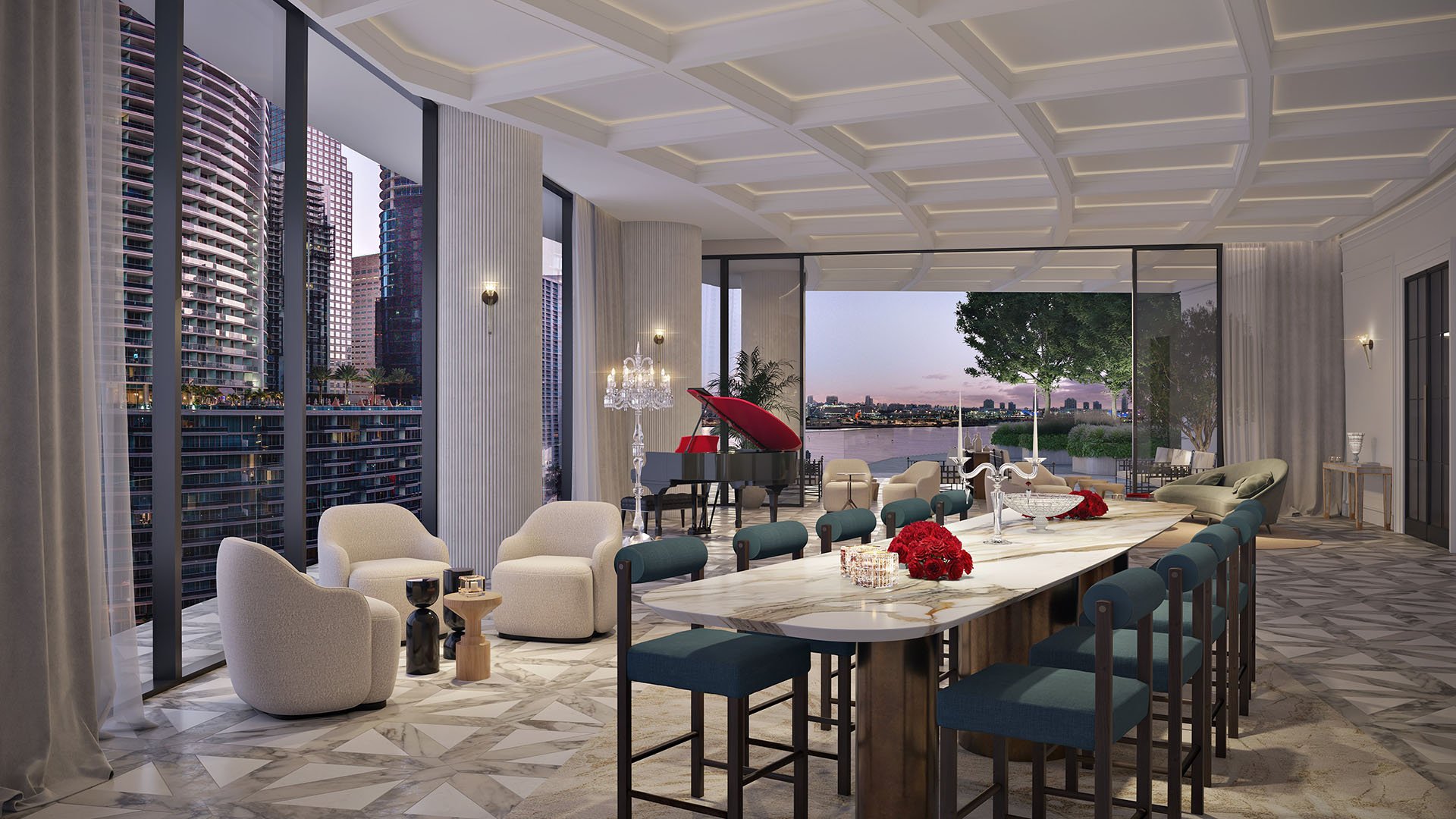
In the upper tier of South Florida real estate, branding can be meaningful, but it is rarely enough on its own. A familiar hospitality or fashion name may signal design intent, service ambition, and market visibility. Yet once a brand expands across multiple residential formats, the label is no longer a clean proxy for value. One address may operate like a private residential enclave with discreet staffing and a tightly curated amenity program, while another under the same brand may lean toward a more hotel-adjacent, lifestyle-driven structure.
For buyers, that distinction matters. The real question is not whether a residence is branded. It is what, precisely, the brand is obligated to deliver, how that promise is administered, and whether the ownership experience supports long-term pricing power.
That is especially relevant in South Florida, where branded inventory spans very different submarkets and buyer profiles. A purchaser considering 888 Brickell by Dolce & Gabbana is evaluating a proposition that may be interpreted differently from a buyer focused on The Ritz-Carlton Residences® West Palm Beach or The Surf Club Four Seasons Surfside. The logo may be the headline, but the operating model is where value either holds or erodes.
When a brand has multiple service models, the first task is to identify the exact form of service attached to the residence. Buyers should separate broad branding language from practical daily realities.
Ask whether the property functions as a primarily residential building with hospitality influence, a hotel-branded residence with robust service integration, or a lifestyle concept where branding is strongest in design, programming, and marketing identity. These distinctions affect staffing intensity, amenity usage, privacy, reservation priority, and owner expectations.
A residence with a deeper service stack can feel materially different in day-to-day ownership. Concierge responsiveness, valet consistency, in-residence dining potential, housekeeping availability, and amenity management all shape the lived product. If the market perceives one model as substantially more complete than another, buyers will often pay for that certainty.
This is why like-for-like comparison matters. A home at St. Regis® Residences Brickell should not be viewed through the same lens as an unrelated branded concept simply because both carry globally recognizable names. In Brickell, where brand competition is part of the market story, the service blueprint often matters more than the badge.
True value in a branded residence often sits inside the documents buyers are tempted to skim. Brand licenses, management agreements, condominium documents, house rules, and fee structures determine whether the brand promise is substantial or merely aesthetic.
The most important question is simple: what is mandatory, what is optional, and what can change? If core services are subject to revision, if staffing standards are not clearly defined, or if brand affiliation can be altered more easily than buyers assume, the premium may warrant a discount.
Similarly, buyers should examine how costs are allocated. A stronger service model can justify higher carrying costs, but only if the service itself is durable, coherent, and visible in the ownership experience. If fees are elevated while the operational offering is diffuse, the market may eventually compress the premium on resale.
In Bay Harbor and Coconut Grove, where lifestyle positioning is increasingly nuanced, this analysis is just as important as in traditional hotel-branded towers. A wellness-oriented concept such as The Well Bay Harbor Islands appeals to a different buyer than a classic hospitality-led model, and the value proposition should be measured against the exact obligations the building is structured to maintain.
One of the most common valuation errors in branded residences is the use of broad, flattering comparables that share prestige but not structure. If the brand itself has multiple service models, this error becomes even more pronounced.
The cleanest approach is to narrow comparables by four filters. First, match the submarket. Second, match the building age and design caliber. Third, match the service intensity. Fourth, match the ownership framework, especially where rental flexibility, hotel access, or membership-style programming may affect use.
A branded residence with lighter services may still command a premium over an unbranded peer because branding can support visibility and buyer confidence. But it may not deserve the same premium as a sister property with fuller staffing, stronger amenity control, and a more established operating identity. That difference can become decisive in a softer resale environment, when buyers stop paying for abstraction and start paying for evidence.
For this reason, South Florida purchasers should compare a property not only to nearby luxury condominiums but also to the closest branded assets with genuinely similar operational depth. In Miami Beach, for example, a buyer looking at Setai Residences Miami Beach would want to distinguish between hospitality-rich ownership and a more design-led branded alternative that offers a different cadence of service.
The most resilient branded premiums tend to come from execution. A name may open the door to attention, but sustained value is built through operational consistency, architectural quality, privacy, and owner satisfaction.
This is where many sophisticated buyers gain an advantage. They do not ask whether a brand is famous. They ask whether the building delivers an experience that feels expensive to replicate elsewhere. That can mean exceptional staffing culture, a calm arrival sequence, superior amenity management, or a governance structure that protects residential character.
In practical terms, the buyer should test whether the branded component improves one or more of these outcomes:
Liquidity at resale
Buyer recognition across domestic and international audiences
Confidence in service continuity
Amenity quality and maintenance standards
Prestige that is legible to the next purchaser
If the answer is vague, the premium may be more marketing-driven than asset-driven. If the answer is tangible, repeatable, and evident in owner experience, the premium may be justified.
Every acquisition at the top of the market should be underwritten twice: once for present enjoyment and once for future explanation. Branded residences with multiple service models require a particularly clear resale narrative.
A future buyer will want to understand not just the brand, but which version of the brand is attached to the home. Is this the quiet residential expression of the brand, the highly serviced hospitality expression, or the design-centric lifestyle expression? The easier that story is to tell, the stronger the resale position tends to be.
That is why clarity often supports value. Properties whose branding, service model, and buyer expectation align are generally easier to reposition in the market than properties where the branding promises one thing and the ownership reality suggests another. In areas like West Palm Beach, Brickell, and Bay Harbor, that alignment can shape the spread between admiration and actual demand.
A disciplined buyer or advisor should be comfortable asking direct questions that move past the sales narrative:
What services are included as of right, and which are subject to separate charges?
What part of the brand affiliation is permanent, and what part depends on renewable agreements?
How is the residence staffed in practice, not just in concept?
What are the limitations on use, guest access, or rental activity?
Which nearby sales truly reflect the same service model?
How does the building preserve privacy, especially if hospitality components are nearby?
The goal is not skepticism for its own sake. It is precision. In luxury real estate, confidence comes from understanding exactly what is being purchased.
Why does a brand with multiple service models require extra scrutiny? Because the same name can represent very different ownership experiences, fee structures, and resale profiles.
Is a branded residence always worth more than an unbranded one? Not automatically. The premium depends on service execution, location, governance, and buyer perception.
What is the first thing to verify? Confirm the exact service model attached to the residence and what owners actually receive on a daily basis.
Do higher fees necessarily mean higher value? No. Higher carrying costs support value only when services are substantial, consistent, and durable.
Why are comparables so difficult in this category? Because many luxury properties look similar on paper while operating very differently in practice.
Can design-led branding still add value without hotel services? Yes, if the design identity, amenity program, and market positioning are coherent and desirable.
How should buyers think about resale? Focus on whether the property's branded story will be easy for the next buyer to understand and trust.
Does the submarket still matter if the brand is global? Absolutely. Brickell, Miami Beach, and Bay Harbor each attract different buyers and pricing logic.
Should buyers rely on the brand's wider reputation? Reputation helps, but the building itself must deliver a quality level that matches the promise.
What is the simplest test of real value? Ask whether the branded component creates a better ownership experience that a future buyer will also pay for.
For a tailored shortlist and next-step guidance, connect with MILLION.
If branded residences are on your mind — as a home or as an allocation — we would be glad to share what we are seeing, privately.
Begin a quiet conversation