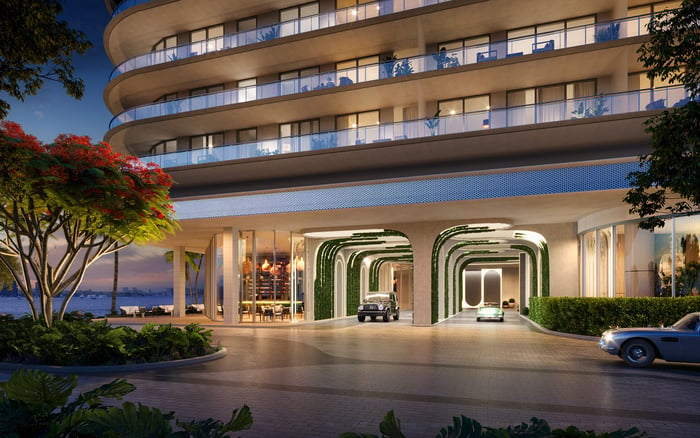
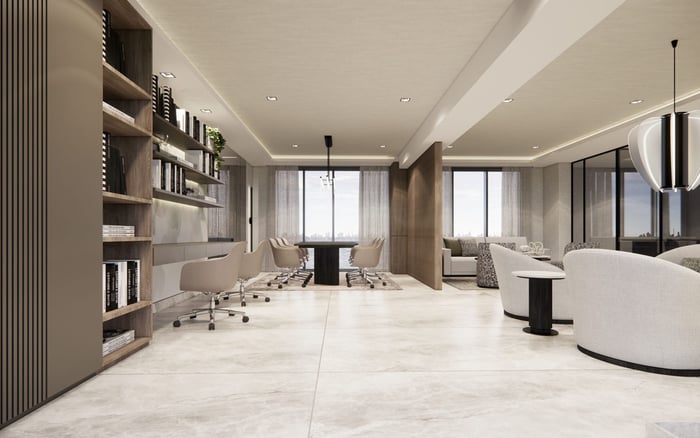
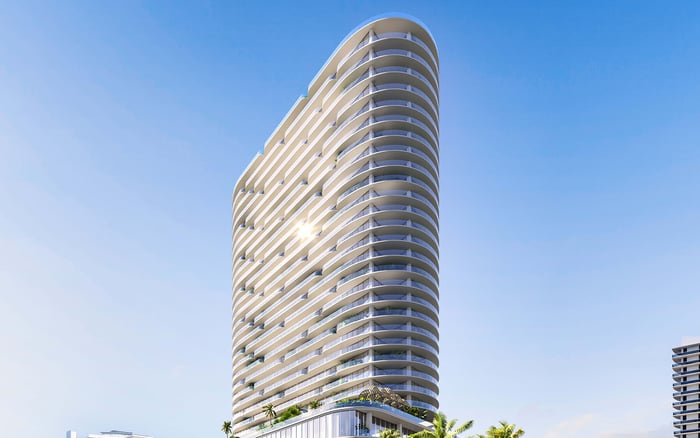
Building on waterfront ground in North Bay Village demands more than elegant design. For buyers evaluating Continuum Club & Residences North Bay Village, the unseen story is the ground itself: sand layers, variable soil conditions, water intrusion management, foundation strategy, and the long-term importance of engineering discipline in a coastal setting. This MILLION Luxury editorial examines why subgrade conditions matter, what sophisticated purchasers should ask, and how soil realities shape value, durability, and confidence in pre-construction and newly delivered luxury residences across South Florida.

In South Florida, some of the most beautiful residences rise from some of the most technically demanding land. Along the water, buyers are not simply acquiring views, terraces, and amenities. They are also buying the outcome of countless decisions made below grade, where sand, fill, groundwater, and bearing conditions shape how a building performs over time.
That is especially relevant for Continuum Club & Residences North Bay Village, where the conversation naturally extends beyond architecture to engineering discipline. At this level of the market, construction quality is not an abstract concern. It touches vibration control, waterproofing strategy, differential settlement risk, podium and parking design, and the day-to-day confidence owners feel years after delivery.
For discerning purchasers in North Bay Village, the soil question is not alarmist. It is simply part of prudent luxury due diligence.
South Florida has long built successfully on coastal and near-coastal sites shaped by sand, marine sediments, and man-made fill. The issue is not whether a site contains sand. Many do. The issue is how that condition is evaluated, modeled, and addressed through geotechnical investigation, structural engineering, and construction sequencing.
Sand can behave very differently depending on density, moisture content, depth, and the presence of other materials below it. On waterfront sites, the challenge is rarely confined to a single layer. Teams must think in systems: how the tower load transfers downward, how groundwater is managed during excavation, how retaining systems perform, and how the completed structure responds over decades.
This is why sophisticated buyers often compare a project not only with its immediate peers in new construction, but also with other coastal developments that have had to solve similar subgrade conditions. In that broader South Florida context, residences such as Pagani North Bay Village and Shoma Bay North Bay Village belong to the same regional conversation about engineering rigor on premium waterfront land.
When buyers hear the phrase soil composition, they often think only of pilings or footings. In reality, the implications are broader.
First, soil and subsurface conditions influence excavation complexity. High groundwater and coastal proximity can affect dewatering plans, temporary support systems, waterproofing details, and below-grade construction logistics. Second, they shape how a project manages movement, both during construction and over the long term. Third, they can affect maintenance planning, especially where water management systems, slabs, garage areas, and waterfront edges require ongoing attention.
For pre-construction buyers, this matters because engineering decisions made early may never be visible in the finished residence, yet they influence performance long after the sales gallery has closed. The best luxury purchases are not simply beautiful at turnover. They remain composed, quiet, and resilient in daily use.
That broader lesson is consistent across premium waterfront development: at the highest tier, invisible engineering is part of the product.
A luxury purchaser does not need to become a geotechnical engineer. But asking sharper questions can materially improve decision-making.
Start with the development team’s approach to subsurface investigation. Buyers should want clarity on whether site conditions were studied thoroughly enough to inform foundation design and water management. The precise technical answers belong to consultants and project professionals, but the buyer’s role is to confirm that this work was treated as central, not incidental.
Next, ask how the project addresses waterproofing, below-grade durability, and long-term maintenance. In a waterfront environment, resilience is not a marketing theme. It is an operating principle. This is particularly important at Continuum Club & Residences North Bay Village, where location and lifestyle are inseparable from the surrounding marine environment.
It is also worth understanding how the structure is intended to perform under ordinary coastal stresses. Buyers in the luxury bracket often focus first on finishes and floor plans, but structural calm matters just as much. A residence should feel serene not only because of its interiors, but because its underlying systems were designed with discipline.
The appeal of Continuum Club & Residences North Bay Village is easy to understand. North Bay Village offers a uniquely central relationship to Miami Beach, the mainland, and Biscayne Bay while retaining a more discreet residential identity than some of the region’s louder enclaves. That combination has made North Bay Village one of the more closely watched submarkets for elevated waterfront living.
Yet precisely because it is a waterfront environment, buyers should approach it with a refined understanding of site conditions. Coastal luxury is always a balance between exposure and protection, glamour and engineering, openness and control. The projects that inspire long-term confidence are usually the ones where those opposites have been resolved elegantly.
A purchaser considering Continuum Club & Residences North Bay Village may also look at nearby residential offerings such as Pagani North Bay Village, Shoma Bay North Bay Village, and The Ritz-Carlton Residences® North Bay Village to compare how waterfront positioning and execution are presented in the same area.
In mature luxury markets, true differentiation is rarely just aesthetic. It is operational. Buyers can see stone, millwork, appliances, and amenity programming. What they cannot easily see is often more important: how deeply a team understood the site, how carefully the foundation and water management strategy were developed, and how thoroughly construction risk was anticipated.
That is why soil composition should be viewed not as a red flag but as a lens. It reveals whether a project was approached with the seriousness elite waterfront building requires. For buyers evaluating new projects in exposed coastal locations, this lens helps separate polished presentation from enduring quality.
At the top of the South Florida market, sophisticated purchasers increasingly reward developments that combine architecture, engineering, and long-horizon stewardship. In that sense, the hidden complexity of building on sand may be one of the clearest indicators of luxury substance.
Why is sand a concern for waterfront luxury towers? Sand itself is not unusual in South Florida, but its density, depth, and interaction with groundwater can materially affect foundation and waterproofing strategy.
Does building on sand mean a project is risky? Not inherently. It means the project depends on strong geotechnical analysis, structural design, and disciplined execution.
Why does soil composition matter to buyers at Continuum Club & Residences North Bay Village? Because subgrade conditions can influence long-term durability, maintenance expectations, and buyer confidence in a waterfront setting.
What should a luxury buyer ask about foundation planning? Ask whether subsurface conditions were thoroughly studied and how those findings informed foundation, excavation, and water management design.
Is groundwater part of the challenge in coastal development? Yes. High groundwater can affect excavation, dewatering, waterproofing, and the design of below-grade spaces.
How does this relate to pre-construction purchases? In pre-construction, many crucial engineering decisions are already being made, even though buyers may not yet see their physical results.
Why is North Bay Village particularly relevant in this discussion? Its waterfront character and growing luxury profile make site conditions especially important to evaluate alongside design and location.
Can soil conditions affect value, not just construction? Yes. In luxury real estate, buyer perception of engineering rigor can influence confidence, marketability, and long-term value retention.
Are nearby projects useful for comparison? Yes. Buyers often compare neighboring waterfront developments to gauge execution standards and positioning within the same submarket.
What is the main takeaway for an investment-minded buyer? Look beyond finishes and views to the quality of planning below grade, because unseen engineering often defines lasting luxury performance.
When you're ready to tour or underwrite the options, connect with MILLION Luxury.
If branded residences are on your mind — as a home or as an allocation — we would be glad to share what we are seeing, privately.
Begin a quiet conversation