A discreet buyer’s guide for remote executives considering trust ownership, privacy expectations, and governance before purchasing luxury real estate in South Florida.

For remote executives buying in South Florida, privacy is rarely a single document or a last-minute closing instruction. It is a coordinated ownership structure, designed before contract, reviewed by counsel, and aligned with how the residence will actually be used. Trust ownership may be part of that structure, but it should be understood as a planning tool, not a cloak.
The strongest approach begins with a simple premise: the buyer’s name, family office, operating company, succession plan, financing strategy, insurance profile, and future exit should not be treated as separate conversations. They intersect. A residence that serves as a winter base, board-meeting retreat, family gathering place, and long-term investment asset requires more careful governance than a conventional second home.
The most valuable privacy advice is often the least theatrical. Do not chase invisibility. Chase consistency, clean documentation, and a title structure your advisory team can defend over time.
Trust ownership can help organize beneficial interests, succession preferences, and management authority. For a remote executive, that may be especially useful when travel schedules are demanding, family members are in different jurisdictions, or decisions need to be made by a fiduciary or authorized representative.
Yet a trust is not a substitute for legal review, tax planning, lender approval, association review, insurance underwriting, or estate coordination. It also does not remove the practical realities of owning a high-profile property in a market where vendors, building staff, service providers, and counterparties may all touch sensitive information. Privacy depends as much on operational discipline as on the name in which title is held.
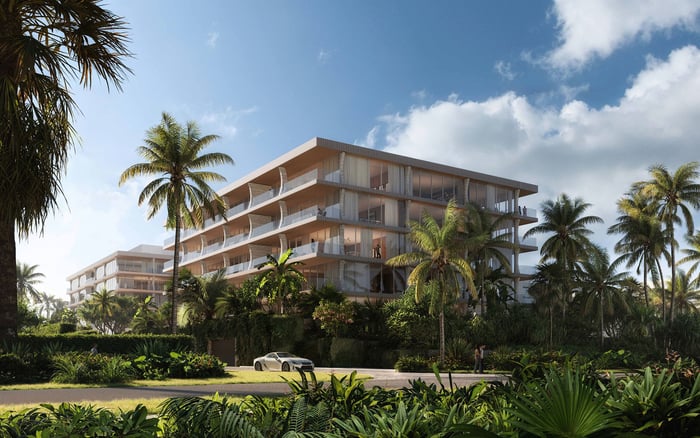
That is why buyers considering residences such as The Residences at 1428 Brickell should think beyond skyline views and amenity access. In a vertical luxury environment, privacy planning includes who receives building communications, who is authorized to approve work, who can access the residence, and how personal information is shared during onboarding.
Remote executives often buy in South Florida for a blend of access and retreat. Brickell offers proximity to financial, legal, and professional networks. Miami Beach provides a hospitality-driven coastal lifestyle. Boca Raton and Palm Beach appeal to buyers who want a more residential cadence, with club, school, airport, and family considerations nearby.
Each geography creates a different privacy posture. A branded tower may offer formalized service, but it can also require detailed owner onboarding. A boutique building may feel discreet, but its smaller community can make occupancy patterns more noticeable. A single-family estate can offer separation, yet staffing, security, landscaping, deliveries, and marine access can create their own information trail.
For buyers evaluating The Perigon Miami Beach, the conversation may center on beach access, residence management, and guest protocols. For those considering Alina Residences Boca Raton, the emphasis may shift toward a more settled residential rhythm, family use, and long-horizon ownership. Neither is inherently more private. The better choice is the one whose operating model fits the buyer’s life.
Trust ownership should be evaluated alongside broader investment control. Who has authority to sign purchase documents? Who can approve capital improvements? Who decides whether the residence may be leased, held vacant, transferred, refinanced, or sold? If the buyer is frequently traveling, those questions cannot wait until a contractor needs access or an association deadline appears.
A strong privacy plan establishes a controlled circle of communication. Counsel, tax advisors, wealth managers, insurance professionals, property managers, security consultants, and real estate advisors should understand their respective lanes. Too many intermediaries can create exposure. Too few can create delays. The goal is a narrow but capable team.
This matters across the South Florida luxury spectrum. A buyer looking at The Ritz-Carlton Residences® West Palm Beach may be thinking about service, lock-and-leave ease, and a polished Palm Beach lifestyle. The privacy question is not merely who owns the residence. It is who manages the interface between ownership, service, family use, and future disposition.
The most elegant privacy structures are usually built before leverage is needed. Before signing, buyers should ask whether the proposed ownership form is acceptable to the seller, lender, title team, insurance carrier, and any applicable association or building review process. They should also confirm who will be disclosed, who will sign, and who will communicate on behalf of the ownership structure.
Executives should be especially careful when speed becomes seductive. In competitive situations, buyers may feel pressure to contract first and structure later. That can work against privacy. Changing ownership parties, revising signatures, or introducing a trust late in the process may create friction. It may also force rushed explanations to parties who should have been briefed in advance.
The purchase agreement, due diligence period, deposit mechanics, financing terms, closing authority, and post-closing management plan should all be reviewed through the same lens. The question is not simply, “Can we close?” The better question is, “Can we close in a way that supports discretion for the next decade?”
Privacy does not end at the closing table. In many ways, it begins there. Remote executives should decide how the residence will be staffed, how vendors will be vetted, how family members will request access, and how digital systems will be administered. Smart-home credentials, package delivery, vehicle access, housekeeping schedules, guest lists, and maintenance approvals all deserve attention.
South Florida luxury ownership often includes travel patterns that are highly seasonal or unpredictable. That makes protocol essential. A residence may sit quiet for weeks, then host family, advisors, friends, or colleagues in quick succession. If no one is clearly responsible, informal workarounds begin. Informal workarounds are rarely private.
The most discreet owners create simple rules. Use one authorized property contact. Limit personal email exposure. Keep vendor communications professional. Separate household management from corporate staff where appropriate. Review who has keys, codes, app access, parking privileges, and permission to authorize repairs. Quiet ownership is usually built from ordinary details.
Before buying, remote executives should convene the core advisory team and define the purpose of ownership. Is the property primarily personal, dynastic, operational, philanthropic, or financial? Will it be used by one person, a spouse, children, guests, corporate visitors, or future generations? Will the buyer finance, pay cash, renovate, hold long term, or potentially reposition?
Those answers influence whether trust ownership is appropriate, how authority should be documented, and how privacy should be maintained. They also help the real estate advisor focus the search. A buyer prioritizing staff efficiency and city access may read Brickell differently than a buyer prioritizing beachfront calm in Miami Beach or residential continuity in Boca Raton.
The right structure should feel almost invisible once implemented. Documents are in order. Communications are controlled. Advisors know their roles. The residence supports the owner’s life without broadcasting it.
Can a trust buy luxury real estate in South Florida? A trust may be part of an ownership plan, but the structure should be reviewed by qualified legal, tax, lending, and title advisors before contract.
Does trust ownership guarantee privacy? No. It can support discretion, but privacy also depends on documentation, communications, staffing, vendor practices, and building procedures.
Should remote executives structure ownership before making an offer? Yes. Early planning helps reduce friction with contracts, signatures, financing, insurance, title review, and association processes.
Is a condo more private than a single-family estate? Not automatically. Condos may offer controlled access and services, while estates may offer separation but require more staffing and vendor management.
Why does Brickell require special privacy planning? Brickell often suits executives who value city access, so privacy planning should account for building onboarding, visitors, deliveries, and service coordination.
What should Miami Beach buyers consider? Miami Beach buyers should examine beach access, guest protocols, residence management, security expectations, and how personal information is handled.
Why do Boca Raton and Palm Beach appeal to privacy-minded buyers? They can offer a more residential cadence, but privacy still depends on staffing, property management, ownership structure, and household discipline.
Who should be on the advisory team? The team may include legal, tax, wealth, insurance, lending, title, security, property management, and real estate professionals.
Can ownership be changed after closing? It may be possible in some situations, but post-closing changes can create legal, tax, financing, insurance, or association considerations.
What is the most important privacy step before buying? Define the owner’s purpose, decision authority, communication protocol, and post-closing management plan before signing the purchase agreement.
For a confidential assessment and a building-by-building shortlist, connect with MILLION.
If branded residences are on your mind — as a home or as an allocation — we would be glad to share what we are seeing, privately.
Begin a quiet conversation