A buyer-oriented editorial on how South Florida’s newest luxury residences are translating biophilic design into everyday living, with a clear ranked lens and practical selection criteria.
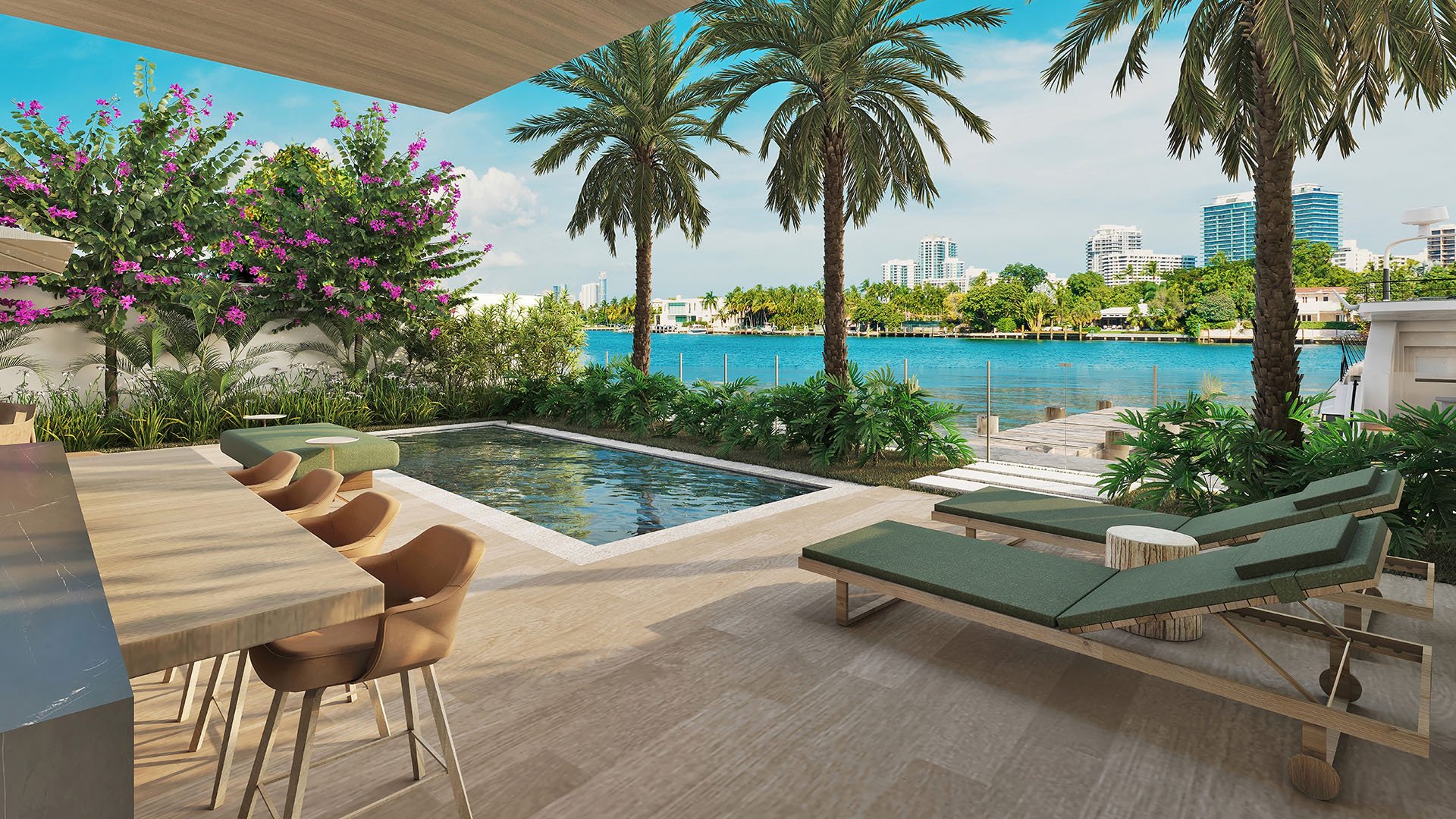
In South Florida, “biophilic design” is no longer a niche architectural preference. It has become the quiet expectation inside the most coveted new-construction homes-especially for buyers who live seasonally, travel often, and want a residence that restores them the moment they arrive. In practice, biophilic design is less about decorative greenery and more about a cohesive system: daylighting, views, cross-breezes, natural textures, and living flora integrated in ways that feel innate, not staged.
What makes the region uniquely suited to this approach is also what makes it demanding. Sun is abundant, salt air is persistent, and wind events are real. The most credible biophilic developments treat planting as infrastructure, not ornament. They plan for irrigation, drainage, shade, and species selection, and they choreograph indoor-outdoor flow so terraces, gardens, and common areas read as true extensions of the home-not separate “amenity zones.”
For the ultra-premium buyer, the payoff is tangible: a daily cadence that feels calmer, healthier, and more spatially generous. At its best, this approach also supports value over time, as the market continues to move toward residences that deliver wellness and beauty as a default condition, not an upsell.
Before you fall for an atrium photo, focus on the signals that separate real biophilia from marketing.
Start with the threshold moments. A nature-forward building typically designs an arrival sequence that slows you down-often through layered planting, filtered light, and acoustics that feel closer to a resort arrival than a corporate tower. Next, prioritize outdoor space that is usable, not symbolic. Deep terraces, wind-aware screens, and shade logic will matter far more than a thin balcony rail.
Then evaluate how the building handles the local microclimate. Flora should be positioned to thrive long-term. A planting concept that ignores salt spray, reflected heat, or maintenance access tends to decline quickly. Finally, look at how the wellness program is physically integrated with the landscape. A “wellness” label is less convincing than a plan where gardens, water, and quiet rooms are placed in ways that make restoration likely-not merely possible.
This is where neighborhoods diverge. In Brickell, the emphasis is often vertical: elevated decks, sky gardens, and terraces framed by the skyline. In Miami Beach, the most persuasive moves are sensory and coastal: shade, breeze, and privacy that makes outdoor living feel intimate. In Bay Harbor and Coconut Grove, many buyers value a calmer, greener street-to-home relationship, where planting softens everyday routines.
1. A private, garden-first arrival sequence - the new “quiet luxury” cue
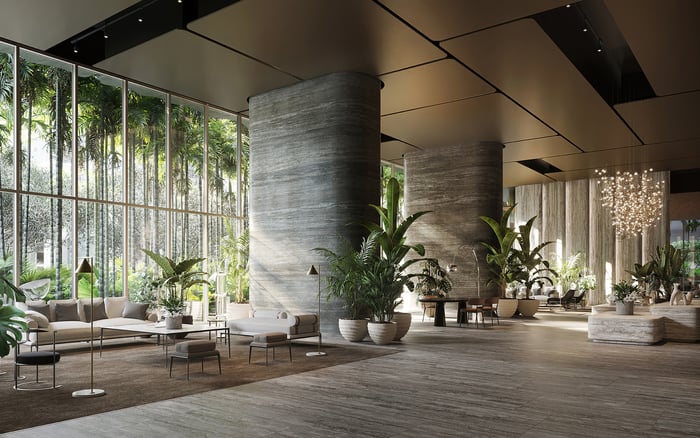
The most sophisticated biophilic projects lead with restraint: a shaded approach, layered planting, and a sense of compression and release as you move from street to lobby to home. It’s the urban equivalent of arriving at a great estate-translated into new-construction vertical living.
When comparing options, audit the first 60 seconds. If you feel calmer before you reach the elevator bank, the design is doing exactly what it should.
2. Indoor-outdoor living that reads as one continuous residence
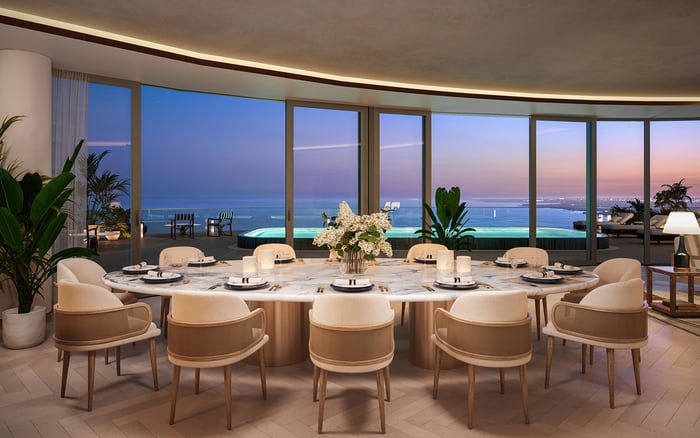
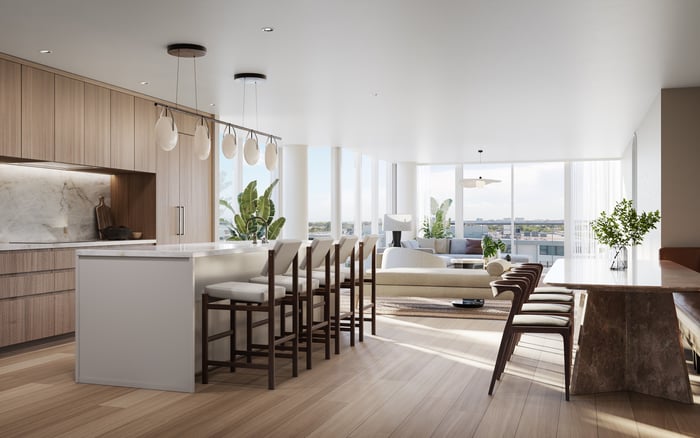
True biophilic luxury is not a unit with a balcony. It is a home where outdoor space is treated as a real “room,” with enough depth and protection to support dining, lounging, and work. That continuity reshapes how a residence lives year-round, especially in a climate where mornings and evenings can feel like a private club.
A useful benchmark is whether the terrace reads as a natural extension of the interiors rather than an accessory. In Brickell, buyers exploring 2200 Brickell will recognize this city-forward version of the concept, where outdoor living is part of the daily rhythm rather than a weekend indulgence.
3. Resort-level landscape planning as a wellness program, not an amenity list
The difference between “nice landscaping” and biophilic planning is intention. A nature-first development uses landscape to create choices: a shaded corner for reading, a quieter pathway, a social deck that still feels soft around the edges. The most premium executions make these moments feel natural-almost inevitable.
For coastal buyers, this can pair with water elements, breezeways, and strategically placed planting that filters noise and increases privacy. On the ocean side, 57 Ocean Miami Beach sits in a context where a nature-led approach is especially meaningful, because the sensory experience of the coast is already so strong. The best buildings heighten it with shade, texture, and green buffering.
4. Elevated “sky garden” thinking for high-rise living
In dense neighborhoods, biophilia becomes three-dimensional. Look for elevated decks that behave like gardens rather than pool terraces, and shared outdoor rooms that feel curated and comfortable even when the building is active.
This is also where view corridors become part of the biophilic strategy. A skyline view can be dramatic, but a framed view with greenery in the foreground is what turns drama into serenity. Buyers drawn to a stronger design signature in Brickell may compare how a project like 888 Brickell by Dolce & Gabbana balances high style with softer, nature-adjacent moments that make the lifestyle feel livable, not just photogenic.
5. A calmer, greener neighborhood fit that prioritizes daily ease
Not every buyer wants maximum intensity. Some want a more residential pace where greenery is present at the street level-and the building’s mood is restorative. Bay Harbor Islands and nearby enclaves have become compelling precisely because they can offer proximity without constant stimulation.
In that context, a wellness-and-nature-forward concept like The Well Bay Harbor Islands reflects what many luxury buyers now request: a home that supports better routines, with design language that feels grounded and breathable.
6. Single-family biophilia: living flora as the home’s identity, not a backdrop
Towers can deliver biophilia beautifully, but the most literal expression often shows up in new or newly curated single-family environments where gardens are not “outdoor space,” but the organizing principle. Think private courtyards, planted edges that create seclusion, and a property that feels like a composed landscape.
In Boca Ratón, a residence such as 749 Bamboo Dr Boca Raton reflects this idea of flora as identity. For buyers seeking privacy and a more personal relationship with greenery, the single-family route can deliver biophilic living with fewer compromises.
Biophilic design is not one thing, and your ideal version depends on how you use a home.
If you entertain, prioritize outdoor rooms that can host without feeling exposed. Deep terraces and landscaped common areas with multiple seating zones often matter more than the size of a single signature pool. If you work from home, focus on daylight and quiet, and consider whether the building offers green spaces that genuinely support short breaks throughout the day.
If this is a second home, biophilia should also mean ease. Look for planting strategies designed to stay beautiful without constant owner attention, and for a building culture that treats landscape maintenance as a core element of the brand experience.
If you are holding long-term, consider resale logic. Nature-forward planning is increasingly aligned with what future buyers will consider “normal,” especially as wellness becomes a non-negotiable. The most resilient value propositions will be those where greenery is integrated architecturally, not applied cosmetically.
When you tour, move beyond the renderings. Ask yourself:
Does the outdoor space feel comfortable at multiple times of day, or only at sunset? Do planted areas appear designed for longevity, with adequate access and protection? Are the quiet zones actually quiet, or are they placed beside high-traffic circulation?
Also note how the building performs in transitional spaces. A truly biophilic project typically makes corridors, elevator lobbies, and arrival points feel less transactional. Even subtle moves-natural materials, softer lighting, curated planting-can meaningfully shift the psychological experience of home.
Finally, consider how the neighborhood contributes. In Miami-beach environments, biophilia is often about shade, wind, and privacy. In Brickell, it is about vertical gardens and terraces that create relief from density. In Boca-ratón settings, it can be about composing privacy through planting rather than walls.
What does “biophilic design” mean in a luxury condo context? It typically means integrating nature through light, air, materials, and living planting so the building feels restorative, not just efficient.
Is a balcony enough to qualify as biophilic? Not on its own. The best biophilic homes have usable outdoor rooms and a building-wide landscape strategy.
How can I tell if the greenery is more than staging? Look for consistent planting across arrival, amenities, and transitions, plus evidence of irrigation and maintenance planning.
Do oceanfront projects have unique biophilic advantages? Yes. Breeze, light, and horizon views are inherently calming, and strong design amplifies them with shade and planting buffers.
Does biophilic design increase privacy? It can. Layered planting and garden walls often create discreet separation without feeling defensive.
Are wellness-branded buildings automatically biophilic? Not necessarily. Biophilia is about the lived environment, while wellness branding can be broader and sometimes superficial.
What matters most for year-round outdoor living in South Florida? Shade, wind awareness, and terrace depth, plus landscaping that holds up to sun and salt air.
Is biophilic design more common in Brickell or Miami Beach? Both, but it expresses differently: Brickell tends toward vertical gardens, Miami Beach toward coastal calm and shade.
How should investors think about biophilic design? As a durability feature: nature-integrated residences are increasingly aligned with buyer expectations and long-term desirability.
What is one red flag during a tour? If outdoor areas feel exposed, unusable, or overly decorative, the project may be selling an image rather than a lifestyle.
To compare the best-fit options with clarity, connect with MILLION Luxury.
If branded residences are on your mind — as a home or as an allocation — we would be glad to share what we are seeing, privately.
Begin a quiet conversation