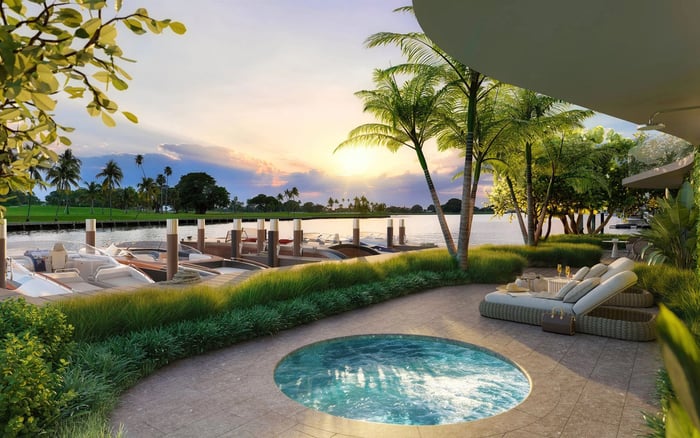
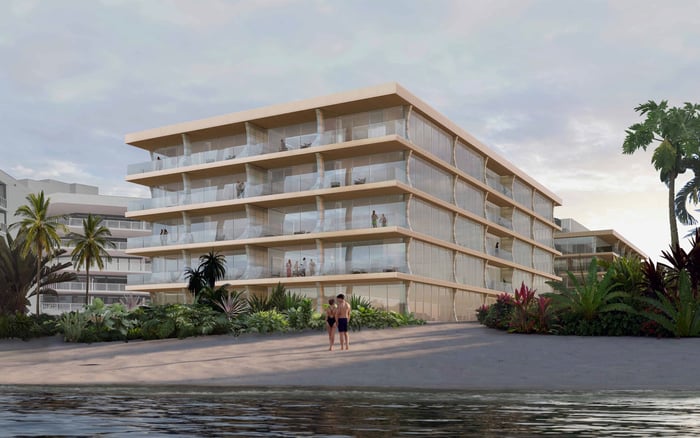
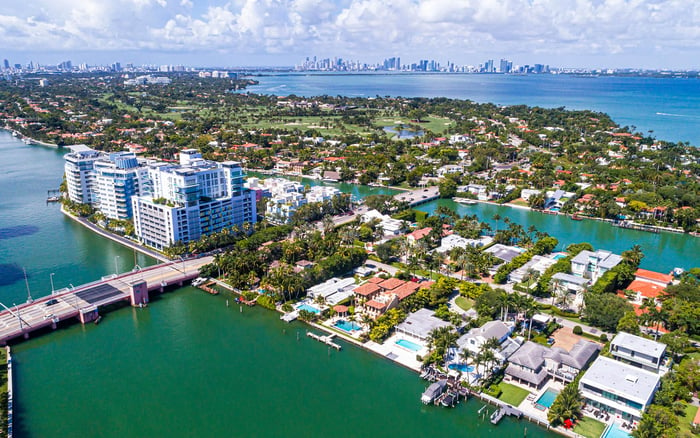
A buyer-focused guide to South Florida’s most compelling waterfront settings for western sunsets, with practical view logic, building orientation cues, and lifestyle trade-offs across key coastal and bayfront corridors.
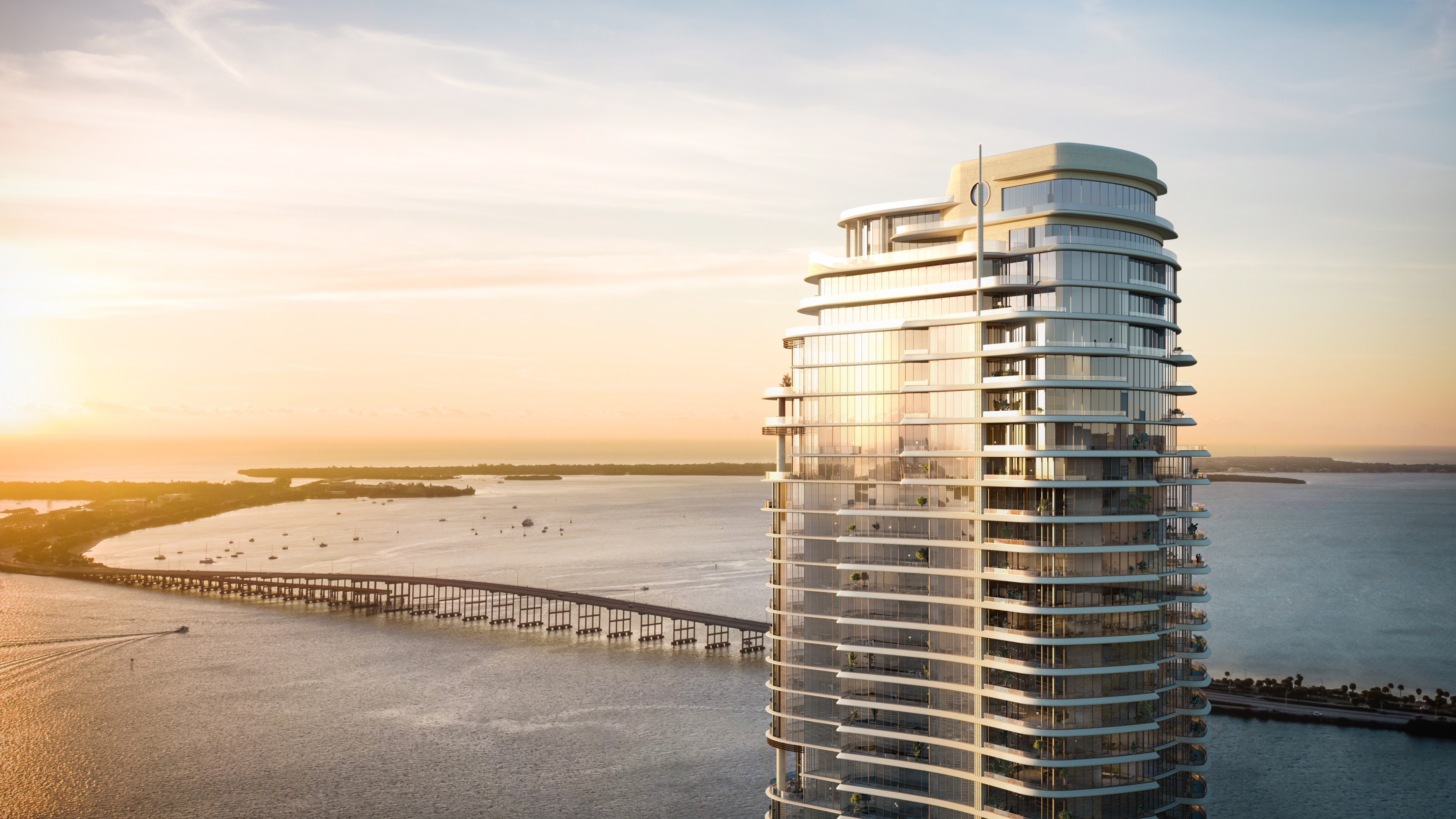
In South Florida, a “sunset view” isn’t a mood. It’s geometry. The most enduring western exposures hinge on three fundamentals: a true west or northwest-facing façade, meaningful distance across the water to the opposing shoreline, and a strong likelihood that nothing new will rise into the view corridor. When those elements align, evening light becomes a daily amenity-one that can rival a private club.
Buyers are often surprised by a simple truth: oceanfront addresses don’t automatically win the sunset conversation. The Atlantic sits to the east, which makes sunrises effortless, while sunsets are often a side-angle experience dependent on corner orientation and clean sightlines across streets, parks, or low-rise neighborhoods. By contrast, bayfront and Intracoastal settings can deliver direct, cinematic dusk views-especially where the waterway is wide and the opposite bank remains lower scale.
The goal isn’t only to “see orange.” It’s to protect the horizon line as the sun drops, avoid visual clutter from bridges and neighboring towers, and keep the view readable from primary rooms-not just as a sliver from a balcony.
“Unobstructed” is best understood as a spectrum. Even premium buildings can register partial interruptions depending on floor level, adjacent parcels, and shoreline curvature. In practical terms, unobstructed western sunsets most often come from:
Wider bodies of water: Biscayne Bay and certain Intracoastal stretches can function like a moat, pushing potential obstructions farther away.
Prominent points and peninsulas: buildings positioned near a land corner often gain a broader sweep of sky.
Height plus placement: higher floors can clear mid-rise neighbors, but siting matters as much as elevation.
Corner exposure: the difference between a west-facing living room and a west-facing bedroom is lifestyle, not a footnote.
This is where buyer diligence becomes architectural. Study how a tower sits on its site, how adjacent parcels are zoned and likely to evolve, and whether the western view looks across protected areas, established low-rise neighborhoods, or undeveloped tracts.
In Miami’s bayfront districts, for example, the opportunity for a clean horizon can be exceptional. For buyers seeking a contemporary bay lifestyle with a strong emphasis on light and water, developments such as Aria Reserve Miami often enter the conversation for their expansive water-facing living.
This ranking highlights developments and enclaves that, by virtue of their waterfront context, are commonly chosen for western or northwest sunset sightlines. Specific view corridors vary by residence, floor, and line.
1. Edgewater Bayfront, Miami - Biscayne Bay’s wide-open dusk
Edgewater’s defining advantage is the scale of Biscayne Bay. When a building faces west over the bay, that width helps keep the skyline from feeling too close, so the sunset reads as a true horizon event rather than a narrow gap between towers. Residences that prioritize bay-facing living areas-particularly on higher floors-can hold the view deep into twilight.
The lifestyle is urban and water-centric: morning walks, marina energy, and a front-row seat to the city’s shifting light. The best outcomes tend to come from carefully selected lines where the primary rooms, not only the terraces, face the bay.
2. Brickell Waterfront, Miami - skyline glow meets open water
Brickell’s waterfront edge can deliver a more tailored version of the sunset experience: the sun drops behind the city, glass warms, and the bay turns reflective. Because Brickell is dense, “unobstructed” depends on tower-to-tower relationships and the exact angle of exposure. Corner residences and higher elevations can meaningfully improve the sense of openness.
For buyers drawn to a more intimate, design-forward approach to waterfront living, 2200 Brickell is often considered within the broader Brickell ecosystem, where balcony living and indoor-outdoor entertaining are part of the daily rhythm.
3. North Bay Village - open-bay angles between Miami and Miami Beach
North Bay Village occupies a distinct midpoint, where the geography can deliver long water views in multiple directions. Western exposures can capture sunsets over the mainland with an expansive sky plane, and the surrounding water creates a sense of separation from both Miami and Miami Beach.
The appeal is the feeling of being on the water without leaving the city’s orbit. Buyers who value bay exposure often watch this corridor for its balance of access, boating-adjacent living, and the potential for broad, less interrupted horizons.
4. West Palm Beach Intracoastal - classic waterway sunsets with a Palm Beach cadence
Along the Intracoastal in West Palm Beach, sunsets can feel calmer and more residential. The western sky often opens across the water, and the boat traffic below adds movement without overwhelming the view. Depending on siting and neighboring structures, select stacks can hold a long, clean horizon line at dusk.
For a modern tower presence near the water, Alba West Palm Beach is frequently discussed by buyers seeking a contemporary residence paired with a West Palm lifestyle-cultural access, dining, and an easy relationship with the water.
5. Fort Lauderdale Intracoastal and New River edges - yachting energy, layered sunsets
Fort Lauderdale’s waterways create a distinctive sunset character. Rather than a single flat horizon, the view often arrives in layers: palms, docks, passing yachts, then sky. Western exposures can be especially compelling where the waterway opens up and where bridges or neighboring towers don’t cut across the sightline.
The strongest sunset residences here typically treat the water as the centerpiece, with terraces designed for evening use and interiors that stay luminous as the sun lowers.
A sunset premium is easy to pay-and harder to secure. The highest-confidence approach is to evaluate a residence the way an architect would.
First, confirm orientation. “West” can mean due west, southwest, or northwest, and each behaves differently. Southwest delivers warmer, longer light but can bring more heat into late afternoon. Northwest often feels more forgiving, with a cooler interior while still capturing dramatic sky.
Second, look past the balcony. Ask where the primary seating area faces, where the dining table naturally belongs, and whether the kitchen carries a true view line. Real sunset living happens when the sunset is visible during ordinary life, not only when you step outside.
Third, be precise about floor level. Higher floors often reduce interruptions, but lower floors can still win if the waterway is wide and the opposite bank remains low-rise. In some cases, mid-level floors strike the best balance of intimacy and openness-particularly where very high floors introduce more wind.
Fourth, consider glazing and terrace depth. Floor-to-ceiling glass, clear balustrades, and a terrace deep enough for a proper seating group can turn a view into a ritual.
Western sunsets are seductive, but sophisticated buyers plan for the realities that come with them.
Heat and glare are the obvious variables. Late-afternoon sun can be intense, so shading, high-performance glass, and thoughtful interior finishes matter. A darker stone countertop may look exquisite, but it can reflect and amplify late-day light in unexpected ways.
Wind is another factor. In taller towers, a sunset terrace can turn breezy at the exact hour you want to linger. Evaluate the balcony’s shape, whether it’s recessed, and how it feels during peak evening conditions.
Privacy can shift as well. Western-facing residences may look back toward the city, where lights and neighboring towers create more reciprocal visibility at night.
Finally, boating infrastructure can influence sound and activity. If you enjoy watching a marina come alive at golden hour, that’s a feature. If you prefer a quieter frame, choose a line that looks over open water rather than docks.
Some buyers want the sunset as a daily anchor; others want it as a social backdrop.
The entertainer: prioritizes a terrace that fits a real dining table, with the horizon visible from the living area.
The collector: wants consistent light on art and finishes, favoring northwest exposures and controlled glare.
The boater: prefers Intracoastal or bayfront settings where the sunset includes movement on the water.
The city minimalist: wants a skyline that glows at dusk, where lights come on as the sky fades.
Miami Beach buyers often prioritize sunrise, but select addresses can still deliver a compelling sunset angle-particularly where a building’s massing and corner lines open toward the bay. For those drawn to a quieter, beachfront-forward environment with a more intimate scale, 57 Ocean Miami Beach is a reminder that the best overall light experience can come from balancing morning ocean brilliance with carefully chosen evening exposures.
Before you decide, run through these practical steps:
Verify the direction of the primary rooms, not just the terrace.
Stand in the living area and imagine furniture placement with the view.
Identify what sits between you and the western sky-today and tomorrow.
Consider how the sunset shifts seasonally and how that affects glare.
Evaluate wind comfort at the hour you plan to use the terrace.
For buyers who want a more residential, single-family interpretation of waterfront sunset living, Boca Raton offers a different kind of luxury: low-rise surroundings, private outdoor space, and a more controlled visual field. A home such as 749 Bamboo Dr Boca Raton speaks to that preference, where evening light becomes part of a private garden-and-pool narrative rather than a tower-to-tower skyline composition.
Do west-facing residences always command a premium? Often, yes-but the premium is strongest when the view is wide and durable, not merely “west-ish.”.
Is bayfront better than oceanfront for sunsets in South Florida? For direct sunsets, bayfront and Intracoastal locations frequently outperform oceanfront addresses.
What floor is best for an unobstructed sunset view? Higher floors usually help, but a wide waterway can make mid-level floors feel equally open.
How can I tell if a sunset view will stay protected? Look at what lies between you and the horizon, with special attention to vacant parcels and likely redevelopment sites.
Are corner units worth it for sunset seekers? Typically, yes, because corners can capture both direct west light and softer northwest light.
Will a western exposure make the residence hotter? It can, especially in late afternoon-so shading, glazing quality, and interior materials matter.
Do bridges and boat traffic hurt a sunset view? They can interrupt the horizon line, though many buyers consider them part of the waterfront atmosphere.
Can I get both sunrise and sunset views in one residence? Flow-through layouts and select corner lines can offer sunrise in one direction and sunset in another.
Is a balcony essential for enjoying sunsets? Not essential, but a usable terrace can turn a view into a daily ritual and social setting.
What is the simplest way to validate a sunset view before buying? Visit at dusk and confirm the horizon from the living area, not just from the balcony.
To compare the best-fit options with clarity, connect with MILLION Luxury.
If branded residences are on your mind — as a home or as an allocation — we would be glad to share what we are seeing, privately.
Begin a quiet conversation