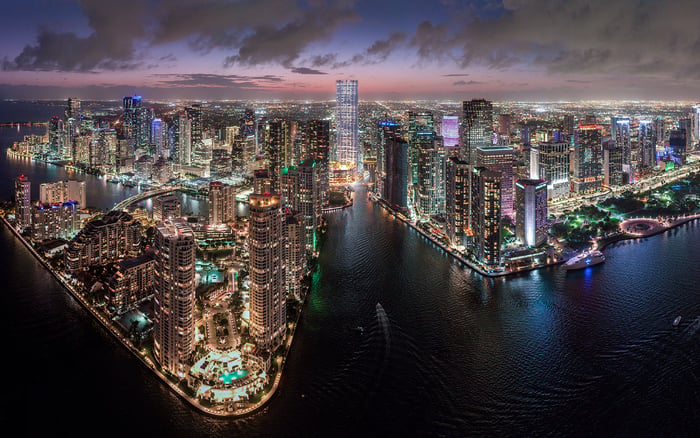
Brightline’s Miami-Orlando corridor is reshaping how ultra-prime buyers value time, access, and walkable city living. As departures become more frequent and repeat ridership rises, station-adjacent neighborhoods in Miami, Fort Lauderdale, Boca Raton, and West Palm Beach are seeing a clearer “station premium” narrative. For luxury real estate, Brightline is less about commuting and more about creating a multi-city lifestyle where meetings, dining, beaches, and airports sit on one predictable spine.
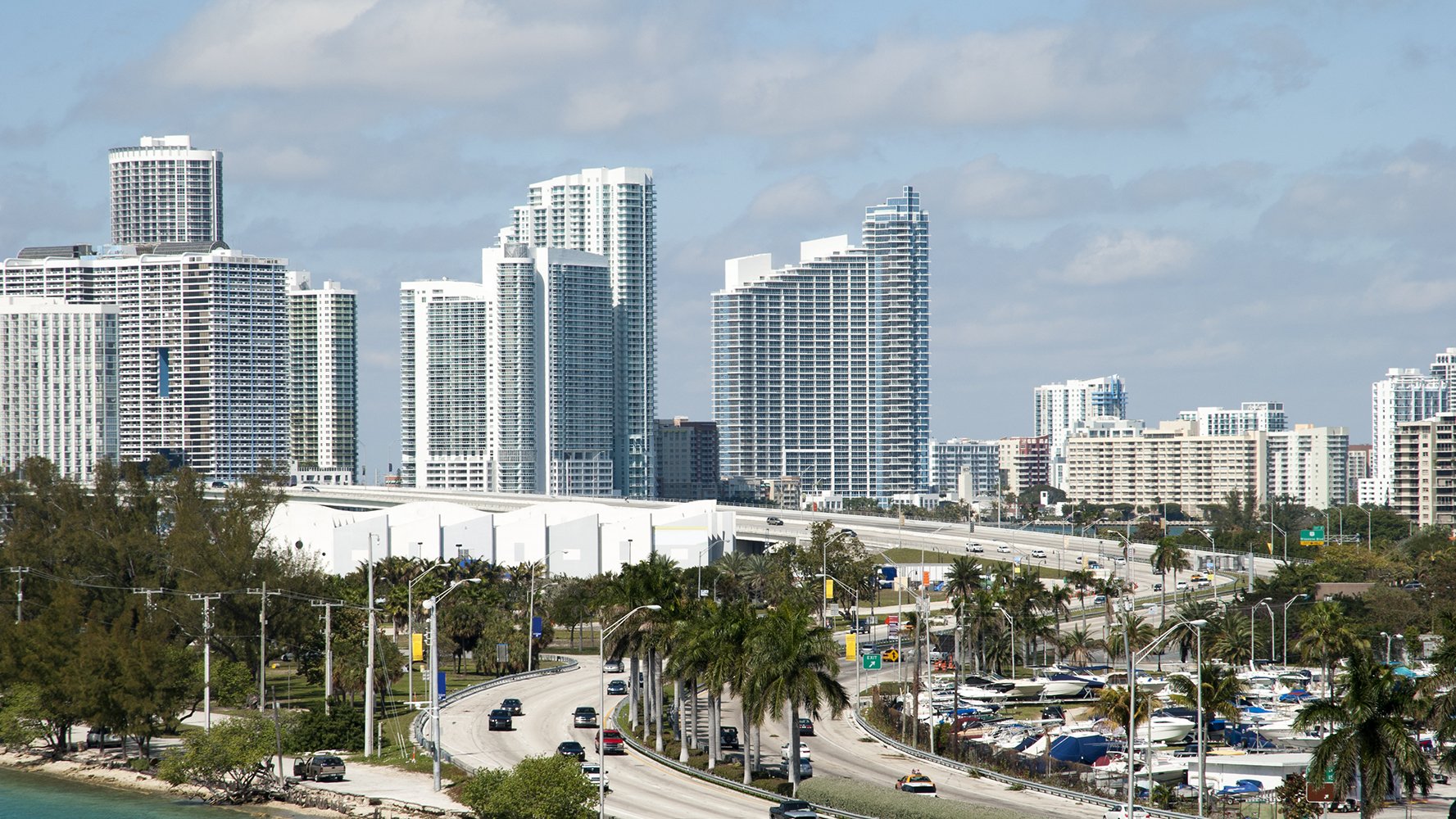
For decades, South Florida’s luxury market priced proximity in familiar ways: direct ocean frontage, a protected view corridor, a short drive to a private terminal, or the ability to reach a preferred dining room without crossing a bridge at the wrong hour. Brightline is introducing a different kind of adjacency premium: the ability to move between major city centers and an international airport with a level of predictability that driving cannot always match.
Brightline’s Florida system began passenger service between Miami and West Palm Beach in 2018, later expanding to Orlando in 2023. The corridor is not a single, uniform track. The original Miami-West Palm Beach segment runs roughly 65 miles on shared-use Florida East Coast Railway track with top speeds around 79 mph. The Orlando extension adds a West Palm Beach-Cocoa segment of about 120 miles with top speeds around 110 mph, plus a roughly 35-mile dedicated passenger line from Cocoa to Orlando International Airport with top speeds around 125 mph. In lifestyle terms, the route pairs easy urban station access with higher-speed stretches where the train earns its reputation for consistency.
For luxury buyers, this is less about “taking the train” and more about protecting optionality. A calendar that spans Miami, Fort Lauderdale, Boca Raton, West Palm Beach, and Orlando can increasingly be treated as one connected catchment instead of separate weekend plans.
Brightline’s Orlando station is integrated into Orlando International Airport’s new Terminal C. That design choice is consequential for real estate because it reframes an intercity trip as a terminal-to-terminal experience-not a ride that ends in a long queue for ground transportation.
In a market where many buyers think in terms of multi-home living, multigenerational travel, or simply maintaining a tighter schedule without giving up leisure, airport integration functions as infrastructure-level luxury. It reduces friction at the moments that are hardest to “buy back” with money: transfers, uncertainty, and wasted time between modes.
When rail is directly tied to an airport terminal, a South Florida owner can envision a routine where a morning meeting in Miami is followed by an afternoon flight out of Orlando-without treating I-95 or the broader Central Florida highway network as an uncontrollable variable.
Transit systems become meaningful to luxury lifestyles when they are frequent enough to use without planning your day around them. Brightline has positioned “network enhancements” to meet ridership demand and optimize the guest experience, including more frequent departures. The plan describes a dual-network service structure with 36 daily departures in South Florida and roughly 30-minute frequency during peak travel times, paired with peak versus off-peak pricing windows on weekdays.
Those details may read like operations, but they signal something larger: the corridor is shifting from novelty to utility. More departures reduce schedule friction. Peak and off-peak pricing points to distinct waves of demand, which typically aligns with repeat usage.
For luxury real estate, the takeaway is clear: frequency and repeat behavior are what translate infrastructure into a durable pricing narrative.
A station premium does not replace the water premium. It layers on top of it.
In South Florida, home values near rail stations have risen faster than surrounding areas, reinforcing the idea that station-area proximity can command a measurable advantage. In luxury terms, that premium is often paid in two currencies: walkability and time.
Walkability matters because many high-net-worth buyers prefer not to be car-dependent for every errand, particularly in pied-à-terre scenarios. Time matters because reliable access between cities makes it easier to say yes to events, meetings, and short stays.
This helps explain why certain urban districts, once viewed primarily as “convenience plays,” now register as lifestyle districts. In Brickell, for example, a buyer evaluating Una Residences Brickell is not only underwriting waterfront positioning and design, but also the ability to operate from a dense, service-rich environment where intercity mobility can be part of the weekly rhythm.
Miami’s station-area story ultimately comes down to compressing distance. Buyers who keep multiple addresses or maintain business interests across Florida often value the ability to move quickly between nodes more than being “central” in any single one.
This is where new development speaks the language of “arrive and live,” not “arrive and drive.” In Downtown and Brickell, towers with strong service models and lock-and-leave ease align with rail-enabled living. Consider how an ownership experience at Aston Martin Residences Downtown Miami can pair a marina-front lifestyle with straightforward access to the broader Brightline network for days when the agenda extends beyond Miami.
In parallel, ultra-prime branded inventory such as 888 Brickell by Dolce & Gabbana reflects a buyer mindset that prioritizes curated living and minimal friction. The more the region behaves like a set of connected neighborhoods, the more these residences function as control centers rather than simple homes.
Fort Lauderdale has promoted transit-oriented development patterns that cluster mixed-use density around transportation nodes, supporting walkable districts near rail. For luxury buyers, the day-to-day payoff is a neighborhood where life can be handled on foot-and where a rail trip feels like a natural extension of the district, not a separate excursion.
The area’s broader shift toward master-planned, mixed-use density is illustrated by the Uptown Urban Village, described as a large-scale transit-oriented district west of I‑95 with entitlements for thousands of residential units and substantial hotel capacity. While entitlements are not the same as delivered lifestyle, the direction is unmistakable: Fort Lauderdale is shaping places where living, working, and hospitality converge.
In that context, a residence such as Four Seasons Hotel & Private Residences Fort Lauderdale reads as part of a broader urbanizing coastline-service, walkability, and high design supported by a transportation network that increasingly rewards proximity.
Boca Raton’s luxury identity has long been anchored in clubs, privacy, and polished residential enclaves. Brightline adds a complementary layer: access without surrendering the cocoon. A buyer can keep Boca as the primary retreat while still treating Miami and West Palm Beach as effortless extensions of the week.
West Palm Beach, by contrast, has leaned into a more downtown-forward lifestyle in recent cycles, supported by cultural programming and an appetite for new residential product. Here, station-area living can feel especially intuitive: less distance between home, dining, and mobility.
A building like Alba West Palm Beach fits the profile of a buyer who wants the Palm Beach County address with a city cadence-and values the ability to move between South Florida nodes without turning every trip into a drive-time negotiation.
Luxury buyers rarely purchase “near transit” in the abstract. They purchase outcomes. Brightline’s evolution offers a more precise checklist for what to evaluate.
First, focus on frequency and the ability to travel spontaneously. A system with roughly 30-minute peak frequency in South Florida can change behavior; it turns some planned trips into impulse decisions.
Second, track repeat usage. Repeat riders have been reported as accounting for 61% of long-distance ridership-an indicator that this is no longer a one-time experience for many travelers. The return of a commuter pass product in May 2025, with around 700 passholders generating 19,333 rides per month by October 2025, adds another signal that routine usage is taking hold.
Third, prioritize neighborhoods where the station is integrated into daily life rather than treated as an isolated point. That typically means mixed-use blocks, strong pedestrian routes, and a meaningful concentration of services.
Finally, be candid about what you are paying for. A station premium is not merely closeness; it is the ability to reclaim hours. In a luxury context, time is often the highest-priced amenity.
Brightline’s Florida network now serves stations in Miami, Aventura, Fort Lauderdale, Boca Raton, West Palm Beach, and Orlando. That list matters because it effectively defines a set of nodes where a buyer can live, meet, dine, and depart by air with fewer compromises.
As the corridor matures, the most interesting change may be psychological. Residents begin to experience South Florida and Central Florida as a single connected lifestyle arc. When that happens, buying decisions evolve: a second home becomes easier to justify, a pied-à-terre becomes more useful, and a downtown condo becomes a strategic asset rather than simply an urban preference.
In a market already shaped by wealth migration and cash-heavy transactions at the top end, a predictable mobility spine can amplify demand for the right blocks around the right stations. The premium is not guaranteed, and it is not uniform. But it is becoming legible-and legibility is usually the first step toward pricing power.
What cities does Brightline serve in Florida? Brightline serves Miami, Aventura, Fort Lauderdale, Boca Raton, West Palm Beach, and Orlando.
When did Brightline begin service in South Florida? Passenger service between Miami and West Palm Beach launched in 2018.
When did Brightline expand to Orlando? Brightline expanded service to Orlando in 2023.
Is the Orlando Brightline station connected to the airport? Yes. The Orlando station is integrated into Orlando International Airport’s Terminal C.
How fast does Brightline travel in South Florida? The Miami to West Palm Beach segment runs with top speeds around 79 mph.
What are the higher-speed segments toward Orlando? West Palm Beach to Cocoa reaches around 110 mph, and the Cocoa to Orlando segment reaches around 125 mph.
What does increased train frequency mean for luxury home values? More departures can make station-area living more usable day to day, supporting a time-and-access premium.
Does Brightline use peak and off-peak pricing? Yes. Weekday peak windows include 6:30-9:30 a.m. and 3:30-6:30 p.m. in South Florida.
Is there evidence of repeat usage on Brightline? Yes. Repeat riders have been reported as a majority of long-distance ridership.
How should a buyer evaluate a “station premium” property? Prioritize walkability, ease of last-mile connections, and whether you can use rail without heavy planning.
If you'd like a private walkthrough and a curated shortlist, connect with MILLION Luxury.
If branded residences are on your mind — as a home or as an allocation — we would be glad to share what we are seeing, privately.
Begin a quiet conversation