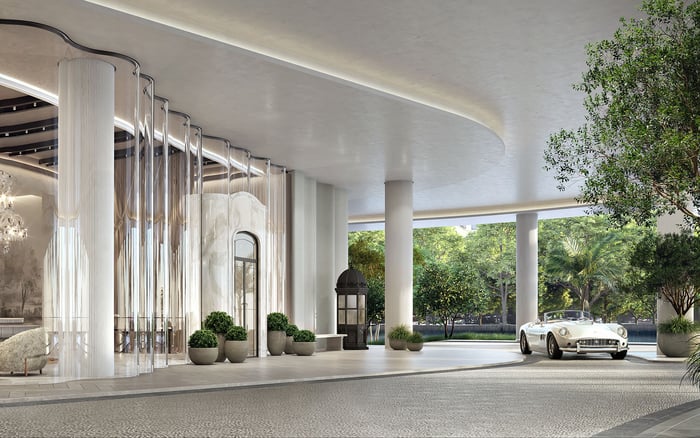
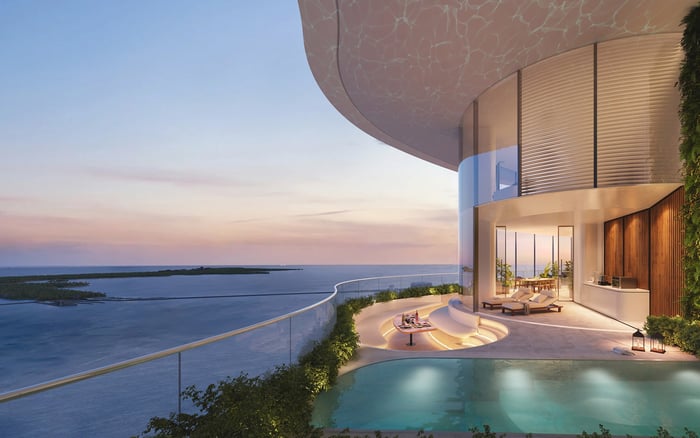
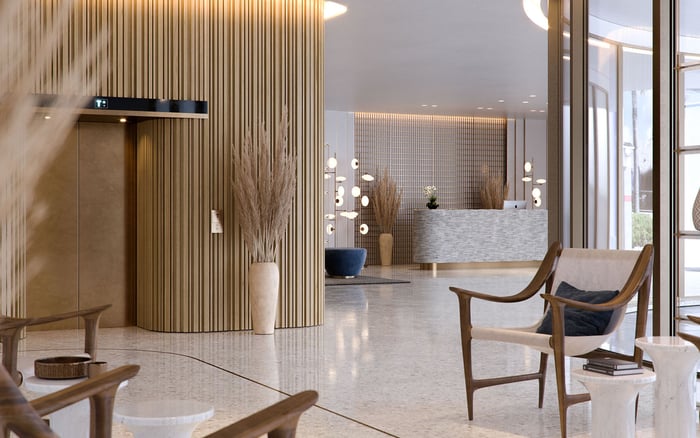
A buyer-oriented look at why indoor golf is moving onto the amenity deck, what it signals about a building’s service level, and which South Florida addresses are leaning into the simulator-lounge lifestyle.
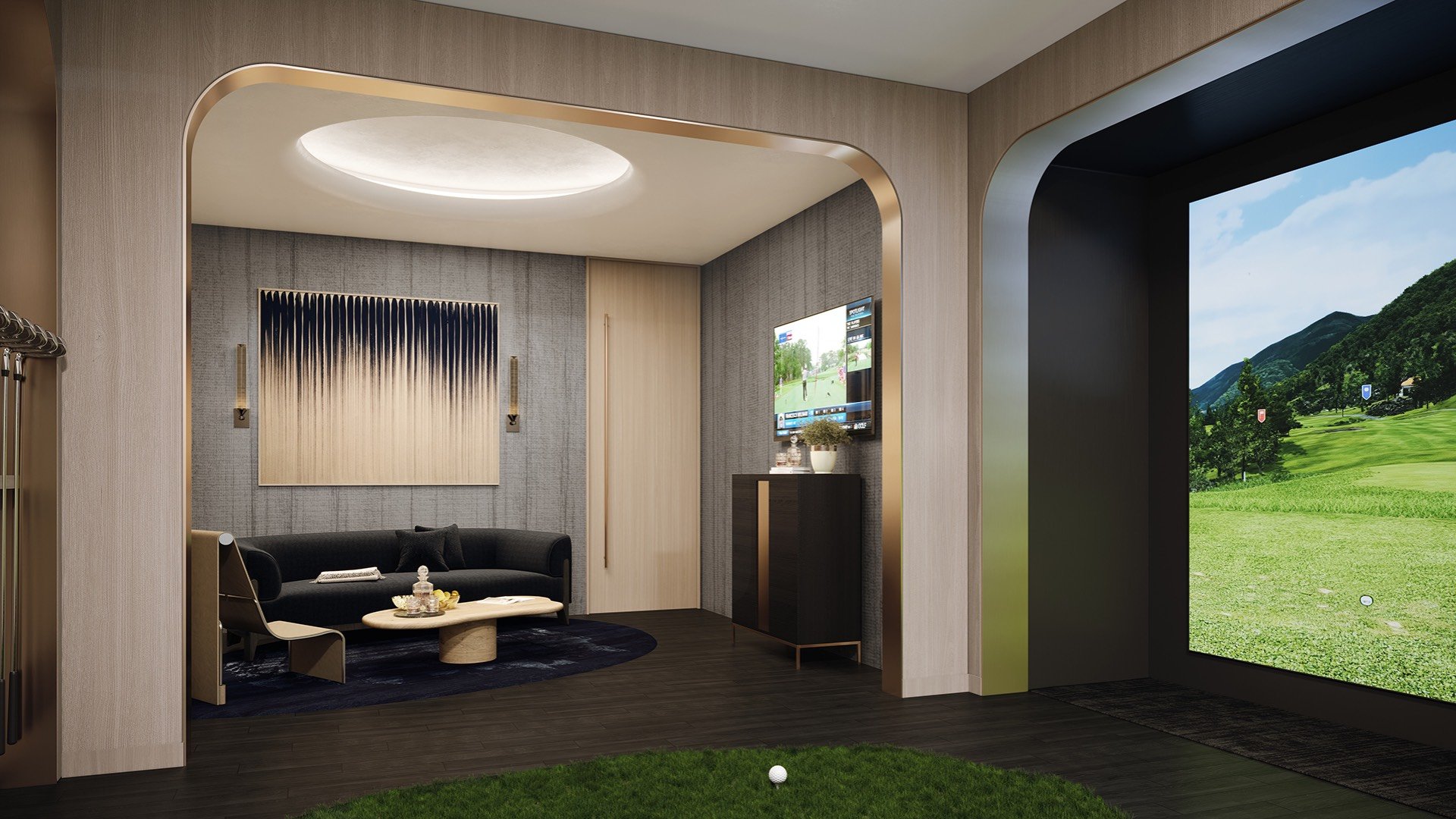
In South Florida, leisure has long been designed around light, landscape, and a certain ease of access. The newest expression of that ease is the golf simulator lounge: an indoor, climate-controlled room that delivers a credible swing experience without the scheduling, heat, or travel friction of a traditional tee time. In a market where buyers increasingly evaluate a building like a private club, the simulator has shifted from novelty to signal. It suggests a development is curating a lifestyle that performs on any calendar and at any hour.
The amenity deck is the natural landing place. It is already the building’s social hub, where residents move between pool, fitness, spa, and lounges. A simulator suite fits this circuit beautifully: arrive in resortwear, take a lesson or a few swings, then step straight into dinner plans. It is also an amenity that plays well across generations. Serious players use it to maintain a repeatable practice rhythm; occasional golfers use it as a relaxed, competitive gathering space that feels closer to a screening room than a sports bar.
For developers, the appeal is equally direct. A simulator lounge can be designed as a branded, memorable room without consuming the footprint of a full-scale indoor court. It photographs well, reads as modern, and supports programming-from instruction to casual leagues-that helps a building feel active beyond the pool season.
Not all simulators are created equal, and discerning buyers should look past the headline. The best rooms are designed with the same discipline as a listening lounge or private dining room.
Start with space planning. Ceiling height and swing clearance matter, particularly for taller players and full-speed drivers. The room should feel comfortable for a small group-not like a corridor with a screen. In stronger executions, there is a clear separation between the hitting zone and the conversation zone, so guests can lounge without hovering near the swing path.
Acoustics are the quiet differentiator. Impact sound, music, and conversation can turn harsh in a hard-surfaced box. Premium lounges integrate absorption and isolation so the simulator can operate near other amenities without becoming the building’s loudest room. Lighting is another tell: adjustable, glare-controlled illumination that keeps the screen readable while still flattering the space.
Finally, hospitality details complete the experience. Seating that encourages lingering, a bar or beverage service point, and a reservation system that feels fair often determine whether the simulator becomes a resident ritual or an underused brochure promise.
A golf simulator lounge typically appears in projects selling a complete day-to-night ecosystem rather than a single signature feature. It pairs naturally with wellness, concierge-level service, and a broader culture of private entertaining.
In Brickell, for instance, the appetite for highly programmed indoor amenities aligns with the neighborhood’s international ownership and preference for effortless social spaces. Projects such as 2200 Brickell and 888 Brickell by Dolce & Gabbana speak to a buyer who wants club-grade environments within an elevator ride. In Miami Beach, where outdoor living is the brand but weather can still dictate plans, the simulator reads as a sophisticated backup to the beach day and a complement to spa and lounge culture, as seen in addresses like 57 Ocean Miami Beach.
Farther north, in areas catering to second-home owners and seasonal residents, the simulator lounge becomes a way to keep habits consistent. It is especially attractive for owners who prefer to practice privately, host guests, or keep activity close to home rather than coordinating transportation and tee sheets.
1. Brickell high-rise lifestyle - business district, private-club amenities
The Brickell buyer tends to prioritize time efficiency and indoor-outdoor flexibility. In that context, a simulator lounge is less about novelty and more about a controlled environment that supports quick practice sessions and social play after hours.
At the best Brickell amenity decks, the simulator is treated as part of a larger lounge stack: adjacent cocktail seating, a media-ready setting, and easy transitions to fitness and wellness spaces.
2. Miami Beach oceanfront living - weatherproof recreation with a resort cadence
Oceanfront living is defined by the outdoors, but truly livable luxury anticipates variability. A golf simulator lounge offers a refined alternative to a rained-out afternoon, functioning like a private salon with a sport dimension.
In Miami Beach, the most compelling versions feel residential-not commercial-and are designed to be enjoyed by a small group without competing with the building’s quiet-luxury tone.
3. Hallandale resort enclave - leisure amenities designed for guests and owners
In resort-oriented markets, the simulator lounge often supports hosting. Owners want amenities that keep visitors engaged beyond the pool, and an indoor golf room delivers a polished, intergenerational activity.
This is particularly resonant in communities where buyers also value proximity to broader recreation and a sense that the building can function as a self-contained destination.
4. Sunny Isles vertical resort corridor - indoor play paired with wellness and views
In a high-density coastal skyline, amenities have to work hard. A simulator lounge provides an active-use room that does not require daylight, and it complements the neighborhood’s appetite for comprehensive, hotel-caliber programming.
The strongest versions are woven into a sequence of wellness and lounge spaces, making it easy to combine a workout, a swim, and a few holes on the simulator in a single visit to the amenity deck.
5. Palm Beach and West Palm Beach refinement - discreet recreation in a club culture
In Palm Beach County, the simulator lounge reads as a private, controlled practice room aligned with a club-forward lifestyle. It appeals to owners who want continuity of routine without advertising it.
Design tends to skew quieter and more tailored, with an emphasis on comfort, material quality, and an atmosphere that feels appropriate before dinner or after a late meeting.
Treat the simulator lounge like any other performance space. Ask to step inside and listen: does it feel insulated, or does sound bleed into adjacent corridors? Check for adequate room behind the player for a comfortable backswing, and whether the ceiling height feels genuinely generous.
Look for signals of real-world use. Are there cues the building expects residents to linger-comfortable seating, a layout that supports conversation? If the room reads as an afterthought, it will likely function like one.
Operational policies matter as much as equipment. A fair reservation system, clear guest rules, and reasonable session limits are what keep an amenity from being either monopolized or neglected. If the building positions itself as a private-club experience, the simulator should be managed with the same level of intention.
The next phase is integration. The simulator lounge is increasingly conceived as a multi-use entertaining room, where a screen can support sports viewing, presentations, or even private events when not in golf mode. Expect more hospitality layering: curated playlists, adjacent bar programs, and spaces that feel like a members lounge rather than a utility room.
There is also a subtle shift in buyer expectations. As high-end developments compete on experience, residents will look for amenities that can be enjoyed year-round, independent of heat, humidity, or travel time. A golf simulator lounge, when executed with discretion and quality, meets that brief elegantly.
For buyers comparing neighborhoods, consider how the simulator fits into the larger lifestyle you are purchasing. In Brickell, it can anchor a weekday rhythm; in Miami Beach, it can be a polished alternative to weather-driven plans; in more resort-oriented corridors, it can be a reliable way to host. The amenity is not the whole story-but it is often a sharp clue to a building’s priorities.
Along the coast, several residential options illustrate the broader amenity-driven direction of the market, from the oceanfront presence of 2000 Ocean Hallandale Beach to the resort-meets-residential mood of Shell Bay by Auberge Hallandale.
Do golf simulator lounges add real value for resale? They can-especially when the room is designed as a true lounge and managed well-because it broadens year-round amenity appeal.
What should I look for in simulator room dimensions? Prioritize comfortable swing clearance, a generous ceiling height, and space for guests to sit well behind the hitting zone.
Is a simulator lounge mainly for serious golfers? No. The best lounges are social spaces first, with technology that also supports practice and lessons.
How do reservations typically work in luxury buildings? Many use time blocks through a building app or concierge, with rules intended to keep access fair during peak hours.
Will the simulator be noisy near other amenities? It shouldn’t be if acoustic isolation and absorption are properly designed into walls, doors, and finishes.
Can I bring guests to the simulator lounge? Often yes, but guest policies vary. Ask about limits and whether events require advance approval.
Does the simulator replace access to real golf? It is a complement rather than a replacement, useful for practice, convenience, and entertaining when time is limited.
What makes a simulator lounge feel truly luxury? Comfortable seating, thoughtful lighting, strong acoustics, and an atmosphere consistent with the building’s overall design.
Are simulators used for instruction? Some buildings accommodate coaching sessions, but availability depends on management policies and scheduling.
Should this amenity influence where I buy in South Florida? It can, if year-round indoor recreation and private entertaining are central to how you plan to use the residence.
For a confidential assessment and a building-by-building shortlist, connect with MILLION Luxury.
If branded residences are on your mind — as a home or as an allocation — we would be glad to share what we are seeing, privately.
Begin a quiet conversation