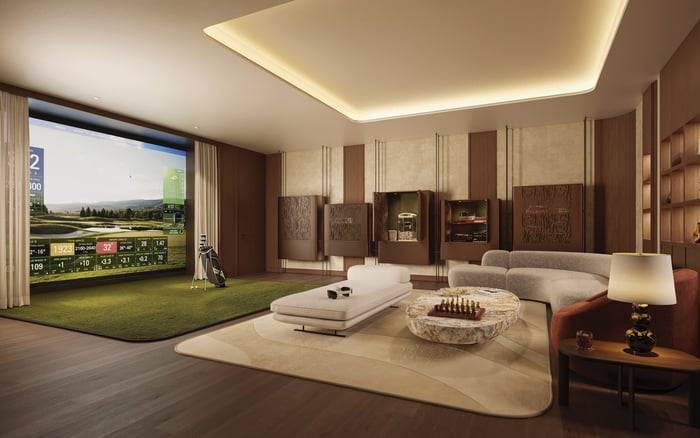
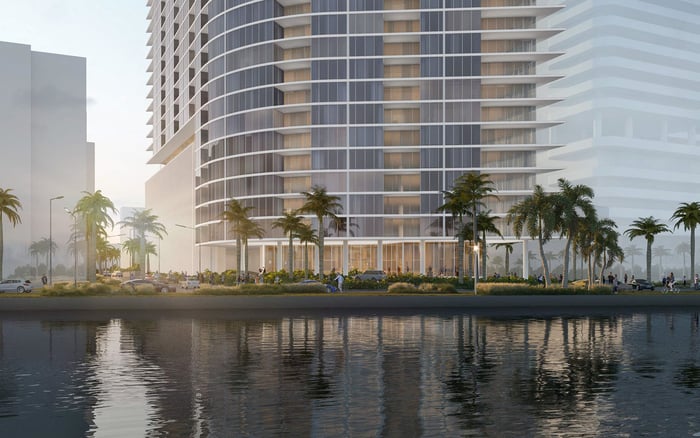
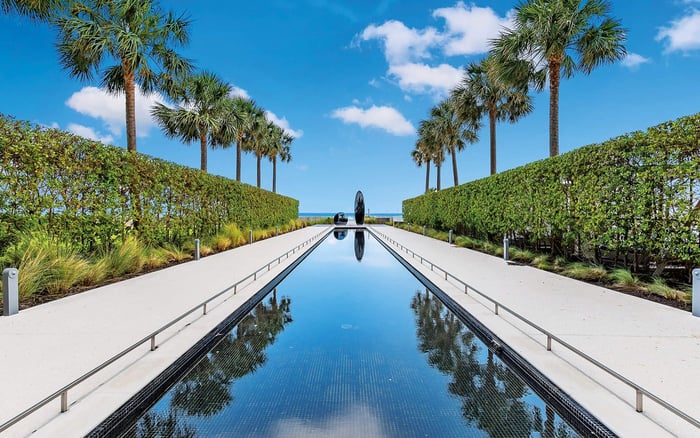
In Miami, the most future-proof luxury towers increasingly behave like cultural institutions: commissioning public art, programming lobbies like galleries, and building resident experiences around collections and curatorship. For buyers, that shift is not just aesthetic. It influences arrival sequences, privacy design, developer intent, and long-term brand gravity. With publicly available detail uneven from project to project, the smartest approach is to evaluate how a building signals commitment to art: whether it integrates art into the architecture, dedicates true gallery-like space, or curates installations as a living program rather than a one-time gesture. Below are five developments that, by concept and positioning, fit the Miami buyer’s appetite for art-forward living, followed by a practical framework for assessing what “art integration” actually means in day-to-day ownership.
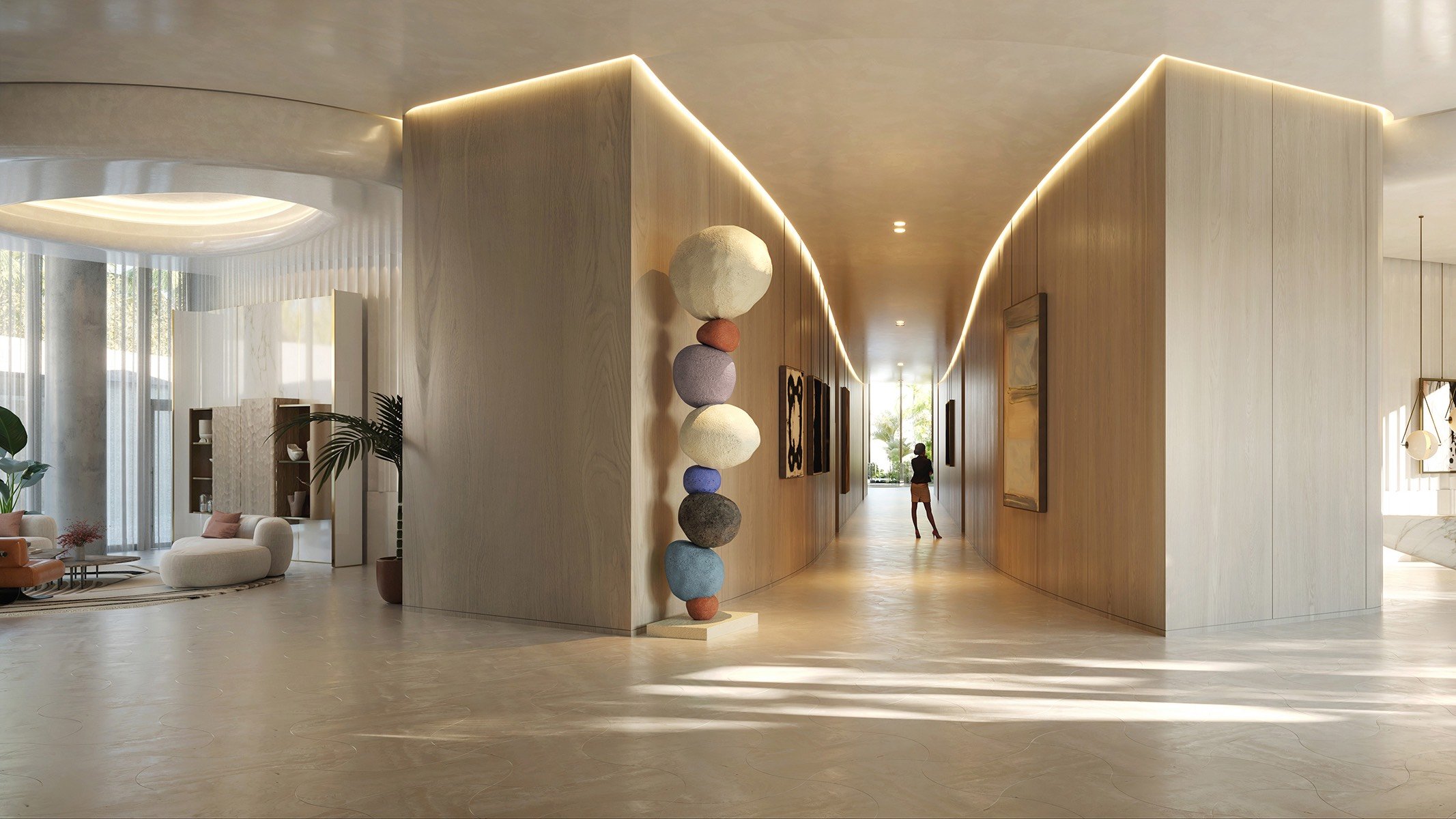
Miami’s luxury residential market has moved well past the familiar checklist of waterfront views, spa programming, and private elevators. In the most sought-after new construction, art has shifted from accessory to infrastructure. Buyers increasingly expect a building to read with the coherence of a tightly edited collection-intentional sightlines, controlled lighting, and arrival sequences that feel composed rather than simply decorative.
For residents, dedicated art galleries and curated installations deliver what standard amenities rarely can: a distinct sense of place that is immediate, memorable, and difficult to replicate. For developers, art-forward programming helps establish cultural credibility, draw neighborhood attention, and anchor a brand identity that carries into resale.
The nuance is that “art in the lobby” is not the same as a gallery or a curated public-installation program. A serious commitment is visible in architectural decisions: wall lengths designed for hanging, ceiling heights that support scale, glazing and lighting calibrated for viewing, and circulation paths that encourage repeated engagement. Even without a formally labeled gallery, the strongest projects plan for art the way they plan for landscaping-an evolving element that requires stewardship.
1. 888 Brickell by Dolce & Gabbana - fashion-house curation meets vertical living
A branded residence typically signals a defined aesthetic universe-and art becomes part of that grammar. With 888 Brickell by Dolce & Gabbana, the proposition reads as more than luxury finishes: a full sensory identity where collectible design, sculptural form, and curated environments are expected to be central.
For buyers who treat their home as an extension of personal collecting, this kind of brand-led curation can feel closer to a private club than a conventional condominium, with public-facing spaces designed to sustain visual impact beyond a single reveal.
2. The Residences at 1428 Brickell - gallery-like calm in a high-design core
Brickell’s strongest buildings balance energy with restraint. The most compelling art-forward approach here often leans into museum-adjacent quiet: clean planes, disciplined material palettes, and purposeful lighting that allows works to read clearly, without competing surface noise.
The Residences at 1428 Brickell suits the buyer who wants art to feel integral to the architecture-not layered on after the fact. Think of it as the difference between a space that displays art and a space designed to live with art.
3. Five Park Miami Beach - public realm presence with curated outdoor moments
In Miami Beach, art is at its most powerful when it shapes the neighborhood’s public realm-plazas, promenades, and landscaped edges where residents and visitors share the same visual experience. This is where curated installations can shift from amenity to civic identity.
Five Park Miami Beach sits in a context where the exterior experience matters as much as interiors, making it a natural candidate for art-led placemaking. For buyers, the value is twofold: a daily sense of cultural activation, and the reputational lift that comes when a building becomes a visual reference point.
4. Faena House Miami Beach - the art district ethos translated into residential scale
Some projects carry an art-first DNA that feels less like a marketing angle and more like a neighborhood philosophy. Faena House Miami Beach belongs in that category: a residence aligned with a broader ecosystem where art, performance, and design are part of the locale’s identity.
For collectors and culturally fluent buyers, the draw is continuity-private living within an environment that naturally supports exhibitions, installations, and curated experiences without forcing the narrative.
5. The Perigon Miami Beach - discreet monumentality with a collector’s sensibility
The most refined art integration is often the least literal. Instead of loud statements, it shows up as disciplined space-making: dramatic but controlled proportions, tactile materials, and a sense that every surface was selected with a curator’s eye.
The Perigon Miami Beach aligns with buyers who want a building to feel like a long-term hold-visually iconic yet understated, with common areas that can support significant works without turning daily life into a showroom.
A gallery is not a corridor with art on the walls. In luxury residential terms, “dedicated” should imply at least three things.
First, physical suitability. The best gallery-like spaces offer uninterrupted wall runs, stable climate control, and lighting that can be tuned, dimmed, and directed without hot spots. Second, intent in the plan. When the space is a true program element, it is positioned where residents actually pass through-or where small gatherings can happen-rather than hidden away as a leftover room.
Third, stewardship. A gallery needs editorial leadership and ongoing maintenance. When a project signals rotating programming or curated refreshes, it reads as a living environment rather than a static installation.
Public art can be a magnet. It shapes where people pause, where photos get taken, and how a property enters the city’s mental map. For residents, that matters because it reframes “arrival” as a daily ritual. A sculpture garden, a commissioned mural wall, or an integrated installation along a drop-off can provide the kind of emotional cue buyers still remember years later.
It also influences perception of safety and quality, because well-maintained public art signals ongoing care. The inverse is true as well: neglected installations can date a building quickly. When evaluating a project, buyers should ask whether installations are designed to weather coastal conditions, whether there is a conservation plan, and who holds responsibility for repairs and replacement.
In Brickell, where density and verticality dominate, art typically lives in the podium, the lobby sequence, and any landscaped edge that softens the street. In Miami Beach, the strongest public installations often integrate with open-air circulation, creating a gallery-walk feeling even when you are simply coming home.
Brickell is a natural home for art-forward vertical living because it already operates like a cosmopolitan core: residents entertain, dine, and move through days that blend business and culture. Projects such as 888 Brickell by Dolce & Gabbana and The Residences at 1428 Brickell speak to buyers who value strong design authorship-and common-area experiences that can stand beside a serious private collection.
Miami Beach, by contrast, rewards art that lives outdoors. It’s a place where a sculpture in a garden-or an installation that frames the skyline-becomes part of daily movement. Developments like Five Park Miami Beach and The Perigon Miami Beach are best assessed not only by interior finish, but by how they choreograph the transition from street to lobby to residence. That is where art and architecture can feel inseparable.
For buyers who prefer an art-district sensibility with a residential address, Faena House Miami Beach offers a context where design language and cultural fluency tend to align-which can matter as much as the art itself.
Art is emotional; buying is disciplined. When a building claims gallery space or curated installations, buyers should verify how it works in practice.
Start with lighting. Ask how artworks are lit at night, and whether the system is designed for rotation. Next, assess wall construction and finishes. True display walls aren’t an afterthought; they’re built to accept hanging systems without damage and to maintain a clean plane.
Then consider operations. Who selects the pieces? Are they permanent commissions, rotating loans, or a mix? Is there a conservation plan suited to humidity and salt air? If programming is promised, ask what the cadence looks like-and where residents will experience it: the lobby, outdoor grounds, amenity floors, or private event spaces.
Finally, consider privacy. The strongest projects capture public-facing impact while protecting resident discretion. A building can be culturally present without turning your front door into a tourist backdrop.
In ultra-premium real estate, resale strength often comes down to narrative. Floor plans matter, of course, but so does the story a building tells in a single image: the lobby, the exterior silhouette, the public installation that becomes its recognizable signature.
When art is integrated with intention, a building tends to age better. It signals discipline, supports a higher standard for common-area maintenance, and creates a lifestyle identity that competing inventory can’t easily replicate. For buyers, that can translate into a more resilient position across cycles-particularly in neighborhoods where new supply is constant.
What is the difference between a dedicated art gallery and a lobby with art? A dedicated gallery is designed for display and rotation, with proper lighting and wall systems. A lobby with art is typically decorative and less adaptable.
Do curated public installations add value to a residence? They can, especially when they strengthen a building’s identity and create a memorable arrival experience that supports long-term brand appeal.
Should buyers prioritize permanent commissions or rotating programming? Permanent works can define a signature, while rotation keeps spaces feeling current. The best outcome is often a mix supported by clear stewardship.
How can I tell if a project is serious about art? Look for purposeful display spaces, museum-like lighting, and a plan for maintenance and conservation rather than one-time decorative gestures.
Are branded residences more likely to have curated art? Often yes, because brand identity depends on cohesive visual storytelling. However, quality varies, so review the physical spaces and operations.
Does outdoor art require special maintenance in coastal Miami? Yes. Salt air, sun, and humidity demand materials and conservation planning suitable for long-term exposure.
Can art programming affect privacy for residents? It can if public areas are over-activated. The best buildings balance cultural visibility with controlled access and discreet circulation.
Is art integration more common in Brickell or Miami Beach? Both, but it often presents differently: Brickell favors interior gallery-like experiences, while Miami Beach leans into outdoor installations and placemaking.
What should I ask during a tour if a building mentions a gallery? Ask how lighting is managed, who curates selections, how often works change, and what policies exist for conservation and damage.
Can I display significant art in my own residence within these buildings? Generally yes, but consider ceiling heights, natural light control, and wall construction. Your advisor can help evaluate suitability for a collection.
For a tailored shortlist and next-step guidance, connect with MILLION Luxury.
If branded residences are on your mind — as a home or as an allocation — we would be glad to share what we are seeing, privately.
Begin a quiet conversation