A refined buyer’s guide to South Florida residences where privacy-minded owners can evaluate floor plans, circulation and service patterns for discreet wellness treatment rooms.
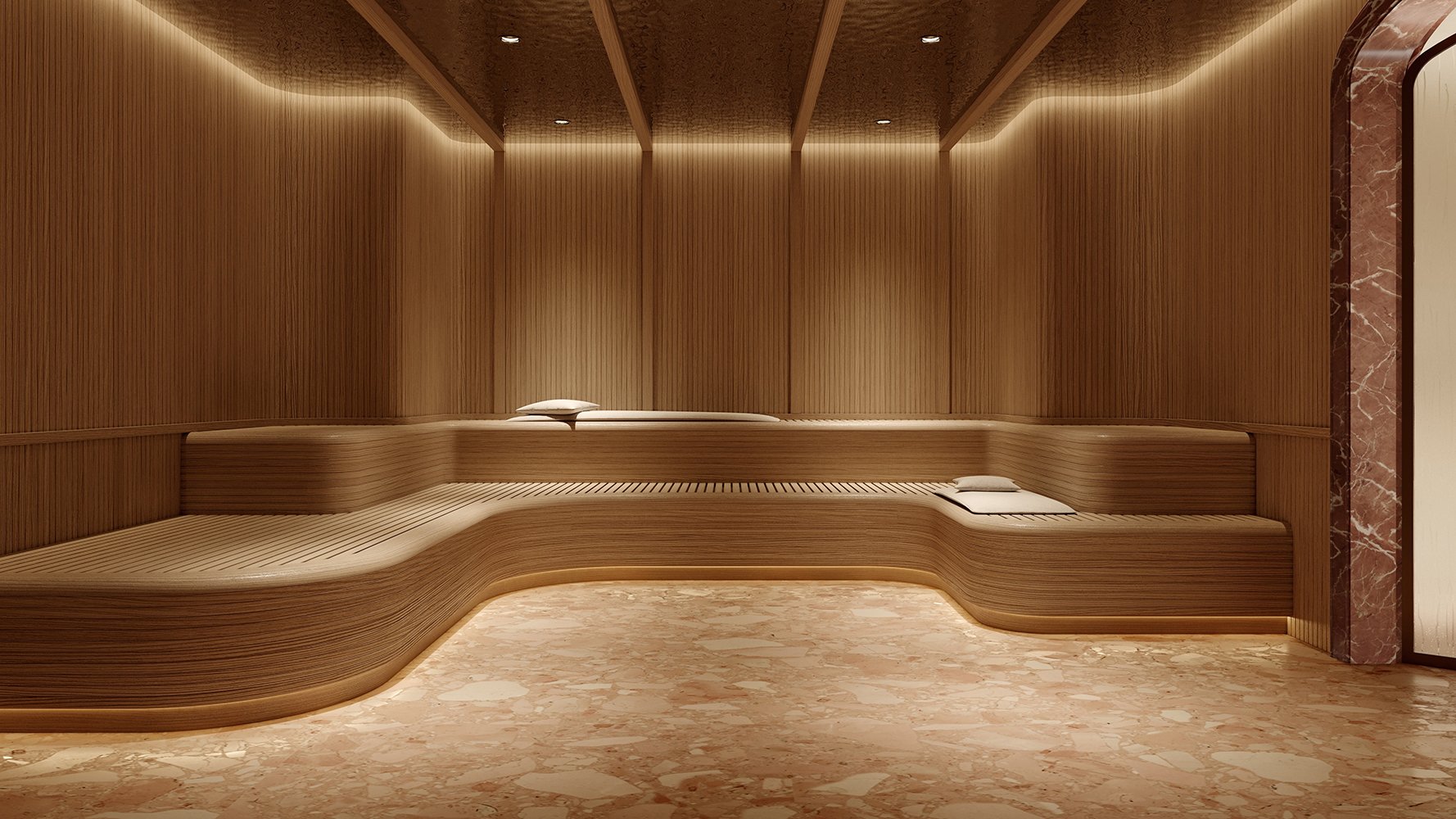
For a certain South Florida buyer, wellness is no longer a shared amenity story. It is a question of discretion, access and control. A private treatment room can support massage, bodywork, recovery, beauty services, meditation, stretching or quiet clinical-style routines. The appeal is not theatrical. It is the ability to receive care without moving through a lobby spa, working around a public schedule or trading privacy for convenience.
The best residences for this use are not necessarily those with the loudest wellness branding. They are the homes where the apartment itself can absorb a specialized room with dignity. A proper treatment room needs quiet, water-adjacent planning where feasible, strong ventilation, towel and product storage, concealed equipment zones, a clear path for a practitioner and enough separation from bedrooms, entertaining spaces and children’s areas. In South Florida, where many owners divide time among multiple homes, the room should also close down cleanly between visits.
In Brickell, buyers often focus on vertical privacy and service access. A residence such as The Residences at 1428 Brickell belongs in the conversation because the neighborhood attracts owners who want the intensity of the city while keeping personal routines behind closed doors. In quieter residential enclaves, the emphasis changes. The Well Bay Harbor Islands speaks directly to buyers who want wellness integrated into daily life rather than treated as an occasional indulgence.
A discreet treatment room begins with the floor plan. The best candidate is not a leftover den facing the main entertaining area. It is a room with a calm approach, a door that can remain closed, enough wall length for a treatment table and cabinetry, and lighting that can shift from practical to restorative. If the room sits near a secondary bath or powder room, the arrangement may become more useful, but buyers should review feasibility before assuming plumbing or electrical upgrades are simple.
Acoustics matter as much as finishes. A room with hard surfaces, a shared wall near an elevator core or direct exposure to a lively terrace may undermine the privacy the buyer is trying to create. The same applies to the entry sequence. A visiting therapist, trainer or nurse should not have to cross the full residence with supplies. The most elegant solution is often the least visible one: a secondary corridor, a service elevator route where available, a discreet parking handoff or a staff-friendly path that preserves the owner’s day.
Storage is the other luxury. Wellness rooms fail when robes, towels, oils, devices, laundry and cleaning supplies migrate into closets meant for fashion or linens. Buyers should think like hoteliers, then edit like private homeowners. The room should not feel commercial. It should feel considered, quiet and easy to maintain.
1. The Well Bay Harbor Islands - Bay Harbor Islands wellness address
This is the most intuitive starting point for a buyer who wants the home environment to support a wellness-oriented daily routine. The Bay Harbor Islands setting also appeals to owners who prefer a residential pace while remaining connected to Miami Beach, Bal Harbour and the mainland.
For treatment-room planning, the buyer’s review should focus on which layouts offer the most private secondary room, how visiting practitioners would arrive and whether the residence can accommodate storage without compromising the main living areas.
2. The Residences at 1428 Brickell - Brickell privacy in a high-rise setting
Brickell is a natural fit for buyers who want immediate access to business, dining and waterfront living while preserving a tightly controlled private life upstairs. In this context, a wellness treatment room becomes part of a larger pattern of efficiency.
The best unit for this purpose is one where a den, office or secondary suite can be separated from entertaining spaces. Buyers should study elevator approach, staff circulation, sound transfer and whether the room can remain serene even when the rest of the residence is active.
3. The Delmore Surfside - Surfside oceanfront discretion
Surfside attracts buyers who value beachfront calm without the same level of public intensity found in more visible resort corridors. For a wellness treatment room, that quieter identity can be an advantage if the unit plan supports separation and calm.
The priority is to avoid turning an ocean-facing showpiece room into a functional treatment zone. A better approach is a secondary room that benefits from natural light, privacy and proximity to bath or dressing areas while leaving the main view corridors untouched.
4. The Well Coconut Grove - Coconut Grove restorative rhythm
Coconut Grove has long appealed to buyers who want a softer daily cadence, more greenery and a residential feel. A wellness room in this setting should feel personal rather than performative, aligned with restorative living and quiet routines.
Buyers should consider whether a room can serve multiple functions without becoming vague. The ideal space might operate as a treatment room on certain days and a meditation, recovery or stretching room on others, provided storage and access are resolved.
5. Auberge Beach Residences & Spa Fort Lauderdale - Fort Lauderdale coastal privacy
Fort Lauderdale offers a different kind of privacy, with a coastal rhythm that suits owners who want resort ease but still prefer personal treatment within the residence. The name itself places spa living in the buyer’s mind, yet the in-unit question remains practical.
The strongest candidates will be residences where a treatment room can sit away from the primary bedroom’s most private zone while still feeling connected to the owner’s wellness routine. Arrival path, towel storage and sound management should guide the decision.
Discretion in Miami Beach and Surfside is often about choreography. The fewer transitions a practitioner must make through public or social spaces, the more successful the experience. Buyers comparing oceanfront residences should ask how a service visit works at the actual time it would occur, not just how it appears on a floor plan. Weekend traffic, valet patterns, elevator timing and guest policies all affect the experience.
At The Delmore Surfside, the Surfside context is part of the appeal for buyers who want a quieter coastal base. In Miami Beach, the question is often whether a residence can balance glamour with retreat. A treatment room should not compete with the living room, terrace or primary suite. It should support the owner’s life quietly, with no need to announce itself.
Some buyers prefer wellness spaces that feel less urban and more residential. Coconut Grove and Fort Lauderdale can satisfy that instinct in different ways. The Grove suggests canopy, privacy and a slower tempo. Fort Lauderdale offers water, beach access and a less compressed coastal rhythm. In both markets, the best treatment-room plan avoids over-customization. A room should feel elevated today, but flexible enough for a future buyer to understand it as an office, studio, guest room or recovery space.
For Grove buyers, The Well Coconut Grove is a natural reference point when the goal is a home shaped around restoration. In Fort Lauderdale, Auberge Beach Residences & Spa Fort Lauderdale offers a coastal lens for buyers who want the privacy of in-residence care while still appreciating a broader resort sensibility.
The most sophisticated wellness treatment rooms are reversible. They use millwork rather than permanent clutter, warm lighting rather than gimmicks and concealed storage rather than exposed equipment. A future buyer should be able to see the room as a refined private office, library, dressing extension or guest suite if their lifestyle differs.
This is where restraint becomes value. Avoid overly clinical finishes unless they are genuinely required. Choose surfaces that clean easily but still belong in a luxury residence. Keep technology hidden. Plan for linens, robes, sanitizing supplies and small devices without turning the room into a storeroom. Above all, preserve the hierarchy of the home. The primary suite should remain the sanctuary, the living room should remain the social heart and the treatment room should operate as a private supporting act.
What is a discreet wellness treatment room? It is a private in-residence room planned for treatments, recovery or restorative services without relying on a shared amenity space.
Does a treatment room need plumbing? Not always, but proximity to a bath or powder room can make the room more practical for towels, handwashing and post-treatment routines.
Which South Florida area is best for this lifestyle? It depends on pace: Brickell suits urban efficiency, Surfside favors quieter coastal privacy and Coconut Grove supports a softer residential rhythm.
Should the treatment room be near the primary suite? It can be, but it should not compromise the privacy or serenity of the primary bedroom, dressing areas or bath.
Can a den become a wellness room? Yes, if the den has privacy, acoustic control, suitable lighting, storage and a sensible path for a visiting practitioner.
Is a branded wellness residence always the best choice? Not necessarily. The floor plan, access sequence and ability to preserve discretion matter more than branding alone.
How should buyers think about resale? The room should be elegant and flexible, so a future owner can understand it as an office, studio, guest room or private retreat.
What should be avoided in the design? Avoid overly clinical finishes, exposed equipment, poor storage and any layout that forces practitioners through the main social spaces.
Are oceanfront residences good for wellness rooms? They can be, but the treatment room should not consume the best entertaining or view space unless the overall plan still feels balanced.
What is the first question to ask when touring? Ask how a practitioner would arrive, set up, work and leave without disrupting the owner’s privacy or the flow of the home.
For a tailored shortlist and next-step guidance, connect with MILLION.
If branded residences are on your mind — as a home or as an allocation — we would be glad to share what we are seeing, privately.
Begin a quiet conversation