A buyer-focused guide to evaluating quiet-floor selection at Auberge Beach Residences & Spa Fort Lauderdale, with emphasis on tower, stack, orientation, amenity adjacency, terrace performance, and practical on-site due diligence.
At Auberge Beach Residences & Spa Fort Lauderdale, the promise is inherently sensory: Atlantic light, broad terraces, resort-style service, and the immediacy of oceanfront living on Fort Lauderdale Beach. Yet for many discerning buyers, particularly those seeking a primary residence or a composed seasonal retreat, the most important luxury is not the view alone. It is quiet.
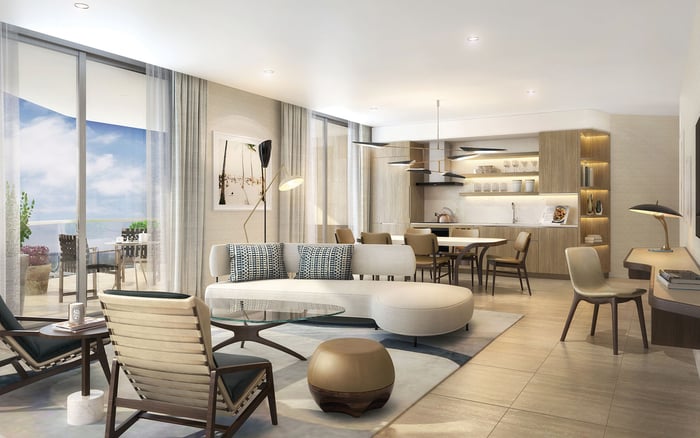
Auberge Beach Residences & Spa Fort Lauderdale is a luxury oceanfront condominium development composed of two glass-clad residential towers oriented toward the ocean. Residences are designed around expansive outlooks, including Atlantic Ocean exposure and, depending on the line, city or Intracoastal perspectives. Large terraces and indoor-outdoor living are central to the experience, which makes acoustic due diligence more nuanced than simply choosing the highest available floor.
The better question is not, “Which floor is quietest?” It is, “Which tower, stack, orientation, and adjacency best match how I want to live?” In a private buying brief, labels such as Fort-lauderdale, Oceanfront, Terrace, Pool, and High-floors can frame the search, but none can replace an acoustic walk-through.
A higher floor may feel intuitively calmer, and sometimes it is. But height does not eliminate sound when a residence has direct exposure to active areas. A line with open sightlines toward roadways, amenity decks, rooftop or mechanical areas, or event-oriented spaces may carry more sound than a lower residence protected by massing and orientation.
At resort-style properties, sound moves in patterns. Pool energy may rise during the day. Restaurant and bar activity can become more noticeable in the evening. Arrival courts, valet movement, and service circulation each have their own rhythm. Beachfront sound is also not silent. Waves, wind, beach activity, and seasonal events can shape the atmosphere even in coveted ocean-facing residences.
This is not a flaw in the product. It is the nature of a vibrant oceanfront branded residence. Buyers who also tour Four Seasons Hotel & Private Residences Fort Lauderdale and St. Regis® Residences Bahia Mar Fort Lauderdale will recognize the broader principle: in hospitality-driven buildings, serenity depends on the precise relationship between private space and shared experience.
The first quiet-floor conversation should begin with a marked plan. Understand how each candidate residence sits in relation to pools, restaurants, spa spaces, beach operations, arrival areas, valet lanes, service zones, elevator cores, and back-of-house functions. Do not rely on a general statement that a unit is “above the activity” or “away from the amenity deck.” Ask for the specific adjacency.
Lower and podium-adjacent residences deserve particular attention because they may sit closer to pool decks, dining areas, arrival activity, and amenity circulation. That does not automatically make them undesirable. Some buyers prize their immediacy, terrace scale, and connection to the property’s resort atmosphere. But the decision should be conscious rather than assumed.
Corner residences require an additional layer of review. A corner line can deliver dramatic dual exposure, yet it may also receive sound from two directions, such as ocean and amenity areas on one side and city or road corridors on another. The most desirable corner for view may not be the most discreet corner for sound.
Ocean-facing residences at Auberge Beach are naturally compelling, particularly for buyers drawn to sunrise, water texture, and the theatrical scale of the Atlantic. Still, ocean exposure can include wind, surf, beachgoers, and occasional activity along the sand. When balcony doors are open, the soundscape becomes part of the residence’s character.
City- or road-oriented lines should be evaluated differently. The concern is less wave and beach activity, and more Fort Lauderdale Beach traffic, nightlife energy, and evening movement. A residence that feels serene at noon on a weekday may feel different during a weekend evening or peak-season period.
Intracoastal or city views, where available by orientation, may offer a more layered urban perspective. The question is whether that orientation also opens the residence to roadway corridors or active hospitality zones. For buyers comparing the broader Fort Lauderdale luxury market, Riva Residenze Fort Lauderdale offers a useful reminder that waterfront calm is always site-specific. Water view, tower position, and surrounding activity must be read together.
Begin with the tower and stack. Which side of the building does the residence occupy? What does it face directly, not merely generally? Are there open sightlines to pools, restaurant terraces, arrival areas, roadways, beach operations, or event-capable spaces? What sits above, below, beside, and behind the residence?
Then ask about mechanical equipment, exhausts, elevator cores, service areas, and amenity back-of-house spaces. The key is not simply whether such functions exist; every full-service building has them. The key is their exact location relative to the unit under consideration.
Next, study the openings. Quiet-floor selection should include inspection of sliding-door seals, balcony-door performance, glazing condition, and any leakage around large openings. At a residence designed around indoor-outdoor living, the terrace is part of the lifestyle, but the door system is part of the acoustic envelope.
Finally, test the residence when it is most likely to be challenged. Visit during daytime pool hours, evening dining or bar periods, weekends, and high-season beach activity if possible. A quiet Tuesday morning is useful, but it is not the whole truth.
For a serious buyer, the most effective approach is to create a simple matrix. Compare each residence by tower, stack, orientation, floor level, proximity to amenity areas, proximity to arrival and valet, exposure to beach activity, exposure to road or nightlife corridors, and condition of door and glazing systems. The goal is not to eliminate every trace of life. The goal is to select the sound profile that supports your intended use.
A seasonal owner who entertains frequently may accept more amenity energy in exchange for a dramatic terrace and a resort-forward atmosphere. A full-time resident who works from home may prioritize a more shielded stack, stronger separation from amenity decks, and less evening exposure. A buyer planning extended family stays may care most about bedrooms, sleeping hours, and the acoustic privacy of guest suites.
The best comparisons happen in person. Floor plans and view lines matter, but sound is experiential. Stand in the primary bedroom. Close the sliders. Open them. Walk the terrace. Listen from the living room and from secondary bedrooms. Repeat the test at a different hour before making a final decision.
Auberge Beach is designed for a polished oceanfront lifestyle, not a monastic one. Its value lies in the combination of branded residence service, resort-style amenities, beach proximity, glass architecture, and expansive indoor-outdoor living. Quiet-floor selection is therefore less about finding a universally “quietest” floor and more about matching a specific residence to a specific buyer’s tolerance, schedule, and expectations.
This is where experienced representation matters. A well-advised buyer will not treat the floor number as the conclusion. They will ask for adjacencies, inspect the openings, visit at realistic times, and compare the unit against the lived rhythm of the property. In South Florida’s top tier, privacy and pleasure are often separated by details measured in orientation, stack, and a few doors of distance.
Is the highest floor always the quietest at Auberge Beach? No. A higher floor can still receive sound if it faces roadways, amenity decks, mechanical areas, or active beachfront spaces.
Should ocean-facing residences be considered quieter? Not automatically. Ocean-facing homes may receive wind, wave, beach, and event-related sound, especially when terrace doors are open.
What should buyers ask about before selecting a floor? Ask about tower, stack, orientation, amenity adjacency, mechanical areas, elevator cores, service spaces, and back-of-house locations.
Are lower floors a poor choice for quiet living? Not necessarily. Lower or podium-adjacent residences simply require closer review for pool, restaurant, arrival, valet, and amenity-deck exposure.
Why do corner residences need extra acoustic review? Corners may have dual exposure, which can mean receiving sound from both ocean or amenity areas and city or road corridors.
When should a buyer visit a candidate residence? Visit during pool hours, evening restaurant periods, weekends, and high-season beach activity to understand the real sound profile.
Do terrace doors affect quiet-floor selection? Yes. Sliding-door seals, balcony-door performance, glazing condition, and sound leakage around large openings are critical details.
How should city-facing lines be evaluated? Review exposure to Fort Lauderdale Beach traffic, nightlife movement, and evening activity rather than relying only on the floor number.
Can resort-style amenities affect residential quiet? Yes. Pools, restaurants, spa areas, beach operations, valet, and service circulation can all influence the acoustic character of a unit.
What is the best way to choose between two similar residences? Compare tower, stack, orientation, adjacency, glazing performance, and real-time visits before deciding which residence best fits your lifestyle.
If you'd like a private walkthrough and a curated shortlist, connect with MILLION.
If branded residences are on your mind — as a home or as an allocation — we would be glad to share what we are seeing, privately.
Begin a quiet conversation