A discreet guide for philanthropic couples evaluating South Florida waterfront homes, with focus on flood, wind, liability, collections, events, boats and annual insurance strategy.
For philanthropic couples, a South Florida waterfront home is rarely just a private retreat. It may serve as a family compound, winter residence, setting for donor salons, discreet board dinners, foundation retreats, or the point of departure for guests on the water. That layered use is precisely why insurance planning should begin before the purchase contract becomes emotionally irreversible.
The romance of water can obscure a practical truth: waterfront exposure is different. Storm surge is an abnormal rise of water generated by a storm above predicted tides, and it can produce severe coastal flooding. Long-term local sea-level trends also vary by location, so waterfront due diligence should consider both today’s map and tomorrow’s assumptions. Official flood maps are a baseline, not a complete portrait of a specific home’s risk.
This is as relevant to a Miami Beach search near The Perigon Miami Beach as it is to a Brickell buyer comparing bay and river perspectives around St. Regis® Residences Brickell. The correct question is not simply whether a residence is insurable. It is whether the insurance program matches the couple’s balance sheet, lifestyle, collections, staff model and philanthropic visibility.
Most homeowners insurance does not cover flooding. That single fact should shape the entire waterfront acquisition timeline. Buyers generally need separate flood insurance or private flood coverage, and residential flood limits available through standard public-market programs may be insufficient for luxury homes with high replacement costs, significant contents, art, wine, custom millwork, imported stone or specialized mechanical systems.
Flood pricing increasingly reflects property-specific variables: distance to water, flood frequency, flood type and replacement cost. As a result, two residences in the same neighborhood can produce very different underwriting outcomes. Roof age, elevation, prior claims, flood zone, coastal position and replacement-cost assumptions can all influence eligibility and pricing.
Wind is its own discipline. Hurricane deductibles and named-storm deductibles can differ materially from the standard all-other-perils deductible. A couple should model these deductibles not as fine print, but as liquidity planning. On a high-value waterfront home, a percentage deductible can become a significant out-of-pocket exposure.
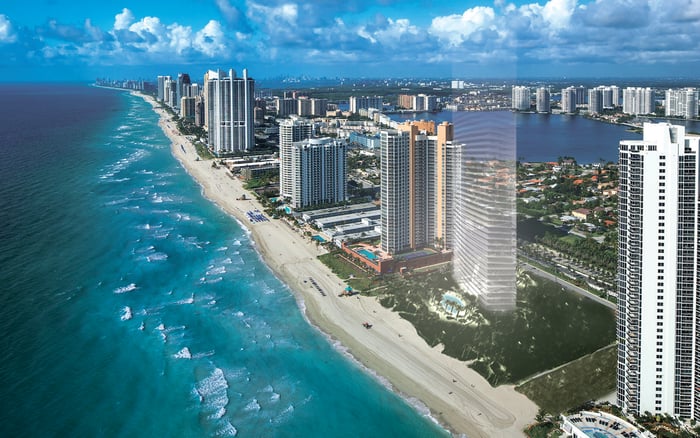
For Sunny Isles Beach buyers weighing vertical coastal living near Bentley Residences Sunny Isles, or Fort Lauderdale clients considering waterfront life near Four Seasons Hotel & Private Residences Fort Lauderdale, the same principle applies: the insurance review should be tied to the structure, not just the ZIP code. Elevation, building hardening, roof condition, openings, generators, seawalls, docks, lifts, pools, guest houses, outdoor kitchens and landscaping should be discussed specifically.
A couple who hosts occasional family weekends presents one risk profile. A couple who hosts donor briefings, seated charity dinners, small performances, foundation meetings, visiting staff or board retreats presents another. Standard homeowners policies include personal liability coverage, but paid staff, frequent hosted functions, foundation activities or public-facing events may require separate review.
The planning conversation should begin with use. Will the residence remain private only? Will it host annual benefit events? Will guests arrive by boat? Will temporary structures be installed on the grounds? Will vendors, valet teams, caterers, musicians, security personnel or outside art handlers be present? These details can affect event liability, workers exposure, liquor liability, contractual indemnities and the limits required from vendors.
Umbrella liability coverage can add protection above homeowners, auto and watercraft liability limits. For philanthropic couples, it is not merely a larger number. It is part of reputation management. Defense counsel expectations, claim-handling protocol, privacy controls and crisis-response resources should be understood before an event calendar is built around the residence.
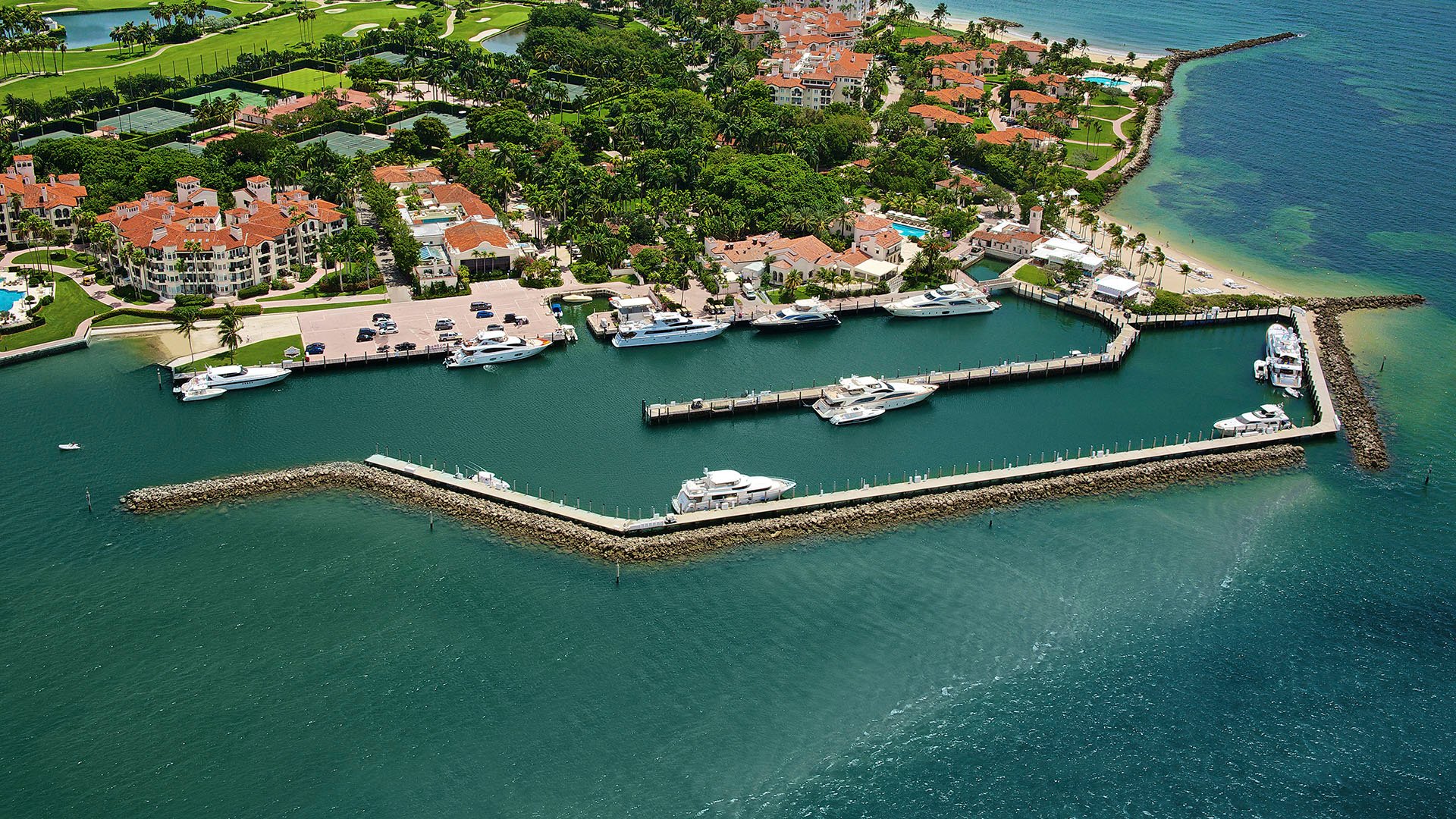
For Fisher Island households, including buyers considering The Residences at Six Fisher Island, the issue is not only physical exposure. It is the intersection of privacy, guests, transportation, staff and high-value personal property.
High-net-worth waterfront ownership often requires layered coverage. Homeowners, windstorm, flood, excess liability, marine, art, jewelry, collectibles, cyber-related household exposures and event coverage may sit under different policies. The quality of the program depends on how well those policies work together.
Collections deserve separate attention. Art, jewelry, wine, design objects and collectibles often require scheduled coverage or specialized policies because standard homeowners policies may impose sublimits. Couples should also discuss where works are located within the home, whether they are moved for events, how they are stored during storm preparation and who is authorized to handle them.
Watercraft is another frequent blind spot. Boats, tenders, docks, lifts and guest outings should be reviewed separately because hull coverage and boat-related liability are commonly addressed through watercraft policies. If the home’s lifestyle includes sunset cruises with donors or family office guests, the marine adviser and insurance broker should be in the same conversation.
Florida’s property insurance market is regulated, but regulation does not guarantee that a private carrier will offer affordable coverage for a high-value coastal property. Citizens Property Insurance Corporation is a state-created property insurer with eligibility rules, coverage-limit constraints and potential assessments after major storms. It should not be treated as a universal solution for ultra-luxury ownership.
Insurance should be quoted and reviewed during the due diligence period, not after inspection contingencies have passed. Flood coverage often has a waiting period before it becomes effective, so waiting until the final days before closing can create avoidable risk.
The acquisition team should coordinate early: insurance broker, estate attorney, tax adviser, property manager, marine adviser, security consultant and, where relevant, the foundation’s counsel. The team should request written clarity on deductibles, exclusions, sublimits, ordinance or law issues, loss settlement terms, temporary housing, contents, collections, staff quarters, seawalls, docks, generators and event use.
Buyers should also review local evacuation and storm-surge planning resources to understand whether a property sits within an evacuation zone. This is not only an emergency planning matter. It influences staffing, collections movement, generator strategy, vehicle staging and whether the couple can responsibly host during hurricane season.
Finally, insurance planning is not a one-time closing task. Coastal availability, premiums, deductibles and exclusions can change quickly. Re-shopping and re-underwriting annually helps preserve options, especially after renovations, major acquisitions, roof work, seawall improvements, staff changes or a shift from private use to philanthropic entertaining.
Does standard homeowners insurance cover flood damage? Most homeowners policies do not cover flooding, so waterfront buyers generally need separate flood insurance or private flood coverage.
Are official flood maps enough for waterfront due diligence? They are a baseline, but buyers should also evaluate property-specific conditions such as elevation, distance to water and replacement cost.
When should a buyer begin obtaining insurance quotes? During due diligence. Flood coverage often has a waiting period, and late binding can create unnecessary closing risk.
Why do philanthropic events affect insurance planning? Donor events, board meetings, vendors, staff and guests can create liability exposures beyond ordinary private residential use.
Should art and jewelry be covered separately? Often, yes. High-value personal property may need scheduled coverage or specialized policies because standard policies can include sublimits.
How should boats and docks be reviewed? Boats, tenders, docks, lifts and guest outings should be evaluated with marine coverage and watercraft liability in mind.
Can Citizens solve coverage issues for luxury waterfront homes? Not necessarily. Eligibility rules, coverage limits and possible assessments mean it may be only one part of a broader insurance strategy.
What deductibles deserve special attention? Hurricane and named-storm deductibles can differ materially from standard deductibles and should be modeled as liquidity exposure.
Why does an evacuation zone matter before purchase? It affects storm planning, staff protocols, art movement, vehicle staging and the practical use of the home during hurricane season.
How often should coverage be reviewed after closing? Annually, and after major renovations, collection purchases, staffing changes, seawall work or expanded philanthropic hosting.
For a discreet conversation and a curated building-by-building shortlist, connect with MILLION.
If branded residences are on your mind — as a home or as an allocation — we would be glad to share what we are seeing, privately.
Begin a quiet conversation