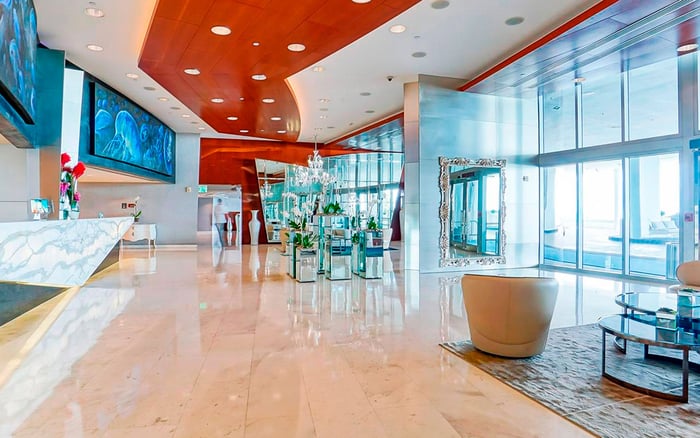
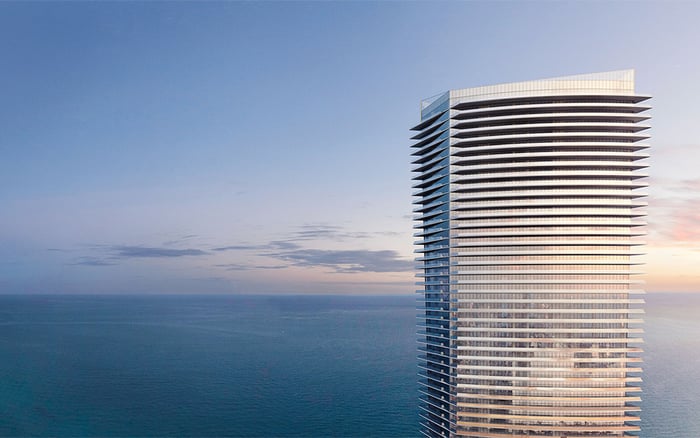
Smart-home cybersecurity is becoming a practical luxury-home filter, especially when comparing Hallandale Beach and Sunny Isles Beach. The strongest decision is less about fear and more about governance, vendor access, privacy expectations, and how each building supports connected living.
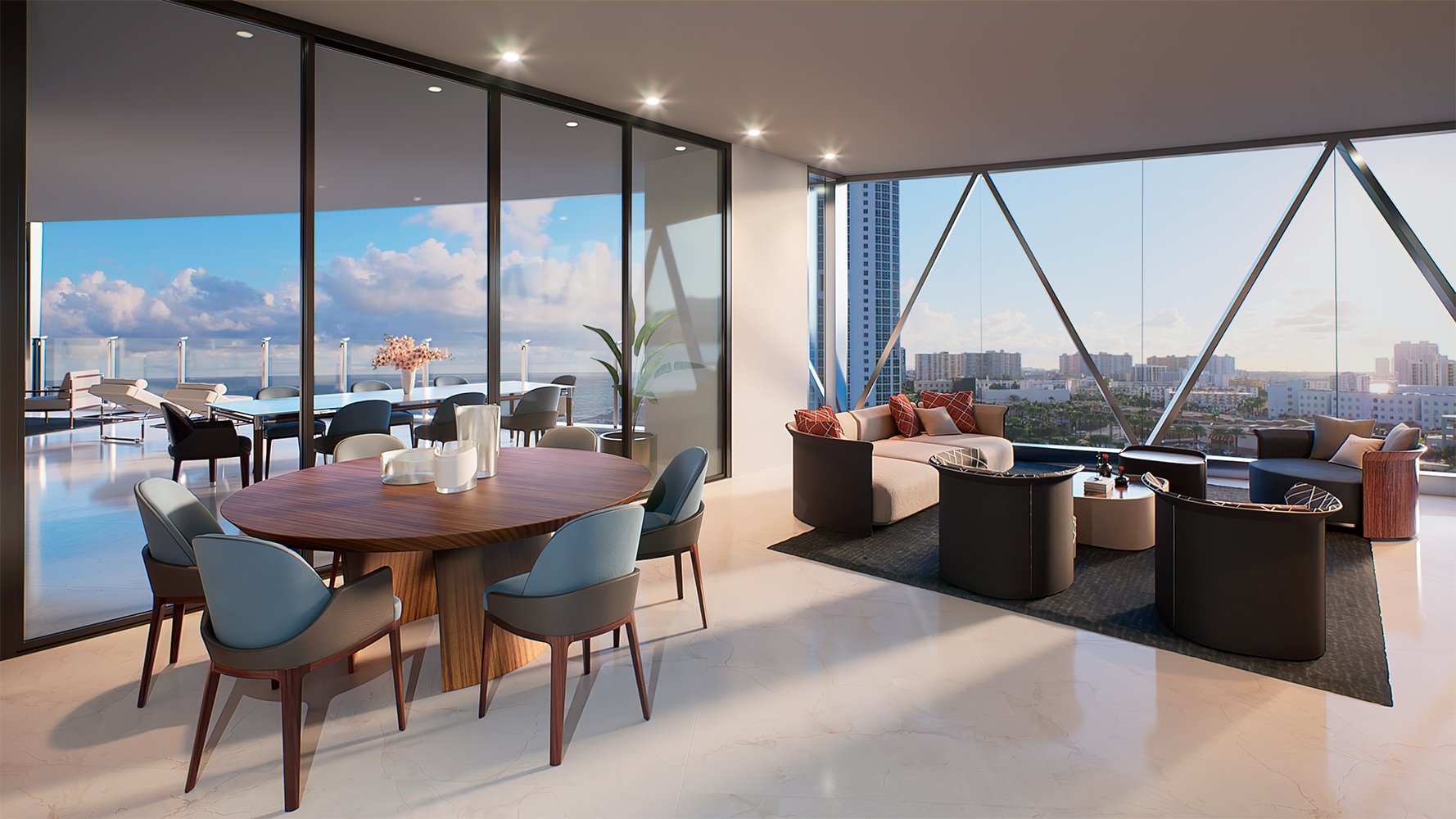
The modern luxury residence is no longer defined only by view, volume, finish, and service. It is also defined by the invisible systems that make daily life feel effortless: lighting scenes, climate control, access management, video intercoms, package notifications, remote shutters, wellness settings, entertainment platforms, and app-based building communication. For a South Florida buyer comparing Hallandale Beach and Sunny Isles Beach, that convenience introduces a quieter question: who controls the digital front door?
Cybersecurity is not replacing traditional priorities. Beach access, architecture, brand, privacy, floor plan, and long-term value still matter. But for sophisticated owners, especially those with multiple homes, household staff, visiting family, and frequent travel, the technology layer can shape how two neighboring coastal markets are evaluated. The strongest choice is not simply the building with more features. It is the building where connected systems feel controlled, intelligible, and well governed.
Hallandale Beach often enters the conversation for buyers who want South Florida waterfront living with a measured, residential rhythm. In that setting, smart-home cybersecurity can reinforce a preference for restraint. A buyer may ask whether the residence can operate elegantly without every function depending on a cloud account, whether vendor access can be limited after installation, and whether household members can be assigned different permission levels.
That lens is especially relevant when considering projects such as 2000 Ocean Hallandale Beach, where buyers may evaluate how in-residence systems, building communications, and personal devices can coexist without creating a single point of exposure. The strongest Hallandale Beach fit may be a home where technology supports calm rather than calling attention to itself.
For some buyers, Shell Bay by Auberge Hallandale also brings cybersecurity into a broader lifestyle discussion. The question is not only what the residence can do, but who can access each layer, how changes are approved, and how the owner can simplify or segment systems over time. In this sense, the Hallandale choice can become a vote for curated connectivity.
Sunny Isles Beach is frequently associated with a more vertical, amenity-rich luxury environment. For buyers drawn to that energy, the cybersecurity conversation becomes more comprehensive. More service interaction can mean more digital touchpoints: guest access, valet coordination, residence controls, elevator permissions, building apps, deliveries, and communication with management.
At Bentley Residences Sunny Isles, the buyer’s technology questions should be as polished as the design conversation. Who manages software updates? Are building systems separated from private residence systems? Can owners audit user permissions? How are former vendors, staff members, or short-term guests removed from access after their role ends?
The same discipline applies when assessing St. Regis® Residences Sunny Isles. A high-touch environment can be exceptionally convenient, but convenience should be paired with clarity. Sunny Isles Beach may be ideal for the buyer who values service, scale, and prestige, provided the building can explain its approach to digital governance in plain language.
Cybersecurity due diligence should begin before finishes and furniture dominate the conversation. A buyer should ask for a clear map of connected systems: what belongs to the residence, what belongs to the building, what is operated by third-party vendors, and what depends on owner-managed accounts. If that map cannot be explained clearly, the risk may not be a technical flaw. It may be a governance flaw.
The next question is access. A luxury home can involve designers, installers, audiovisual teams, property managers, housekeepers, family offices, drivers, chefs, and visiting guests. Each party may need temporary access to something. The buyer should know whether permissions can be time-limited, role-based, and revoked without disrupting the rest of the system.
Updates are another critical point. Smart systems should not be frozen at delivery. Owners should understand who updates firmware and software, how notifications are handled, and whether updates are tested before they affect daily living. A residence that works beautifully on day one still needs a plan for year three.
Finally, the owner should ask what happens during failure. Can doors, elevators, climate systems, shades, and essential functions operate in a practical way if an app is unavailable, a network is down, or an account is locked? True luxury includes graceful fallback.
The cybersecurity lens does not declare one market superior. It clarifies personality fit. Hallandale Beach may suit the buyer who wants fewer digital layers, tighter personal control, and a quieter operating environment. Sunny Isles Beach may suit the buyer who welcomes a more expansive service platform and is willing to investigate how that platform is secured.
The most important shift is psychological. Instead of asking, “Which residence is smarter?” the sharper question is, “Which residence gives me more confidence?” Confidence comes from transparency, access discipline, update planning, and the ability to separate personal privacy from building convenience.
For a primary residence, that may mean prioritizing daily usability and staff protocols. For a second home, it may mean remote monitoring, vendor oversight, and simple owner controls from abroad. For a family residence, it may mean individual access settings for children, guests, and caregivers. In every case, smart-home cybersecurity turns a location comparison into an operating-style comparison.
Ask for a technology orientation before closing. Request documentation for owner-controlled systems, vendor-installed systems, and building-controlled systems. Confirm whether passwords, administrative accounts, and installer credentials are transferred properly. Ask whether the building has a consistent process for onboarding and offboarding residents, staff, and approved vendors.
For Sunny Isles buyers comparing multiple towers, the answers may reveal important differences in management culture. For Hallandale buyers reviewing boutique or resort-style environments, they may reveal whether the technology experience is appropriately tailored. In both cases, the goal is not to become an engineer. The goal is to ensure that a luxury residence remains private, convenient, and resilient.
The best smart home is not the one with the longest feature menu. It is the one where the owner understands the controls, trusts the stewardship, and can live beautifully without wondering who else has access.
Should cybersecurity affect my choice between Hallandale Beach and Sunny Isles Beach? Yes, if connected systems, building apps, remote access, or staff permissions are part of your daily lifestyle.
Is a more connected building automatically less secure? No, but more connected environments require clearer governance, stronger access controls, and better owner education.
What is the first cybersecurity question to ask a sales team? Ask which systems are controlled by the owner, the building, and outside vendors.
Why might Hallandale Beach appeal to privacy-focused buyers? It may appeal to buyers who prefer a more selective approach to connected living and digital complexity.
Why might Sunny Isles Beach still be the better fit? Sunny Isles Beach may suit buyers who value a high-service environment and are comfortable assessing its digital systems.
Should I ask about vendor access before closing? Yes, because installers and service providers often create accounts or permissions that should be reviewed and revoked when appropriate.
What does graceful fallback mean in a smart residence? It means essential functions can still operate sensibly if an app, account, or network connection is unavailable.
Can cybersecurity influence resale appeal? It can, because organized systems and clear documentation make a connected residence easier for the next owner to understand.
Should family offices be involved in the review? For high-net-worth buyers, a family office or trusted technology adviser can help evaluate access, privacy, and maintenance protocols.
What is the simplest rule for smart-home due diligence? If a system touches access, privacy, or daily comfort, the owner should know who controls it and how it is maintained.
For a confidential assessment and a building-by-building shortlist, connect with MILLION.
If branded residences are on your mind — as a home or as an allocation — we would be glad to share what we are seeing, privately.
Begin a quiet conversation