A discreet guide to designing Palm Beach estate entrances that balance architectural grace, coastal resilience, privacy, life safety and layered access control.
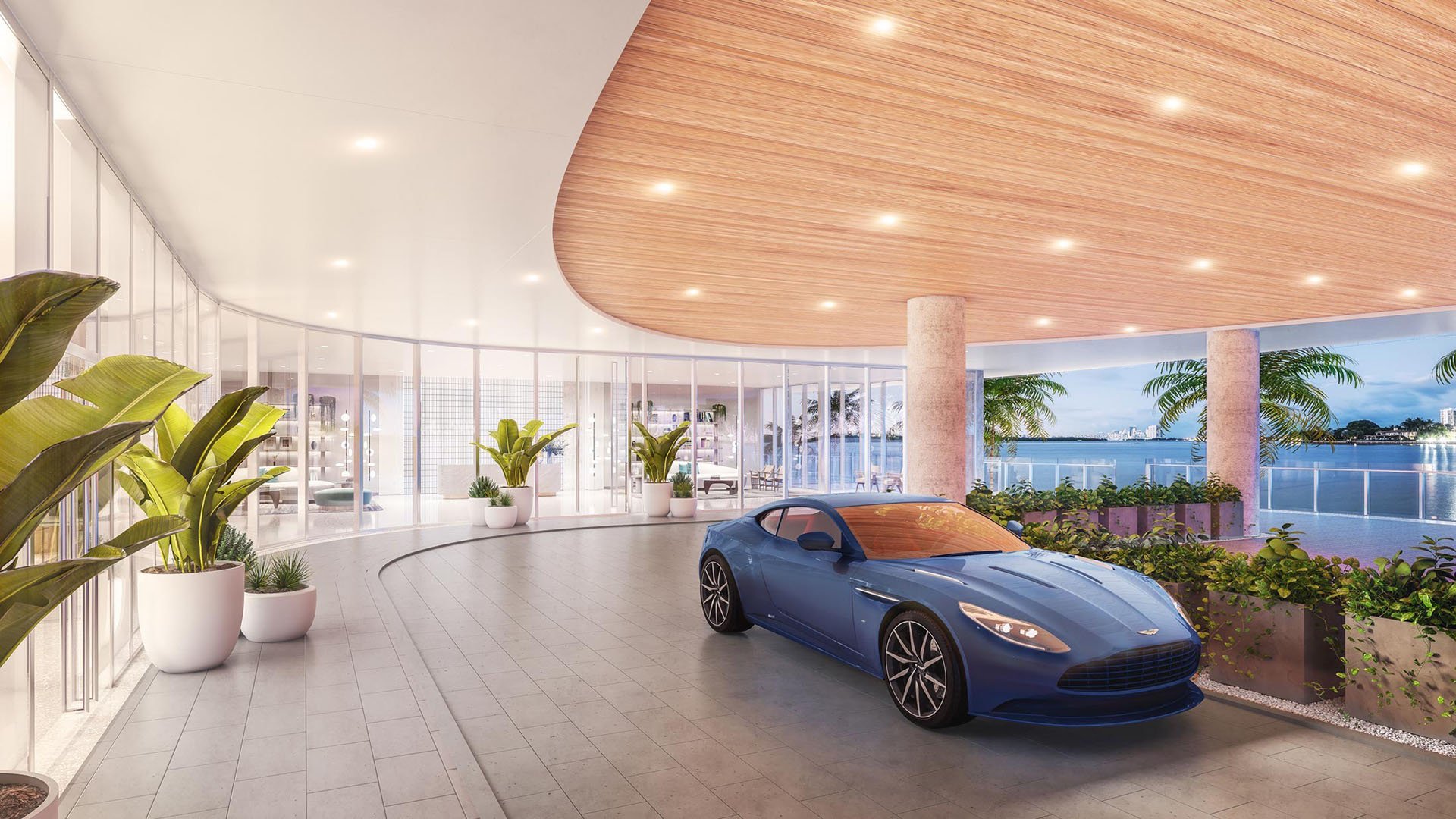
In Palm Beach, the most successful estate entrance does not announce fear. It communicates order, privacy and calm. A gate may be the most visible element, but it is only one layer in a broader protective envelope that should begin with a formal security risk assessment. The objective is to understand how residents, guests, service providers, deliveries and emergency responders will move through the property before architecture, landscape and technology are fixed in place.
For ultra-premium homes, the entrance is both threshold and service instrument. It must preserve the ceremonial arrival expected of a significant coastal residence while supporting access control, surveillance, territorial definition and emergency operations. That balance is especially important for Palm Beach buyers, where a militarized frontage can diminish the elegance of an otherwise exceptional estate.
The same thinking applies beyond single estates. Buyers studying Palm Beach Residences, South Flagler House West Palm Beach or other full-service residential settings often evaluate security as part of the arrival experience, not as a separate technical feature. The question is not simply whether a property is protected. It is whether protection has been made graceful.
A security entrance should begin with three parallel studies: risk, regulation and circulation. Risk clarifies what the entrance is meant to deter or manage. Regulation establishes the limits for walls, fences, gates, gatehouses, setbacks and architectural character. Circulation determines whether residents, guests, vendors and emergency vehicles can move without conflict.
In Palm Beach, those code and zoning questions should be addressed early, not after a masonry wall or gatehouse has been designed. A beautiful concept can become expensive to revise if setbacks, visibility requirements or architectural review expectations are misread. Entrance driveways and landscape features must also preserve safe vehicular sightlines, particularly where a private road meets a public right-of-way.
The most refined entrances create a sequence rather than a single stop. A driver should understand where to pause, where to present credentials and where to proceed without confusion. When site geometry allows, resident access, guest processing, service and vendor movement, and emergency access should be separated. Queue space matters as much as gate style. Visitor screening should not push traffic onto public roads or compromise the daily convenience a luxury estate is meant to provide.
On the South Florida coast, security infrastructure must be designed for weather as well as people. Hurricane wind, windborne debris, heavy rain and flood exposure are not peripheral concerns. They shape the durability of gates, gatehouses, columns, access panels, cameras, intercoms, bollards and control rooms.
Flood-zone mapping should inform entrance grading, drainage, equipment elevation and the placement of any staffed gatehouse or control space. Low-lying and coastal locations may need entrance systems that can tolerate temporary water exposure while protecting power, communications and operating hardware. A gate that cannot function during an outage, storm or evacuation can become a life-safety problem as well as a security issue.
Marine exposure is equally consequential. Salt air accelerates corrosion, especially on metals, fasteners, hinges, operators, enclosures and exposed electronics. For an oceanfront estate or a waterfront residence near West Palm Beach, specifying corrosion-resistant materials is not a cosmetic decision. It is a performance requirement. Coatings, stainless or otherwise appropriate hardware, sealed enclosures and routine maintenance schedules should be treated as part of the design package.
This resilience mindset is also relevant for buyers comparing full-service coastal residences such as The Ritz-Carlton Residences® West Palm Beach or The Bristol Palm Beach, where arrival, access control and storm preparedness converge in the overall ownership experience.
A luxury entrance works best when physical design, human procedure and technology reinforce the same plan. Cameras, lighting, credential checks, license-plate recognition, guard protocols and physical barriers should not operate as isolated features. They should support a layered screening model in which each element compensates for the limitations of the others.
Automated vehicular gates should be designed with recognized safety requirements for gate operators and entrapment protection, including UL 325. Physical gate construction should also account for ASTM F2200 safety principles for automated vehicular gate systems. Where a credible vehicle-ramming risk exists, bollards, wedge systems or other barriers should be selected using tested crash ratings such as ASTM F2656/F2656M rather than relying on visual mass alone.
The key is restraint. A well-designed bollard line can be integrated into stone piers, landscape edges or formal paving. Lighting can support camera performance without washing the facade in glare. Intercoms and credential readers can be placed at a comfortable driver height and finished to match the architecture. The best entrances feel inevitable, not retrofitted.
Palm Beach landscape design can soften the visual impact of security infrastructure, but planting cannot be allowed to undermine the security plan. Hedges, palms, walls and understory planting should preserve camera views, maintain driver sightlines and avoid creating concealed waiting areas near the gate or pedestrian entry.
Territorial definition can be subtle. A change in paving, a low wall, a clipped hedge, a water element or a pair of lanterns can signal that the property has a defined edge without turning the frontage into a fortress. In a gated-community context, the same principle applies at both the community threshold and the individual residence. The buyer should feel a sense of arrival, not an encounter with a checkpoint.
For Palm Beach estates, single-family homes and new-construction compounds, the entrance should be designed by the architect, landscape architect, civil engineer, security consultant and access-control specialist as a single composition. When these disciplines work separately, the result is often visible clutter: added cameras, exposed conduits, awkward readers and plantings that must be cut back later.
Modern estate entrances collect information. Guest lists, access logs, camera footage and license-plate data may all become part of the security record. That information should be treated as sensitive private data, with clear policies for retention, access and disclosure. The point is not only discretion. It is governance.
Networked cameras, intercoms, visitor-management platforms, gate controllers and cloud-based systems should be managed with cybersecurity risk controls. Weak passwords, unpatched devices, poorly configured remote access and unclear vendor privileges can turn a physical security system into a digital vulnerability. For high-profile owners, the most important security feature may be disciplined administration.
Fire-rescue access must also be coordinated so that gates do not delay emergency response. Backup power, manual release procedures, staff training and storm protocols should be documented before they are needed. In the best homes, security feels effortless because the difficult decisions have already been made.
The right questions are practical. Has a formal risk assessment been completed? Are walls, gates, gatehouses and setbacks aligned with local requirements? Can visitors queue without blocking traffic? Are sightlines preserved at the road? Are gate operators and gate construction designed to accepted safety standards? Are flood exposure, corrosion and backup power addressed? Are data retention and cybersecurity policies documented?
A serious entrance design is never just a gate package. It is architecture, infrastructure, hospitality and continuity planning in one. For the Palm Beach buyer, the finest result is quiet security: composed, resilient, service-oriented and almost invisible until it is needed.
What is the first step in designing a secure estate entrance? Begin with a formal security risk assessment, then align architecture, landscape, circulation and technology around the actual risks.
Should a Palm Beach estate entrance look visibly fortified? Usually no. The strongest luxury entrances balance access control and surveillance with architectural restraint and a gracious sense of arrival.
Why do setbacks and local codes matter so early? Walls, fences, gates, gatehouses and architectural character may be subject to local requirements that can reshape the design.
How should visitor traffic be handled? The entrance should provide enough queue space for screening without backing cars onto public roads or slowing resident access.
What standards matter for automated gates? Automated vehicular gates should account for UL 325 operator safety and ASTM F2200 gate construction principles.
Are bollards always necessary? Not always. If vehicle-ramming risk is credible, barriers should be selected by tested crash ratings rather than appearance alone.
How does coastal exposure affect entrance design? Salt air, wind, rain and flood risk make corrosion-resistant materials, protected electronics, drainage and maintenance essential.
Can landscaping improve security? Yes, if it defines boundaries and softens infrastructure without blocking cameras, reducing sightlines or creating hiding places.
What privacy issues come with access-control systems? Guest logs, camera footage and license-plate data should have clear retention, access and disclosure rules.
Why is backup power important for gates? During storms, outages or evacuations, a nonfunctioning gate can create both a security issue and a life-safety concern.
For a confidential assessment and a building-by-building shortlist, connect with MILLION.
If branded residences are on your mind — as a home or as an allocation — we would be glad to share what we are seeing, privately.
Begin a quiet conversation