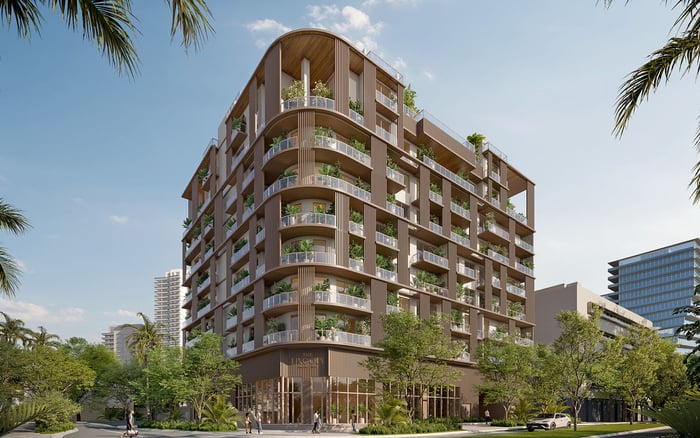
Full-floor living can reduce routine neighbor contact, but the privacy premium should be tested against elevator access, service circulation, acoustics, staffing, governance, and resale depth.

The Lincoln Coconut Grove is built around a compelling luxury proposition: one residence per floor, condominium convenience, and an atmosphere closer to that of a standalone home. For privacy-minded buyers, the appeal is immediate. Fewer residences can mean fewer routine encounters in corridors and elevator lobbies, as well as a stronger sense of residential exclusivity.
Yet “full-floor” describes spatial allocation, not absolute seclusion. Entrances, elevators, staff, amenities, mechanical infrastructure, and service areas may still be shared. The prudent question, therefore, is not simply whether a residence occupies an entire floor. It is whether the building’s complete operating system supports discretion from arrival through daily life.
A single residence per floor removes one familiar source of condominium friction: immediate neighbors opening onto the same residential corridor. Arrivals can feel quieter, incidental contact may be reduced, and the entry sequence can take on the character of a private home.
Shared circulation elsewhere remains. A buyer may still encounter residents, guests, employees, contractors, or delivery personnel between the garage, lobby, elevator, and amenities. Privacy should be evaluated as a chain-and its weakest point may lie well beyond the front door.
This distinction is useful when comparing Coconut Grove options. Opus Coconut Grove and Park Grove Coconut Grove may belong on a broader tour, but each property should be assessed through its own plans, documents, access protocols, and operating structure-not through labels alone.
Elevator configuration is central to the privacy premium. Buyers should establish whether residential access is private or shared, how individual floors are access-controlled, whether staff use the same elevator, and whether it opens directly into the home or into a common vestibule. The practical difference between exclusive use and controlled shared use can be substantial.
Walk every likely route. Start at the garage and principal entrance, then trace the paths used by family, guests, deliveries, household employees, contractors, and service personnel. Ask where visitors wait, who authorizes access, how credentials are issued, and whether anyone can reach a residential landing without direct approval.
A tour of Four Seasons Residences Coconut Grove or The Well Coconut Grove may help clarify personal preferences, but the meaningful comparison is operational: who moves where, under whose supervision, and with what degree of separation.
One residence per floor does not prevent sound from traveling through slabs, façades, elevator shafts, plumbing, or mechanical systems. Privacy includes freedom from overheard conversation and intrusive building noise-not merely the absence of a neighboring front door.
Request acoustic details and ask how the assemblies address vertical transmission, exterior noise, elevator movement, and mechanical vibration. Review the placement of equipment and service zones in relation to bedrooms, entertaining spaces, and private terraces. Where documentation permits, determine whether the specified construction supports the design intent.
Discretion depends heavily on people and procedures. Staffing levels, front-desk practices, access controls, camera policies, package handling, visitor authorization, and contractor rules can shape daily privacy as much as architecture does. A sophisticated plan can be undermined by inconsistent procedures or inadequate operating resources.
Association governance matters as well. Owners collectively influence security policies, staffing, access rules, and budgets. Review the declaration, bylaws, proposed budget, security plan, service-access plans, and rules governing deliveries and household staff. Consider not only current promises, but also how policies may be changed and funded over time.
The economic case is personal. A buyer who prioritizes low density, fewer incidental encounters, and a residence-like arrival may rationally value the full-floor format over a larger amenity program. Someone who gives greater weight to extensive resort services may reach a different conclusion.
Future liquidity also warrants attention. Full-floor residences are a niche luxury product, which can sharpen their appeal to a particular buyer while narrowing the eventual resale audience. Set marketing language aside and test the premium against tangible attributes: controlled access, service separation, acoustic design, staffing quality, governance, and the durability of the operating budget.
The central discipline is simple: pay for privacy that can be demonstrated through plans, specifications, documents, and procedures-not merely inferred from a full-floor label.
Does a full-floor residence guarantee complete privacy? No. Residents may still share entrances, elevators, staff, amenities, service routes, and building systems.
What is the main privacy advantage of one residence per floor? It can reduce routine encounters with neighbors in residential corridors and elevator lobbies.
Why is elevator configuration so important? It determines who can reach the floor, whether access is shared, and how directly the elevator connects to the home.
Should buyers trace delivery and contractor routes? Yes. Service circulation reveals whether operational privacy matches the promise of the floor plan.
Can acoustic issues exist without same-floor neighbors? Yes. Sound can travel through slabs, façades, elevators, plumbing, and mechanical equipment.
Which documents should privacy-focused buyers request? Request the declaration, bylaws, budget, security plan, elevator specifications, acoustic details, service plans, and relevant rules.
How does staffing affect residential discretion? Staff procedures govern visitor screening, package handling, access credentials, contractor entry, and everyday consistency.
Can association decisions change the privacy experience? Yes. Owners collectively influence security policies, staffing, access rules, and the budgets that support them.
Is a full-floor premium always economically justified? No. Its value depends on how strongly the buyer prefers low density and exclusivity over broader amenities.
What resale consideration is most important? The format serves a niche audience, so buyers should consider the depth of the future purchaser pool.
If you'd like a private walkthrough and a curated shortlist, connect with MILLION.
If branded residences are on your mind — as a home or as an allocation — we would be glad to share what we are seeing, privately.
Begin a quiet conversation