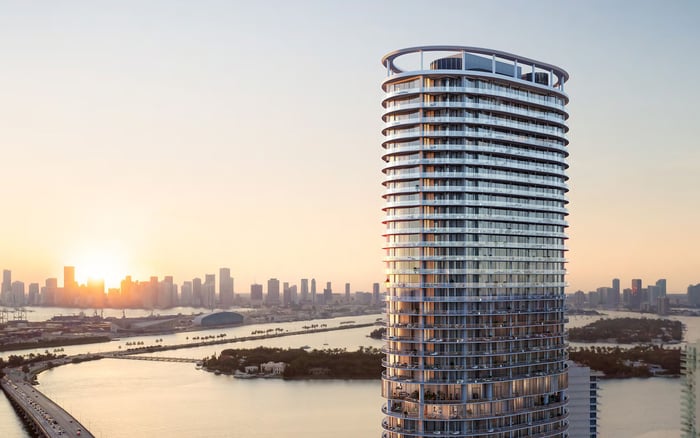
A disciplined framework for evaluating daily walkability, club privileges, private dining, and service access before purchasing in Bay Harbor Islands.

For a luxury buyer, walkability is not an abstract score. It is the ability to complete the routines that matter with the comfort, discretion, and timing expected of a primary residence or second home. Before comparing floor plans, identify the journeys you expect to make on foot: morning coffee, dinner, wellness appointments, shopping, a meeting, or an evening stroll.
Then rank each journey by frequency. A destination visited five times a week should carry more weight than an occasional amenity. Treat Bay Harbor Islands as a search area, not a promise that every residence offers the same pedestrian experience. The relevant measure is always door to door.
Begin every property tour outside. Walk from the actual residential entrance rather than estimating from a map. Note crossings, shade, lighting, curb conditions, traffic exposure, places to pause, and whether the route remains comfortable in formal clothing. Repeat the exercise at midday and after dinner if those periods reflect your schedule.
The lobby experience matters as well. Ask how residents receive cars, meet drivers, collect deliveries, and return in wet weather. A route that appears short can feel inconvenient when the arrival choreography is unresolved. Buyers considering Alana Bay Harbor Islands can use a tour to test their own essential routes rather than rely on a broad impression of the neighborhood.
Create three categories: comfortably walkable, walkable with conditions, and vehicle preferred. This distinction is more useful than reducing a nuanced daily routine to a single number.
Club language demands careful reading. Access can mean ownership rights, a membership opportunity, a resident program, reciprocal privileges, priority reservations, or merely proximity. These arrangements are not interchangeable.
Request the current governing documents and a written explanation of eligibility, initiation costs, recurring charges, guest rules, cancellation provisions, transferability, waitlists, and any restrictions tied to residence type. Confirm whether participation is optional and whether access survives a resale. If an external club is central to the purchase, verify its terms directly before making that access part of the decision.
At The Well Bay Harbor Islands, for example, the prudent approach is not to infer privileges from the project name. Ask the sales team to distinguish residential amenities from any separately governed membership, service, or reservation arrangement.
Private dining can describe very different experiences: a reservable room, catered entertaining space, chef service, restaurant delivery, or an invitation-based program. The elegance of the room is only one measure of value. Its operating rules determine whether it supports the way you entertain.
Ask who prepares and serves the food, whether outside chefs are permitted, how far in advance reservations open, and whether owners receive priority. Review minimum spends, staffing charges, corkage, cancellation terms, guest limits, cleanup responsibilities, and available storage. Buyers with dietary restrictions should also establish whether menus and preparation protocols can be adapted.
When touring La Maré Bay Harbor Islands, request a demonstration of the complete hosting sequence, from guest arrival and elevator access to service staging and departure. Privacy is often shaped by circulation, not décor.
A smaller residential setting may appeal to buyers seeking discretion, but scale alone does not establish service quality or access. Evaluate staffing coverage, management structure, package handling, valet procedures, guest screening, amenity booking, and after-hours response. Ask which services are included in common charges and which are arranged separately.
Apply the same questions to every presentation. A visit to Onda Bay Harbor should be measured against the same written criteria as a tour of Bay Harbor Towers. Consistency makes the differences visible and limits the influence of presentation style.
Test the residence on an ordinary day as well. Consider how long it takes to leave the unit, retrieve a vehicle, receive a guest, or arrange dinner. Luxury is often revealed through reduced friction rather than an extended inventory of amenities.
A concise matrix can keep the decision disciplined. Place candidate residences in columns and score only the factors you have personally tested or received in writing. Useful rows include morning walk, evening walk, preferred dining route, car arrival, guest arrival, resident dining, external club eligibility, booking priority, recurring cost, and transferability.
Add an expiration date beside every access-related representation. Programs, fees, and operating arrangements can change, making current written confirmation essential. Identify which elements are contractual, which are governed by association rules, and which are discretionary services.
Finally, assign each criterion a weight. A household that entertains weekly may prioritize private dining operations. A frequent traveler may place greater value on smooth arrivals and dependable staffing. The best choice is not the building with the longest list; it is the residence whose verified access model aligns with actual behavior.
Ask counsel to review condominium documents, budgets, rules, disclosures, and any agreement connected to club or dining access. Have a financial adviser model recurring and elective costs separately. Request written clarification of any claim that materially influences the purchase.
For pre-completion residences, distinguish an intended program from an operating service. For completed properties, ask to see current rules and booking procedures. In either case, do not treat proximity, branding, or informal assurances as guaranteed access.
How should buyers measure walkability in Bay Harbor Islands? Walk the exact routes from the residential entrance at the times you expect to use them, then record comfort, crossings, weather exposure, and arrival quality.
Is a neighborhood walkability score sufficient? No. A broad score cannot reflect a specific entrance, personal mobility, preferred destinations, or conditions at different times of day.
Does proximity to a private club guarantee entry? No. Buyers should confirm eligibility, costs, guest rules, transferability, and availability directly in writing.
What club documents deserve review? Review membership terms, fee schedules, house rules, waitlist provisions, cancellation rights, guest policies, and any residency-linked agreement.
What can private dining access include? It may include a reservable room, catering, chef service, delivery coordination, or a separate program, subject to the applicable rules.
Which private dining costs should be clarified? Confirm room fees, food and beverage minimums, staffing, corkage, cancellation charges, gratuities, and cleanup costs.
How can buyers compare several residences fairly? Use one weighted matrix, ask identical questions, and score only personally tested features or terms received in writing.
Should second-home buyers evaluate access differently? They should emphasize after-hours arrivals, guest authorization, reservation lead times, remote management, and continuity of service during absences.
What matters most in a boutique residence? Focus on staffing, privacy, response times, booking procedures, delivery handling, and the distinction between included and elective services.
When should access details be reconfirmed? Reconfirm material terms before contract, during diligence, and before closing, especially when a service is separately operated or still planned.
For a discreet conversation and a curated building-by-building shortlist, connect with MILLION.
If branded residences are on your mind — as a home or as an allocation — we would be glad to share what we are seeing, privately.
Begin a quiet conversation