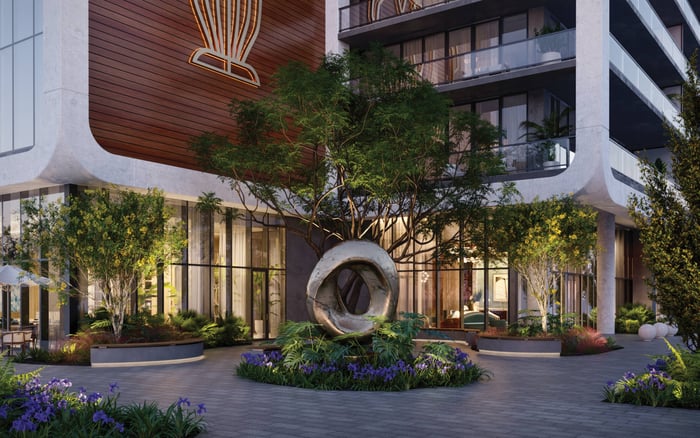
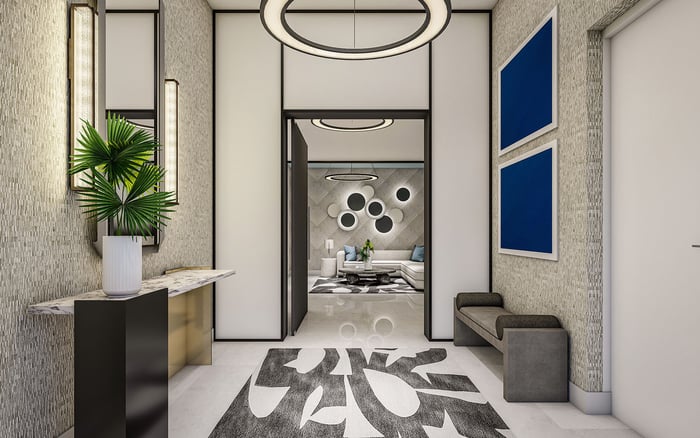
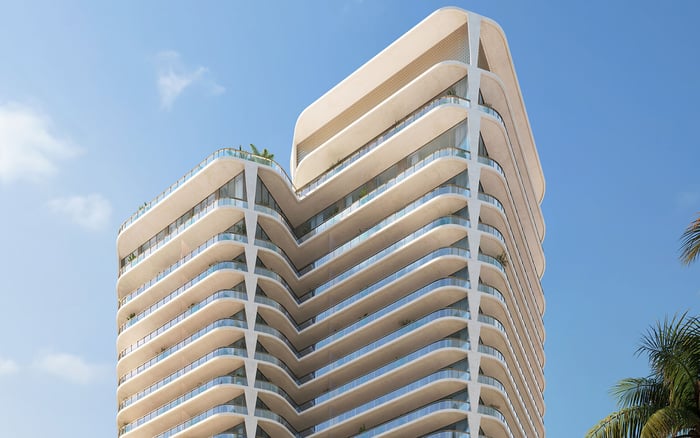
Maison D'Or South Flagler places private dining within the ownership proposition, making recurring hospitality, privacy, and operating consistency central to buyer due diligence.
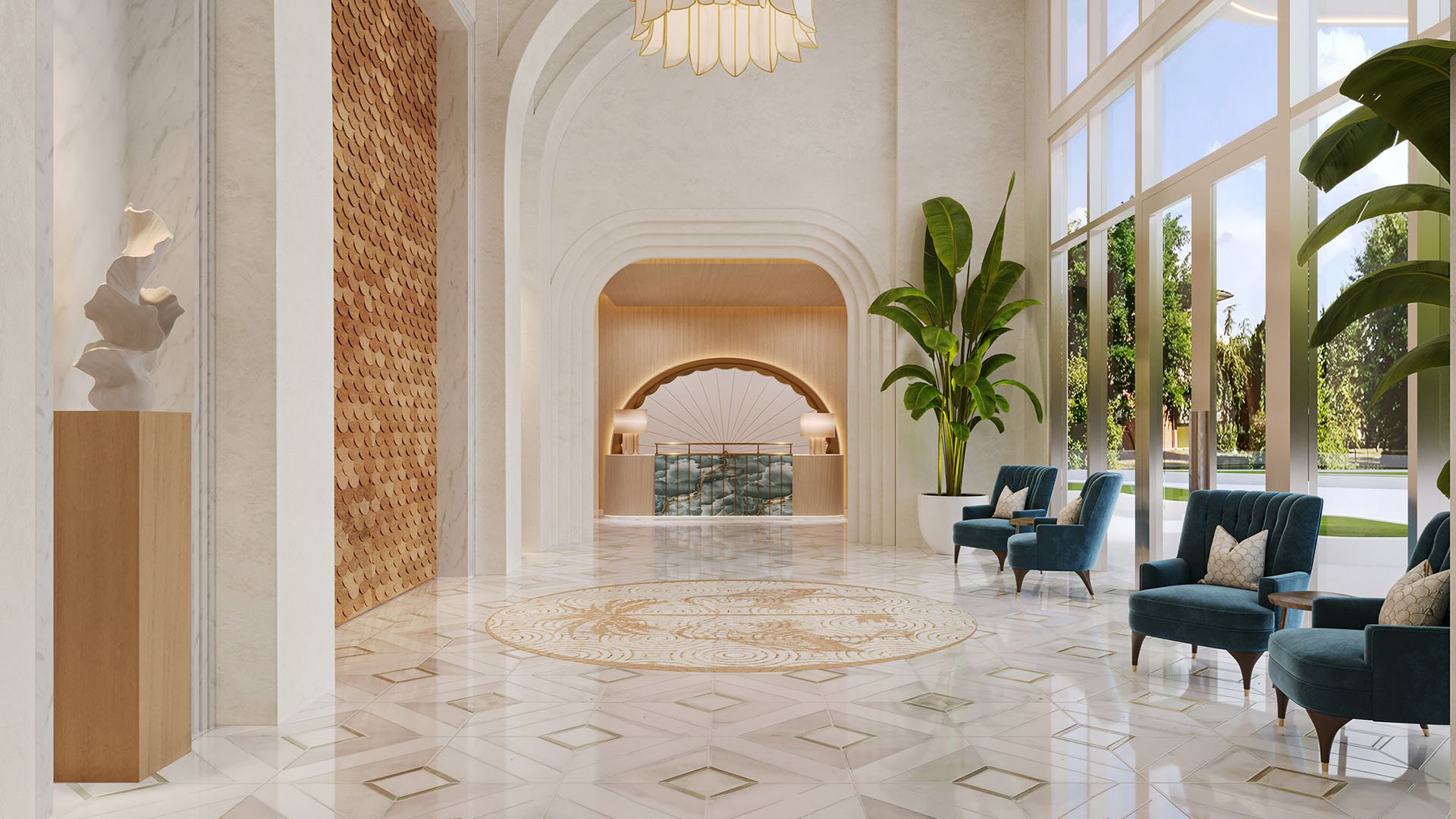
At Maison D'Or South Flagler, private dining is positioned as part of the building's operating hospitality-not simply as a handsome room awaiting an outside caterer. The distinction matters. An amenity can photograph beautifully yet remain peripheral to ownership. A staffed service, delivered consistently, can shape the rhythm of everyday life.
Intended exclusively for residents and their invited guests, the concept seeks to combine restaurant-level food, hotel-style service, and the controlled social setting of a private club within an ultra-luxury waterfront condominium on South Flagler Drive in West Palm Beach.
For buyers evaluating new-construction residences, that proposition shifts attention from the physical amenity plan to the quality of recurring execution.
Public restaurants depend on outside traffic, broad visibility, and constant table turnover. Resident-only dining begins with a different premise: access is restricted, the audience is known, and invited guests enter through the building's controlled environment.
That framework is intended to preserve privacy, security, and exclusivity. It can also make the experience feel more residential than commercial. Owners may dine without leaving the property, host guests in a professionally serviced setting, or use the amenity as an extension of the home without turning the residence itself into an event space.
This is where lifestyle becomes operational rather than decorative. The value lies not simply in having somewhere to eat, but in reducing the planning, travel, and coordination that often surround a well-served meal.
For a year-round resident, useful hospitality is often measured in ordinary moments: an evening when cooking is inconvenient, a small gathering that calls for service, or a desire to remain close to home. For a second-home owner, on-site dining may be equally relevant, simplifying arrival and entertaining during a shorter period of occupancy.
If operated consistently, the service could reduce reliance on outside restaurants, hotel bookings, or additional club memberships. It does not necessarily replace those experiences. Rather, it adds a private option integrated into the residence and available without leaving the property.
That is a meaningful distinction in a waterfront setting, where buyers often assess not only views and finishes, but also how seamlessly the property supports their time in residence.
Resident-only access gives private dining a dual role: convenience and filter. The intended social environment is narrower than that of a public venue, while invited guests can still be accommodated within the building's hospitality framework.
For some owners, this controlled setting may be as important as the cuisine. Privacy is not solely a matter of elevator access or arrival protocols. It also concerns where residents can meet, dine, and entertain without entering a public room. In that sense, hospitality becomes part of the architecture of discretion.
Private dining places recurring service quality at the center of ownership. Buyers should therefore examine it with the same care applied to floor plans, common charges, and residence specifications.
The essential questions concern staffing, menu format, service hours, reservations, capacity, guest policies, private events, and owner charges. Buyers should also establish whether costs are supported through common charges, billed per use, tied to minimum spending, or managed through another structure. Room service, gratuities, cancellation terms, and seasonal scheduling should be clarified directly when relevant.
These details determine whether the amenity functions as an occasional special setting or a dependable part of daily ownership. They also reveal the level of operational discipline required from the building. A sophisticated room cannot compensate for limited hours, uncertain availability, or service that varies with demand.
The correct lens, then, is not simply, “Does the building have private dining?” It is, “How will the service work for the way I live?”
Maison D'Or enters a West Palm Beach market where service-rich residences form an important buyer comparison set. Prospective owners may also consider South Flagler House West Palm Beach, The Ritz-Carlton Residences® West Palm Beach, or Mandarin Oriental Residences, West Palm Beach as they define their desired balance of residence, location, and hospitality.
Within the wider Palm Beach conversation, the central issue is fit. Private dining is most valuable to owners who expect to use it and place a premium on controlled access, effortless entertaining, and service close to home. At Maison D'Or, the promise is not merely another shared space. It is an active hospitality environment whose long-term value will be established meal by meal.
Who is intended to use the private dining service? It is intended for Maison D'Or residents and their invited guests, rather than the general public.
Is this simply a reservable dining room? No. The concept is framed as an operating hospitality service, not merely a room with a catering kitchen.
Can the amenity benefit full-time residents? Yes. It is designed to support year-round living by making professionally serviced dining and entertaining available on the property.
Can seasonal owners benefit as well? Yes. The service may simplify meals and hosting during shorter periods of residence.
Why does resident-only access matter? Restricted access is intended to support privacy, security, exclusivity, and a more controlled social setting.
Could private dining replace club membership? If operated consistently, it could reduce reliance on additional memberships, though its value depends on an owner's habits and the service model.
Are dining hours and menus specified? Buyers should directly verify current service hours, menu format, reservation procedures, and seasonal availability.
How might owners be charged? Buyers should determine whether dining is billed per use, supported through common charges, subject to minimum spending, or handled through another structure.
What operating details deserve the closest review? Focus on staffing, consistency, capacity, guest rules, event policies, charges, gratuities, and cancellation terms.
What is the clearest measure of long-term value? The key measure is whether reliable service aligns with how frequently an owner expects to dine, host, and spend time in residence.
For a tailored shortlist and next-step guidance, connect with MILLION.
If branded residences are on your mind — as a home or as an allocation — we would be glad to share what we are seeing, privately.
Begin a quiet conversation