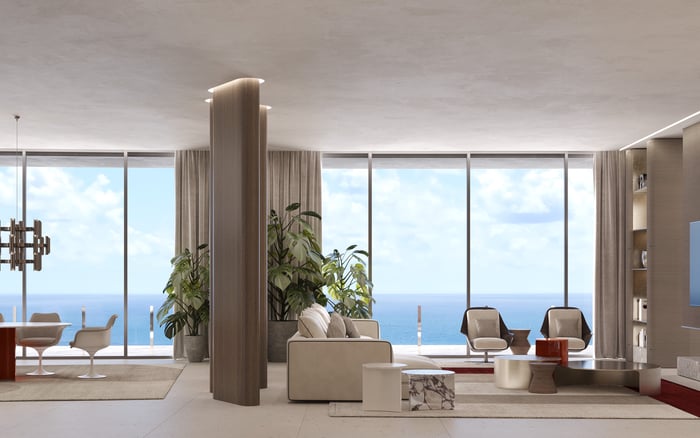
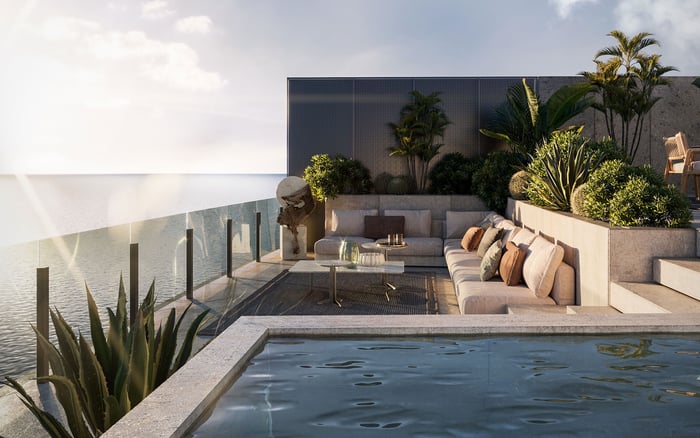
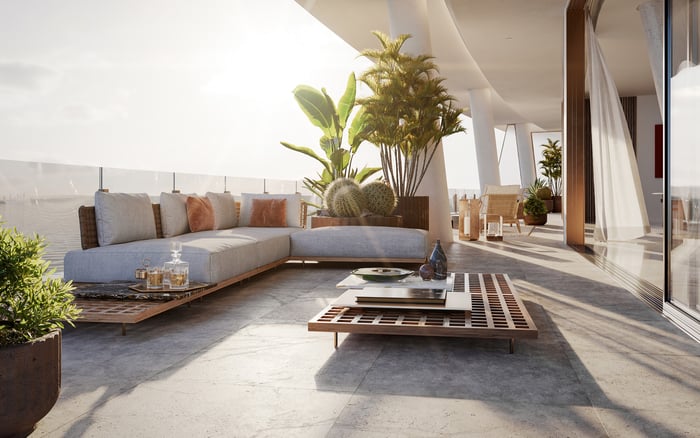
A discreet guide to the Coconut Grove residence profiles that suit buyers focused on structure, carry, flexibility and long-term ownership planning.

Coconut Grove has a particular magnetism for buyers who want South Florida living without the glare of a more performative address. Its appeal is quieter: canopy, privacy, bay breezes, walkable rituals, marina culture and a residential cadence that feels established rather than manufactured. For a tax-aware buyer, that discretion matters because a residence is not only a lifestyle decision. It is a holding decision, an estate decision, a liquidity decision and, often, a multigenerational planning decision.
The most sophisticated buyers do not begin with finishes. They begin with use. Will the residence serve as a primary home, a seasonal base, a future retirement address, a family asset, or a flexible holding that may later become part of a broader portfolio? Each answer changes the questions around ownership entity, financing, insurance, rental tolerance, association rules, renovation risk and timing of exit.
Terms such as Coconut-grove, Investment, Second-home, New-construction, Terrace and Waterview may sound like search labels, but they also mirror the practical questions that shape a purchase. A water-facing residence may require a different diligence lens than a lock-and-leave apartment. A low-density home may offer control while requiring more owner management. A new residence may reduce immediate maintenance variables while raising questions around delivery, warranties and association formation.
1. Waterfront-facing primary residence
For buyers intending to establish a long-term South Florida base, the waterfront-facing primary residence is often the most emotionally compelling profile. The value is not simply the view. It is the way daily living can combine privacy, outdoor connection and a sense of permanence that supports family planning over time.
A tax-aware review should begin before contract stage. The buyer's advisers should consider how title is held, whether the intended use aligns with broader planning, and how recurring obligations fit within a long-range carry model. Waterfront exposure, insurance considerations, maintenance reserves and future renovation control belong in the same conversation as architecture and design.
2. Full-service lock-and-leave condominium
The lock-and-leave condominium suits buyers who want Coconut Grove access without assuming the operational burden of a standalone property. For seasonal users and international families, the appeal is straightforward: controlled access, staffed environments, amenity infrastructure and the ability to arrive to a residence that functions with minimal friction.
Tax-aware buyers should read association documents, rental restrictions, reserve practices and assessment risk with care. The right building can simplify ownership, but simplification is not the same as passivity. Ongoing costs, occupancy rules and the buyer's own use pattern should be tested against the intended holding period.
3. Boutique low-density residence
A boutique residence can be especially attractive for buyers who want privacy without sacrificing the convenience of shared services. In Coconut Grove, this profile tends to appeal to owners who value scale, neighbor discretion and a quieter building culture. It is often less about spectacle and more about control of daily life.
From a tax-aware standpoint, low density invites a close reading of governance. Fewer owners can mean a more personal environment, but major capital decisions may also be felt more directly. Buyers should understand voting rights, maintenance obligations, insurance allocation and the process for approving future improvements.
4. Townhouse-style or villa-style residence
The townhouse or villa-style residence sits between condominium ease and single-family autonomy. For families relocating to South Florida, or for buyers who want a more residential rhythm, this category can offer private entries, outdoor space and a sense of separation while remaining manageable.
The tax-aware diligence is practical. Confirm the boundaries between private and shared responsibility, understand how outdoor areas are treated, and evaluate whether the residence supports the buyer's long-term use. If the home may later become a second home rather than a primary base, rental flexibility and holding structure should be reviewed early.
5. Design-forward new residence
A design-forward new residence attracts buyers who want current planning, contemporary systems and a clean ownership start. This can be particularly relevant for those who prefer to avoid immediate renovation decisions and want a home that aligns with modern expectations for wellness, entertaining and outdoor connection.
The tax-aware buyer should not confuse newness with simplicity. Contracts, completion timing, closing costs, warranty language, association budgets and post-closing obligations deserve disciplined review. New construction can be elegant, but the ownership structure should be equally refined.
Tax-aware ownership is not a slogan. It is the practice of aligning the residence with the buyer's legal, financial and personal intentions before the purchase becomes irreversible. That may involve individual ownership, trust planning, entity considerations, financing choices, charitable planning, succession planning or other strategies specific to the buyer.
In Coconut Grove, the most attractive residence is rarely the one that solves only for today. It is the one that can accommodate the next chapter: children aging into the home, parents visiting for longer periods, a principal residence becoming a seasonal retreat, or a family asset becoming part of an estate plan. The property should be beautiful, but it should also be coherent.
This is where a disciplined advisory circle matters. Real estate counsel, tax counsel, wealth advisers and insurance professionals should be aligned before closing. Their work is not to dull the romance of the purchase. It is to protect it.
Before making an offer, buyers should clarify three points. First, define intended use with precision. A residence used for three winter months carries different planning implications than a full-time home. Second, determine the preferred holding structure before title documents are prepared. Retrofitting structure after closing can create avoidable complexity. Third, test the full annual carry, including association obligations, maintenance, insurance, reserves and advisory costs.
The most refined Coconut Grove purchase is not necessarily the largest or most visible. It is the one that allows the owner to live well while preserving options. That is especially important in South Florida, where lifestyle, mobility and wealth planning often intersect inside the same decision.
What does tax-aware ownership mean in Coconut Grove? It means evaluating the residence through structure, carry, use, estate planning and future flexibility before purchase.
Should tax planning happen before or after contract? It should begin before contract whenever possible, because title, financing and closing structure can affect later decisions.
Is a condominium easier for tax-aware buyers? It can be easier operationally, but association rules, rental limits, reserves and assessments still require careful review.
Is a single-family-style residence better for long-term planning? It may offer more control, but it can also involve more maintenance, insurance and management responsibility.
What should seasonal buyers prioritize? Seasonal buyers should focus on access, security, management support, carrying costs and rules around periods of nonuse.
Can rental flexibility matter even if I do not plan to rent? Yes. Future flexibility can affect liquidity, family planning and the ability to adapt if circumstances change.
Why do association documents matter so much? They define owner rights, restrictions, financial obligations and governance, all of which shape long-term ownership.
Should I buy personally or through an entity? That decision depends on legal, tax, estate and privacy goals and should be reviewed with qualified advisers.
Does new construction eliminate diligence risk? No. It changes the diligence focus toward contracts, completion, budgets, warranties and early association operations.
How should a buyer compare water views and privacy? The right balance depends on use, exposure, maintenance expectations and how the residence supports daily life.
For a discreet conversation and a curated building-by-building shortlist, connect with MILLION.
If branded residences are on your mind — as a home or as an allocation — we would be glad to share what we are seeing, privately.
Begin a quiet conversation