A disciplined framework for evaluating art storage, lighting, climate control, approvals, and operational responsibility before purchasing a luxury Surfside residence.
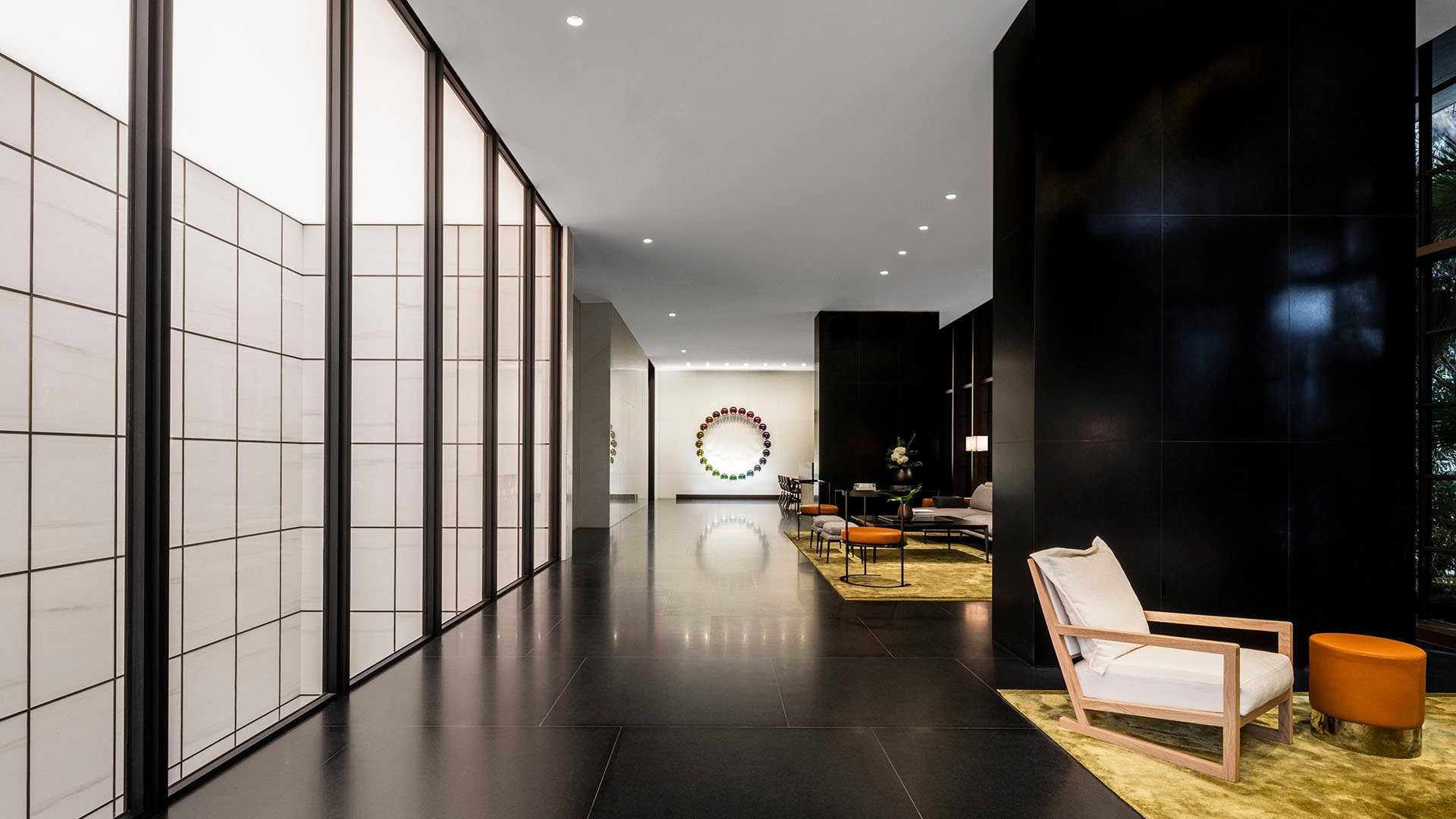
For an art-conscious buyer, a Surfside residence cannot be fully evaluated by its view, volume, finish palette, or furniture plan. The more exacting inquiry concerns the systems behind the walls, the permissions embedded in the governing documents, and the practical route from loading area to final installation.
This is where Design & Architecture becomes operational rather than ornamental. Lighting must serve both daily life and the intended collection. Climate control should be assessed room by room. Storage requires more than an available closet. Every assumption should be tested against written specifications, plans, rules, warranties, and the responsibilities assigned to the owner.
This edition of Buyer's Guides presents a disciplined approach to reading the fine print. It does not presume that any residence, amenity, or service is art-ready. Instead, it identifies the questions that help a buyer distinguish an elegant presentation from a home that can be owned carefully.
Begin with an inventory brief prepared for the prospective home. Categorize works by scale, weight, material, framing, electrical needs, sensitivity, and installation method. Identify pieces intended for display, rotation, or storage, then map each category to a proposed room.
This exercise reframes the property review. A broad wall may be visually appealing yet unsuitable if switches, grilles, access panels, or door swings interrupt the usable field. A dramatic glazed exposure may require a different display strategy. A sculpture may call for confirmation of loading, elevator dimensions, turning clearances, floor conditions, and installation permissions.
For a Second-home, the brief should also address periods when the residence is unoccupied. Buyers should establish who may enter, monitor, respond, or coordinate with a conservator, art handler, electrician, or insurer. Those access rights should be understood before closing, not improvised after an alert or service request.
The phrase “art storage” warrants scrutiny. Determine whether it refers to a private room, a shared area, adaptable millwork, or simply space within the residence. Request dimensions and identify doors, thresholds, nearby plumbing, electrical equipment, air distribution, and any restrictions on racks or wall-mounted systems.
A serious storage plan should be reviewed as a complete assembly: enclosure, shelving or racks, lighting, controls, security, access, and maintenance. Buyers should determine which components are included, which require owner work, and which may need association or building approval. If a consultant proposes alterations, obtain the approval path and allocation of responsibility in writing.
When considering Arte Surfside or Ocean House Surfside, review the project materials and transaction documents for the particular residence under consideration. Project identity alone should never substitute for confirmation of the actual room, system, rule, or service relevant to a collection.
A lighting plan should begin with the art schedule, not fixture selection. Mark likely locations for paintings, photography, works on paper, sculpture, and objects. Then request the reflected ceiling plan, fixture schedule, control narrative, switching zones, and any available information about adjustability.
The buyer’s team can test whether fixture positions correspond to usable art walls and whether the controls allow distinct scenes for daytime, evening, entertaining, and vacancy. Confirm how decorative fixtures interact with art lighting and whether modifications would affect ceilings, millwork, wiring, warranties, or approvals.
Mockups are particularly valuable. Rather than relying on a rendering, request a practical demonstration using representative work sizes and intended viewing positions. The objective is not maximum brightness, but a controlled, flexible composition that serves the collection and the room without making either feel secondary.
Do not reduce a climate review to thermostat count. Ask the appropriate consultants to examine zoning, sensor locations, air delivery, return paths, equipment access, control interfaces, and the treatment of spaces proposed for storage or concentrated display.
In an Oceanfront residence, the buyer should define the intended use of each room and ask whether the specified system and enclosure are suitable for that purpose. If supplemental controls, monitoring, shades, films, backup measures, or dedicated equipment are proposed, clarify who designs, approves, installs, commissions, maintains, and pays for each element.
Apply the same discipline when reviewing The Delmore Surfside and The Surf Club Four Seasons Surfside. Compare the documents for the exact opportunity, then have qualified advisers reconcile marketing language with plans, contracts, rules, and the buyer’s collection brief.
Ownership begins before installation day. Trace the route from vehicle arrival through receiving, corridors, elevators, doorways, and into the residence. Confirm scheduling, insurance certificates, protective coverings, contractor access, supervision, working hours, deposits, and approval lead times.
Large or fragile pieces may require a route study and written installation sequence. Determine whether the temporary removal of doors, fixtures, glazing, or railings would be permitted. If specialized lifting or exterior access is contemplated, treat it as a separate approval matter and do not assume feasibility.
Also review the rules governing drilling, anchoring, electrical work, ceiling interventions, wall reinforcement, noise, and service personnel. Even the most refined installation plan is useful only if it can be executed within the property’s documents and operating procedures.
Create a matrix with five columns: requirement, supporting document, responsible party, approval status, and completion date. Include storage dimensions, lighting specifications, controls, climate provisions, monitoring, access, installation logistics, and ongoing service.
Keep verbal assurances out of the decision column until they appear in controlling documents or an agreed written instrument. If information conflicts, pause and reconcile it. Careful ownership is less about accumulating paperwork than ensuring that plans, contracts, rules, and actual conditions describe the same residence.
The resulting file should remain with the home. It can support future maintenance, staff instructions, consultant reviews, insurance discussions, and eventual resale diligence while preserving a clear record of what was installed and who remains responsible.
What should an art-focused buyer request first? Request the relevant plans, specifications, rules, contracts, and an inventory-based room brief before assessing suitability.
Is a spare closet sufficient for art storage? Do not assume so. Evaluate its dimensions, enclosure, nearby systems, access, lighting, security, and permitted storage equipment.
Who should review the lighting plan? A buyer may coordinate the architect, lighting designer, art adviser, installer, and other qualified specialists appropriate to the collection.
Should lighting be tested before closing? When access and transaction terms permit, a mockup can help assess proposed fixture positions, controls, and viewing conditions.
How should climate control be evaluated? Review the intended use of each room alongside zoning, sensors, air distribution, controls, equipment access, and monitoring provisions.
What matters when the home will sit unoccupied? Establish monitoring, notification, access, response authority, and maintenance responsibilities in a written operating plan.
Can a buyer assume building staff will handle art? No. Written confirmation should define available services, limitations, scheduling, liability, and charges.
What installation rules deserve attention? Review delivery routes, elevator procedures, working hours, insurance requirements, anchoring rules, deposits, and approval timelines.
Should the art plan be included in purchase diligence? Yes. Use it to identify required confirmations, owner work, approvals, costs, and unresolved conditions before the decision is final.
What is the clearest sign of an art-ready residence? The strongest indicator is alignment among the collection brief, physical conditions, technical documents, governing rules, and written responsibilities.
For a confidential assessment and a building-by-building shortlist, connect with MILLION.
If branded residences are on your mind — as a home or as an allocation — we would be glad to share what we are seeing, privately.
Begin a quiet conversation