A buyer-focused guide to the five Brickell residence layouts that best support visiting family, live-in help, adult children, and privacy-conscious entertaining.
In Brickell, a guest suite is rarely just a spare bedroom. For many buyers, it is the difference between gracious hospitality and daily household tension. Visiting parents, adult children, long-stay friends, private staff, and overnight caregivers each place distinct demands on a residence. The strongest layouts anticipate those demands before they become visible.
The right Brickell residence gives everyone a place to retreat. It allows a guest to wake early without crossing the primary suite, take a call without occupying the living room, or return after dinner without disrupting the household. It also protects the owner’s sense of ceremony. A residence can be generous in square footage and still feel strained if every movement funnels through one corridor, one bathroom, or one social zone.
For buyers comparing luxury homes in Brickell, the question is not simply how many bedrooms appear on a floor plan. The more revealing question is how the plan performs when occupied by people with different schedules. A smart guest suite softens the edges of shared living. It creates welcome without surrendering privacy.
1. Separate-entry suite residence - arrival privacy
The strongest configuration is a residence where the guest suite can function with a sense of independent arrival. This does not require a fully detached apartment. It can be achieved through a secondary entry sequence, a discreet vestibule, or bedroom placement that lets a guest come and go without crossing the main entertaining space.
This layout is especially useful for extended visits, private staff, or family members who keep different hours. It reduces awkwardness at the threshold, where household friction often begins. A guest feels hosted rather than monitored, while the owner preserves a calmer primary living zone.
2. Split-bedroom residence - acoustic distance
A split-bedroom plan remains one of Brickell’s most practical luxury configurations. When the guest suite sits away from the primary suite, the residence gains acoustic and psychological separation. The result is not only quieter. It feels more composed.
This configuration works well for couples who host parents, siblings, or adult children. It also supports a more formal entertaining rhythm because overnight guests are not placed beside the owner’s most private rooms. If the guest suite has its own bath access and a logical path to the kitchen or living area, the plan becomes significantly more graceful.
3. En-suite guest room residence - bathroom independence
A true en-suite guest room is the most direct way to reduce morning and evening friction. Shared bathrooms may be workable for short stays, but in a luxury Brickell setting, the best guest experience is self-contained. The guest can dress, bathe, and prepare for the day without negotiating the household’s timing.
This is particularly important for multigenerational use. Older relatives may need privacy, storage, and easy access to a shower. Younger visitors may keep late schedules. A private bath keeps both realities from disturbing the rest of the home. It also makes the residence feel more complete for resale-minded buyers, even when they are purchasing primarily for personal use.
4. Den-adjacent suite residence - work and sleep separation
Many guest stays now include remote work. A bedroom alone may not be enough. A residence with a guest suite near a den, media room, or flexible secondary space allows visitors to work, read, or take calls without taking over the dining table. That separation is a quiet luxury.
This layout is also valuable for families who host children with tutors, grandparents with caregivers, or friends staying through long weekends. The adjacent flexible room can absorb luggage, laptops, and daily routines. It prevents the guest bedroom from becoming a cramped all-purpose zone and keeps the main salon elegant.
5. Service-aware residence - invisible circulation
The most refined Brickell layouts consider not only where guests sleep, but how service moves around them. A guest suite placed near laundry access, a service corridor, or a secondary hall can make housekeeping and daily care feel discreet. This is less about staff formality than reducing overlap.
When linens, deliveries, luggage, and cleaning can move through the home without interrupting the primary social spaces, the residence feels composed even when full. For buyers who entertain frequently or travel with household support, this type of plan often feels more luxurious than a larger residence with less intelligent circulation.
A spare bedroom is measured by dimensions. A gracious guest suite is measured by behavior. It should offer a real place for luggage, a logical route to a bathroom, sufficient wall space for furniture, and enough distance from the loudest parts of the home. The suite should not feel like an afterthought carved from leftover area.
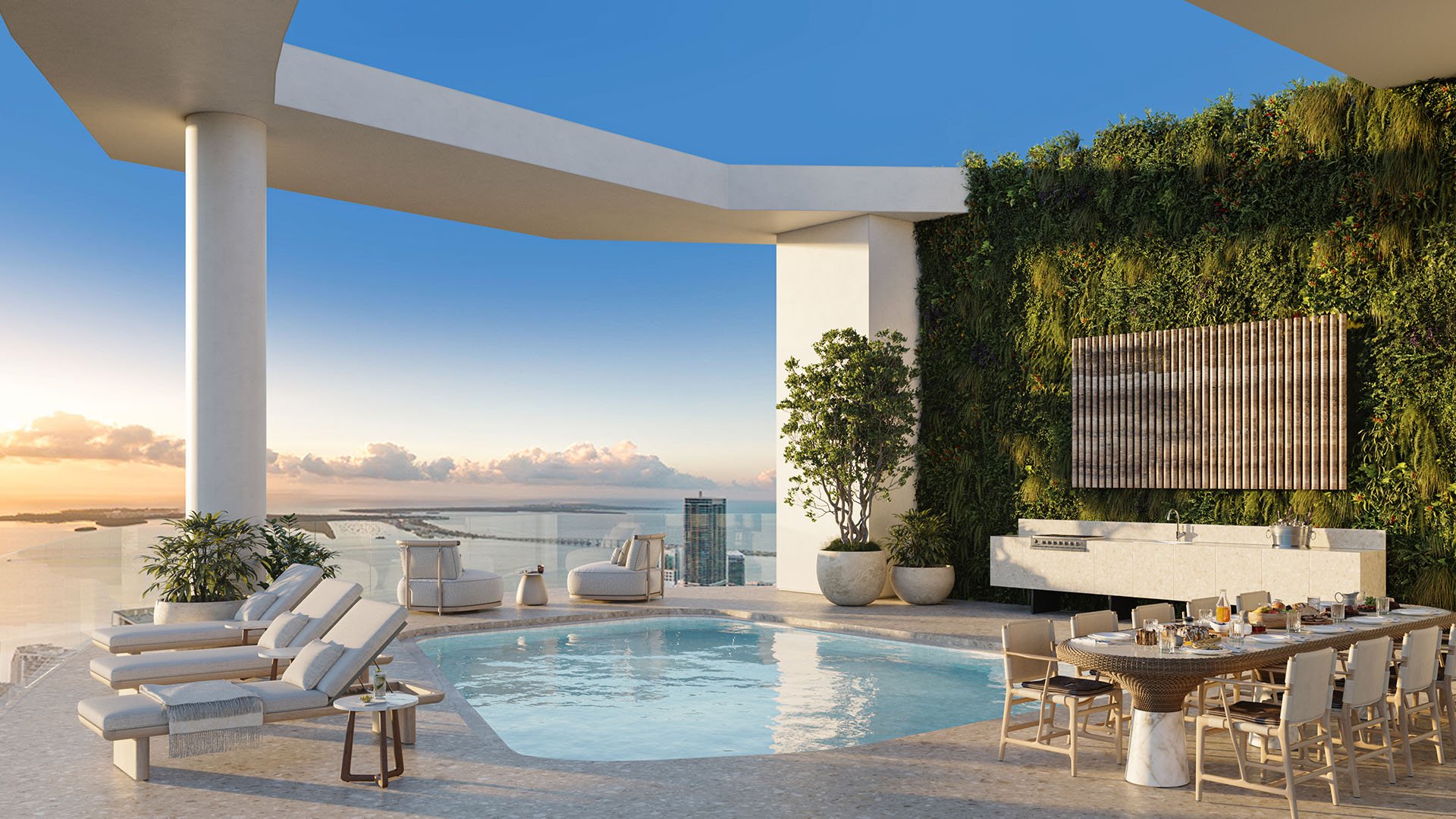
Light matters, too. A balcony or terrace near the guest zone can give visitors a private pause without forcing them into the main living room. Even when outdoor space is shared, proximity to fresh air changes how a room is used. It lets a guest read quietly in the morning or step outside during a call.
Storage is another quiet indicator of quality. A beautiful room with no place for a suitcase quickly becomes visually noisy. For long-stay guests, a proper closet, linen access, and space for personal items can be more valuable than a dramatic view. Luxury, in this context, is the absence of improvisation.
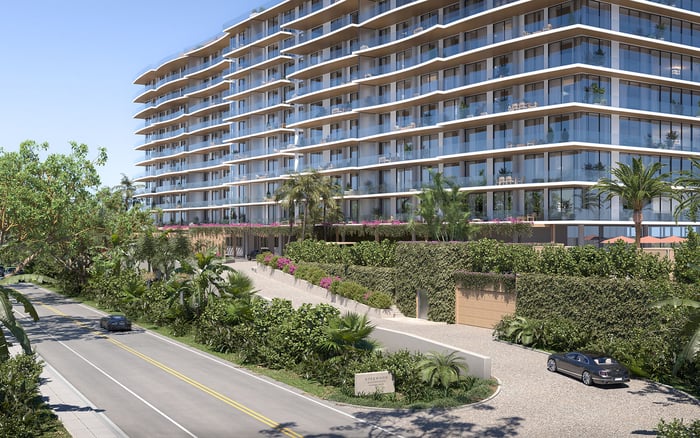
Brickell buyers should think about the building’s rhythm as much as the residence itself. Elevators, lobby flow, valet arrival, amenity access, and guest parking all shape the hosting experience. A floor plan can be excellent, but if arrival feels congested or confusing, the household still absorbs the stress.
Amenity programming also affects guest-suite value. A pool, fitness area, lounge, or private dining space can give visitors somewhere to spend time outside the residence. That reduces pressure on the living room and makes longer stays easier. The best amenity strategy is not spectacle. It is the ability to preserve calm upstairs.
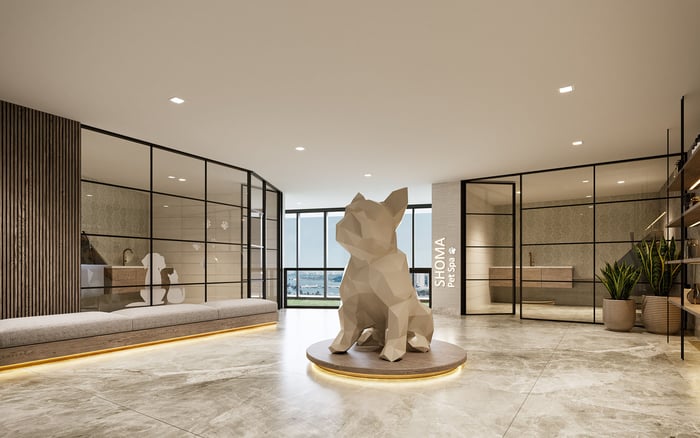
Pets introduce another layer. Buyers who travel with dogs, host relatives with animals, or maintain a pet-friendly household should consider where a guest suite sits in relation to service elevators, outdoor access, and washable surfaces. Pets can be joyful, but they magnify weak circulation quickly.
New-construction buyers should be especially attentive to how flexible rooms are labeled and delivered. A den may not live like a bedroom. A secondary room may lack the privacy required for long stays. The most sophisticated buyer reads beyond the marketing name and asks how the room will function at 7 a.m., 11 p.m., and during a full weekend of guests.
When touring, stand at the guest-suite door and imagine every daily movement. Where does a guest place luggage? Can they reach coffee without passing the primary suite? Is the bath private, semi-private, or dependent on a shared hall? Can a late arrival enter quietly? These questions reveal more than a polished finish package.
Then test the social geometry. From the living room, how visible is the guest corridor? From the kitchen, does the suite feel too exposed? If someone is working in the guest room, will dining, music, or television interrupt them? A residence that handles these small conflicts gracefully will feel more expensive over time.
Finally, consider future use. Today’s guest suite may become a caregiver room, a college-age child’s base, a wellness room, or a quiet office. The best Brickell purchase is not the one that answers only this season’s needs. It is the one with enough discretion and adaptability to remain elegant as the household changes.
What makes a guest suite better than a standard bedroom? A guest suite usually offers more privacy, better bath access, and a stronger sense of independence than a standard bedroom.
Is an en-suite bathroom essential for Brickell buyers? It is not always essential, but it is one of the clearest ways to reduce friction during longer guest stays.
Should a guest suite be near or far from the primary suite? Most luxury buyers prefer separation because it improves privacy, acoustics, and comfort for both owner and guest.
Can a den function as part of a guest suite? Yes, if it gives visitors a separate place to work, read, or store luggage without taking over the main living areas.
Why does circulation matter so much? Circulation determines how guests, owners, service, luggage, and daily routines move through the home without conflict.
Are larger residences always better for hosting? Not necessarily. A smaller, well-zoned residence can host more gracefully than a larger plan with poor bedroom placement.
How should buyers assess guest privacy during a tour? Walk the route from entry to guest room, guest bath, kitchen, and living area to see where privacy breaks down.
Do amenities make guest suites more useful? Yes. Amenities can give visitors places to spend time outside the residence, preserving calm in the private home.
What role does storage play in guest comfort? Proper storage keeps luggage and personal items from overwhelming the bedroom, especially during extended stays.
Is flexibility important for resale? Yes. Flexible guest-suite layouts can appeal to buyers with family, staff, remote work, or multigenerational needs.
When you're ready to tour or underwrite the options, connect with MILLION.
If branded residences are on your mind — as a home or as an allocation — we would be glad to share what we are seeing, privately.
Begin a quiet conversation