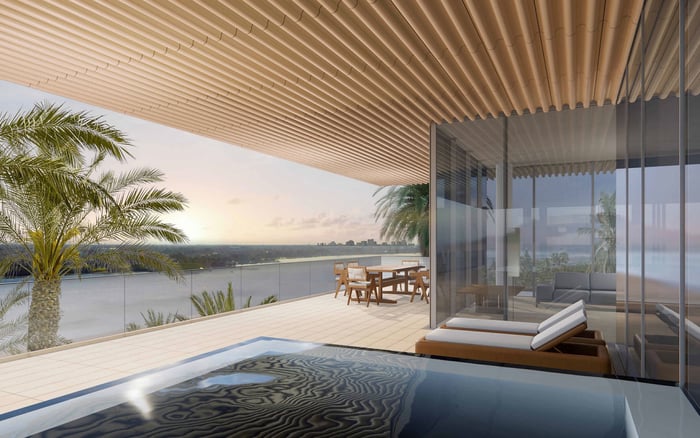
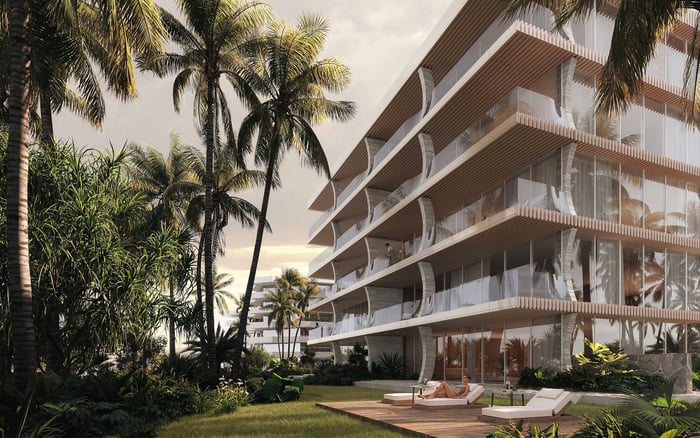
A discreet buyer’s guide to evaluating Boca Raton and Palm Beach residences for sauna, wellness, and low-crowd amenity access, grounded in careful residential due diligence.

For ultra-premium buyers in Boca Raton and Palm Beach, the appeal of a sauna or wellness suite is rarely about checking a box on an amenity list. It is about frictionless access, privacy without performance, and a daily ritual that feels as composed as the residence itself. The strongest wellness experience is not necessarily the largest spa floor or the longest roster of facilities. It is the one a resident can use quietly and consistently, without moving through a crowded club atmosphere.
That distinction matters. A sauna may be private, semi-private, resident-only, club-based, appointment-based, or part of a broader spa environment. Each format creates a different living experience. For a buyer comparing Boca Raton and Palm Beach, the question is not simply whether a residence offers wellness amenities. The more useful question is how those amenities are accessed, managed, maintained, and shared.
This is also where discretion becomes a form of value. Palm Beach and Boca Raton buyers often want a residence that supports health without turning wellness into spectacle. A thoughtfully operated amenity suite can feel closer to a private retreat than a public facility, especially when elevator flow, staffing, reservation systems, and resident density are aligned.
1. Palm Beach Residences as a Palm Beach search reference
Palm Beach Residences can serve as an initial reference point for buyers beginning a Palm Beach focused search. It should be used as a starting place for comparison, not as a substitute for direct confirmation of sauna access, wellness programming, exclusivity, scheduling, and operating rules.
2. Residences with private or semi-private wellness access
The most controlled wellness experience may come from a residence where the sauna or recovery ritual is private, semi-private, or otherwise separated from a busy shared environment. Buyers should confirm what is physically included, what is shared, and what requires reservation.
3. Boutique buildings with limited resident flow
A smaller residential setting can support a quieter wellness rhythm, but size alone does not guarantee privacy. Guest policies, peak-hour behavior, staff oversight, and how residents actually use the amenities remain central to the experience.
4. Buildings with disciplined amenity operations
A larger property can still feel calm if access is managed carefully. Reservation systems, service schedules, resident-only rules, and clear operating standards can make the difference between a wellness suite that feels composed and one that feels overused.
5. Residences where circulation supports discretion
A sauna or recovery room can lose appeal if reaching it requires crossing highly visible social spaces. Buyers should evaluate elevator flow, lobby exposure, pool adjacency, and whether the wellness path feels private enough for daily use.
In a luxury residential search, “without crowds” is a nuanced requirement. It does not require emptiness. It requires predictability. A buyer may be comfortable sharing a wellness suite with a small number of residents if the space is well managed, appointment systems are clear, and peak-hour patterns are understood. Another buyer may prefer an in-residence sauna, a private treatment room, or a boutique building where the resident population is inherently limited.
The most refined buyers tend to evaluate crowd levels in layers. First comes physical design: how many residents share the wellness area, how the space is reached, and whether it is integrated into a busy recreation zone. Second comes operations: staffing, guest policies, booking windows, and maintenance schedules. Third comes culture: whether residents treat the amenities as a social hub or a private ritual.
For this reason, a residence with fewer amenities can sometimes serve a wellness buyer better than a building with a more extensive but heavily trafficked club level. The ideal outcome is a routine that feels effortless: a morning steam, a quiet recovery session, or a post-training sauna without negotiation.
Boca Raton and Palm Beach speak to different versions of South Florida luxury. Boca Raton often appeals to buyers who want space, privacy, club culture, and a polished residential rhythm. Palm Beach, by contrast, carries a more rarefied sense of restraint, with a lifestyle shaped by discretion, proximity, and a deeply established social fabric.
For wellness buyers, neither market should be reduced to a single amenity claim. The stronger approach is to compare how a residence supports the buyer’s daily cadence. Does the building make it easy to exercise before sunrise? Is there a recovery sequence after tennis, golf, Pilates, or beach time? Can a resident move from home to wellness space without passing through a lobby experience that feels too public?
Search terms such as Boca Raton, Palm Beach, West Palm Beach, pool, lap pool, and boutique can help organize the first review. The real test is whether the property’s design and management align with the buyer’s desire for calm.
The most important questions are practical. Is the sauna in the residence, in a resident-only amenity area, or in a shared club environment? Are guests allowed? Can residents reserve time, or is access first-come, first-served? Is there a separate recovery zone, or is the sauna attached to a larger pool and fitness area that may draw more traffic?
A buyer should also ask how often the facility is serviced, whether operating hours match personal routines, and whether the space is used heavily during weekends or seasonal peaks. In South Florida, seasonality can affect the feel of almost every amenity. A calm wellness room in late summer may feel very different during peak winter occupancy.
Privacy also depends on circulation. A beautifully appointed sauna can lose its appeal if reaching it requires crossing crowded social spaces. Conversely, a smaller amenity can feel highly private if access is discreet and the building population is limited. This is why floor plans, elevator banks, staff protocols, and guest rules deserve as much attention as finishes.
The new wellness conversation in South Florida is less about display and more about control. Buyers are asking for residences that help them live well without adding complexity. They want polished design, but they also want silence. They want the option to recover, train, swim, stretch, and reset without turning every activity into a shared performance.
In that context, sauna access is one part of a larger residential philosophy. The best fit may be a building with a compact wellness suite that is rarely crowded. It may be a residence where private outdoor space, a serene bath environment, and nearby wellness services create the desired routine. Or it may be a larger property whose operations are disciplined enough to preserve calm even when amenities are extensive.
For buyers weighing Boca Raton and Palm Beach, the wisest posture is selective patience. A wellness residence should not be chosen because a feature appears impressive in isolation. It should be chosen because the entire environment supports the buyer’s preferred pace.
Is sauna access enough to define a wellness residence? No. Sauna access is only one part of the wellness experience, which also includes privacy, management, circulation, and daily usability.
Can a building promise a low-crowd wellness experience? Buyers should be cautious with that idea. Low-crowd comfort depends on resident density, guest rules, reservation systems, and seasonal use.
Is Palm Beach better than Boca Raton for private wellness living? Neither market is automatically better. Palm Beach and Boca Raton serve different lifestyle preferences, so the right choice depends on routine and privacy expectations.
Should buyers prioritize an in-residence sauna? An in-residence sauna offers the greatest control, but a well-managed resident-only amenity can also provide a refined experience.
What should buyers ask before relying on a shared wellness amenity? Ask who can use it, whether guests are allowed, how reservations work, and how the space is maintained during peak season.
Do larger amenity programs always feel more crowded? Not always. A larger program can function well if access is controlled and operations are disciplined.
Why does building scale matter for wellness access? Fewer residences can mean fewer potential users, but management rules and resident habits are just as important.
Are pool and lap-pool amenities substitutes for sauna access? They are complementary rather than equivalent. A pool or lap pool supports fitness and recovery, while a sauna serves a different ritual.
How should seasonal occupancy affect a buyer’s decision? Buyers should understand how the property feels during peak winter months, when amenity demand may be higher.
What is the most important wellness due diligence step? Confirm the exact amenity access, usage rules, and operational details before making wellness access central to a purchase decision.
For a discreet conversation and a curated building-by-building shortlist, connect with MILLION.
If branded residences are on your mind — as a home or as an allocation — we would be glad to share what we are seeing, privately.
Begin a quiet conversation