A discreet buyer’s guide to selecting beachfront residences that balance daily walkability with a quieter evening profile, from promenade access to residential street positioning.
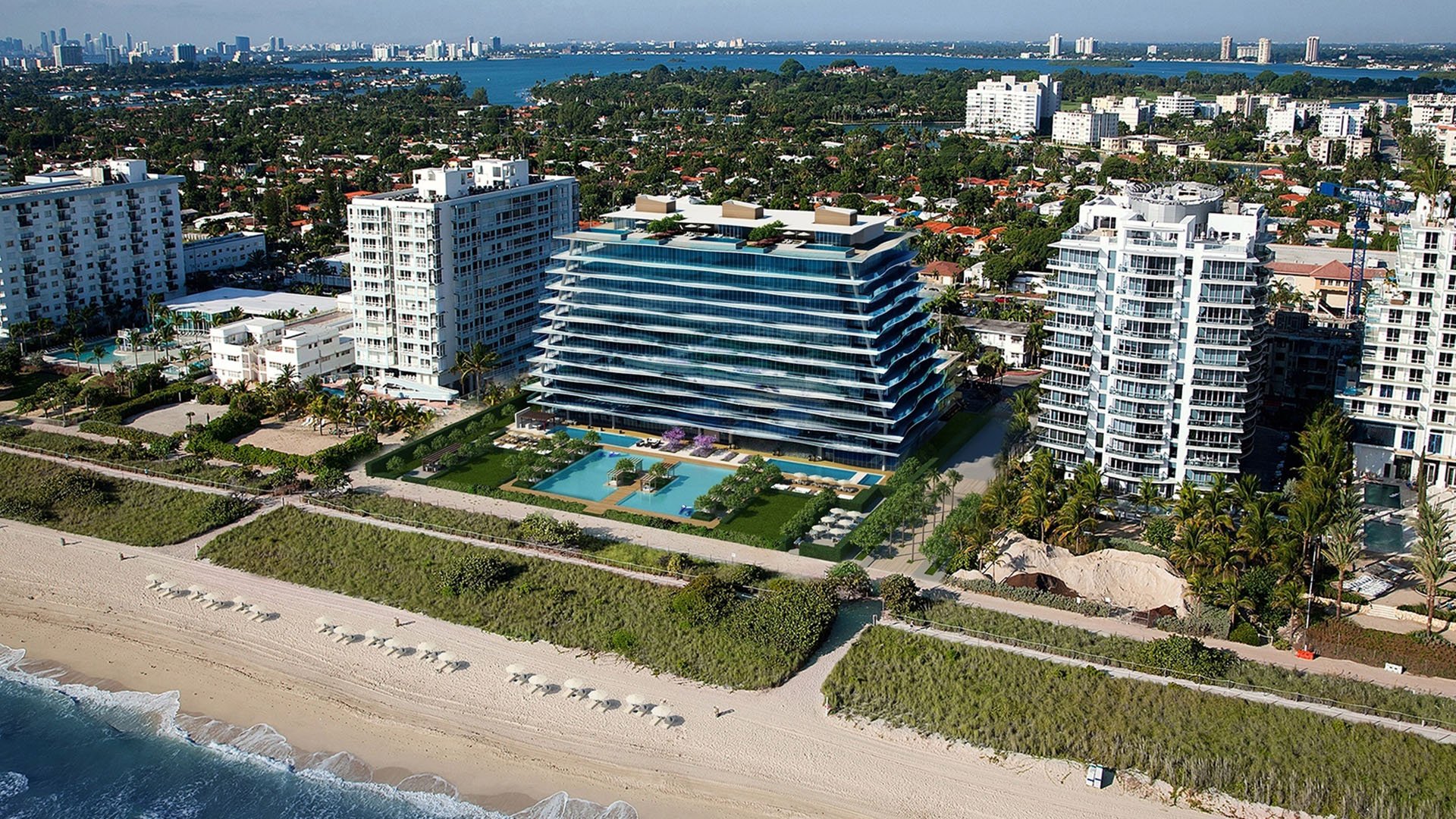
For a certain South Florida buyer, the ideal beachfront residence is not defined by spectacle. It is defined by control: the ability to step out for coffee, walk to the sand, dine nearby, and return to a home that still feels private after dark. Walkability matters, but not when it carries the acoustic penalty of late-night crowds, valet congestion, and entertainment traffic beneath the windows.
This is where the search becomes more exacting. The best beachfront addresses for this buyer are not necessarily the loudest or most famous. They sit close enough to daily pleasures that a car becomes optional for ordinary rituals, yet far enough from nightlife cores that the residence retains a sense of retreat. In markets where oceanfront, beach access, Miami Beach, Surfside, Bal Harbour, and South of Fifth are all used as search shorthand, the true distinction is not the label. It is the lived experience from morning to midnight.
1. Oceanfront residence - residential promenade setting
The most balanced option is a true oceanfront home positioned along a walkable stretch used primarily for daytime movement: beach walks, fitness routines, dog walks, and quiet neighborhood circulation. The attraction is immediacy without intensity. You are not choosing isolation; you are avoiding the blocks where nightlife becomes the identity of the address.
For buyers, the key is to study what happens outside the building after dinner, not only what looks convenient at noon. A promenade-adjacent residence can deliver excellent daily walkability while keeping the evening environment more measured, especially when the surrounding fabric is residential rather than entertainment-led.
2. Beachfront residence - calm edge of a dining district
The second profile is for the buyer who wants restaurants close by, but not directly below. A calm-edge residence sits within walking distance of dining, cafés, wellness services, and retail, while avoiding the most animated blocks. This is often the sweet spot for second-home owners who want convenience without feeling as if they purchased into a hospitality corridor.
The distinction can be subtle. A few blocks may separate a serene homecoming from a noisy one. Buyers should pay attention to pedestrian flow, valet patterns, outdoor music, and rideshare pickup zones. The goal is not to remove energy from the lifestyle, but to keep it at a civilized distance.
3. Surfside-style beachfront residence - village-scale walkability
A village-scale beachfront setting appeals to buyers who want everyday errands and dining to feel approachable rather than performative. The strongest version of this profile offers an elegant shoreline address with a neighborhood rhythm: morning coffee, beach access, low-key dinners, and a return home that feels composed.
This profile is especially attractive to buyers who value discretion. The walkable environment should feel useful, not crowded. A residence in this category works best when its surrounding streets support a daily routine without relying on late-night entertainment as the primary draw.
4. Bal Harbour-adjacent beachfront residence - refined convenience, lower-volume evenings
For buyers who prioritize polished retail, formal dining, and beach proximity, a Bal Harbour-adjacent profile can be compelling. The ideal address in this category offers walkable access to refined amenities while preserving the residential calm expected at this level of ownership.
The buyer should look beyond brand names and consider how the building is positioned in relation to arrival courts, main roads, service entrances, and pedestrian corridors. Quiet luxury is often architectural and urbanistic before it is decorative. The best residence is the one that lets you access the neighborhood’s advantages without absorbing its busiest moments.
5. South of Fifth ocean-edge residence - dining nearby, residential return
At the southern end of the beach, the most desirable version of walkability is not about being at the center of every scene. It is about having dining, waterfront promenades, and beach access within reach, while returning to a street or building position that feels distinctly residential.
This profile suits buyers who enjoy a more urbane coastal lifestyle, but still want a clear separation between going out and being home. The residence should feel like a private base, not an extension of the evening’s most active block. For many buyers, that separation is the definition of livability.
Walkability is often treated as a simple convenience score, but luxury buyers should read it more carefully. A beachfront residence can be highly walkable and still poorly suited to a quiet lifestyle if the nearest walkable uses are nightlife-heavy. Conversely, a property that appears slightly removed on a map may deliver a more elegant daily rhythm if its routes are pleasant, shaded, residential, and direct.
The best test is experiential. Imagine three ordinary moments: leaving for a morning walk, returning from dinner, and sleeping on a weekend night. A strong residence performs well in all three scenarios. It should offer immediate access to the sand or shoreline path, a dignified walking route to dining or services, and enough separation from late-night activity that the interiors retain their intended calm.
Once the location feels right, the building itself becomes the second filter. Buyers should consider orientation, glazing, bedroom placement, elevator flow, arrival sequence, and the relationship between private terraces and public-facing spaces. A residence can be close to activity and still feel serene if its planning is intelligent.
Higher floors may reduce some street-level noise, but they are not an automatic solution. Wind, exposure, nearby mechanical systems, and event noise can all shape the experience. Corner positions, setback lines, and the placement of primary suites can matter as much as views. In a true luxury purchase, sound, privacy, and circulation deserve the same attention as finishes.
Terraces require particular scrutiny. A large outdoor room is a major asset only if it is pleasant to use at the hours that matter to the owner. Buyers who entertain quietly, read outdoors, or dine at home should evaluate whether the terrace faces the ocean, a pool deck, a busy street, or a neighboring venue. The view is only part of the value.
This search suits buyers who want an elegant coastal routine rather than a resort spectacle. They may be primary residents, seasonal owners, or international buyers who prize privacy when they are in residence. They want to walk, but not perform. They want restaurants nearby, but not noise underneath. They want beach access, but not the constant churn of a tourist corridor.
For these buyers, the winning residence is the one that preserves optionality. You can be social when you choose, retreat when you prefer, and move through the neighborhood without depending on a car for every minor errand. That combination is increasingly rare, and it is why quiet walkability remains one of the most sophisticated filters in South Florida beachfront real estate.
What makes a beachfront residence walkable but quiet? It combines direct coastal access with nearby daily amenities, while avoiding the blocks most associated with late-night traffic and entertainment noise.
Is oceanfront always better for a quiet lifestyle? Not always. The surrounding street pattern, neighboring uses, and building orientation can matter as much as the fact that the residence is on the water.
Should buyers avoid restaurant districts entirely? No. The better strategy is to be close enough to enjoy them on foot, but not positioned directly above or beside the most active evening blocks.
Do higher floors solve nightlife noise? They can help in some settings, but floor height is only one factor. Orientation, glazing, terrace exposure, and nearby outdoor venues also matter.
Why is South of Fifth often discussed by quiet-walkability buyers? It is associated with a more residential coastal feel while still offering dining, waterfront walks, and beach access within a compact area.
Why do Surfside buyers often value village scale? A village-scale setting can make daily walks feel practical and relaxed, with less dependence on large entertainment corridors.
How should buyers evaluate beach access? They should consider not only distance to the sand, but also the quality, privacy, and ease of the route from the residence to the beach.
Is Bal Harbour better for buyers who want refined convenience? It can appeal to buyers who prioritize polished retail and dining nearby, provided the specific residence preserves residential calm.
What should buyers look for during a private showing? They should assess arrival, terrace exposure, bedroom orientation, elevator flow, and the feel of the surrounding streets at different times.
Can a highly walkable beachfront home still feel private? Yes, when the address, building design, and immediate surroundings create a clear separation between public energy and private living.
For a confidential assessment and a building-by-building shortlist, connect with MILLION.
If branded residences are on your mind — as a home or as an allocation — we would be glad to share what we are seeing, privately.
Begin a quiet conversation