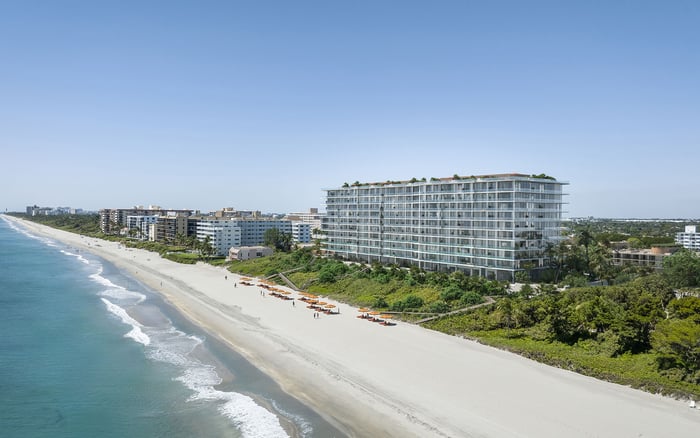
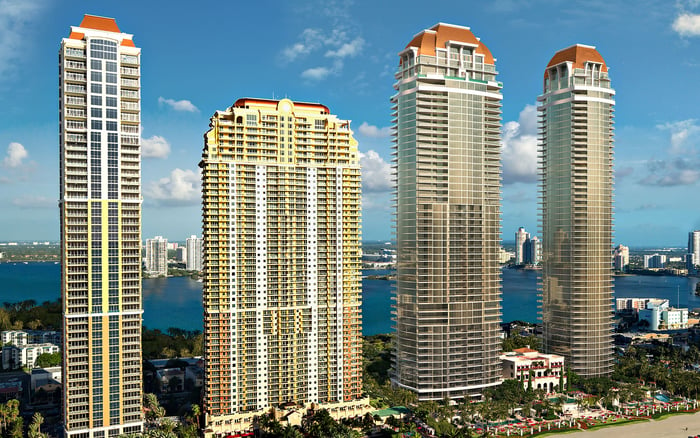
Listing photos compress South Florida’s coastline into a single idealized image. Serious buyers compare beach access by studying the path to the water, privacy, beach width at different conditions, building services, shoreline context, and the lifestyle tradeoffs behind each address.
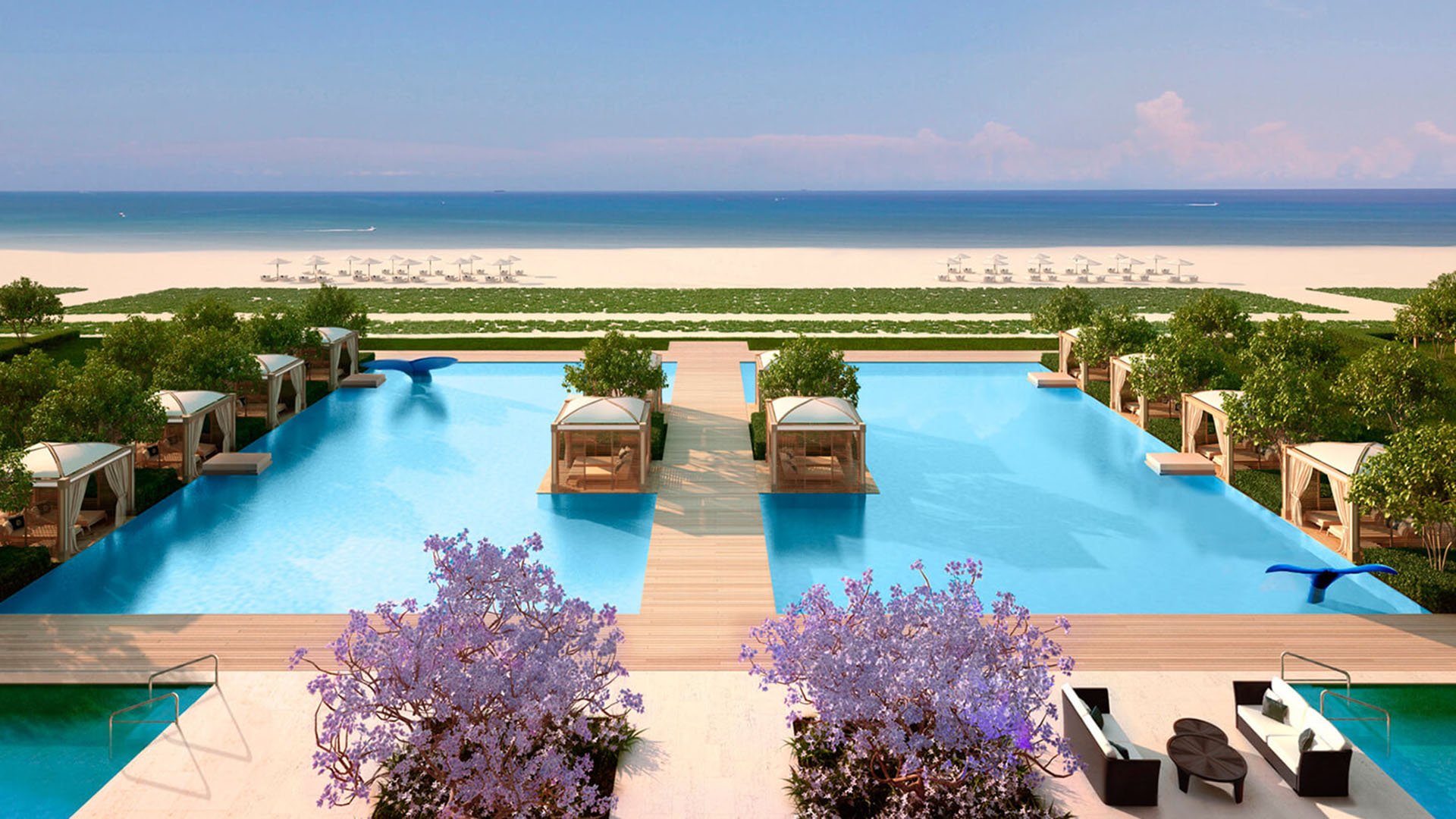
In South Florida luxury real estate, the beach is often presented as a flawless plane of pale sand and blue water. In a listing gallery, one stretch of coastline can look almost indistinguishable from the next. The camera rewards symmetry, clear skies, and the empty-hour romance of sunrise. Ownership, however, is experienced at ground level: through gates, paths, elevators, attendants, towels, umbrellas, neighbors, tides, and the subtle social choreography of a particular shoreline.
For a serious buyer, beach access is not a generic amenity. It is a daily ritual. The difference between stepping directly from a private residential terrace path onto the sand and crossing a public corridor filled with chairs, coolers, bikes, and hotel traffic can define the feel of an entire residence. Two properties may frame the same Atlantic horizon, yet one may feel serene and residential while the other feels energized, public, and highly visible.
This is why the best comparison begins with a simple question: what exactly happens between your front door and the water?
Start by mapping the physical sequence. Is the beach reached through a lobby, a pool deck, a garden path, a gate, a boardwalk, or a shared public access point? Does the route require an elevator transfer, a service corridor, or a staffed beach desk? Is the path intuitive for children, guests, older relatives, and anyone carrying towels, bags, or paddleboards?
The most desirable access often feels effortless. It is not necessarily the shortest route, but the most composed one. A shaded walkway, controlled entry point, and well-managed transition from building to shoreline can make a property feel more private and polished than another residence with comparable frontage.
In Miami Beach, comparisons between addresses such as 57 Ocean Miami Beach and The Perigon Miami Beach should not stop at the view line. Buyers should walk the complete path at least once, ideally in resort wear rather than business attire, because the practical experience reveals what photographs omit.
A beach can look generous in one photograph and feel compressed at another hour. The width of usable sand, the density of beachgoers, and the ease of creating a quiet place can shift by season, time of day, weather, and nearby public access patterns. Rather than asking whether a building is “on the beach,” ask how the beach behaves.
Visit in the morning, at midday, and in the late afternoon if possible. Observe where residents naturally sit, where public foot traffic concentrates, and whether the building’s beach setup feels orderly or improvised. Notice how sound travels. Some shorelines feel contemplative at sunrise and animated by late afternoon. Others maintain a private residential mood throughout the day.
A buyer may internally tag candidates as beach-access or oceanfront, but those labels are only the first layer. The real comparison becomes more refined when separated by submarket and rhythm: Surfside, Sunny Isles, Bal Harbour, and Miami Beach each deserves its own walk, not just its own search filter.
Oceanfront ownership has symbolic power, but usability is the luxury. A residence can command a dramatic view yet offer beach access that feels indirect, crowded, or dependent on a service model that does not match the buyer’s lifestyle. Another property may have a calmer, more discreet path to the sand, even if its marketing imagery is less theatrical.
For this reason, compare the service layer carefully. Who manages chairs and umbrellas? How are guests handled? Is there an attendant, and if so, where does the service begin and end? Are beach amenities seasonal, daily, request-based, or first-come? The answers shape the lived value of the address.
At Rivage Bal Harbour, for example, a buyer’s diligence should still focus on the same essentials: the transition from residence to sand, the feeling of privacy, and the way the beach environment supports the household’s actual routine. Brand, architecture, and address matter, but the beach must be tested as a daily amenity.
The most telling beach-access questions are often about boundaries. Where does the residential environment end? Where does the public beach experience begin? Is there a visible divide, a landscaped edge, a controlled gate, or simply an open transition? None of these conditions is inherently good or bad. The point is alignment.
Some buyers want an energetic shoreline with walkers, nearby cafés, and a sense of urban life. Others want a quieter setting where the building’s beach presence feels almost club-like. Families may prioritize easy supervision and predictable access. Second-home owners may value a lock-and-leave service model that makes each arrival feel seamless.
The right answer depends on temperament. A buyer who values privacy should not be seduced by a wide-angle photograph that conceals heavy foot traffic. A buyer who enjoys activity should not overpay for seclusion that may feel too still after the first season.
Beach access is shaped not only by the sand, but by what sits behind it. Parking patterns, nearby hospitality uses, parks, restaurants, residential density, and street design can influence the way a shoreline feels. A building may be oceanfront, but the surrounding neighborhood determines whether the beach feels residential, resort-like, or civic.
In Broward and Palm Beach County, the comparison can become even more nuanced because quieter coastal stretches may appeal to buyers who want space, calm, and a more private daily cadence. At Rosewood Residences Hillsboro Beach, the broader question is not merely whether the residence is near the ocean. It is whether the coastal setting supports the buyer’s desired pace of life.
The same discipline applies farther south in Sunny Isles, where vertical living, resort energy, and direct beach orientation can coexist. A building such as St. Regis® Residences Sunny Isles should be evaluated through both its private residential promise and the surrounding beachfront rhythm.
Before choosing between two similar-looking listings, ask your advisor to arrange a practical comparison. Walk the access route. Stand at the beach entry point. Observe the chair setup area. Note the distance from elevator to sand. Ask how guests are registered. Ask how beach equipment is stored, requested, and returned. Ask what the shoreline feels like during peak weekends.
Then consider the softer signals. Does the access feel elegant or exposed? Does the building staff appear to control the beach experience with confidence? Is there a natural place to pause before entering the sand? Does the path feel appropriate after dinner, after a swim, or with children in tow?
A fine coastal residence should make the beach feel less like an outing and more like an extension of home. That is the distinction photographs rarely capture.
When the sand looks identical, the superior property is the one that makes access feel intentional. It respects privacy without inconvenience, service without fuss, and beauty without dependence on staged imagery. It offers the water as part of daily life, not merely as a backdrop for a listing.
For South Florida buyers, this is a sophisticated form of due diligence. It asks less about whether a building has beach access and more about the quality of that access. The answer is found in movement, management, privacy, and mood. The ocean view may sell the dream, but the path to the sand determines whether the dream becomes effortless.
Why do beach-access comparisons matter if two listings look similar? Photos flatten differences in privacy, service, crowding, and convenience. The daily route to the sand can change the entire ownership experience.
Should I prioritize direct oceanfront over nearby beach access? Direct oceanfront can be highly desirable, but usability matters more than the label. A composed, well-managed access path may be more valuable than a dramatic view with awkward circulation.
How many times should I visit the beach before deciding? Visit at more than one time of day whenever possible. Morning, midday, and late afternoon can reveal different patterns of light, activity, and privacy.
What should I look for when walking from the lobby to the beach? Notice distance, shade, gates, staff presence, guest handling, storage, and how natural the transition feels. The best route feels intuitive and calm.
Is a wider-looking beach always better? Not necessarily. A beach that appears wide in photos may feel busy, exposed, or poorly serviced in practice.
How important is beach service? Very important for many luxury buyers. Chairs, umbrellas, towels, and attendant procedures can turn beach access from occasional use into a daily pleasure.
Can public access nearby affect the feel of a residence? Yes. Public paths, parks, and hospitality uses can influence foot traffic, sound, and the sense of privacy along the sand.
Should families evaluate beach access differently? Families should focus on supervision, ease of carrying items, restroom proximity, gates, and predictable service. Convenience becomes part of safety and comfort.
Do different South Florida beach towns feel meaningfully different? Yes. Each coastal area has its own rhythm, density, and level of public activity, so buyers should compare neighborhoods in person.
What is the simplest rule for comparing beach access? Do not judge only the view. Walk the route, observe the shoreline, and decide whether the beach feels like a natural extension of home.
To compare the best-fit options with clarity, connect with MILLION.
If branded residences are on your mind — as a home or as an allocation — we would be glad to share what we are seeing, privately.
Begin a quiet conversation