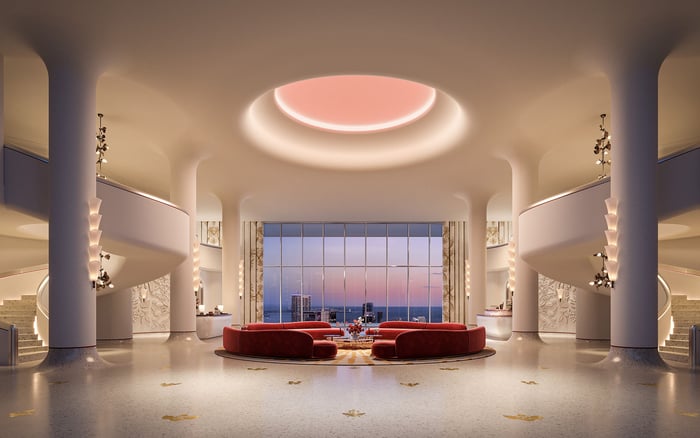
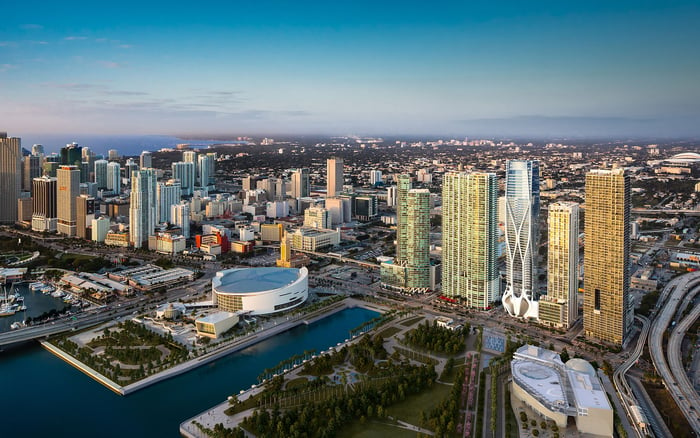
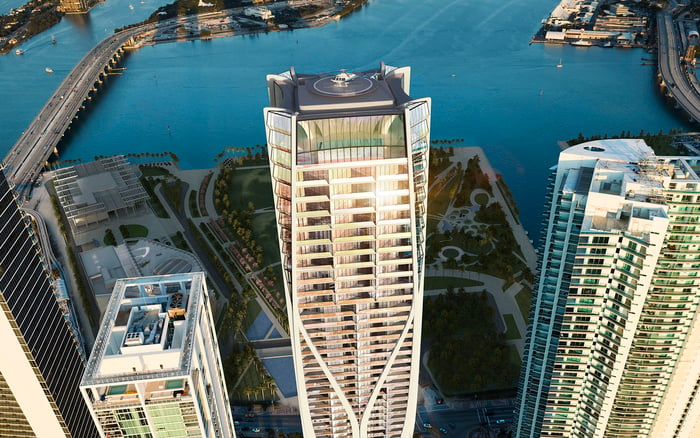
A refined buyer’s guide to comparing resilience planning, backup power, and storm staffing across Edgewater, Downtown Miami, and Brickell luxury towers.
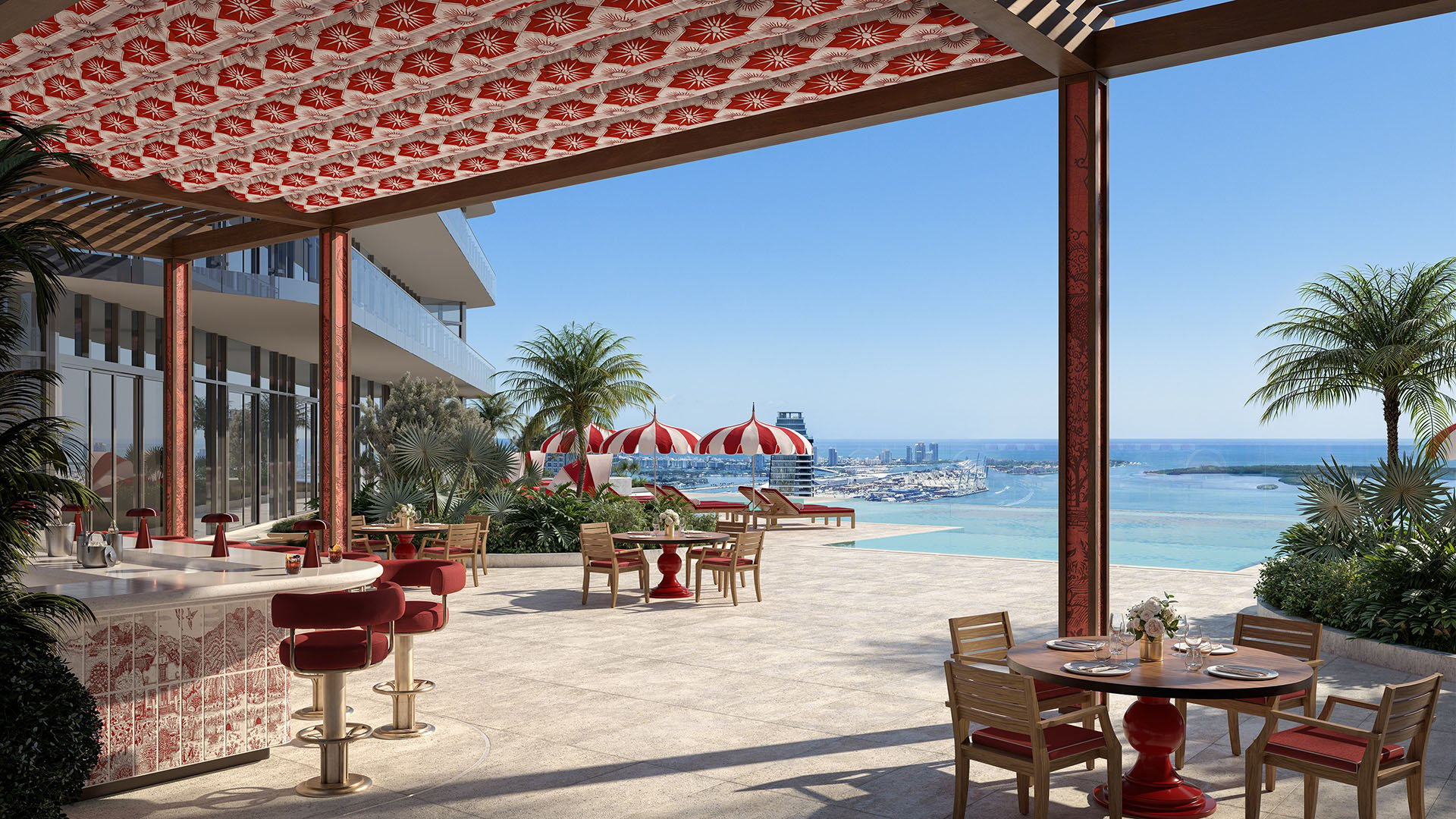
For South Florida’s most discerning condominium buyers, resilience has moved from technical appendix to boardroom priority. In a city defined by bayfront living, dense urban infrastructure, intense rainfall, king tides, storm surge, and hurricane-force winds, the question is no longer whether a luxury tower looks beautiful in fair weather. The sharper question is how it performs when conditions are imperfect.
That distinction matters when comparing The Cove Residences Edgewater, Faena Residences Miami Downtown Miami, and House of Wellness Brickell. Each belongs to a distinct urban context: Edgewater, Downtown, and Brickell. Each should be evaluated through location, systems, operations, and ownership expectations, not merely through finishes and views.
The most useful framework separates three ideas often blurred in sales conversations: resilience planning, generator coverage, and storm staffing. They overlap, but they are not interchangeable. A tower can have a strong long-range resilience posture without offering the broadest in-unit backup power. Another can emphasize generator capacity while leaving owners to ask harder questions about fuel duration or post-storm service. A third may place greater weight on operational readiness, with staffing protocols that shape the lived experience before, during, and after a major weather event.
Resilience planning begins before a storm is named. It includes how a building addresses flood exposure, wind conditions, drainage, critical-equipment placement, envelope durability, emergency access, and long-term asset protection. For buyers considering Edgewater or Downtown, where water, density, and infrastructure can converge in different ways, the planning conversation should feel specific rather than ceremonial.
For The Cove Residences Edgewater, the first diligence question is not, “Is it new?” It is, “What is the documented resilience strategy for this site and this building?” The answer should address the structural and code baseline, then go further into floodproofing philosophy, key mechanical protections, access points, and recovery sequencing. Cove Miami, as a phrase buyers may encounter in search, should still lead to the same disciplined inquiry: what protects the resident experience and the association’s asset over time?
For Faena Residences Miami Downtown Miami, the Downtown context makes continuity especially important. Dense urban environments can place pressure on access, utilities, service routes, and post-storm coordination. A luxury address may be architecturally compelling, but the strongest ownership case includes a clear explanation of how residents, staff, vendors, and essential systems are expected to function during a prolonged disruption.
Backup power is one of the most misunderstood subjects in luxury condominium due diligence. “Generator” is not a complete answer. The meaningful question is what the generator powers, for how long, and under what operating assumptions.
At minimum, buyers should understand whether backup power supports life-safety systems, emergency lighting, fire systems, and critical pumps. The next level of inquiry is more lifestyle-driven: elevator service, water pressure, cooling in designated common areas, building access systems, communications, security operations, refrigeration for essential spaces, and any in-unit loads. In the ultra-premium market, comfort during an outage is not a vanity issue. It can determine whether an owner can remain in residence safely and privately, or must relocate.
The distinction matters in Brickell. A buyer comparing House of Wellness Brickell with other Brickell residences should ask whether generator coverage is designed primarily for code-driven essentials, broader common-area continuity, or a more expansive resident experience. If in-unit power is discussed, it should be documented with clarity, including which circuits are supported, what limits apply, and how fuel duration is modeled.
Generator value also depends on fuel. Duration, refueling logistics, vendor access, maintenance schedules, load testing, and association cost implications should all be part of the conversation. A polished amenity deck does not answer whether a building can sustain comfort through a multi-day outage.
Systems matter, but so do people. Storm staffing is the operational layer that turns plans into reality. A well-trained on-site team can help secure the property before landfall, communicate with residents, monitor essential systems, manage access, coordinate vendors, document conditions, and guide re-entry or recovery after the event.
For luxury buyers, this is where service culture intersects with risk management. The question is not only whether a concierge desk exists on a normal Friday evening. The question is who is expected to be present before, during, and after a storm, what authority they have, how they communicate with residents, and what protocols govern safety decisions.
Brickell, Downtown, and Edgewater can each present different staffing challenges. Road access, surrounding construction, utility interruptions, and neighborhood density may affect how quickly vendors and personnel can move. A staffing plan should not be vague. It should identify roles, communication channels, backup leadership, resident advisories, and post-storm inspection procedures.
Edgewater buyers often focus on bay views and proximity to the cultural corridor, but waterfront orientation and rainfall management deserve equal attention. The right questions for The Cove Residences Edgewater include floodproofing approach, critical-system protection, drainage assumptions, and how residents are expected to use the building during extended utility disruption.
Downtown buyers may place higher weight on access, coordination, and vertical mobility. Faena Residences Miami Downtown Miami should be compared through questions about elevator continuity, building operations during citywide strain, and the sequence for returning services after a storm.
Brickell buyers often balance high-rise density with a desire for hotel-level convenience. At House of Wellness Brickell, the resilience conversation should connect wellness, service, and continuity. If a building is positioned around elevated daily living, buyers should ask how that promise is protected when normal infrastructure is stressed.
For investment-minded owners, these questions are not merely defensive. Resilience planning, generator scope, and staffing protocols can affect long-term confidence, association budgeting, insurance conversations, rental desirability, and resale perception. Sophisticated buyers increasingly view storm performance as part of the ownership experience rather than a footnote.
A serious buyer or adviser should request concrete documentation rather than rely on broad assurances. Useful materials may include a summary of structural and code compliance, floodproofing strategy, emergency operations plan, generator scope narrative, fuel-duration assumptions, equipment-maintenance schedule, staffing protocol, resident communication plan, and post-storm recovery procedure.
The association cost implications also deserve attention. Expanded generator coverage can influence capital costs, maintenance obligations, reserves, fuel contracts, and future assessments. Enhanced staffing may improve service continuity but requires clear budgeting. Long-term resilience planning may reduce exposure in one category while increasing investment in another. The best comparison is not about the most dramatic promise. It is about the most transparent operating model.
The buyer’s final matrix should be simple: structural baseline, flood strategy, generator scope, fuel duration, elevator and water continuity, cooling strategy, staffing plan, recovery protocol, resident communications, and association costs. If a developer team can answer those points clearly, the conversation becomes more meaningful than any generic resilience slogan.
Is code compliance enough for a Miami luxury tower? No. Code compliance is a baseline. Buyers should also evaluate comfort, service continuity, and recovery planning during prolonged outages.
How is resilience planning different from generator coverage? Resilience planning addresses broader flood, wind, drainage, and asset-protection strategy. Generator coverage focuses on what remains powered when utility service fails.
What should buyers ask about generators? Ask what systems are powered, whether elevators and water pressure are supported, how long fuel is expected to last, and how refueling is handled.
Does backup power always include in-unit electricity? Not necessarily. In-unit loads should be confirmed in writing, including which circuits are covered and what operating limits apply.
Why does storm staffing matter in a luxury building? Trained staff can secure the property, communicate with residents, monitor systems, coordinate vendors, and support post-storm recovery.
Are Edgewater, Downtown, and Brickell resilience needs identical? No. Exposure varies by waterfront orientation, density, infrastructure, and access, so each location should be evaluated on its own terms.
What documentation should a buyer request before contract? Request resilience summaries, generator scope, fuel assumptions, staffing protocols, emergency communications, and post-storm recovery procedures.
Can stronger resilience affect ownership costs? Yes. Generator systems, staffing, maintenance, reserves, and recovery planning can all influence association costs over time.
Should condo boards revisit storm protocols after delivery? Yes. Protocols should be maintained, tested, and updated as systems age, vendors change, and resident expectations evolve.
What is the best way to compare these three projects? Use a matrix that separates planning, power, staffing, recovery, and cost, then ask for project-specific answers in writing.
If you'd like a private walkthrough and a curated shortlist, connect with MILLION.
If branded residences are on your mind — as a home or as an allocation — we would be glad to share what we are seeing, privately.
Begin a quiet conversation