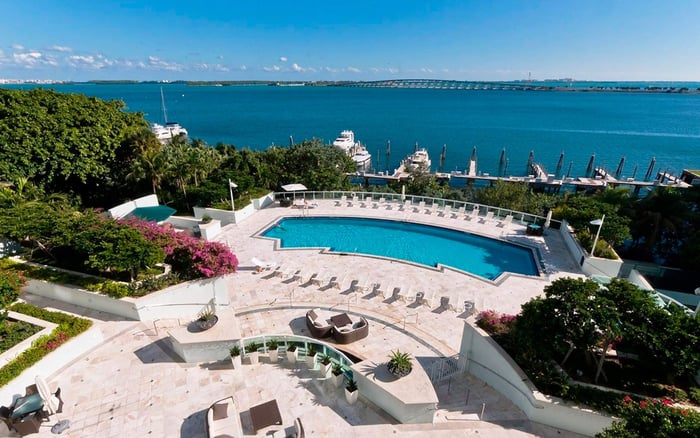
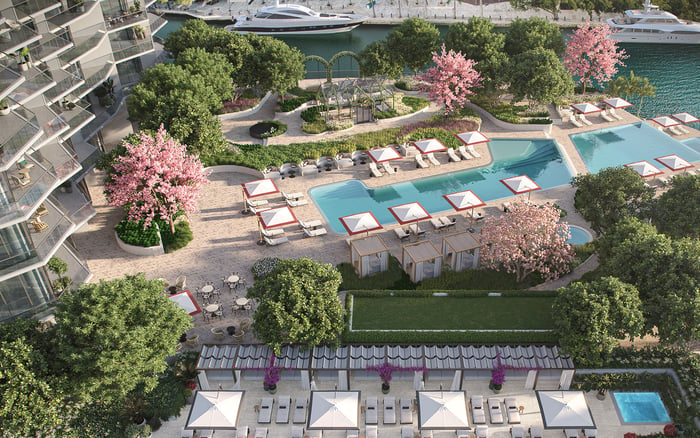
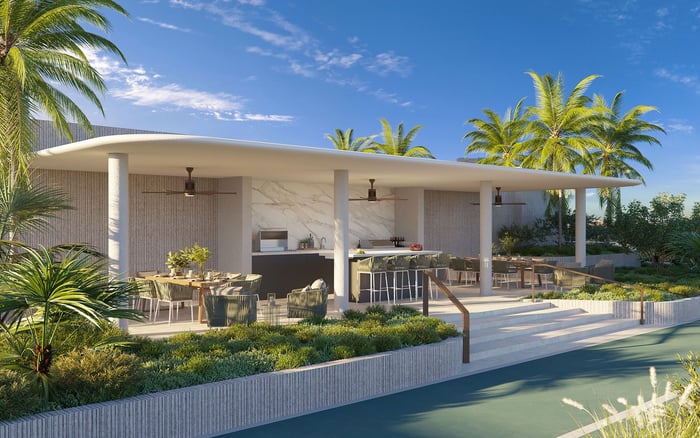
A discreet buyer’s guide to five privacy-led bayfront residence profiles in South Florida, with emphasis on water orientation, arrival discretion, amenities, and long-term livability.
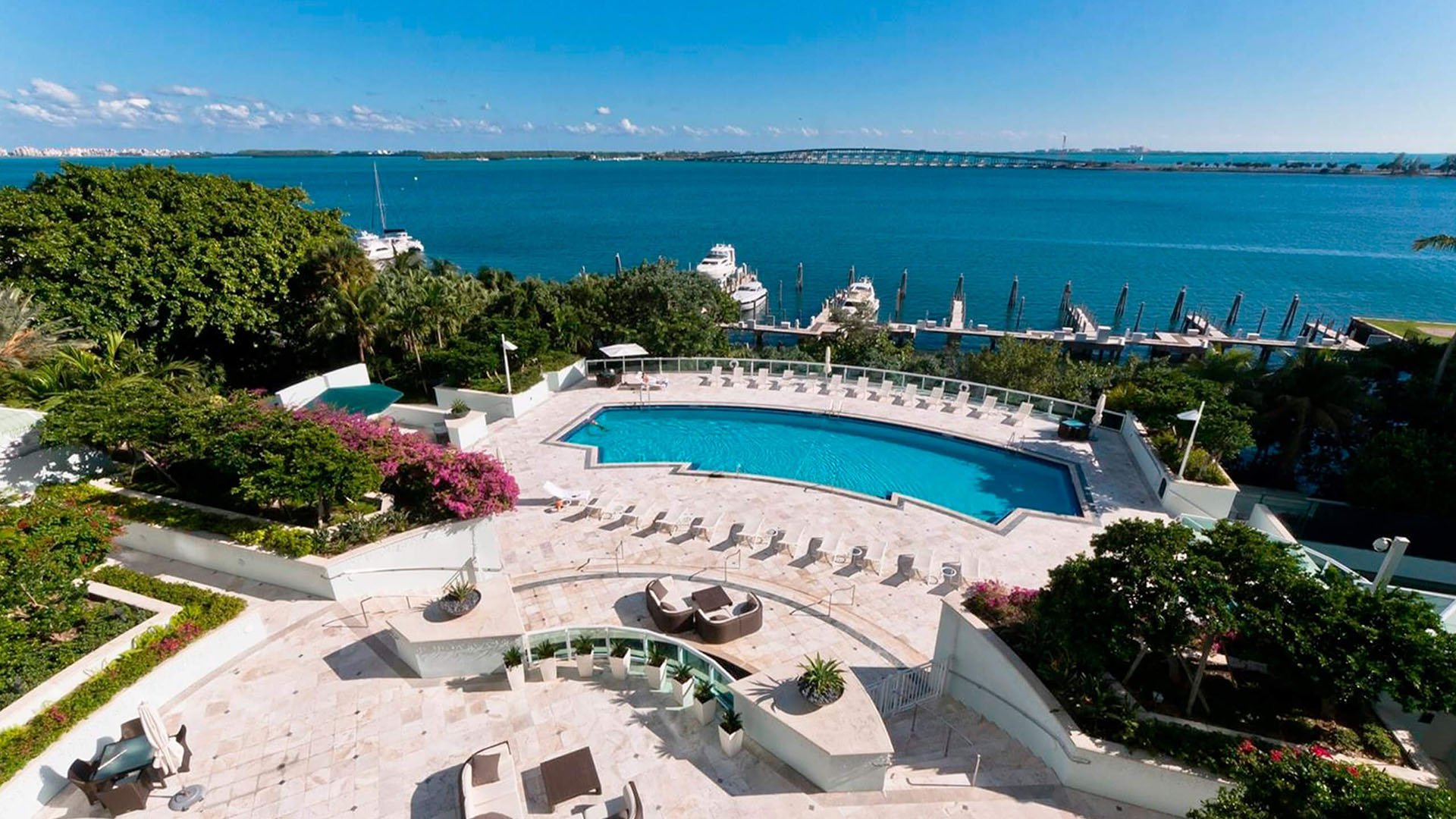
For a certain South Florida buyer, the most valuable amenity is not the largest lobby, the most theatrical arrival court, or the most photographed pool deck. It is quiet. More precisely, it is the ability to live on the water with minimal visual exposure, a controlled approach, and the sense that the residence belongs more to the horizon than to the street.
Bayfront living and Oceanfront living are often treated as interchangeable luxuries, yet they answer different privacy instincts. Ocean frontage delivers drama, open views, and the sensory pull of surf and sky. Bayfront living can be more composed, with calmer water, more nuanced exposures, and, in select settings, a more protected residential rhythm. The most sophisticated buyers weigh both conditions carefully, especially when the brief calls for discretion.
At this level, privacy is not a single feature. It is a sequence. It begins at the gate or porte cochere, continues through elevator access and sightlines, and culminates inside the residence, where terraces, glazing, and primary rooms determine how visible life feels from the outside. A great Waterview is only half the equation. The sharper question is whether that view can be enjoyed without compromise.
1. Private Island Residence - controlled arrival
The strongest privacy profile begins with geography. A residence in a private or semi-private island setting benefits from immediate psychological separation from the city. The approach is limited, the audience is smaller, and daily life feels removed without sacrificing proximity to the cultural and culinary life that defines South Florida.
For buyers who value discretion over spectacle, this profile is often the benchmark. The residence should be evaluated for arrival control, water exposure, terrace orientation, and the way neighboring homes align across the channel or bay. A beautiful view loses its power if the primary living spaces look directly into another residence.
2. Low-Density Oceanfront Residence - fewer shared moments
An Oceanfront building with a low-density feel can offer a rare combination: open-water grandeur with a more private daily cadence. The key is not merely being on the sand. It is how many households share the experience, how elevators are organized, and whether common areas feel serene rather than performative.
This profile suits buyers who want the elemental quality of the ocean without the intensity that can accompany heavily trafficked resort corridors. The best examples feel residential first, with amenities that support daily life rather than announce themselves.
3. Bayfront Residence with Marina Access - water as entrance and escape
A Marina setting introduces a different kind of privacy, one tied to mobility. For boaters, the water is not simply a view; it is a private route. The ability to move quietly between home, open water, and favored destinations can change the rhythm of ownership, especially for buyers who treat time as the ultimate luxury.
The most important considerations are practical as much as aesthetic. Buyers should evaluate how the boating component interacts with residence privacy, whether pedestrian movement near slips affects the home, and whether the water-facing rooms remain protected from activity at the dock.
4. Elevated Bayfront Residence - height with discretion
A higher-floor bayfront residence can create privacy through elevation. The advantage is not only a broader view, but also distance from adjacent circulation, waterfront paths, and neighboring low-rise sightlines. When planned well, elevation gives the interiors a quiet, suspended quality above the bay.
The strongest version of this profile pairs height with thoughtful floor plan design. Primary suites, living rooms, and terraces should orient toward the most private expanse of water. A Balcony can be exceptional, but only when its position allows for relaxed use throughout the day and evening.
5. Garden-Level Waterfront Residence - privacy through enclosure
Not every private waterfront home needs to rise above the shoreline. In some cases, a garden-level residence can feel deeply secluded when landscape, setbacks, and outdoor rooms are handled with care. The appeal is tactile: water nearby, greenery close, and an indoor-outdoor life that feels less exposed than a fully elevated glass envelope.
This profile requires the most scrutiny. Buyers should consider how outdoor areas are screened, whether neighboring buildings overlook private zones, and how amenities such as a Pool influence the sense of retreat. When successful, the result can feel like a villa with condominium-level ease.
The most private bayfront residences are rarely defined by one headline feature. They are defined by alignment. The arrival sequence should feel calm. Elevator access should reduce unnecessary encounters. Outdoor spaces should face water, sky, or landscape rather than adjacent terraces. Service areas should support staff, deliveries, and maintenance without drawing daily life into public view.
Sound matters as much as sight. A residence can be visually protected yet acoustically exposed if it sits near active amenity decks, restaurant terraces, marina operations, or high-traffic waterfront promenades. The luxury buyer should experience the property at different hours, not only during a polished showing window.
Light is another subtle privacy tool. Morning and evening exposure can change how a glass residence feels from inside and outside. Window treatments, terrace depth, and room placement all shape whether the home feels open or overly visible after sunset.
South Florida offers distinct expressions of waterfront privacy. Some buyers gravitate toward island environments for separation. Others prefer the energy of Miami Beach, tempered by a quieter building profile and a more residential edge. Still others want Brickell convenience with a residence that shields them from the intensity below.
The right choice depends on how the buyer lives. A frequent traveler may value lock-and-leave efficiency and private elevator access. A boater may prioritize a residence that integrates naturally with water access. A family may care more about protected outdoor rooms, staff circulation, and guest arrival that does not disturb the household.
For many, the ideal address is not the most visible one. It is the one that allows entertaining when desired and retreat when needed. In that sense, the privacy premium is emotional as well as architectural.
A floor plan can reveal more than a rendering. Start with the entry. Does the residence open directly into a private foyer, or does it rely on shared corridors? Then study the relationship between entertaining rooms and bedrooms. The best plans let guests enjoy the water while preserving a clear private zone.
Terraces deserve special attention. Width, depth, and adjacency determine whether outdoor living feels natural. A narrow terrace may photograph beautifully but offer limited everyday privacy. A deeper terrace with thoughtful orientation can become the most-used room in the home.
Finally, evaluate back-of-house function. Laundry, service access, storage, package handling, and staff movement are not glamorous topics, but they separate a trophy residence from a truly livable one. At the highest end, privacy depends on operations being nearly invisible.
Privacy tends to age well. Finishes can be refreshed, furniture can be replaced, and amenity tastes can evolve, but a protected water orientation and a discreet arrival sequence are difficult to recreate after the fact. For buyers comparing residences, these fundamentals deserve as much attention as brand, design language, and amenity programming.
The most compelling bayfront home is not necessarily the one with the loudest presentation. It is the one that supports a quieter way of living, where the water is present, the city is accessible, and the owner remains comfortably out of view.
What defines a private bayfront residence? A private bayfront residence combines controlled arrival, protected sightlines, thoughtful outdoor space, and a water orientation that feels calm rather than exposed.
Is Oceanfront always more private than bayfront? Not necessarily. Oceanfront can offer broader views, while bayfront settings may provide calmer water, softer exposure, and a more discreet residential rhythm.
Why does elevator access matter for privacy? Elevator configuration influences how often residents encounter neighbors, guests, and staff before reaching the home, which affects the daily sense of discretion.
Should buyers prioritize height or low-density design? Both can support privacy. Height creates distance from street and waterfront activity, while low-density design reduces shared circulation and amenity intensity.
How important is a Marina for privacy-focused buyers? A Marina can add private mobility for boaters, but buyers should study whether dock activity affects views, sound, or the use of outdoor spaces.
Does a Balcony improve privacy? A Balcony improves privacy only when it is deep, well-oriented, and shielded from direct views by nearby residences or active common areas.
Can a Pool reduce privacy? A Pool can enhance daily life, but its placement matters. If it draws activity close to private rooms, it may affect the calm a buyer expects.
Is Brickell suitable for buyers seeking privacy? Brickell can suit privacy-minded buyers when the residence offers elevation, controlled access, and interiors oriented away from the most active urban sightlines.
What is the most overlooked privacy detail? Evening visibility is often overlooked. Once interior lights are on, glass, terrace depth, and window treatments become essential to comfort.
How should buyers compare Waterview residences? Buyers should compare not only the beauty of the Waterview, but also what faces back toward the home and how the view feels at different hours.
For a confidential assessment and a building-by-building shortlist, connect with MILLION.
If branded residences are on your mind — as a home or as an allocation — we would be glad to share what we are seeing, privately.
Begin a quiet conversation