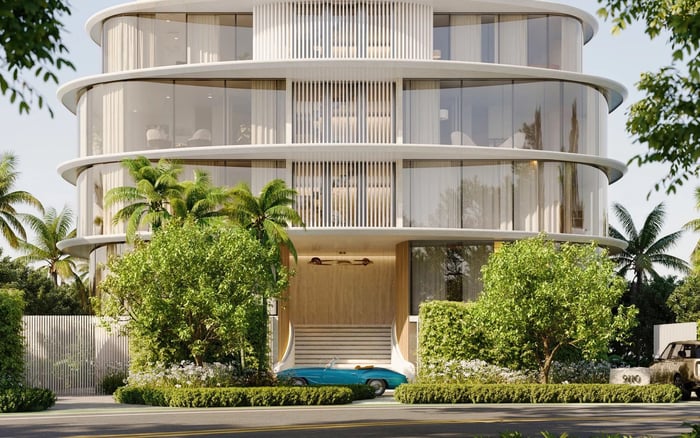
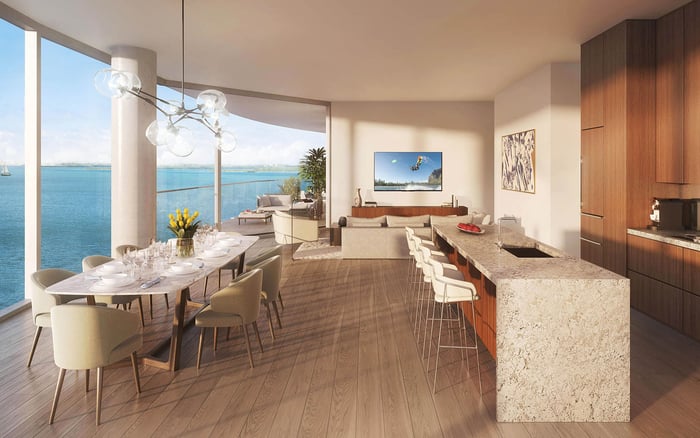
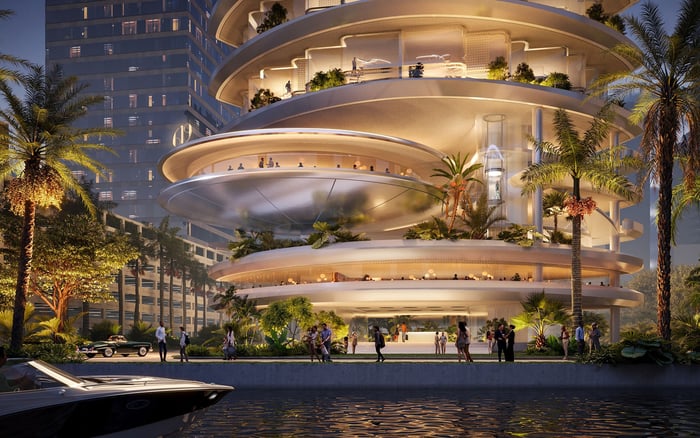
A discreet guide for South Florida buyers who value bayfront living, polished arrivals, and guest parking that supports effortless entertaining.
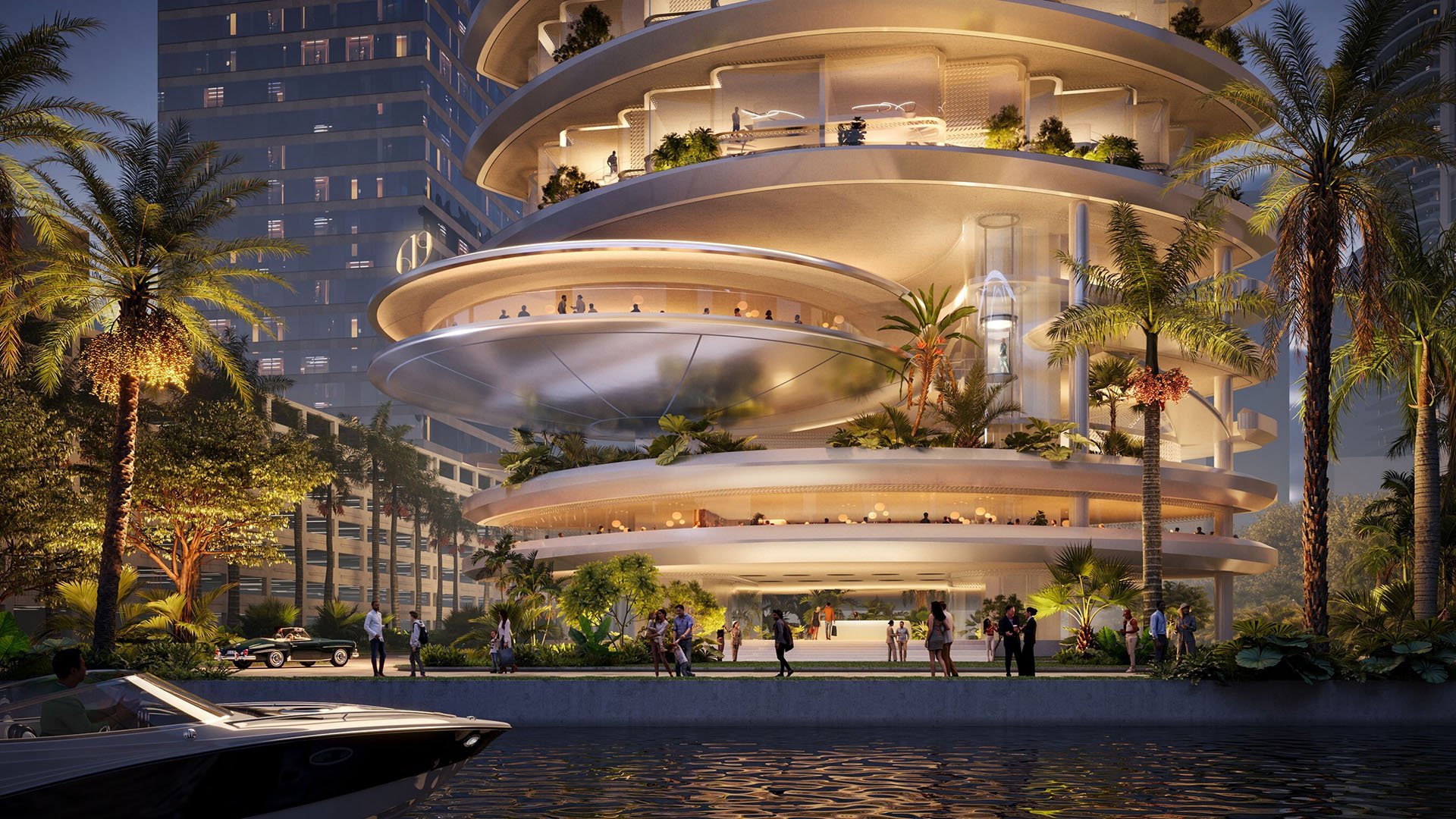
Bayfront living asks more from a building than a beautiful view. It asks for an arrival sequence that can absorb dinner guests, family visits, drivers, service appointments, and spontaneous evenings on the terrace without turning the front door into a negotiation. For many South Florida buyers, guest parking is not a secondary amenity. It is part of the home’s social architecture.
The best bayfront residences make arrival feel composed. A visitor should know where to go, whom to speak with, and how the handoff works without a phone call from the owner. That ease is especially valuable in waterfront neighborhoods, where buildings may sit on constrained parcels, entrances can intersect with service circulation, and peak-hour traffic can alter the mood before a guest reaches the lobby.
For buyers comparing Brickell, Miami Beach, Sunny Isles, Coconut Grove, marina-oriented, and waterview options, the question is not only whether guests can park. The deeper question is whether they can arrive gracefully, repeatedly, and predictably.
1. Arrival-first bayfront residence - dedicated guest sequence
The strongest profile begins before the garage. Look for a residence where the approach, drop-off, valet stand, lobby desk, and guest authorization process feel like one integrated sequence. This is the difference between a building that merely accepts visitors and one designed to host them.
For owners who entertain often, this profile matters because it reduces friction at the precise moment hospitality begins. A comfortable guest experience is shaped by clear circulation, visible staff presence, and a front-of-house rhythm that does not rely on improvisation.
2. Valet-supported bayfront residence - managed peak arrivals
Valet service can be a meaningful advantage when it is managed with discipline. In waterfront towers where space is at a premium, valet-supported guest parking can preserve the elegance of the arrival while keeping vehicles moving through the entrance court.
The buyer’s focus should be consistency. Ask how guest vehicles are handled during weekend evenings, holidays, private dinners, and building events. The most refined residences keep the process calm even when the evening is busy.
3. Low-density bayfront residence - fewer competing arrivals
A smaller residential environment can simplify guest parking because fewer homes are drawing on the same arrival infrastructure at the same time. This does not guarantee ease, but it can create a more private rhythm when low density is paired with thoughtful front-door staffing.
For buyers who value discretion, this profile is often appealing. Guests are less likely to encounter a crowded lobby or congested entry, and the owner’s sense of privacy remains intact even during an active social calendar.
4. Bayfront residence with clear self-park logic - independence for frequent guests
Some buyers prefer a building where close family members, regular guests, or household support can navigate without repeated explanation. A clear self-park framework can support that goal when access control, signage, and lobby communication are well organized.
This profile is practical for owners who host relatives, visiting adult children, or friends who come and go often. It also reduces reliance on the owner to coordinate every arrival, an underrated form of daily convenience.
5. Service-aware bayfront residence - separation of social and operational traffic
Easy guest parking is not only about guests. It is also about what guests do not experience. A well-planned residence separates social arrival from deliveries, contractors, moves, and back-of-house activity as much as possible.
This matters in bayfront homes because owners often use them intensively. Terraces, boats, fitness routines, catering, and household maintenance can all bring additional movement through the property. When the building manages those flows discreetly, guest parking feels more polished.
A private showing should include more than the residence itself. Walk the arrival path as a guest would. Approach from the street, observe the turning radius, study the porte-cochère, and ask how a visitor is cleared when the owner is not immediately available. If the answer is vague, the experience may become inconsistent once the building is busy.
Timing also matters. A mid-morning tour may reveal very little about the true character of a building’s guest parking. The better test is the early evening window, especially near weekends, when residents are returning, deliveries are active, and dinner guests begin to arrive. The most desirable buildings maintain composure during these overlapping moments.
Buyers should also distinguish between stated parking availability and lived ease. A building may offer guest accommodations, but if spaces are awkwardly located, procedures are unclear, or staff must improvise, the experience can feel less luxurious than the address suggests.
In Brickell, density and energy are part of the appeal, so guest parking depends heavily on front-door choreography. A residence with disciplined valet, strong staffing, and an intuitive arrival lane can feel remarkably easy even in an urban setting.
In Miami Beach, the guest experience may be shaped by street access, security protocols, and the relationship between the building entrance and surrounding traffic. The most successful residences preserve a sense of resort-like calm from curb to lobby.
In Sunny Isles, many buyers expect a vertical resort experience, where guest parking should support beach days, family visits, and extended stays. The ideal building makes those arrivals feel generous rather than transactional.
In Coconut Grove, the conversation often shifts toward intimacy and neighborhood texture. Buyers may prioritize privacy, ease for regular visitors, and a softer residential arrival over sheer scale.
For homes near a marina or direct waterview setting, additional complexity can enter the picture. Guests may be arriving for boating, waterfront dinners, or sunset gatherings, which makes coordination between parking, lobby access, and outdoor amenities especially important.
Guest parking is one of the quietest indicators of how a residence is managed. It reveals whether the building anticipates real life or simply photographs well. The lobby may be exquisite, the views cinematic, and the amenities extensive, but if a guest’s first interaction is confusion, the home’s sense of ease is compromised.
For the ultra-premium buyer, the point is not abundance for its own sake. It is predictability. Owners should be able to host a birthday dinner, welcome relatives for a long weekend, or receive friends after a day on the water without recalibrating the evening around parking logistics.
That is why sophisticated buyers treat guest parking as part of due diligence. It touches privacy, security, staff quality, building culture, and the intangible pleasure of feeling at home the moment someone arrives.
Why is guest parking especially important in bayfront residences? Bayfront homes often support entertaining, visiting family, and waterfront activities. A smooth arrival preserves the sense of ease buyers expect from a premium address.
Is valet always better than self-parking for guests? Not always. Valet can be elegant when well managed, while clear self-parking can be preferable for frequent visitors who value independence.
What should I ask during a private showing? Ask how guests are registered, where they wait, how peak evenings are handled, and whether procedures change during holidays or events.
Should I tour the parking areas? Yes. The garage, drop-off, and lobby path reveal how the building functions beyond the residence itself.
Does low density make guest parking easier? It can help by reducing competing arrivals, but staffing, circulation, and access control are equally important.
How does Brickell affect guest parking expectations? Brickell buyers should pay close attention to valet discipline, curb management, and the building’s ability to remain calm in an active urban setting.
What matters most in Miami Beach residences? The best Miami Beach guest experience combines security, clarity, and a resort-like arrival that does not feel congested.
Do waterfront amenities affect parking needs? Yes. Boating, pool use, terrace entertaining, and visiting family can increase guest activity and make coordination more important.
Can guest parking influence resale appeal? It can. Buyers who entertain or host extended family often view easy guest parking as a meaningful daily-life advantage.
What is the simplest test of guest parking quality? Arrive as a guest would during a busy evening and observe whether the process feels intuitive, staffed, and calm.
For a confidential assessment and a building-by-building shortlist, connect with MILLION.
If branded residences are on your mind — as a home or as an allocation — we would be glad to share what we are seeing, privately.
Begin a quiet conversation