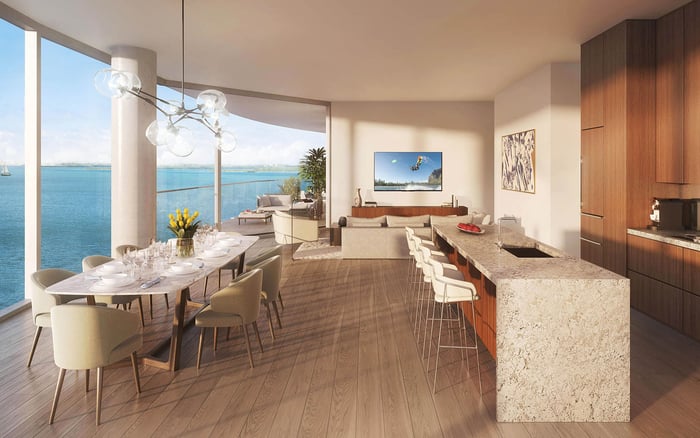
In Miami’s luxury condo market, sophisticated buyers are looking beyond the postcard view to judge how graciously every bedroom lives, especially the secondary suite.
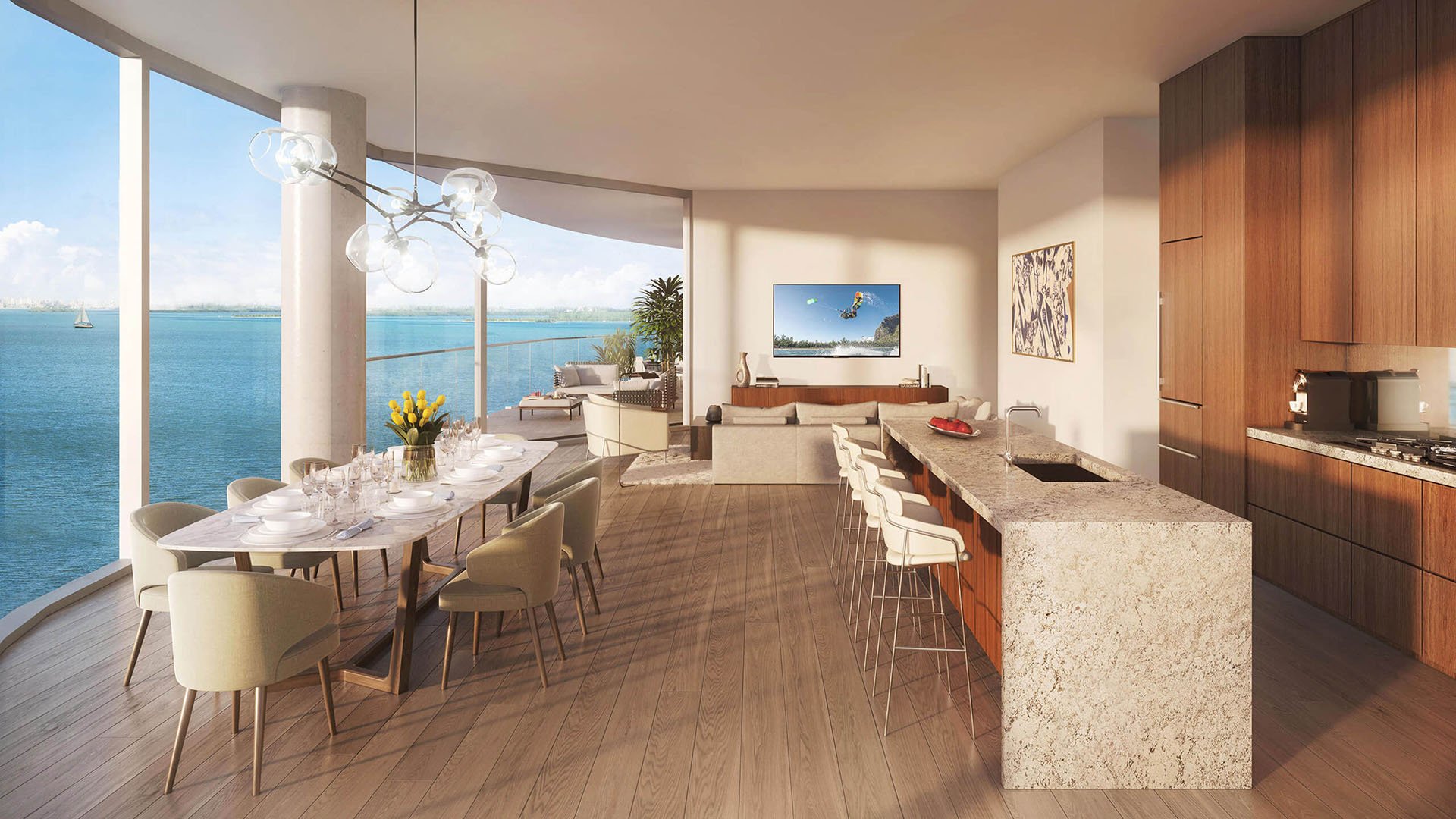
For years, the Miami condo conversation began with the view. Ocean, bay, skyline, sunrise, sunset, and that particular angle of light across Biscayne Bay could dominate a first showing before anyone asked where a guest would sleep. The instinct is understandable. A remarkable view is emotional, cinematic, and instantly legible.
Yet the more seasoned buyer is increasingly asking a sharper question: how does the residence treat the people who are not sleeping in the primary suite? In a city where condos often serve as full-time homes, seasonal bases, family gathering places, and working retreats, the secondary bedroom has become a quiet test of residential intelligence. The best floor plans do not reserve dignity for the owner alone. They distribute comfort throughout the home.
In buyer notes, terms such as Brickell, Miami Beach, Sunny Isles, Coconut Grove, new construction, and waterview may sit beside a more revealing priority: a second or third bedroom that feels intentional rather than residual.
Secondary-bedroom dignity is not about making every room equal. It is about ensuring that a non-primary bedroom has a coherent role and a gracious baseline of comfort. The room should have usable proportions, a sensible place for a bed, real storage, natural light where possible, privacy from entertaining areas, and a bathroom arrangement that does not make guests feel as if they are borrowing space.
In luxury residences, the difference between a bedroom and a dignified bedroom often reveals itself slowly. A plan may photograph beautifully, then disclose a narrow room, an awkward door swing, limited closet depth, or a bathroom accessed through a public corridor. None of these issues may matter during a ten-minute tour. They matter when adult children visit, when parents stay for a month, when a caregiver needs privacy, or when a second bedroom becomes a study by day and a guest suite by night.
That is why the conversation around projects such as The Residences at 1428 Brickell often extends beyond the headline appeal of location and skyline orientation. The serious question is how the private rooms support a complete life, not merely a spectacular arrival.
A view is a privilege, but it is not a floor plan. It can elevate the living room, shape the emotional identity of the residence, and influence the way a home is remembered. Still, the view is most powerful in the spaces where people gather. If the price of that view is a secondary bedroom that feels compressed, exposed, or poorly connected to a bath, the trade may become less attractive over time.
Luxury buyers are often purchasing flexibility. A second bedroom may need to host a grandparent, a teenager, a business partner, a nanny, or a friend who expects the ease of a private suite. When that room feels like a leftover rectangle at the back of the plan, the residence can begin to feel less luxurious than its asking presentation suggests.
On Miami Beach, where light and horizon are central to the dream, buyers may still look closely at how bedroom wings are organized. A residence connected to The Perigon Miami Beach may attract attention for its coastal setting, but an informed evaluation also studies circulation, privacy, and whether secondary rooms can function gracefully when the home is full.
The modern South Florida luxury buyer is rarely solving for a single use case. The same condo may serve as a winter home, a school-year base, a pied-a-terre, a multigenerational meeting point, and an occasional office. That range of uses has made secondary rooms more important than the old hierarchy allowed.
A dignified secondary bedroom protects relationships. Guests do not need to feel like intruders. Adult children do not feel relegated. A spouse taking a video call does not have to occupy the dining table. Staff or care support, when relevant, can be accommodated with discretion. In this sense, the secondary bedroom is less about square footage than social choreography.
Sunny Isles buyers, for example, often respond to the drama of vertical living and water-oriented exposure. Yet even in a market where the view can be extraordinary, the more durable pleasure may come from a plan that lets every occupant retreat well. At St. Regis® Residences Sunny Isles, the buyer’s eye should move from the glass line to the bedroom doors, the closets, and the way private spaces separate from entertaining areas.
A disciplined showing begins before the balcony. Walk first from the entry to the secondary bedrooms. Notice whether the path feels private or exposed. Stand where the bed would sit and ask whether nightstands, luggage, a desk, or a lounge chair can fit without compromise. Open the closet. Consider whether the bathroom is en suite, shared, or effectively public. Listen for proximity to elevators, service spaces, kitchens, and media rooms.
Then study the light. Not every secondary room needs the trophy exposure, but it should not feel punished. A partial city outlook, a calm garden view, or a well-scaled window can be enough if the room feels balanced. A bedroom that is modest but composed can outperform a larger room with a confusing layout.
In Coconut Grove, where buyers often seek a softer residential rhythm, the same discipline applies. A project such as Four Seasons Residences Coconut Grove invites a buyer to think not only about branded service and setting, but also about whether every sleeping room supports the calm, private life that the neighborhood implies.
A thoughtful secondary bedroom can widen the future audience for a residence. A buyer with children may value separation. A downsizer may want elegant space for visiting family. An international owner may want guests to stay comfortably for longer periods. A couple may want two true offices without sacrificing hospitality. These are not niche scenarios. They are recurring patterns in high-end urban and coastal living.
The view may remain the first impression, but bedroom count and quality often determine who can actually live there. A residence that works for more types of households may feel easier to own, easier to use, and easier to explain when it returns to the market.
This is especially relevant in boutique bayfront settings, where a calm residential scale can make the internal plan even more important. At Onda Bay Harbor, for instance, buyers considering a quieter island lifestyle should look closely at how guest rooms, terraces, and shared spaces relate to one another. The point is not to ignore the view. It is to refuse a beautiful compromise that makes the home less livable.
The most persuasive Miami condo is not always the one with the most dramatic outlook. It is the one that makes daily life feel unforced. The primary suite may deliver the grand gesture, but the secondary bedroom reveals the architect’s discipline and the developer’s priorities. It shows whether the residence was planned as a complete home or staged around one irresistible photograph.
For the luxury buyer, the question is no longer simply, “What do I see from the living room?” It is, “How does this home treat everyone who belongs here?” When that answer is strong, the view becomes a pleasure rather than a distraction.
Should I give up a water view for a better second bedroom? Often, yes, if the secondary bedroom will be used regularly by family, guests, or staff. A compromised room can affect daily life more than a stronger outlook.
What makes a secondary bedroom feel luxurious? Good proportions, privacy, storage, natural light, and a sensible bathroom relationship are the essentials. Finishes matter, but layout matters first.
Is an en suite bathroom necessary? It is highly desirable in a luxury condo, especially for longer guest stays. A shared bath can work if it is discreet and not overly exposed to public areas.
Can a den replace a true second bedroom? Only if it has the privacy, size, and function required for sleeping or focused work. Many dens are useful, but they should not be mistaken for a dignified bedroom.
How should I evaluate a floor plan online? Look at room dimensions, door swings, closet placement, and distance from entertaining areas. Then confirm the feeling in person before making assumptions.
Does this matter more for full-time residents? Full-time residents usually feel these issues fastest, but seasonal owners notice them when guests stay longer. A second home still needs to live well.
Are views still important in Miami condos? Yes, views remain central to the appeal of many residences. The key is ensuring the view does not mask weaknesses in the private-room layout.
What should families prioritize? Families should look for bedroom separation, storage, acoustic privacy, and flexible rooms. The best plan supports both gathering and retreat.
Can a smaller secondary bedroom still work well? Yes, if it is well proportioned and thoughtfully located. A smaller room with privacy and light can feel better than a larger but awkward one.
What is the best way to shortlist comparable options for touring? Start with location fit, delivery status, and daily lifestyle priorities, then compare stacks and elevations to validate views and privacy.
For a tailored shortlist and next-step guidance, connect with MILLION.
If branded residences are on your mind — as a home or as an allocation — we would be glad to share what we are seeing, privately.
Begin a quiet conversation