A discreet buyer’s guide to bayfront residence profiles that balance water views, beach proximity, privacy, and calmer arrivals in South Florida’s luxury market.
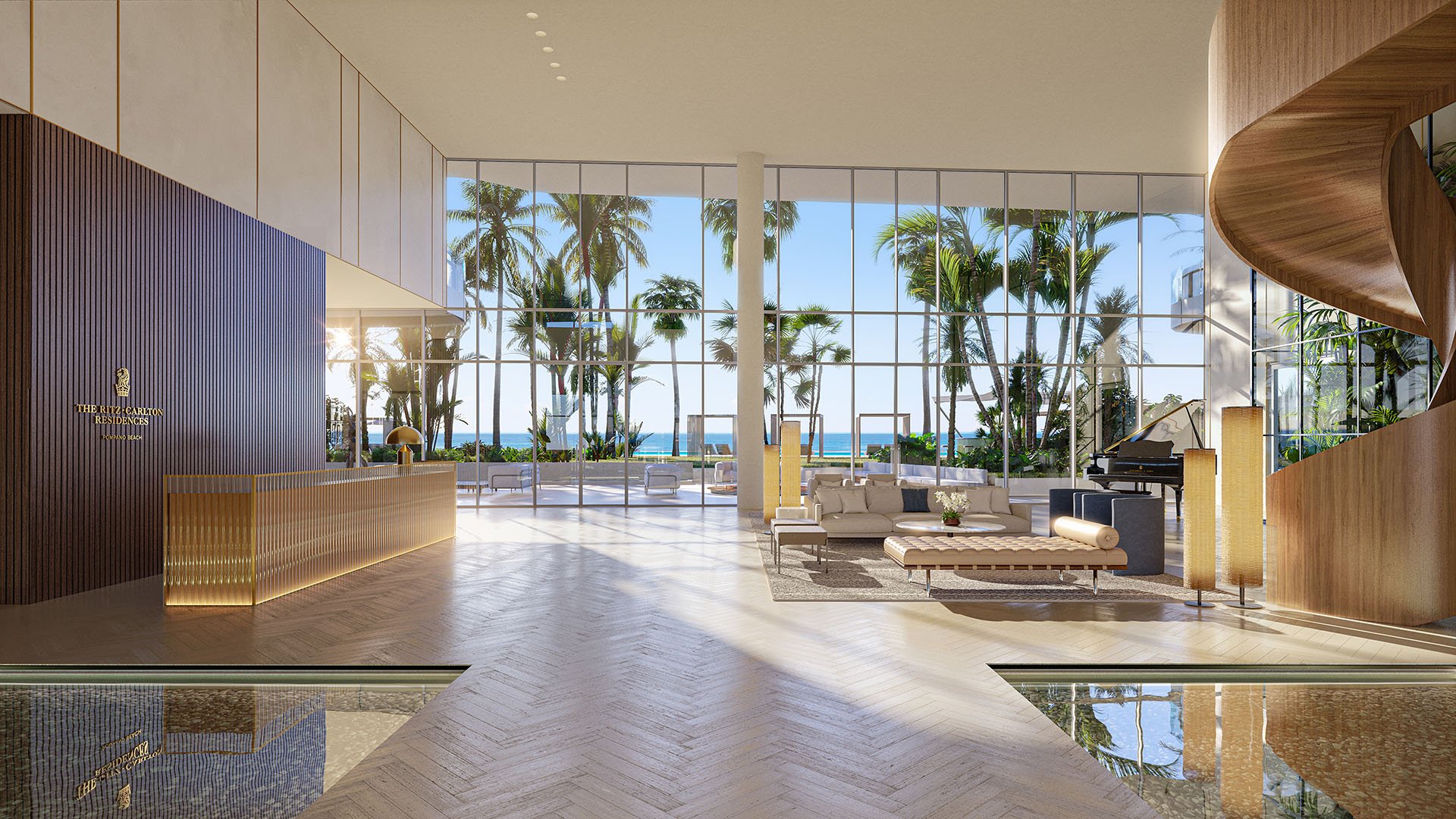
For a certain South Florida buyer, the fantasy is not a crowded oceanfront lobby with a constant parade of arrivals. It is a quieter sequence: a controlled entry, a composed elevator ride, a private residence opening to water and sky, and a beach routine that does not feel performative. The best bayfront residences for this audience are not defined by view corridors alone. They are defined by how calmly one can live in them.
That is the distinction behind the search for bayfront homes with Beach-access and limited lobby traffic. The objective is not isolation. It is elegance without congestion, service without spectacle, and proximity to the sand without turning every errand into a passage through a hotel-style arrival court. In practice, buyers should evaluate building scale, elevator design, resident-only amenity patterns, parking flow, and the property’s natural connection to beach-oriented neighborhoods.
In search conversations, shorthand matters. Terms such as Boutique, Waterview, Miami Beach, Surfside, and Sunny Isles help organize the brief, but the real test is lived experience. A residence may have a beautiful bay outlook and still feel busy at the front door. Another may sit just off the ocean and feel far more private because its circulation is deliberate, legible, and simple.
1. Boutique bayfront residence - low-arrival rhythm
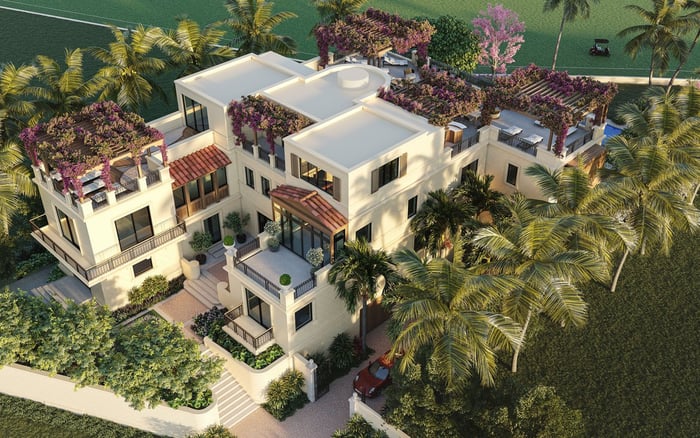
A Boutique bayfront residence is often the most intuitive fit for buyers who dislike heavy lobby traffic. Smaller-scale living can mean fewer competing arrival patterns, a more familiar resident environment, and less of the resort-like energy some buyers prefer to avoid.
The appeal is especially strong for owners who use the residence seasonally or as a second home. A quieter arrival sequence can make short stays feel more fluid, while the bay setting preserves the Waterview that anchors the South Florida experience.
2. Private-elevator bayfront residence - direct vertical access
Private or semi-private elevator access is a defining feature for buyers who want to minimize shared-space exposure. Its value is not only privacy. It is psychological ease: leaving the car, ascending efficiently, and arriving at the home without crossing a crowded lobby zone.
This profile is especially relevant for buyers who entertain discreetly, travel with family, or keep an irregular schedule. The residence feels less like a building and more like a vertical estate, even within a condominium setting.
3. Bayfront residence near a beach path - sand without lobby spectacle
Some buyers do not need to live directly on the ocean to enjoy a beach-centric lifestyle. A bayfront residence near a practical beach route can provide a calmer home base while keeping morning swims, walks, and sunset returns within the daily rhythm.
The key is convenience without compression. If the beach path requires navigating crowded valet lanes, dense retail spillover, or heavily programmed public space, the advantage fades. The strongest version offers a clean residential transition from bay to sand.
4. Service-forward residence with separated circulation - privacy by design
A building can feel busy even with a limited number of homes if service, guest, delivery, valet, and resident circulation all converge in one place. Conversely, a carefully organized property can feel serene because each movement has its own logic.
For buyers focused on low lobby traffic, this profile deserves close attention. Ask how residents, guests, household staff, deliveries, and amenity users move through the property. The most refined answer is not louder branding. It is quieter choreography.
5. Bayfront residence in a calmer enclave - neighborhood as amenity
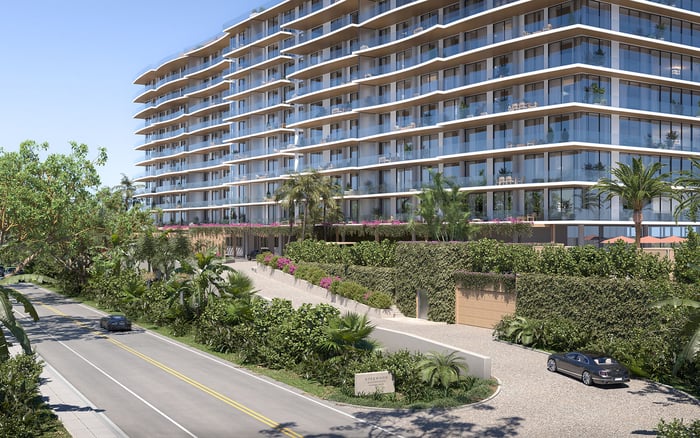
The surrounding neighborhood matters as much as the building. A bayfront home in a calmer enclave can offer the best of South Florida: water views, proximity to restaurants and clubs, access to the beach, and a more composed residential atmosphere.
This is where areas associated with Miami Beach, Surfside, and Sunny Isles enter the conversation differently. Each can support a luxury lifestyle, but the correct choice depends on how the buyer weighs privacy, beach routine, building scale, drive patterns, and social energy.
The most successful residences solve congestion before it appears. They do this through scale, separation, and predictability. Scale is the obvious factor: fewer residences can mean fewer residents arriving at the same time. Yet scale alone is not enough. A poorly planned small building may feel less private than a larger property with disciplined circulation.
Separation is often more important. Resident entrances, guest arrival points, service corridors, valet zones, and amenity access should not collapse into a single social stage. Buyers who value discretion should study the route from garage or valet to elevator, the distance from lobby to amenity spaces, and whether beach activity funnels back through the primary residential entry.
Predictability is the final layer. A building with limited transient traffic, clear access control, and amenities designed principally for residents tends to feel calmer. This does not require austerity. It requires restraint. The best luxury experience is often the one that removes friction without announcing itself.
Oceanfront living has obvious power: immediate sand, horizon views, and an unmistakable sense of place. But oceanfront buildings can also carry more visible energy, especially when the arrival experience is tied to beach service, guests, dining, or highly activated amenities. For some buyers, that energy is part of the appeal. For others, it is precisely what they are trying to avoid.
Bayfront living offers a different mood. The water is often calmer, the outlook can feel layered and cinematic, and the residence may sit within a more residential cadence. When the beach is still close, the result can be highly persuasive: wake to bay light, keep the home environment quiet, and reach the sand without living inside the busiest part of the beachfront.
This is not a universal hierarchy. It is a lifestyle calibration. The right buyer should not ask only, “How close is the beach?” The sharper question is, “How private does daily beach access feel from my front door?”
A polished sales presentation can make almost any arrival feel controlled. The better test is to visit at different times of day. Mid-morning, late afternoon, and early evening can reveal how valet, elevators, amenity spaces, and guest arrivals actually behave. A residence that feels calm at noon may feel very different when beachgoers return, deliveries arrive, and dinner plans begin.
Pay attention to thresholds. Where do you first encounter other people? How many steps are shared before the elevator? Does the amenity deck draw non-resident guests across the main lobby? Is there a direct route from parking to residence? These questions are not minor. They determine whether the property feels like a private home or a public address.
For families, the beach route matters even more. Towels, boards, strollers, pets, and visiting relatives quickly expose inefficient design. The most elegant residence is the one that remains graceful on an ordinary day, not only during a staged showing.
The strongest bayfront residence for this buyer is not necessarily the tallest, newest, or most recognizable. It is the one that makes privacy feel effortless. It delivers water, keeps the beach close, and avoids turning the lobby into the center of domestic life.
In South Florida’s luxury market, that combination is increasingly valuable. Buyers want the sensuality of the coast without surrendering to constant movement around the front door. The right residence should feel composed from curb to elevator, relaxed from terrace to shoreline, and quietly assured in every transition.
What type of bayfront residence is best for low lobby traffic? A smaller-scale or Boutique building with controlled resident circulation is often the most natural fit.
Is bayfront living less crowded than oceanfront living? It can feel calmer, especially when the beach remains nearby but the building is not centered on heavy beachfront activity.
Should private elevator access be a priority? For privacy-focused buyers, private or semi-private elevator access can materially improve the daily experience.
Does Beach-access always mean direct oceanfront access? No. It can also mean a practical, convenient route to the sand from a nearby bayfront setting.
Why does lobby design matter so much? The lobby shapes every arrival and departure, so congestion there can affect the entire ownership experience.
Is Waterview more important than beach proximity? It depends on lifestyle. Many buyers want both, but privacy and circulation can be just as important.
Can a larger building still feel private? Yes, if resident, guest, service, and amenity circulation are thoughtfully separated.
Which areas should buyers compare? Miami Beach, Surfside, and Sunny Isles can each be relevant, depending on the buyer’s preferred rhythm.
What should I watch during a property tour? Notice valet flow, elevator wait, guest movement, amenity access, and the route from home to beach.
Is this search better for a primary home or second home? It can suit either, particularly when the owner values privacy, water views, and easy coastal routines.
To compare the best-fit options with clarity, connect with MILLION.
If branded residences are on your mind — as a home or as an allocation — we would be glad to share what we are seeing, privately.
Begin a quiet conversation