A discreet buyer’s guide to evaluating Miami Beach boutique residences beyond the immediate pull of the water, from arrival sequence and floor plan discipline to privacy, service, maintenance, and resale resilience.

In Miami Beach, a great view can disarm even the most disciplined buyer. Water, palms, sky, and the island’s silver-blue light can make a residence feel inevitable within seconds. That first emotional response is real, and it should not be dismissed. It also should not be allowed to conduct the entire negotiation.
A boutique residence is not simply a smaller building with fewer neighbors. At the highest level, it is a study in proportion, privacy, service, material restraint, and the way daily life unfolds when the elevator door opens. The view may be the seduction. The building is the relationship.
For a buyer considering 57 Ocean Miami Beach or weighing another intimate coastal address, the sharper approach is to admire the horizon, then turn inward. Study the arrival, the plan, the acoustics, the exposure, the terrace, the service model, and the way the building will age. In the ultra-premium segment, the question is not whether the view is beautiful. The question is whether the residence still feels exceptional when the blinds are drawn.
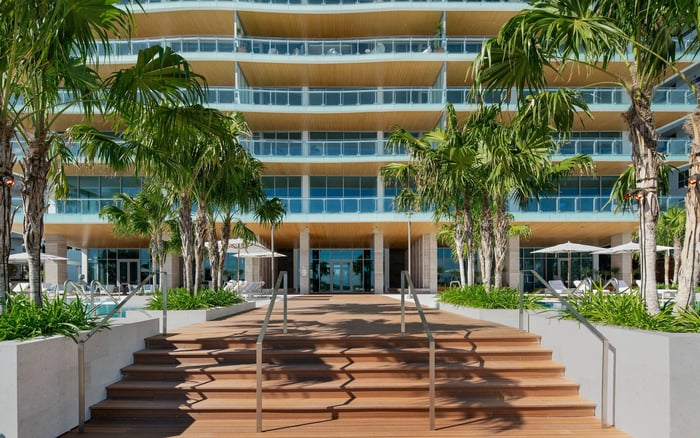
The most revealing moments often happen before you enter the unit. A true boutique building should feel composed from the curb, not improvised. The sequence from street to lobby to elevator should communicate discretion. If the entry feels congested, exposed, or over-designed, the private-residence experience may never fully recover upstairs.
Look for clarity. Is the drop-off intuitive? Does the lobby feel proportionate to the number of residents, or does it perform for visitors at the expense of owners? Is the staff positioned to greet without hovering? In Miami Beach, where resort energy is never far away, the strongest boutique buildings create a quiet threshold between public glamour and private life.
This is where boutique becomes tangible. It is not a marketing adjective. It is a daily condition. A buyer should feel that the building edits the outside world, rather than merely decorating the entry to it.
Staging can flatter almost any residence. The floor plan is harder to disguise. Before being persuaded by finishes, walk the unit as if you already live there. Where do guests enter? Where does luggage go? Is there a gracious transition between entertaining and sleeping areas? Does the primary suite have privacy, or is it positioned only to chase the best angle of the water?
A boutique residence should avoid wasted drama. Long galleries can be elegant, but only if they serve art, movement, and separation. Expansive glass can be thrilling, but only if the living room still has usable walls. Open kitchens can feel social, but only if service, storage, and daily maintenance have been considered.
The best Miami Beach residences make the plan feel inevitable. Rooms have hierarchy. Views are framed, not sprayed indiscriminately. There is a place to host, a place to retreat, and a place to live quietly on an ordinary Tuesday morning.
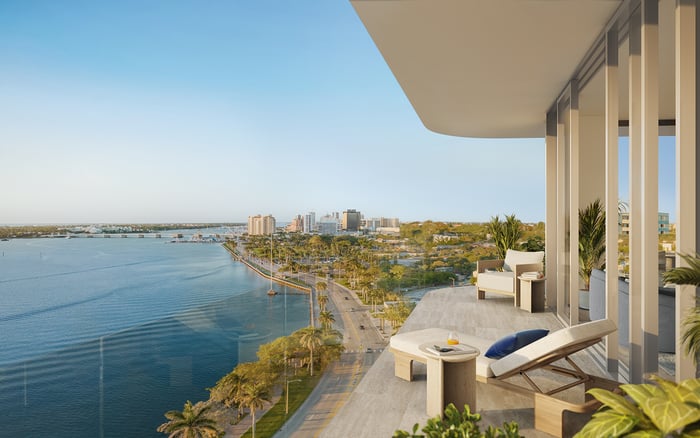
A terrace can be the signature of a Miami Beach residence, but it should be evaluated with the same rigor as interior square footage. Size alone is not enough. Depth, orientation, privacy, wind, sun, and adjacency to interior rooms determine whether the outdoor space becomes a daily room or an occasional photograph.
Stand outside at different points if possible. Notice whether neighboring terraces look directly into yours. Consider where dining would actually fit, whether doors interrupt furniture placement, and whether the terrace connects naturally to the kitchen, living area, or primary suite. A narrow ledge with a spectacular view may be less valuable in practice than a more protected outdoor room with shade and usable depth.
For buyers touring The Perigon Miami Beach, the important exercise is not simply to ask what can be seen from outside. It is to ask how often you would want to sit there, dine there, read there, and open the doors without feeling exposed.
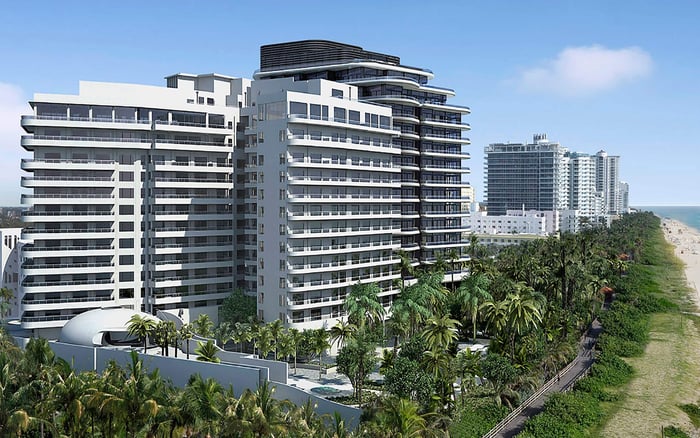
Oceanfront living has undeniable power, but oceanfront is not a synonym for effortless. Direct exposure can bring extraordinary light and atmosphere, yet it also demands careful attention to glazing, shading, balcony usability, maintenance, and interior material selection.
A disciplined buyer asks practical questions. How does the residence handle afternoon sun? Are bedrooms calm, or does the view dominate to the point of restlessness? Is there cross-ventilation or a meaningful sense of air movement? Does the glass create glare across the main living area during the hours you are most likely to be home?
Waterview value is also nuanced. A frontal ocean view, an oblique water view, and a layered city-and-water composition create different moods. None is automatically superior for every buyer. The right view is the one that suits the way you live, entertain, wake, work, and recover.
In boutique buildings, privacy should be architectural, operational, and social. It is not only about fewer residences. It is about how those residences are arranged. Elevator access, corridor length, sightlines, valet flow, amenity placement, and staff discretion all contribute to the feeling of ownership.
A building can be intimate in count and still feel exposed if amenities are poorly located or circulation forces residents through shared spectacle. Conversely, a well-planned boutique address can make daily movement feel almost invisible.
When considering Shore Club Private Collections Miami Beach, or any residence with a high-design identity, privacy deserves equal billing with architecture. A beautiful building that cannot protect stillness may not satisfy the buyer who values discretion above display.
Service is where boutique buildings either become exceptional or merely expensive. The best service culture is anticipatory but quiet. It remembers preferences without theatrics. It solves problems without broadcasting them. It understands that residents are not hotel guests, even when the setting has resort-level polish.
Ask how the building manages deliveries, guests, maintenance access, pets, beach equipment, vehicles, and private events. Consider whether service areas are properly separated from owner spaces. A refined residence can lose its calm if back-of-house movement repeatedly intrudes on the front-of-house experience.
Beach access also deserves scrutiny. Direct or convenient access is valuable only when it is managed with elegance. Storage, rinsing areas, towel flow, security, and re-entry routes all shape whether beach living feels seamless or sandy and improvised.
Boutique luxury ages best when it avoids overstatement. Trend-driven finishes can photograph beautifully and fatigue quickly. A more enduring residence often relies on proportion, natural materials, thoughtful lighting, precise detailing, and a palette that allows the owner to bring in art, objects, and personality.
In a market known for dramatic architecture, restraint is a competitive advantage. A buyer comparing The Ritz-Carlton Residences® Miami Beach with another Miami Beach option should pay attention to what is quiet as much as what is theatrical. Door hardware, stone transitions, millwork alignment, ceiling planes, and lighting temperature all reveal the seriousness of execution.
The best interiors do not demand constant admiration. They support a life of ease, entertaining, privacy, and return. That is the difference between a showpiece and a residence.
A boutique building must be judged for how it will live five, ten, and twenty years from now. Maintenance culture matters. Governance matters. Reserve discipline, design durability, staff continuity, and owner alignment all influence long-term value and quality of life.
Ask what will be difficult to maintain. Highly customized common areas can be exquisite, but they require commitment. Extensive exterior materials, complex landscaping, elaborate water features, and specialized systems should be understood as ongoing responsibilities, not just aesthetic pleasures.
Resale resilience often comes from clarity. The most durable boutique residences tend to have a legible identity, strong location logic, rational plans, genuine privacy, and amenities that residents actually use. If the building’s value proposition depends entirely on one postcard view, the buyer should slow down.
The right Miami Beach boutique residence should become more convincing with each visit. Morning light, afternoon glare, evening arrival, weekend traffic, lobby rhythm, elevator wait, staff tone, and terrace comfort all tell different parts of the truth.
A serious buyer should return, at least mentally, to one essential question: would this residence still feel right after the initial view becomes familiar? If the answer is yes, and if the plan, privacy, service, materials, and building culture all reinforce that feeling, then the view becomes what it should be: the final grace note, not the entire composition.
What is a boutique residence in Miami Beach? It is typically understood as a more intimate residential building where privacy, design control, service, and owner experience matter as much as scale.
Should the view be the deciding factor? No. The view should elevate the residence, but the floor plan, privacy, service, and long-term maintenance should carry equal weight.
How should I evaluate a terrace? Look beyond size and study depth, shade, wind, privacy, furniture placement, and how naturally it connects to the interior.
Is oceanfront always better than a partial water view? Not necessarily. Direct exposure can be spectacular, but some buyers prefer a more protected view composition with softer light and greater daily comfort.
Why does arrival matter in a boutique building? Arrival sets the tone for privacy and service. A composed entry sequence often signals a more thoughtful residential experience upstairs.
What should I notice during a second showing? Pay attention to noise, glare, elevator flow, staff interaction, parking movement, and whether the residence feels as strong after the initial impression.
How important is beach access? It can be highly valuable when it is convenient, secure, and well managed, with practical support for towels, storage, rinsing, and re-entry.
Can a highly designed residence become dated? Yes. Residences with balanced proportions, quality materials, and restrained detailing often age more gracefully than trend-heavy interiors.
What makes a boutique residence good for resale? Durable value usually comes from a clear identity, strong location logic, livable plans, privacy, and amenities that residents truly use.
When should I involve an advisor? Early in the process. A seasoned advisor can help separate emotional appeal from structural strengths, ownership costs, and long-term fit.
When you're ready to tour or underwrite the options, connect with MILLION.
If branded residences are on your mind — as a home or as an allocation — we would be glad to share what we are seeing, privately.
Begin a quiet conversation