A buyer-focused guide to selecting bayfront residences with the physical, digital, and operational foundations needed for next-generation smart-home living.
For a certain South Florida buyer, the next great residential amenity is not a larger screen, a louder speaker, or another app. It is the invisible architecture that allows a home to think, adapt, protect privacy, and age gracefully as artificial intelligence becomes more deeply embedded in daily life.
Bayfront residences are especially suited to this conversation. They already appeal to buyers who value light, water, security, service, and discretion. The question now is whether the residence can also support an AI-forward way of living: predictive climate control, layered security, integrated lighting, wellness settings, energy monitoring, voice and touch interfaces, and spaces that remain elegant as technology evolves.
The best candidates are not defined by gadgetry. They are defined by readiness: disciplined low-voltage planning, resilient connectivity, clean equipment locations, adequate power, service access, privacy-minded network design, and a layout that allows systems to be upgraded without compromising architectural calm.
1. Full-floor bayfront condominium - privacy-first infrastructure
A full-floor bayfront residence gives an owner meaningful control over circulation, entry sequence, lighting zones, acoustic separation, and private network planning. For AI-ready living, that privacy is not merely social. It is technical. Fewer shared thresholds can simplify decisions around secure access, camera placement, elevator arrival, and whole-home automation boundaries.
This type of residence is most compelling when the home can support a dedicated equipment area, structured wiring, redundant connectivity, and clear pathways for future upgrades. The buyer should look beyond the water view and ask how the residence manages invisible complexity.
2. New-construction bayfront residence - clean-slate systems planning
New-construction can be attractive because the buyer may have a stronger opportunity to coordinate smart-home infrastructure before finishes are finalized. That can matter enormously. A home designed for AI should not rely on afterthought solutions, visible wires, or device-by-device improvisation.
The most desirable scenario is one in which lighting, shades, audio, access control, climate, network, and security are planned as a single ecosystem. In a bayfront setting, that planning should also consider equipment placement, humidity, serviceability, and the long-term ability to replace hardware while preserving the residence’s interior language.
3. Boutique bayfront condominium - controlled scale and discretion
A boutique bayfront building can offer the quiet atmosphere many ultra-premium buyers prefer. For smart-home performance, smaller scale may also help a purchaser focus on the relationship between residence, staff, access, and building operations.
The key is not whether a building feels intimate. The key is whether the residence can maintain digital privacy while still connecting gracefully to services such as arrival management, package handling, guest access, and security. A beautifully designed home becomes more powerful when its technology supports discretion rather than announcing itself.
4. Marina-adjacent bayfront residence - lifestyle integration
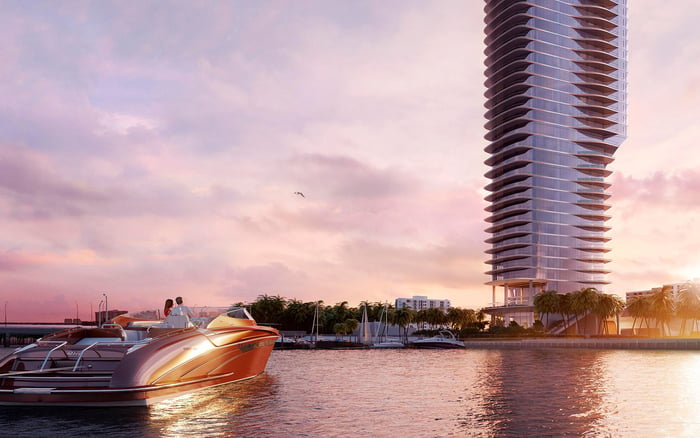
For buyers whose waterfront life includes boating, wellness routines, outdoor entertaining, and frequent travel, a marina-adjacent bayfront residence can benefit from AI-ready coordination. The home may need to manage schedules, climate, lighting, access permissions, and remote monitoring while the owner moves between residence, water, and city.
This category rewards buyers who think operationally. Smart infrastructure should support how people actually live: arriving at night, hosting guests, closing the residence for travel, monitoring conditions remotely, and returning to a home that feels composed rather than mechanical.
5. Penthouse-level bayfront residence - customization and long-term value
A penthouse-level bayfront home often appeals to buyers who expect customization. That makes infrastructure planning critical. The most successful smart-home environments begin before the decorative layer, with disciplined decisions about equipment rooms, wiring runs, wireless coverage, motorized shading, lighting scenes, and future replacement cycles.
For AI readiness, the penthouse advantage is not only elevation. It is the ability to align architecture, technology, and service into one private residential experience. The buyer should insist that technology remain subordinate to design while still being powerful enough to support the next decade of living.
AI-ready does not mean filling a residence with experimental devices. It means preparing the home so future systems can be added, upgraded, removed, or secured without invasive construction.
The strongest residences typically share a few qualities. They have structured cabling rather than total dependence on consumer-grade wireless devices. They provide reliable network coverage across interior and exterior living areas. They allow lighting and shade control to be layered by mood, privacy, time of day, and heat. They support climate zoning that responds to exposure, occupancy, and comfort preferences. They protect sensitive household data with thoughtful network segmentation.
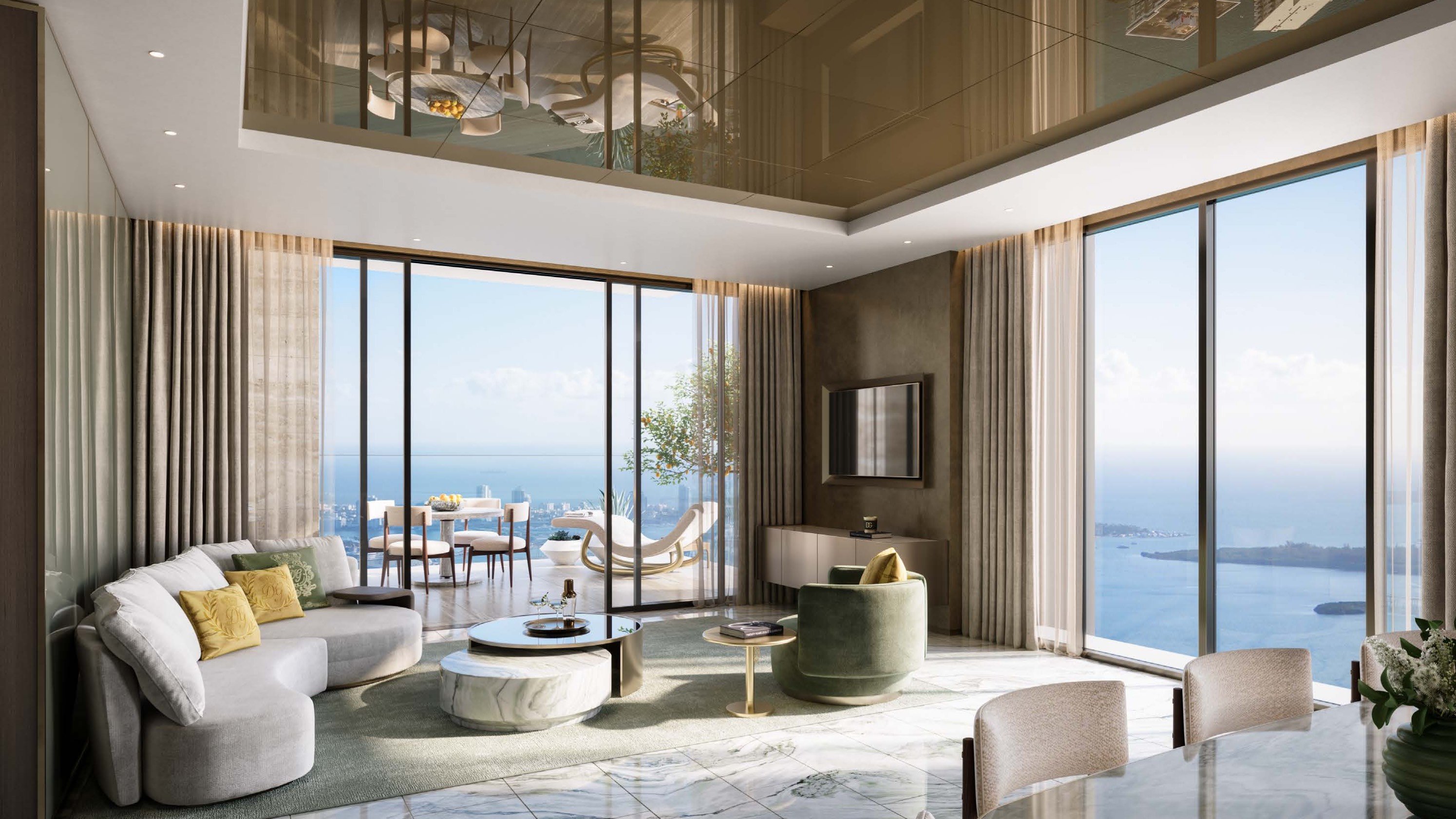
For bayfront living, the water itself adds another layer. Sun exposure, glare, humidity, salt air, storms, and outdoor entertaining can all influence how technology should be specified. A terrace may need robust connectivity. A primary suite may need shading that responds quietly to morning light. A media room may need acoustic treatment that does not interrupt the design. The point is not more technology. The point is better choreography.
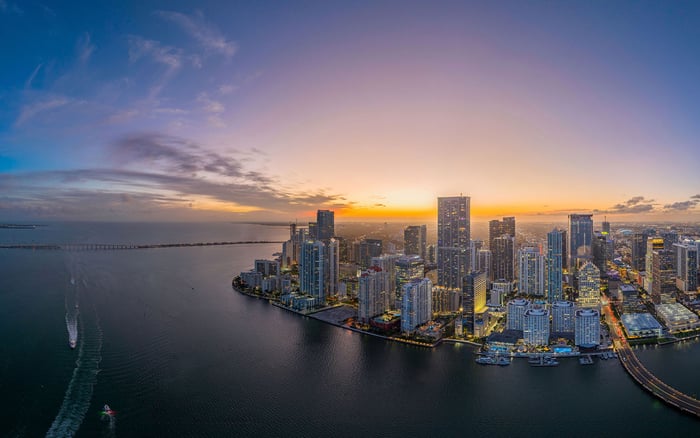
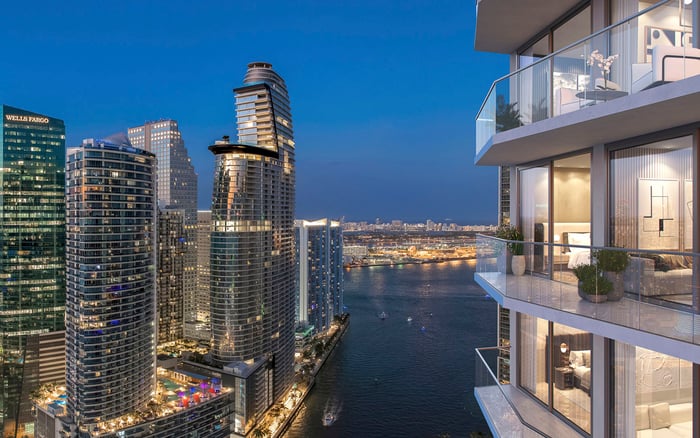
South Florida offers many versions of waterfront living, each with a distinct buyer psychology. Brickell often appeals to purchasers who want a financial-district lifestyle, skyline energy, and immediate urban access. Miami Beach tends to attract those who value resort rhythm, architectural presence, and proximity to sand and culture. Sunny Isles is often considered by buyers who want vertical waterfront living with expansive views and a polished residential atmosphere.
Other buyers may prioritize Edgewater for its relationship to Biscayne Bay and the arts-and-design corridor, or Coconut Grove for a softer, more residential sensibility near the water. The right choice depends less on a single label and more on whether the residence can support the owner’s daily patterns.
For a buyer using search filters such as Waterview, New-construction, Pre-construction, Brickell, Miami Beach, or Sunny Isles, the technology conversation should begin early. A spectacular view can sell the first impression, but infrastructure determines whether the home remains effortless after move-in.
Before committing to a bayfront residence, a buyer should request a clear picture of what is inside the walls and behind the millwork. Where will the network equipment live? Are there dedicated pathways for future wiring? Can the home support hardwired access points? How are shades, lighting, audio, and climate controlled? Can systems be serviced without disturbing finished spaces?
Privacy deserves equal attention. AI-enabled homes collect and process sensitive household behavior. Buyers should understand how cameras, voice controls, locks, sensors, guest access, and remote monitoring will be governed. A luxury residence should not trade convenience for exposure.
Resilience also matters. Bayfront owners should think about backup power strategy, surge protection, equipment placement, and continuity of essential systems. The most refined home is the one that continues to feel calm when conditions outside are not.
The mistake is to treat AI-ready infrastructure as a technical package alone. In the best homes, technology serves atmosphere. Lighting scenes should flatter materials. Climate should disappear into comfort. Security should feel protective, not oppressive. Audio should be immersive without clutter. Interfaces should be intuitive enough for owners, guests, family members, and staff.
This is why the most sophisticated buyers involve design, integration, and advisory teams early. A smart residence should not feel like a control room. It should feel like a beautifully composed private environment whose intelligence is revealed only when needed.
What makes a bayfront residence AI-ready? It needs the infrastructure to support smart systems over time, including wiring, network coverage, power planning, equipment access, and secure controls.
Is AI-ready the same as having smart devices installed? No. Devices can be replaced quickly, while true readiness depends on the physical and digital backbone of the residence.
Should buyers prioritize new construction for smart-home planning? New-construction can make coordination easier, especially when wiring, lighting, shades, and network design are addressed before finishes are complete.
Why does bayfront living change the technology conversation? Sun, glare, humidity, outdoor living, and storm considerations can affect placement, resilience, connectivity, and long-term serviceability.
What is the most overlooked smart-home issue? Service access is often underestimated. Systems should be reachable for upgrades or repairs without disrupting refined interiors.
How important is privacy in an AI-enabled residence? It is essential. Cameras, sensors, locks, voice controls, and remote access should be planned with clear boundaries and secure networks.
Do penthouses make better AI-ready homes? They can, particularly when they allow greater customization, but the real advantage comes from thoughtful infrastructure rather than height alone.
Can older bayfront residences be upgraded? Some can, but buyers should evaluate wiring paths, equipment locations, network capacity, and how much construction would be required.
Should design or technology come first? They should be planned together. The goal is technology that supports architecture, atmosphere, privacy, and daily comfort.
What is the best way to shortlist comparable options for touring? Start with location fit, delivery status, and daily lifestyle priorities, then compare stacks and elevations to validate views and privacy.
To compare the best-fit options with clarity, connect with MILLION.
If branded residences are on your mind — as a home or as an allocation — we would be glad to share what we are seeing, privately.
Begin a quiet conversation