Miami preconstruction buyers are looking more closely at deposit timing, liquidity, and opportunity cost as higher interest rates reshape conversations around luxury condominium commitments.
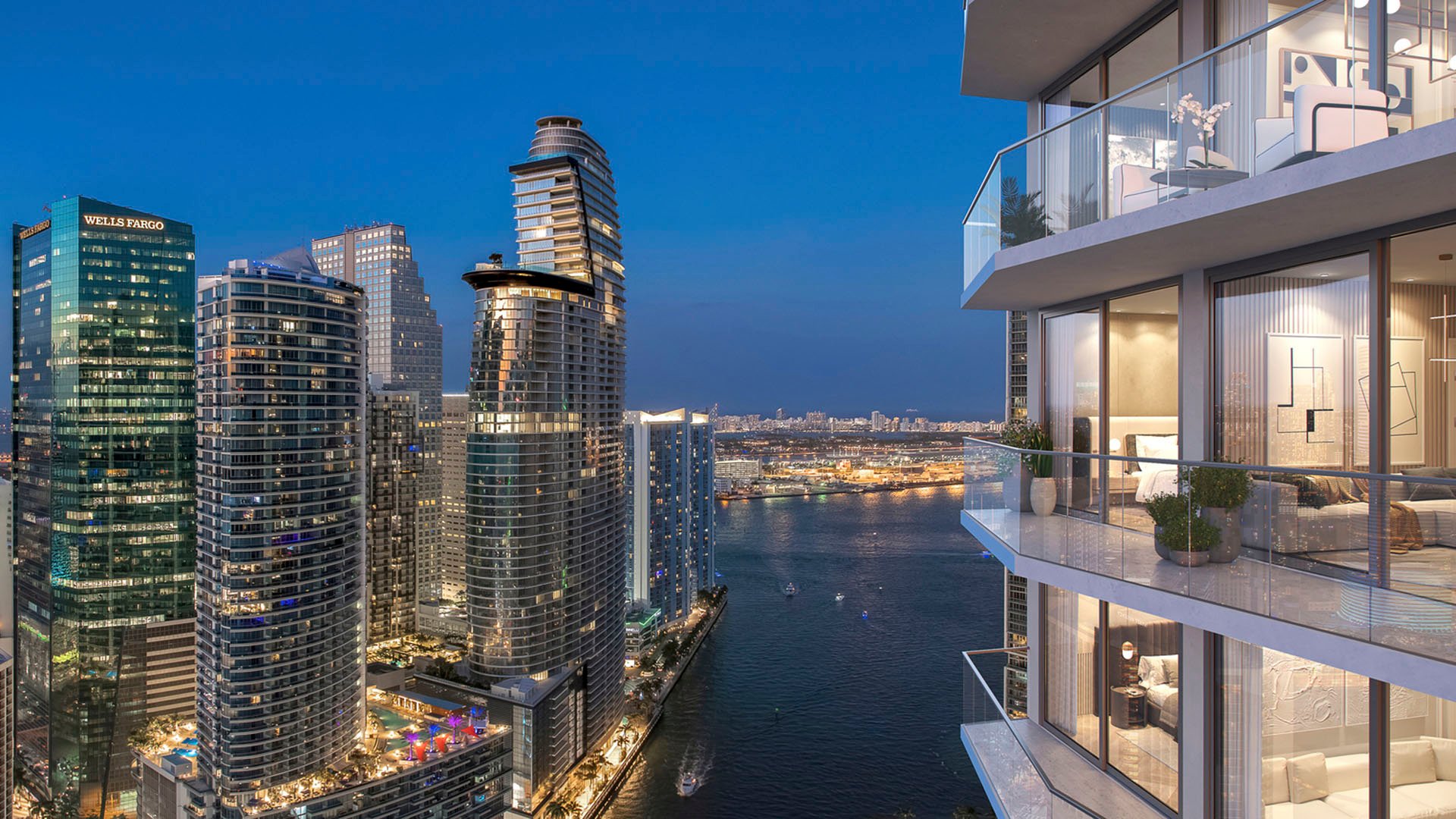
In Miami’s luxury condominium market, the deposit schedule has always been more than a payment calendar. It is a signal of conviction, a measure of liquidity, and a quiet negotiation between buyer confidence and developer certainty. In a higher interest-rate environment, that schedule is receiving renewed scrutiny.
For years, well-capitalized buyers often approached preconstruction contracts with a direct mindset: secure the residence early, accept the required deposit milestones, and wait for completion. Today, the calculus is more nuanced. The question is not only whether a buyer can meet the deposit requirement. It is whether committing capital over a multi-year development horizon still aligns with the buyer’s broader portfolio, financing posture, and lifestyle timing.
That shift does not suggest softness at the top of the market. South Florida’s most coveted new residences continue to attract buyers who value design pedigree, views, service, privacy, and scarcity. What has changed is the sophistication of the conversation. Deposit timing, refundability language, construction milestones, and closing preparation now sit closer to the center of the due-diligence table.
The modern ultra-premium buyer is rarely assessing a single residence in isolation. A Brickell buyer comparing urban preconstruction opportunities such as 2200 Brickell may also be evaluating cash reserves, private credit exposure, business liquidity, and the timing of other real estate acquisitions. The deposit is therefore not merely a cost. It is capital made unavailable for other uses.
That opportunity cost becomes more pronounced when interest rates are elevated. Even buyers who do not need leverage often benchmark the deposit against alternative uses of cash. For financed buyers, the issue is more layered: the deposit schedule must be weighed alongside future mortgage availability, rate expectations, and tolerance for carrying risk between contract and closing.
There is also a behavioral dimension. A larger upfront commitment may give the developer confidence, but it can narrow the buyer’s flexibility. A more gradual schedule may be attractive, yet it may not be available for the most sought-after residences or the most competitive releases. Luxury buyers are therefore learning to compare not just price per residence, but the rhythm of commitment.
It is tempting to assume that higher rates automatically give buyers more leverage over deposit terms. The reality is more disciplined. Developers still need credible contracts, predictable capital commitments, and a sales profile that supports construction planning. In Miami’s branded and design-led market, a deposit schedule is often part of the project’s financial architecture, not a casual sales concession.
This is why reevaluation does not always mean reduction. In many cases, it means clearer explanations, more careful sequencing, or a deeper discussion of why deposits are structured as they are. Buyers want to understand what triggers each payment. Developers want assurance that buyers are not casually reserving inventory without serious closing intent.
That balance is especially relevant for new-construction residences, where timelines, approvals, construction phases, and closing expectations may span meaningful periods. The best conversations are specific, not emotional. They focus on contract language, milestone clarity, buyer readiness, and the practical implications of each payment date.
Brickell remains a natural case study because it attracts global buyers, finance professionals, entrepreneurs, and residents who value proximity to Miami’s commercial core. A purchaser considering Cipriani Residences Brickell or The Residences at 1428 Brickell may be less concerned with affordability than with capital efficiency.
In this context, the deposit schedule becomes part of an investment conversation. Buyers may ask whether the residence is intended as a primary home, a second home, a long-term hold, or a strategic Miami foothold. Each purpose produces a different view of tied-up capital. A primary user may accept a more substantial schedule because the lifestyle outcome is the priority. A portfolio-minded buyer may place greater emphasis on timing, exit flexibility, and the cost of idle cash.
Brickell also concentrates sophisticated comparison shopping. Buyers can examine multiple towers, design languages, service models, and delivery horizons within a tight geography. When residences feel comparable on lifestyle, deposit structure may become one of the deciding factors.
The psychology shifts along the sand. Miami Beach buyers often approach preconstruction through the lens of long-term scarcity and lifestyle preservation. A residence connected to beach access, privacy, and architectural identity may be evaluated less like a financial instrument and more like a generational lifestyle asset. Still, even here, the deposit schedule matters.
For example, a buyer studying The Perigon Miami Beach may focus on timing as much as headline price. If the goal is seasonal use, family legacy planning, or relocation preparation, the buyer needs to know when capital is due and how that schedule intersects with other life events.
Sunny Isles conversations can be similarly nuanced, especially when buyers are comparing oceanfront living with branded service, privacy, and tower prestige. A buyer considering St. Regis® Residences Sunny Isles may be comfortable with significant commitments, but still expect a refined explanation of milestones and closing obligations.
In these resort and waterfront settings, the highest-quality buyers are not necessarily seeking the lightest deposit. They are seeking confidence that the contract structure reflects the caliber of the project and the reality of today’s capital markets.
Deposit negotiations in the current cycle are less about broad discounts and more about precision. Buyers want clean timelines, defined obligations, and a realistic understanding of what happens if market conditions, personal plans, or financing expectations change. Developers want committed purchasers whose deposits support stability rather than speculation.
For advisors, the work is increasingly forensic. The right review includes comparing deposit timing across projects, studying the purchase agreement carefully, and understanding whether the buyer’s liquidity will remain comfortable after each payment. It also includes pressure-testing the buyer’s ability to close if rates, valuations, or personal balance sheets shift before delivery.
This is where discretion matters. In the luxury segment, the strongest buyers often prefer quiet, well-prepared negotiation over public posturing. A thoughtful request, supported by proof of funds and a credible closing profile, will generally carry more weight than an aggressive demand detached from the realities of development finance.
Before signing, buyers should map the deposit schedule against their broader financial calendar. That means looking beyond the first payment and understanding every subsequent due date. It also means confirming whether payments are tied to time, construction progress, contract execution, or other defined events.
The next step is to compare structures across realistic alternatives, not unrelated projects. A boutique waterfront building, a branded urban tower, and a large master-planned development may each have different deposit logic. The goal is not to find a universal standard. The goal is to understand whether the requested structure is reasonable for the specific residence, timeline, and buyer objective.
Finally, buyers should remember that certainty has value. A slightly heavier deposit schedule may be acceptable if it secures the preferred line, view, floor, or residence type. Conversely, a lighter schedule may not compensate for a weaker fit. In Miami’s luxury market, the best contract is rarely the one with the smallest initial payment. It is the one that aligns capital, conviction, and lifestyle with the fewest surprises.
Are Miami preconstruction deposits becoming more negotiable? They may be discussed more carefully, but flexibility depends on the project, residence demand, contract stage, and buyer strength.
Does a higher interest-rate environment always reduce deposit requirements? No. Higher rates can sharpen buyer scrutiny, but developers still need dependable commitments and contract certainty.
What should buyers compare besides the total deposit amount? Buyers should compare timing, payment triggers, refundability language, closing obligations, and liquidity impact.
Why does opportunity cost matter for cash buyers? Even without financing, deposited capital cannot be used elsewhere during the contract period.
Is Brickell different from Miami Beach for deposit strategy? Yes. Brickell often centers on capital efficiency, while Miami Beach may emphasize scarcity, lifestyle, and long-term use.
Should buyers prioritize the lightest deposit schedule? Not necessarily. The best schedule is the one that supports the buyer’s goals while securing the right residence.
Can deposit terms affect a developer’s view of a buyer? Yes. A clear, timely deposit commitment can signal seriousness and improve the quality of the negotiation.
What documents should be reviewed before signing? Buyers should review the purchase agreement, deposit schedule, milestone language, and closing requirements.
How early should buyers plan liquidity for preconstruction? Buyers should plan before contract execution and maintain comfort through every scheduled payment and closing.
Is professional guidance important for luxury preconstruction contracts? Yes. Experienced guidance helps align residence selection, contract timing, and capital strategy.
When you're ready to tour or underwrite the options, connect with MILLION.
If branded residences are on your mind — as a home or as an allocation — we would be glad to share what we are seeing, privately.
Begin a quiet conversation