Top 3 Branded Residences in Miami for Wellness-Led Living
Quick Summary
- Wellness is now a core luxury metric
- Amenities scale signals daily convenience
- Dining is becoming a resident benefit
- Price bands vary widely by brand
Why wellness-led branded living is reshaping Miami luxury
For years, South Florida’s prime residential conversations started with waterfront exposure and ended with floorplans. Today, many buyer consultations open with a different question: how does the building support the way you actually live, especially when you are in and out of Miami?
That shift helps explain why branded residences have moved from a niche category to a defining one. When hospitality groups attach their names to homes, they bring a specific promise: service fluency, privacy protocols, and amenities built around daily rhythm, not occasional use. In Miami, the strongest branded concepts increasingly treat wellness as the organizing principle.
Here, “wellness” is not a marketing adjective. It is a practical framework that connects design, programming, and staffing to outcomes buyers recognize immediately: better sleep, less friction, more discretion, and fewer decisions. The most compelling projects also understand that wellness is broader than spa rooms and fitness equipment. The best executions aim to function as a complete ecosystem: movement, recovery, food, social tempo, and how quickly you can return to baseline after travel.
The ranking: Top 3 branded residences for wellness-led living
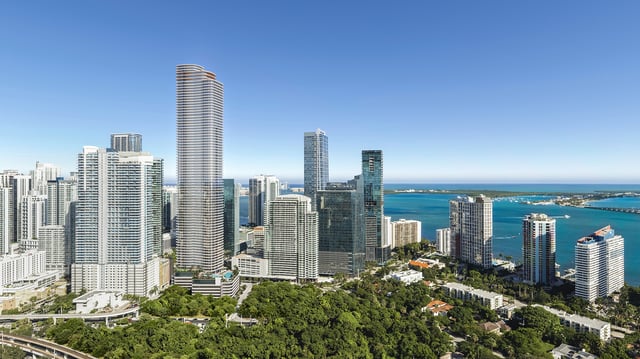
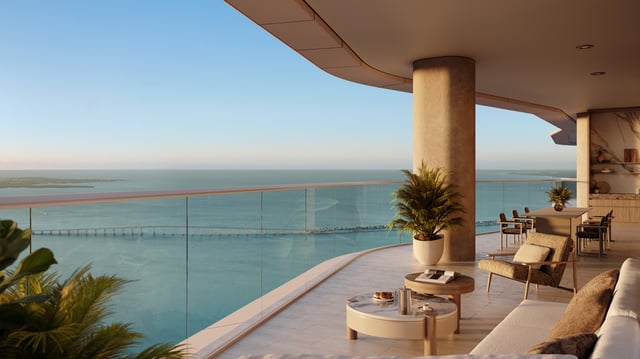
1. The Residences at Mandarin Oriental, Miami — Brickell Key’s resort-style benchmark The planned Residences at Mandarin Oriental, Miami are tied to the Mandarin Oriental brand and are publicly associated with 500 Brickell Key Drive on Brickell Key. The two-tower branded concept is positioned for buyers who want island-style calm while staying minutes from the financial district.
The project is marketed with roughly 100,000 square feet of amenities and a resort-style program, including spa and health-and-wellness facilities plus fitness programming. The core value proposition is brand alignment. Mandarin Oriental has long positioned wellness as central to its global identity, and the residences messaging follows that logic. The emphasis reads less like a checklist and more like a treatment-and-program mentality designed for repeat use.
2. 619 Brickell (Nobu Residences Brickell) — Zen-forward wellness with a downtown address Nobu Residences Brickell, commonly referenced as 619 Brickell, is a branded residential tower concept at 619 Brickell Avenue. Reporting describes a 74-story building planned with around 300 residences, placing it in a materially different scale category than boutique ultra-luxury offerings.
Project materials and coverage frame the amenity program at roughly 90,000 square feet, with a wellness-forward, Zen-inspired positioning. The credibility driver is the partnership profile. Nobu Hospitality and Foster + Partners have publicly announced their collaboration, and the concept is built to deliver hospitality-style services.
Dining also plays a central role. Local reporting covers an on-site Nobu restaurant component, reinforcing a modern reality of wellness-led living: what you eat and how you entertain increasingly sit inside the same lifestyle system as training and recovery.
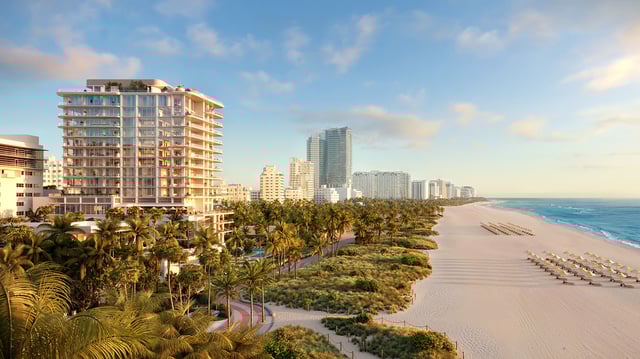
3. Casa Cipriani Miami — Boutique privacy with club-caliber wellness and dining Casa Cipriani Miami is located at 3611 Collins Avenue in Miami Beach’s Mid-Beach area and is presented as a hybrid of residences with a hotel and private club concept. Market summaries and listing materials commonly cite an extremely limited residence count, often noted as 23 residences. That scarcity immediately speaks to buyers who equate wellness with silence, control, and minimal neighbor density.
The project is widely marketed with over 50,000 square feet of amenities blending dining and club life with wellness and fitness components. The promotional narrative includes spa elements such as treatment rooms and sauna alongside fitness facilities. In practice, Casa Cipriani’s wellness identity is not separated from lifestyle. It is integrated into a private membership cadence where restoration and social energy are designed to coexist.
What “wellness” really means in a South Florida condo decision
In real terms, wellness-led living shows up in the moments buyers do not photograph.
First is recovery. A building that invests in treatment spaces is responding to the modern travel loop: late arrivals, short stays, and compressed schedules. A credible wellness offering is one you will actually use on a weekday, not only when guests are in town.
Second is programming. When a project highlights fitness programming, it signals an expectation that residents will treat the amenity level like an extension of a private club. The distinction matters because the difference between a beautiful gym and a durable habit is often structure.
Third is sensory control. In Miami, wellness is also about acoustics, lighting, and privacy. Marketing rarely itemizes these elements, but the most sought-after branded environments tend to systematize calm through staffing, access control, and circulation that limits friction.
Finally, food has entered the discussion as a core amenity. The logic is simple: the ability to default to a trusted on-site dining experience reduces daily decisions and raises consistency. For second-home buyers in particular, that predictability is not a convenience. It is part of the wellness equation.
Amenity square footage: why scale matters, and when it does not
Buyers routinely ask whether amenity square footage is a meaningful metric. It can be, with caveats.
A larger figure often signals variety and redundancy, which matters most when a building serves a larger resident base. In that context, the reported 90,000 square feet of amenities at 619 Brickell reads as a deliberate attempt to support daily demand without congestion. Similarly, the roughly 100,000 square feet marketed at the Mandarin Oriental residences points to a resort-style ambition where wellness is one chapter within a broader lifestyle program.
But scale is not always the point. Casa Cipriani’s “over 50,000 square feet” narrative lands differently because the residence count is so limited in common market materials. If your definition of wellness is never waiting, rarely sharing, and never feeling “built for crowds,” smaller can register as stronger.
Pricing signals: three different buyer profiles
These three projects also illustrate how branded residences can serve different definitions of luxury in South Florida.
Market summaries commonly cite a $5 million-plus starting band for the Mandarin Oriental Brickell Key residences. That positions the offering firmly in the upper luxury bracket while still speaking to both full-time and seasonal ownership.
Casa Cipriani is frequently summarized around a $25 million-plus starting point, consistent with its ultra-exclusive, low-unit-count positioning and Miami Beach club lifestyle. For many buyers, that premium is less about square footage and more about controlled access and brand-mediated privacy.
Meanwhile, market summaries for 619 Brickell often cite a sub-$1 million entry point, frequently described as starting from the $800Ks. That does not diminish the concept’s ambition. It signals a wider buyer funnel and a different strategy: bringing hospitality-forward wellness and design into a more accessible segment of Brickell’s new development conversation.
Neighborhood fit: choosing between Brickell, Brickell Key, and Miami Beach
Location often determines whether a building’s wellness promise feels believable in day-to-day life.
Brickell Key is for buyers who want separation without distance. If your calendar is downtown-forward but you want a clear boundary between work and recovery, the island logic holds. In that context, The Residences at Mandarin Oriental, Miami reads as a natural fit for owners seeking a resort-style buffer around a city core.
Brickell proper is about velocity. It suits residents who want immediate access to the city, treat wellness as a structured routine, and keep dining and entertaining close. For that profile, 619 Brickell aligns with a lifestyle where amenities must support both daily training and social flexibility.
Miami Beach, particularly Mid-Beach, operates on a different cadence. It is less about speed and more about atmosphere. When wellness is defined as controlled social access, ocean air, and a club-like rhythm, Casa Cipriani Miami Beach occupies a rare lane.
For buyers comparing Miami Beach options with a similarly service-led sensibility, it is also worth noting the broader branded landscape, including Setai Residences Miami Beach, where the appeal is often continuity between hospitality standards and residential privacy.
How to vet a wellness-led building before you buy
Luxury buyers tend to prefer discreet verification over marketing language. A few practical angles help you separate signal from gloss.
Start with the brand’s global identity. Mandarin Oriental explicitly positions wellness as central to its brand story, which provides context for a wellness-forward amenity program. Nobu also presents wellness experiences as part of its hospitality offering, reinforcing why its residences emphasize a Zen-inspired lifestyle frame.
Next, pressure-test the amenities through real use cases. Ask when you would actually use the spa, fitness, and dining components: arrival day, a Tuesday morning, post-flight, post-meeting. If the answer is “rarely,” then wellness is not value for you, it is décor.
Then consider density. A limited residence count can be a wellness feature in itself, especially for buyers sensitive to shared spaces. Conversely, a larger number of residences can still work if the amenity program is scaled and structured to avoid friction at peak times.
Finally, evaluate the dining component as an operating advantage. When dining is integrated as a resident anchor, it can reduce decision fatigue and improve consistency, especially for part-time owners who want predictability the moment they arrive.
FAQs
What is a branded residence in Miami? A residence associated with a hospitality or luxury brand, typically paired with service and amenity standards aligned to that brand.
Why are wellness amenities becoming so important? They support daily routines such as training, recovery, and stress reduction, which many buyers now prioritize as much as views or finishes.
Where are The Residences at Mandarin Oriental, Miami planned? They are publicly associated with 500 Brickell Key Drive on Brickell Key.
How large is the Mandarin Oriental amenity program? It is marketed at roughly 100,000 square feet of amenities.
What is 619 Brickell also known as? It is commonly presented as Nobu Residences Brickell, a branded tower concept at 619 Brickell Avenue.
Who designed 619 Brickell? It has been publicly announced as designed by Foster + Partners in partnership with Nobu Hospitality.
Does 619 Brickell include a Nobu restaurant? Project coverage describes an on-site Nobu restaurant component as part of the concept.
Where is Casa Cipriani Miami located? It is located at 3611 Collins Avenue in Miami Beach’s Mid-Beach area.
How many residences are associated with Casa Cipriani Miami in market materials? Market summaries often cite a very limited count, commonly referenced as 23 residences.
How should I compare these projects if I am a second-home buyer? Focus on service consistency, privacy and density, and whether the wellness and dining offerings match how you live when you are in Miami.
For discreet guidance on South Florida’s best-in-class buildings, connect with MILLION Luxury.

Million Luxury
Million Luxury
Welcome to MILLION, an exclusive luxury real estate boutique nestled in the heart of South Florida’s most desirable locations. Specializing in high-end properties, we provide a sanctuary for discerning clients including top Fortune 500 executives, affluent families, celebrities, and professional athletes from across the globe. At MILLION, we understand the unique demands of our elite clientele and offer a seamless blend of confidentiality and personalized attention. Our commitment to privacy is unwavering; we ensure that every transaction and interaction is handled with the utmost discretion and according to stringent confidentiality protocols. Our concierge service embodies the pinnacle of white-glove care, offering tailored assistance that transcends traditional real estate support.