A discreet, buyer-oriented guide to Florida’s most rarefied ZIP codes, from private-island enclaves to global beachfront corridors, with practical cues on lifestyle, access, and ownership considerations.
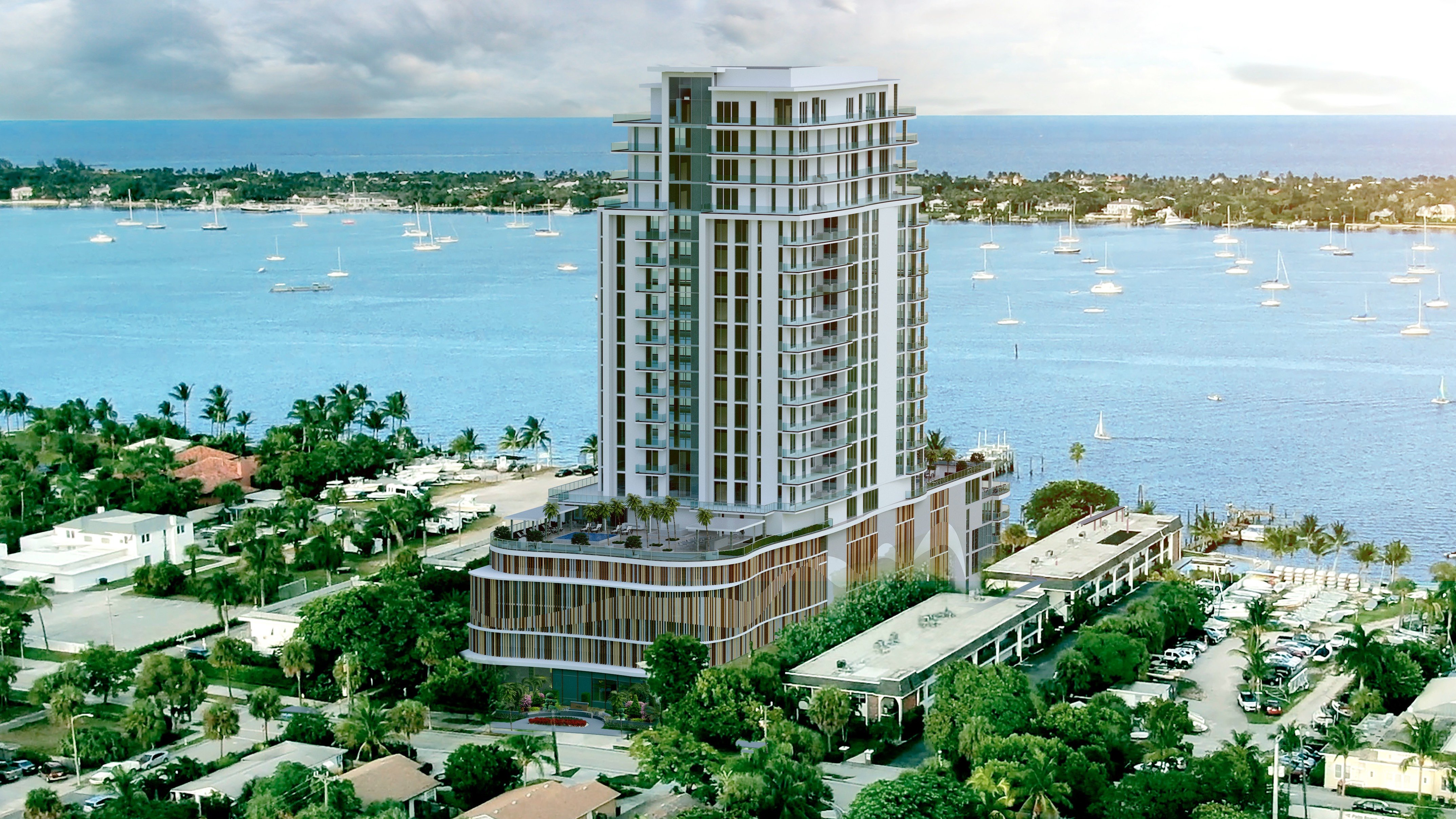
South Florida’s ultra-luxury market isn’t a single market. It’s a portfolio of microclimates, each operating by its own rules of access, inventory, and social rhythm. Some buyers seek true geographic separation-the kind that makes “privacy” less a marketing line and more a daily condition. Others want the opposite: a front-row seat to culture, dining, and the city’s momentum.
In South Florida, the most coveted ZIP codes typically fall into three categories:
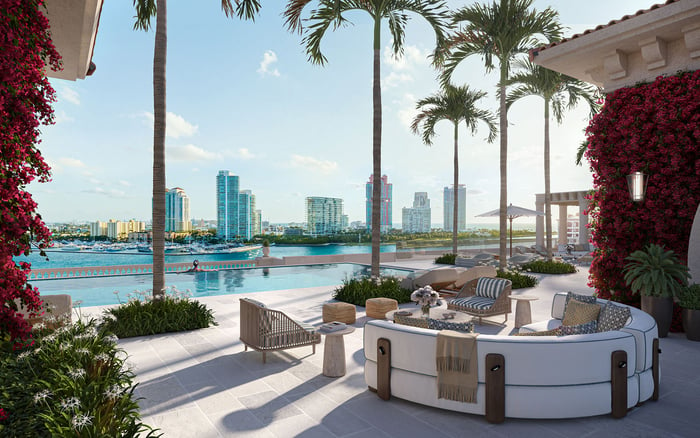
1. Fisher Island (33109) - private-island Miami-Dade Fisher Island is often positioned as South Florida’s most exclusive ZIP code, and it operates like a resort that happens to be a neighborhood. Access is the first filter: there is no public road connection, with arrival typically by ferry, boat, or helicopter.
Daily life runs on private, club-led amenities, including beach, golf, tennis, dining, and marina culture. For buyers who want privacy without sacrificing service, Fisher Island delivers a version of “separate” that still feels fully staffed.
2. Palm Beach (33480) - barrier-island prestige Palm Beach remains the archetype of long-established coastal prestige: a barrier island defined by trophy estates, a deep social calendar, and an enduring luxury identity.
For ultra-high-net-worth buyers, Palm Beach is often less about finding “a deal” and more about securing an address that signals permanence. Inventory can move in tight cycles, and competition tends to concentrate around irreplaceable lots and legacy-quality homes.
3. Jupiter Island area (33469) - scarce ocean and Intracoastal frontage This barrier-island market north of Palm Beach is shaped by low turnover and the enduring appeal of water on both sides. The value proposition is clear: privacy, long sightlines, and a limited supply of prime frontage.
Buyers looking for a quieter coastal cadence often gravitate here while keeping access to South Florida’s airports and services.
4. Indian Creek (33154) - gated island municipality Indian Creek is exceptionally small and widely known for being security-focused, with the rare quality of feeling both local and sovereign. The island’s exclusivity isn’t just cultural-it’s structural, with a limited number of homes and a private country club and golf course occupying much of the land.
For a certain buyer profile, Indian Creek is the purest form of “address as perimeter,” where the community’s scale reinforces discretion.
5. Brickell (33131) - Miami’s vertical luxury core Brickell is Miami’s financial district, where luxury is measured in walkability and proximity as much as in square footage. The premium here is time: an elevator ride to work, dining, fitness, and the city’s most efficient commute patterns.
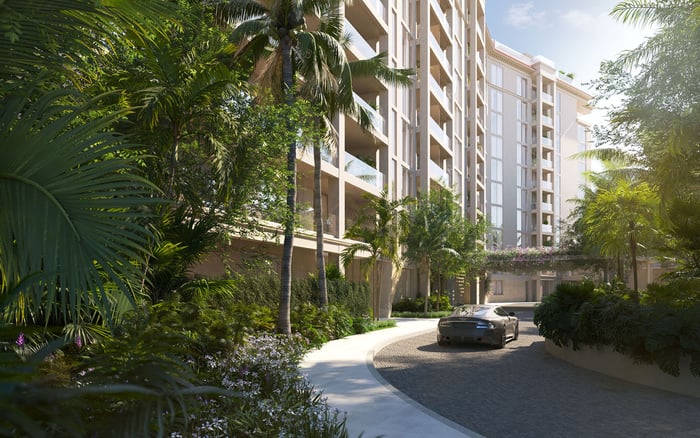
This is also where new luxury towers compete on service, design, and private-residence programming. Buyers who want a modern, lock-and-leave footprint often begin with 888 Brickell by Dolce & Gabbana, where branding and lifestyle positioning are part of the value proposition.
6. Hillsboro Beach (33062) - Hillsboro Mile oceanfront strip Hillsboro Beach is synonymous with “Hillsboro Mile,” an oceanfront stretch that commands premium pricing relative to many nearby Broward locations. Geography does the work here: a narrow band of sand and sea that keeps supply limited and views protected.
For buyers who want coastal serenity without giving up South Florida access and amenities, the area offers a calibrated alternative to busier beachfront nodes. Newer, service-driven options such as Rosewood Residences Hillsboro Beach reflect the corridor’s preference for understated, hospitality-inflected living.
7. Fort Lauderdale (33308) - Coral Ridge and waterfront submarkets Fort Lauderdale’s 33308 ZIP code includes upscale neighborhoods associated with Coral Ridge, where waterfront living and a more residential street grid deliver a classic South Florida lifestyle.
The city’s luxury narrative has broadened in recent years, pairing yachting culture with increasingly ambitious residential offerings. For buyers who want a newer, design-forward condominium alternative while staying close to the city’s waterfront energy, Andare Residences Fort Lauderdale offers a contemporary read on the market’s direction.
8. Aventura (33180) - resort-style high-rise living Aventura is a defining North Miami-Dade luxury condo market, known for abundant high-rise inventory and a resort-style approach to amenities. The appeal is practical: managed living, security, and a strong orientation toward second-home ownership.
For buyers balancing privacy with convenience, Aventura’s position between the beaches and key commercial corridors can feel like a compromise that is actually an advantage. Properties such as Avenia Aventura speak to the area’s emphasis on turnkey comfort and amenitized daily life.
9. Miami Beach / South Beach (33139) - iconic global beachfront address 33139 is Miami Beach at its most recognizable: an international lifestyle destination where luxury housing coexists with year-round tourism, dining, and cultural demand.
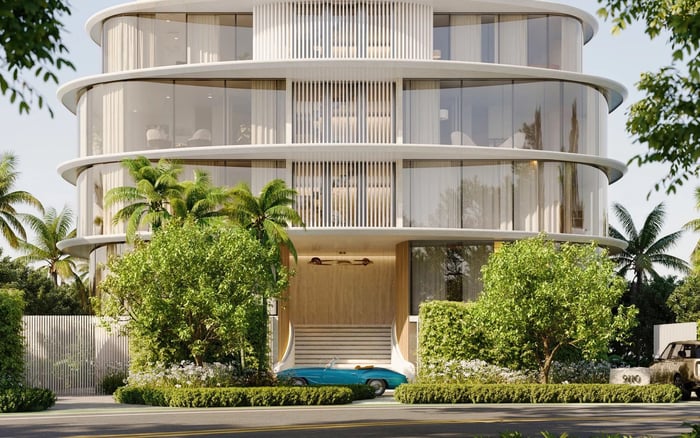
For buyers, the decision often comes down to micro-location and noise tolerance: some want the full voltage of the scene, while others prefer pockets that read more residential while keeping the beach within minutes. Ultra-luxury boutique inventory like Five Park Miami Beach can appeal to those seeking a newer, service-oriented home base in an iconic ZIP.
At this level, “best” isn’t universal. It’s fit. Narrow your options through four practical questions.
First, decide whether access is a feature or a friction. A ferry-only arrival can be the point, not the problem, if your priority is a controlled environment. If you travel constantly, a walkable urban core or a straightforward drive to major corridors may matter more.
Second, clarify whether you’re buying a lifestyle system or a single asset. Club-centric environments reward buyers who will actually use the amenities. Beach corridors reward buyers who are purchasing light, view, and shoreline as a permanent luxury.
Third, define how you want privacy to work. Gated islands and small municipalities create privacy structurally. Busy global destinations create privacy through building quality, service, and the ability to retreat upward, inward, or behind controlled access.
Fourth, align the property with your ownership use case. Primary-residence needs (schooling, commuting, year-round livability) can be very different from second-home priorities (lock-and-leave simplicity, onsite service, seasonal usage).
Across these ZIP codes, luxury has become more operational. Buyers increasingly evaluate staffing, security, and service alongside finishes. In vertical markets like Brickell, the differentiators are privacy at the elevator, the arrival sequence, and whether the building performs like a true hospitality environment. In beachfront markets, the differentiators are view permanence, shoreline feel, and the ability to live with fewer compromises.
The other shift is psychological: the top ZIP codes are no longer merely “vacation real estate.” For many households, they function as full-time home bases. That dynamic supports demand for reliable infrastructure, proximate airports, and neighborhoods that work through all seasons.
In South Florida specifically, the most resilient addresses tend to be those with an identity that cannot be replicated: a private island with controlled access, a barrier island with limited frontage, or an urban core that compresses the city into a walkable radius.
Which counties does this guide cover? Miami-Dade, Broward, and Palm Beach counties only.
What makes Fisher Island (33109) stand out among South Florida ZIP codes? It’s a private-island ZIP with no public road access and a lifestyle centered on private club amenities.
Why is Indian Creek (33154) considered especially private? It’s a small, security-focused island municipality with limited homes.
Is Brickell (33131) considered ultra-luxury even though it’s urban? Yes-its premium is driven by walkability, convenience, and proximity to Miami’s financial core.
Why do barrier islands like Palm Beach (33480) command ultra-luxury pricing? Limited land, beachfront positioning, and long-standing prestige combine to constrain supply and support demand.
What draws buyers to the Jupiter Island area (33469)? Low turnover, a quieter coastal cadence, and scarce frontage across ocean and Intracoastal settings.
What defines Hillsboro Beach (33062) at the high end? The Hillsboro Mile corridor concentrates premium oceanfront real estate in a narrow strip.
What does 33308 represent in Fort Lauderdale? It includes upscale areas associated with Coral Ridge and nearby waterfront submarkets.
Why do buyers consider Aventura (33180) for luxury condos? It offers high-rise living with resort-style amenities and a turnkey ownership profile.
How should a buyer choose among these ZIP codes? Focus on access, privacy, lifestyle (club vs. beach vs. city), and whether you want a primary home or a lock-and-leave residence.
When you're ready to tour or underwrite the options, connect with MILLION Luxury.
If branded residences are on your mind — as a home or as an allocation — we would be glad to share what we are seeing, privately.
Begin a quiet conversation