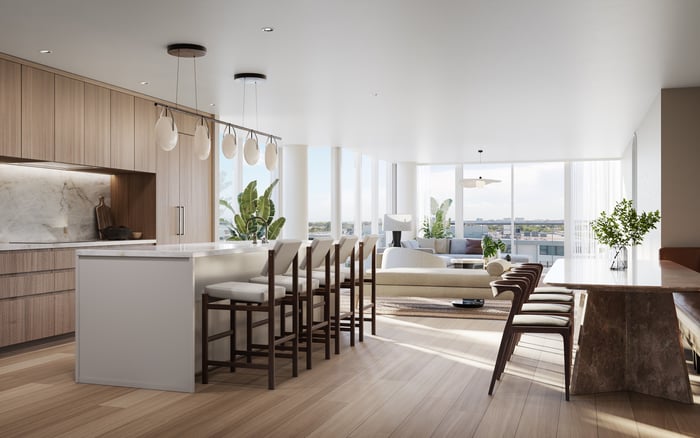
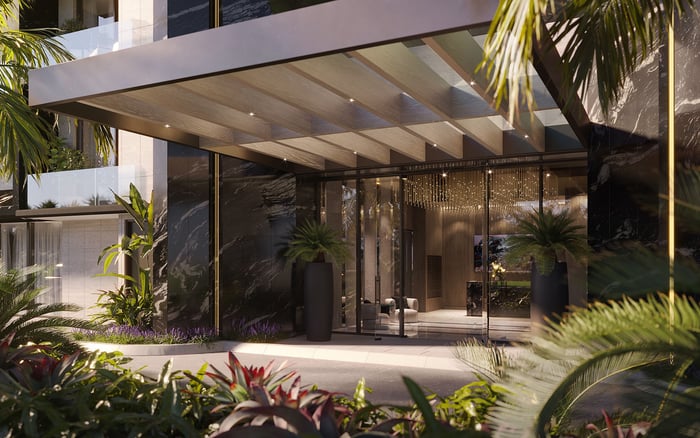
A buyer-focused look at why climate-controlled storage matters at The Well Bay Harbor Islands, with practical questions for evaluating humidity control, access, security, backup systems, and wellness-aligned daily living in 2026.
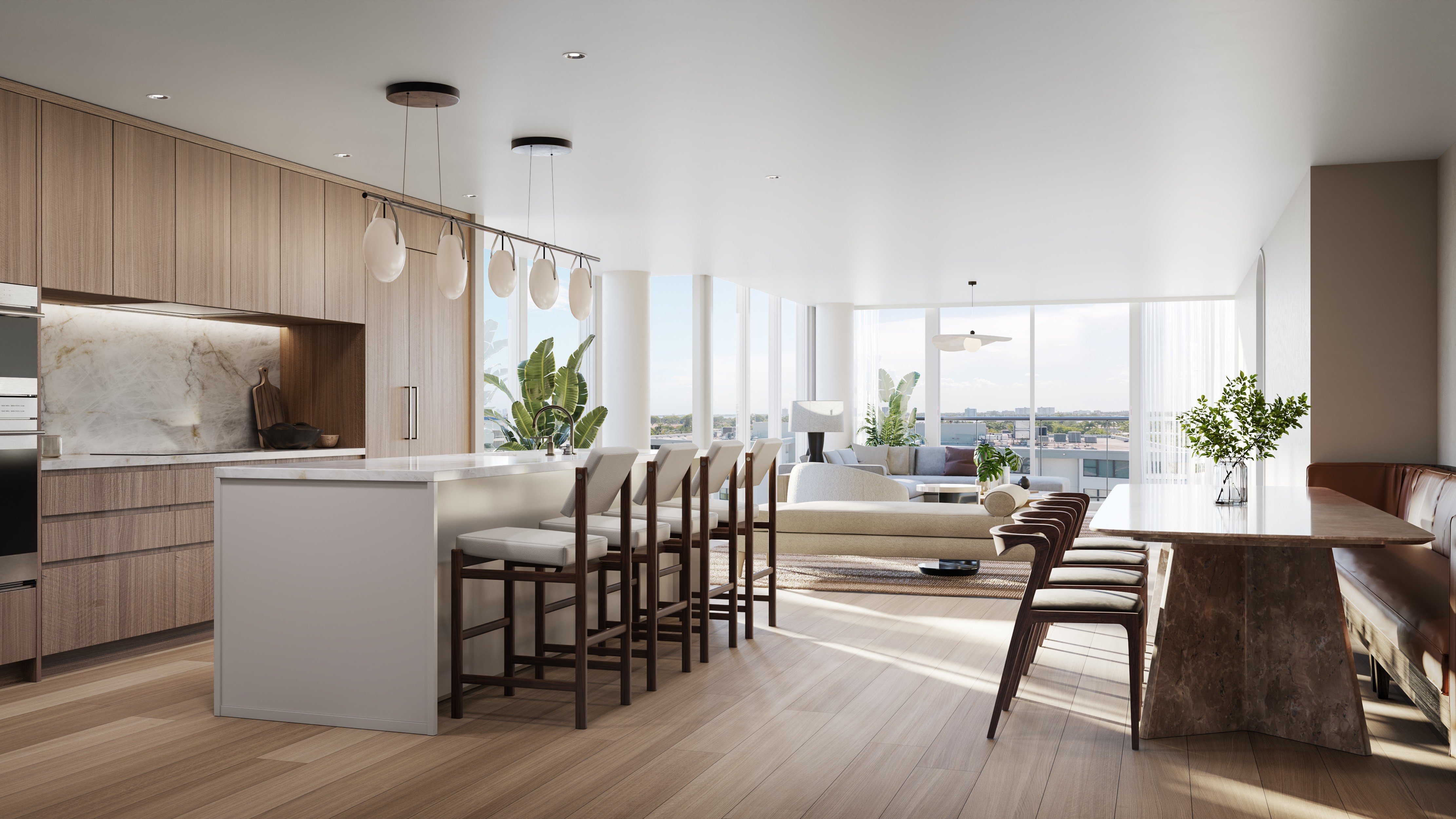
At the upper end of South Florida real estate, storage is no longer a utility closet conversation. It is a lifestyle, preservation, and operations question. For buyers evaluating The Well Bay Harbor Islands, the sharper 2026 question is not simply whether storage exists. It is whether the storage program is equal to the building’s broader promise.
That distinction matters in a Miami-area luxury market shaped by heat, humidity, salt air, storm planning, and owners who often arrive with possessions that require more than square footage. Art, couture, collectibles, wellness equipment, seasonal wardrobes, luggage, and family archives all demand a higher standard of care. The best residences are not only designed for what is displayed. They are planned for what must be protected.
For sophisticated purchasers, family offices, and advisors, climate-controlled storage should be treated as due diligence, not decoration. At The Well Bay Harbor Islands, the buyer test is whether the storage conversation feels engineered, managed, and operationally serious, rather than simply attached to wellness language.
Wellness in residential design is often discussed through light, air, fitness, spa programming, circulation, and quiet. Yet a calm home also depends on what can be removed from daily view without being placed at risk. A residence feels more restorative when closets are not overloaded, seasonal items have a protected place, and valuables are not improvised into guest rooms or secondary corridors.
This is where climate-controlled storage becomes part of the lived wellness proposition. It supports order. It reduces visual noise. It allows owners to keep primary spaces intentional, not overfilled. In a boutique building, where privacy and ease are central to the purchase, the storage experience should feel like an extension of the residence rather than a forgotten back-of-house compromise.
The Well Bay Harbor Islands is being assessed here through that lens. The goal is not to declare technical specifications that have not been verified. The goal is to outline the questions a disciplined buyer should ask before deciding whether storage quality aligns with the project’s positioning.
The first question is temperature. Buyers should ask what temperature range is intended for storage areas, how it is monitored, and whether performance is consistent during peak summer conditions. In South Florida, vague references to air conditioning are not enough for sensitive belongings.
The second question is humidity. Humidity is often the more consequential issue for art, couture, leather goods, paper, and certain collectibles. A serious program should address humidity control directly, including how conditions are measured and what happens when thresholds move outside desired ranges.
The third question is access. A luxury storage area should be convenient without being casual. Buyers should understand whether access is private, monitored, limited by hours, or integrated into the building’s broader residential operations. Convenience matters, but so does control.
The fourth question is security. Storage often contains valuable items that owners do not want in active living areas. Buyers should ask about access protocols, surveillance, separation between owners, and how deliveries or staff interactions are managed.
The fifth question is backup planning. In a South Florida setting, resilience is not abstract. Buyers should ask how storage areas are treated during power interruptions, storm preparation, and post-event recovery. A program that depends entirely on normal operating conditions is not the same as one designed for regional realities.
The sixth question is suitability. Not every climate-controlled room is appropriate for every valuable object. Owners with art, wine-related materials, archival documents, or couture should consult their own specialists and ask whether the building’s storage environment is appropriate for those categories.
Storage is a proxy. It can reveal how deeply a building team has thought about daily ownership, not just arrival sequences and amenity photography. A refined storage program suggests attention to mechanical planning, circulation, security, maintenance, and resident behavior. A weak one can signal that operational life was treated as secondary.
For a Bay Harbor Islands buyer, that proxy has real financial meaning. The residence may be used seasonally. It may serve as a second home. It may hold wardrobes and equipment that rotate with travel, family visits, boating, wellness routines, or social calendars. Storage becomes part of capital preservation because it protects the possessions that support the owner’s lifestyle.
The same logic applies to resale perception. Future buyers are increasingly sensitive to how a building performs beyond the private residence. They want to know whether common and support spaces were planned with rigor. In that sense, climate-controlled storage is not merely an amenity. It is a signal of competence.
A family office or advisor should approach The Well Bay Harbor Islands with a checklist that separates verified features from sales language. The wellness identity is important, but the deeper question is whether the building’s less visible systems support that identity. Storage is one of the cleanest ways to test the claim.
Advisors should request clarity on location within the building, environmental controls, operating responsibility, access rules, and emergency procedures. They should also ask whether storage is assigned, licensed, limited, separately charged, or otherwise governed by documents. These are not minor points. They affect usability, privacy, and the owner’s long-term expectations.
Buyer shorthand often reduces the conversation to neat categories such as Bay Harbor Islands, boutique, new construction, waterview, and The Well Bay Harbor Islands. Those labels may help frame a search, but they do not replace the operational questions that determine whether daily ownership feels effortless.
South Florida luxury ownership asks more from storage than many other markets. Heat can stress materials. Humidity can affect fabrics, paper, wood, leather, and certain finishes. Salt air can add another layer of exposure. Hurricane season introduces a separate resilience concern, particularly for items that owners do not inspect daily.
That does not mean every possession requires museum-grade conditions. It does mean buyers should resist treating all storage rooms as equal. A conditioned, monitored, secure, and sensibly located space can be materially different from a room that is merely enclosed and cooled some of the time.
In 2026, the most discerning buyers will likely evaluate storage with the same seriousness they bring to terraces, views, parking, wellness amenities, and private entry sequences. The question is not whether the topic feels glamorous. The question is whether it protects the glamour elsewhere in the home.
The right conclusion is disciplined rather than dramatic. The Well Bay Harbor Islands belongs in the conversation for buyers seeking a wellness-oriented boutique residential setting in a Miami-area market. But the storage component should be tested carefully, because it sits at the intersection of lifestyle utility and asset protection.
A buyer who owns art, couture, collectibles, wellness equipment, or extensive seasonal wardrobes should ask specific questions before relying on climate-controlled storage as part of the ownership plan. If the answers are clear, documented, and operationally credible, storage can strengthen the building’s case. If the answers remain general, the buyer should continue probing.
In the next luxury cycle, invisible infrastructure may matter as much as visible amenity. Climate-controlled storage is one of those quiet features that tells an informed buyer whether a residence has been planned for real life, not just presentation.
Why does climate-controlled storage matter at The Well Bay Harbor Islands? It matters because the project’s wellness positioning raises the standard for order, protection, and daily ease. Storage should support the lifestyle promise, not sit outside it.
Is this article confirming the building’s exact storage specifications? No. This is a buyer due-diligence guide focused on the questions purchasers should ask before relying on any storage program.
What belongings are most sensitive to poor storage conditions? Art, couture, collectibles, wellness equipment, seasonal wardrobes, leather goods, and archival items may require more controlled environments.
Should buyers ask about humidity separately from temperature? Yes. Humidity can be more damaging than temperature for certain materials, so it deserves its own line of inquiry.
How does storage connect to wellness? Proper storage helps keep living spaces calm, uncluttered, and intentional. That supports the broader wellness-oriented experience.
What should advisors review in the ownership documents? They should examine assignment rights, access rules, fees, limitations, and any language governing storage use or availability.
Does South Florida living change the storage test? Yes. Heat, humidity, salt air, and storm planning make storage quality more consequential in South Florida settings.
Is climate-controlled storage a resale consideration? It can be. Future buyers may view strong storage as evidence of better planning, operations, and resident usability.
Can all valuables go into standard climate-controlled storage? Not necessarily. Highly sensitive possessions may require specialist guidance and storage conditions beyond a typical residential program.
What is the simplest buyer takeaway? Ask precise questions and look for operationally credible answers before treating storage as a true luxury feature.
For a tailored shortlist and next-step guidance, connect with MILLION.
If branded residences are on your mind — as a home or as an allocation — we would be glad to share what we are seeing, privately.
Begin a quiet conversation