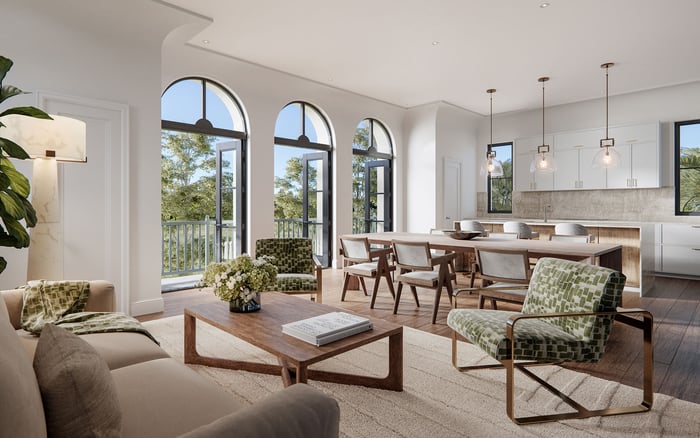
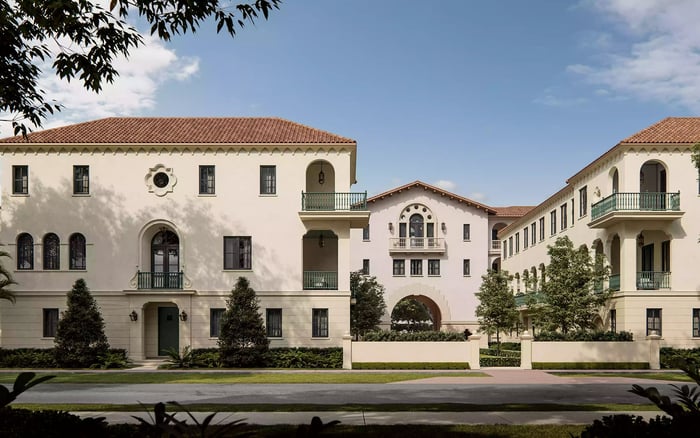
For luxury buyers in Coral Gables, privacy is rarely just about gates and guards. It is about how a building moves people: where cars arrive, how guests are routed, how elevators open, and whether you can live elegantly without feeling observed. This MILLION Luxury editorial compares The Village at Coral Gables and Cora Merrick Park through the lens that matters most in daily life: privacy and elevator flow.
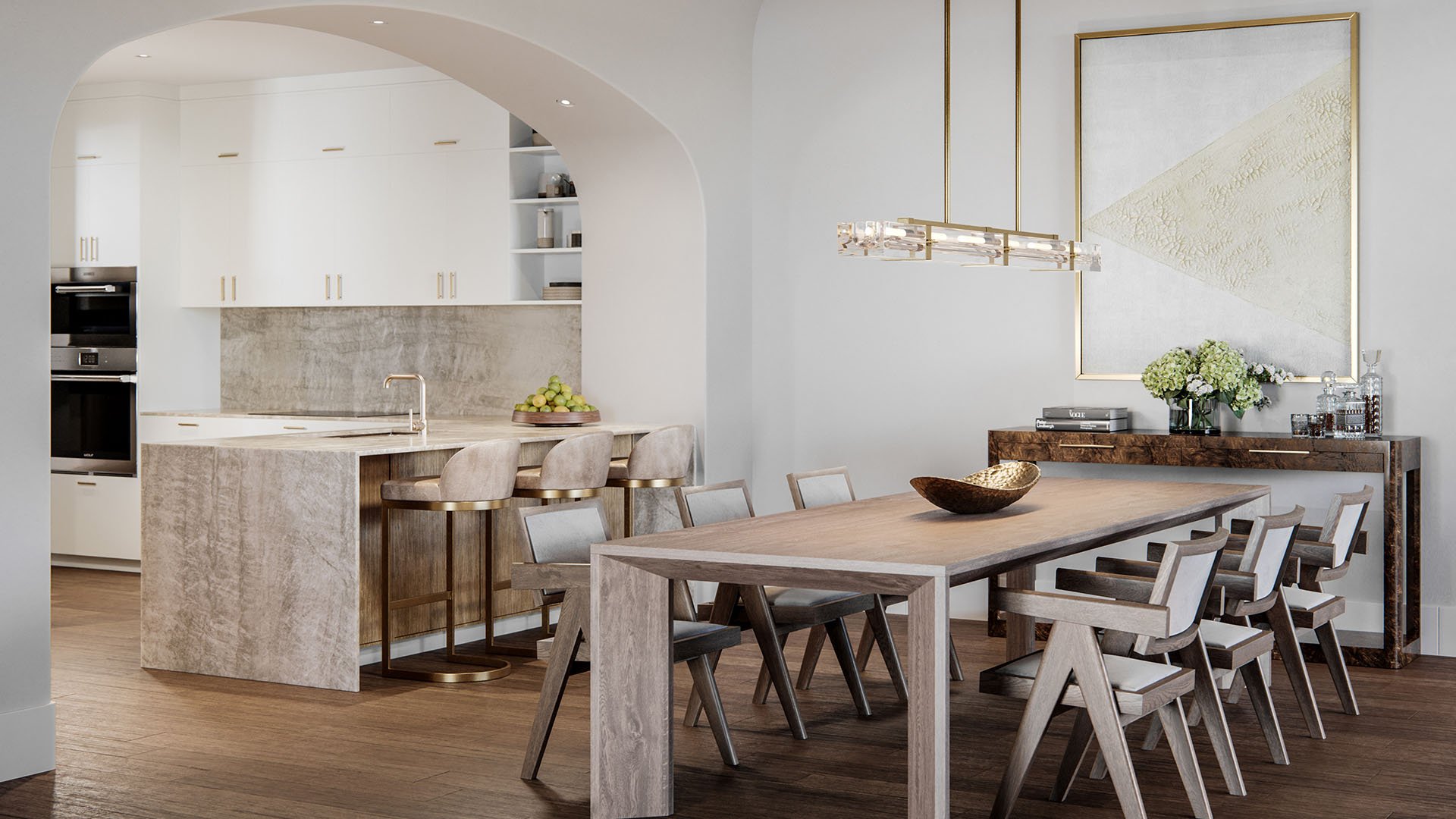
In Coral Gables, privacy is more than a lifestyle preference. It is a form of operational excellence. The most discreet buildings feel calm because they are designed to reduce unplanned encounters, protect sightlines, and separate “public” moments from “resident” moments. The fastest way to assess that design is to study elevator flow.
Elevator flow is the choreography of how residents, guests, staff, and deliveries move from curb to door to residence. A building can be beautifully finished and impeccably staffed, yet still feel exposed if its circulation plan forces everyone through the same choke points. Conversely, a well-planned mid-rise can feel quietly elite when arrivals, elevator cores, and corridors are intentionally separated.
That is where the comparison between The Village at Coral Gables and Cora Merrick Park becomes most revealing. Both are Coral Gables options for buyers who value taste, convenience, and a refined neighborhood cadence. But the day-to-day experience of privacy can shift dramatically based on how each building handles movement.
Before choosing a side, keep the approach simple: evaluate privacy across three repeatable moments.
First is arrival. Ask what a passerby can see when a car door opens. Is the drop-off exposed to street traffic, or buffered by landscaping and setbacks? Does the lobby sit directly on axis with the entrance, or is it offset so arriving residents do not become a visual event?
Second is vertical travel. How quickly can you move from arrival to elevator to residence without cutting through communal space? Are elevator banks visible from lobby seating areas? Does the elevator open to a corridor that keeps front doors discreet, or does it spill into a long hallway that encourages lingering and conversation?
Third is the service layer. The most private buildings are the ones where service is present but not performative. Deliveries, vendors, and moving activity should have a clear, controlled path that does not hijack the resident experience. Even if you rarely use it, a distinct service pattern changes the tone of the entire property.
The Village tends to resonate with buyers who define luxury as separation. When a property reads more like a composed enclave than a single-tower experience, privacy often comes from distributing activity across more than one point. That can mean quieter arrivals, fewer bottlenecks, and fewer “everyone sees everyone” moments.
From an elevator-flow perspective, the advantage of a more campus-like feel is as psychological as it is practical. You can often move through the property without feeling like you are stepping onto a stage. If your priorities include a discreet routine, controlled contact with neighbors, and the sense that your home is insulated from the city’s rhythm, this profile typically fits.
On tour, concentrate on how you are welcomed. A truly private arrival is not just a door person or a clean porte cochere. It is what happens immediately after the greeting: do you have a short, direct line to the elevator, or are you routed across social space? Notice whether the lobby is designed for lingering and visibility, or for quiet passage. That difference shows up daily, not just at move-in.
Cora Merrick Park is often considered by buyers who want a precise, urban-elegant pattern. For that buyer, privacy is not necessarily about isolation. It is about predictability: controlled access, clean routing, and a building that feels managed and intentional.
From an elevator-flow standpoint, the key question is whether the primary circulation prioritizes convenience over separation. Many lock-and-leave buyers accept more shared movement in exchange for a frictionless routine: quick transitions from car to elevator, minimal decision points, and straightforward access for guests.
When you tour, look for the moments that protect your routine even during a busy week. How are guest arrivals handled? Is there a clear place for a driver to wait without blocking the main entry? If discretion matters to you, ask how deliveries are routed and where packages are held-because package rooms and mail areas can become the loudest “public square” in an otherwise quiet building.
Because the Research Pack is not providing building-specific programming details, the smartest approach is to use a buyer’s checklist and make the building demonstrate its privacy.
Ask for a peak-time walk-through. Not midday. Go when residents are actually moving: morning departures, evening returns, weekend guest traffic. You are not only assessing how crowded it gets; you are assessing whether crowding is visible.
Then test sightlines. Stand where you would naturally wait and see what you can observe. Can you see the elevator doors open? Can you see who is getting out? Can someone seated in the lobby watch you come and go? Discreet buildings reduce the amount of information a stranger can collect with casual glances.
Finally, ask about separation between resident, guest, and service patterns. Even without a dedicated service elevator, a building can preserve dignity through timed access, controlled doors, and staff-managed routing. The most important word here is “routing.” If management has a clear answer, the building likely has a clear plan.
Elevators get the attention, but corridors decide whether a building feels intimate or exposed. Two buildings can have identical finishes and entirely different corridor psychology.
Pay attention to door spacing, turns, and acoustics. Long, straight hallways with many doors read more like a hotel. Corridors that bend, break, and keep fewer doors in view tend to feel more residential and private. The quietest buildings are the ones where you do not accidentally collect social obligations simply by stepping outside.
This matters especially for the buyer who travels. If you are away often, you want a building where arriving home does not feel like walking through a social arena. That is core lock-and-leave luxury, created by circulation design as much as by amenities.
Coral Gables buyers often cross-shop neighborhoods when privacy is non-negotiable. Across South Florida, the lesson is consistent: newer luxury product increasingly treats elevator flow as part of the brand experience, not merely a building system.
In Brickell, the privacy conversation turns vertical and high-traffic quickly, which is why buildings like 2200 Brickell draw interest from buyers who want a more residential cadence than the densest parts of the core. In Coconut Grove, the tone shifts: quieter streets, more residential arrival patterns, and a stronger expectation of discretion, which is part of the appeal of Four Seasons Residences Coconut Grove.
And for buyers who equate privacy with true low-density beachfront living, the discussion shifts to how a building manages owners, guests, and resort energy. That is why a project like 57 Ocean Miami Beach can enter the conversation, even if the buyer ultimately prefers the Gables for its culture and proximity.
These comparisons are not about declaring a winner. They are about recognizing that privacy is a system. When you know which system you prefer, you can choose the right building faster.
If your ideal privacy is minimal contact, minimal visibility, and a sense that your home sits behind layers, The Village at Coral Gables often aligns with that instinct. The buyer profile here typically values discretion as a lifestyle setting: the ability to move quietly, entertain selectively, and keep daily life from becoming communal.
If your ideal privacy is controlled access, a polished, managed environment, and the confidence that guests can arrive without complexity, Cora Merrick Park tends to suit that rhythm. Here, privacy is less about distance and more about management: a well-run pattern that keeps life efficient and composed.
The most sophisticated choice is the one that matches your personal operating system. Privacy is not one thing. It is the feeling that the building works for you in the background-without requiring performance from you.
Use these three tests to force clarity between the two.
The lobby test: from the moment you enter, how quickly can you disappear into your day?
The guest test: can a friend arrive without becoming everyone’s entertainment?
The service test: do packages, vendors, and moves happen quietly, or do they take over the front-of-house?
Bring these questions to both tours. Make each building demonstrate its best version of discretion, then choose the one whose flow feels most natural to you.
Which building is better for privacy: The Village at Coral Gables or Cora Merrick Park? It depends on whether you prefer separation and a quieter feel or a polished, predictable lock-and-leave routine.
What does “elevator flow” mean in a condo decision? It is how residents, guests, and staff move from curb to elevator to residence with minimal friction and visibility.
Is a private elevator the only way to get real privacy? No. Smart arrivals, controlled access points, and discreet corridors can deliver meaningful privacy even without it.
What should I look for in the lobby if I value discretion? Check sightlines to elevator doors, where people sit, and whether you can reach the elevator without crossing social space.
How do I evaluate guest privacy during a tour? Ask where guests wait, how they are admitted, and whether guest arrivals funnel through resident-only areas.
Do service and delivery areas really affect resident privacy? Yes. Package rooms and vendor routes can become the most public spaces if they are not well separated and managed.
When is the best time to tour for a true sense of building traffic? Visit during morning departures or evening returns so you can observe real movement patterns and bottlenecks.
Can corridor design change how private a building feels? Absolutely. Shorter, quieter, broken-up corridors feel more residential than long, hotel-like hallways.
Is Coral Gables generally quieter than Brickell or Miami Beach for condo living? Often, yes, because the neighborhood rhythm is more residential, though each building’s circulation plan still matters.
What is the single best question to ask management about privacy? Ask how the building routes residents, guests, and deliveries differently, and listen for a clear, practiced answer.
When you're ready to tour or underwrite the options, connect with MILLION Luxury.
If branded residences are on your mind — as a home or as an allocation — we would be glad to share what we are seeing, privately.
Begin a quiet conversation