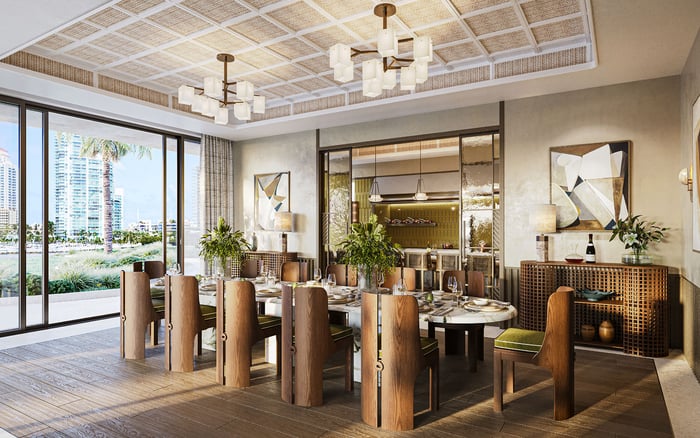
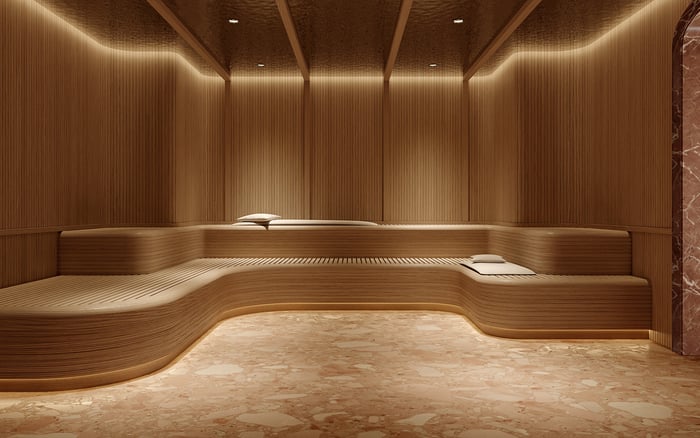
A dedicated cold plunge and sauna suite inside the primary suite has shifted from novelty to a discreet marker of truly turnkey luxury. In South Florida, where wellness is as much about privacy and pace as it is about amenities, these at-home rituals are increasingly designed with the same rigor as a dressing room or spa bath. For buyers and developers, the real value is not spectacle. It is daily usability, acoustic separation, humidity control, and an experience that feels intentionally integrated into the home’s most private zone.
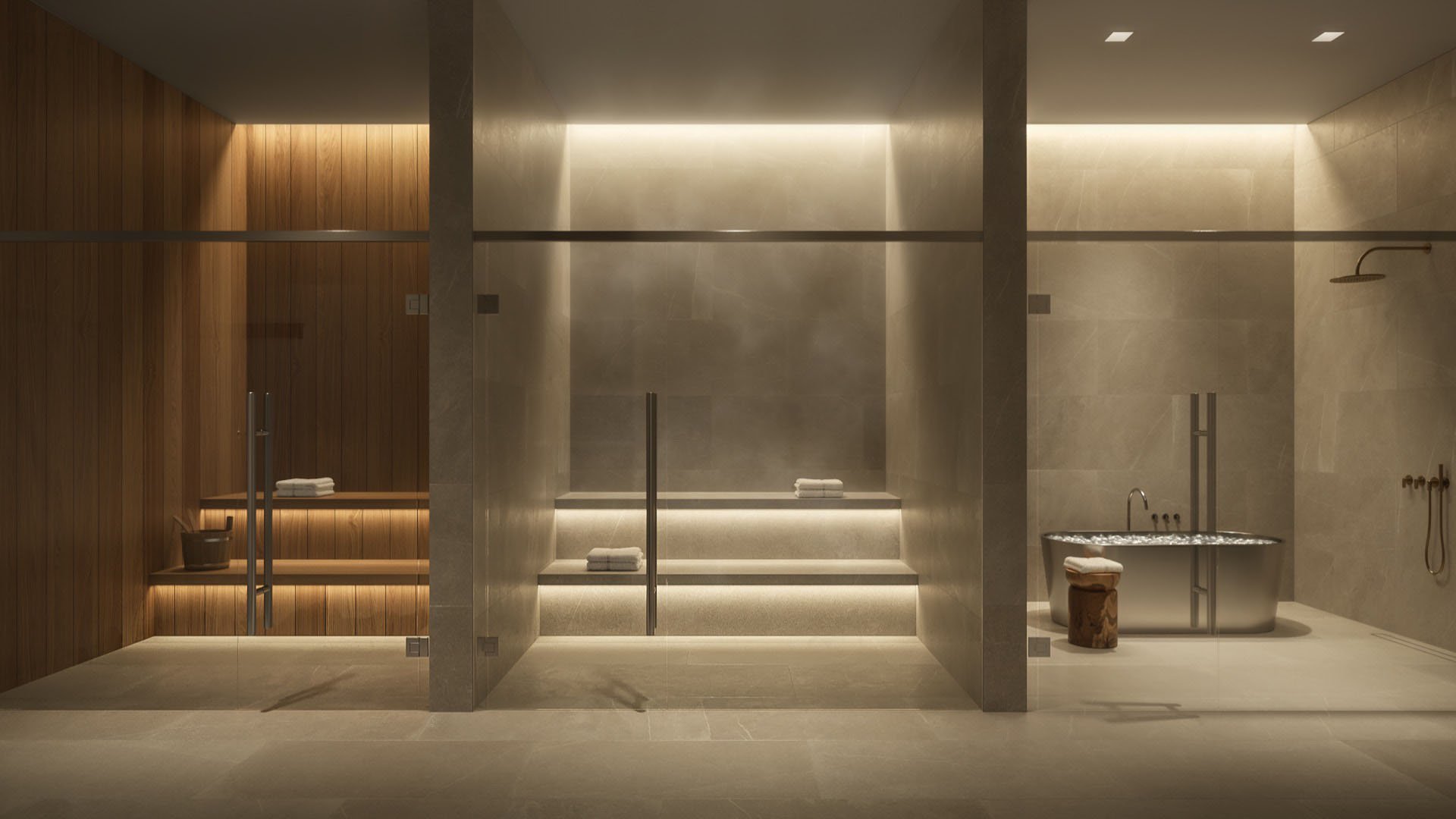
In ultra-premium residences, the primary suite has evolved into more than a bedroom with an oversized bath. It functions as the home’s command center for sleep quality, recovery, skincare, and quiet. A dedicated cold plunge and sauna suite advances that idea by making the ritual immediate and private: no elevator ride to the spa, no shared facilities, no waiting, no social friction.
What makes this shift consequential is not the trend, but the architectural logic behind it. When cold exposure and heat therapy are treated as a true room program within the primary suite, the experience becomes consistent, contained, and protected. Done correctly, it can feel as intuitive as stepping into a steam shower or a dressing room. Done casually, it reads as an add-on-one that can compromise comfort, acoustics, and long-term maintenance.
For South Florida buyers who prioritize discretion, a primary-suite suite also signals intent: wellness isn’t outsourced; it’s embedded. In markets where the most coveted luxury is often not the largest footprint, but the most intelligently curated daily life, that distinction matters.
A cold plunge in a bathroom can work. A sauna in a flex corner can work. The dedicated suite, however, is about controlling the conditions that make both genuinely enjoyable.
A true cold plunge and sauna suite typically establishes separation between three distinct zones: the sleeping environment, the wet thermal environment, and the grooming environment. That separation is the point. It keeps heat, moisture, and the sound of pumps or ventilation away from the bedroom. It also prevents serious equipment from becoming visual noise by forcing it to perform as infrastructure-not decor.
In a primary suite, comfort is cumulative. If the bedroom feels faintly damp, if the closet takes on a trace of odor, if the floor stays cold in the wrong places, you notice. A dedicated suite allows the rest of the primary suite to remain calm and textile-friendly while still supporting a high-performance wellness routine.
Luxury buyers often talk about “using the amenities,” but daily behavior is dictated by friction. If the experience requires planning, exposure to neighbors, or a change of environment, even the most beautiful amenity becomes occasional.
A dedicated suite changes that equation. It supports a morning protocol without leaving the primary suite. It supports recovery after training without crossing the lobby. It supports late-night heat therapy without an audience. In a residence where time and discretion are part of the lifestyle, that matters.
This is one reason wellness-forward brands and residential concepts resonate in South Florida. In areas like Bay Harbor and Coconut Grove, the preference is often for a quieter, more curated experience rather than a louder one. It’s the same sensibility that draws buyers toward environments that emphasize a holistic lifestyle, such as The Well Bay Harbor Islands, where wellness isn’t treated as a single room, but as a guiding principle.
Without a Fact Table for project-specific specs, the strongest guidance is to focus on the building-science fundamentals that determine whether the suite feels effortless-or perpetually “in service.” When touring, ask questions that reveal whether the suite was engineered, not improvised.
Cold plunge setups vary, but water is always the central concern. Look for evidence of a deliberate drainage strategy, waterproofing continuity, and finishes that can tolerate frequent wet use. A dedicated suite should read as a refined wet room, not a decorative room that happens to get wet.
South Florida humidity is unforgiving. A sauna introduces heat and moisture; the surrounding envelope has to handle it. The suite should have robust ventilation and details that discourage condensation in adjacent spaces. Pay attention to door seals, threshold transitions, and whether the room feels neutral-never musty.
The primary suite is a sanctuary. If the cold plunge relies on pumps, filtration, or mechanical equipment, sound isolation becomes a defining detail. Listen for humming, vibration, and fan noise. A premium result is quiet enough that the bedroom remains undisturbed.
Sauna heaters and associated ventilation can require meaningful electrical planning. The best suites feel fully integrated, with clean panel planning and no afterthought wall-mounted controls or exposed conduits.
Many buyers are seduced by a dramatic stone moment, but wet thermal rooms are harsh environments. Ask how surfaces are intended to be cleaned and maintained. In this category, longevity is luxury.
The goal isn’t to make the space feel like a commercial spa. The goal is to make it feel like a private ritual room.
A strong suite typically gets four things right:
First, circulation. You can move from sauna to cool-down to shower without cutting through the bedroom or tracking water into dressing areas.
Second, lighting. It’s layered and dimmable, with a calm, restorative tone rather than bright task lighting.
Third, storage. Towels, robes, skincare, and cleaning supplies have a home, so the suite never looks “in use” unless you want it to.
Fourth, temperature logic. The room doesn’t fight itself. You don’t feel drafts where they don’t belong, or trapped heat where it shouldn’t be.
In high-design markets like Brickell, this approach aligns with the broader move toward residences that deliver private, hotel-level experiences inside the unit. Buyers already expect refined arrival sequences and elevated interiors in towers such as 2200 Brickell. A dedicated wellness suite is the next step in that same philosophy: design that elevates everyday life.
In the upper tier, resale value is often less about the mere presence of an amenity and more about whether it reads as permanent, tasteful, and low-risk. A dedicated cold plunge and sauna suite can signal a property planned for modern wellness expectations-especially when it’s positioned as a private extension of the primary suite rather than a novelty.
However, buyers should consider reversibility. The most compelling suites are conceived so future owners can repurpose the space without a full demolition. Think of it like a wine room or a secondary prep kitchen: it’s a luxury feature, but it should remain flexible.
In Miami Beach, where buyers often weigh lifestyle and privacy with equal intensity, the premium is on rooms that feel serene and intentionally composed. A building like 57 Ocean Miami Beach speaks to that quieter sensibility, and the same mindset applies within the residence: a wellness suite should feel like a calm, architectural room, not a loud gadget showcase.
Coastal living adds specific pressures: salty air, high humidity, and constant cooling loads. That environment is exactly why a dedicated suite can be a more responsible choice than a casual installation.
By separating wet thermal functions from the primary bedroom and closet zones, you reduce the risk of moisture migrating into textiles, millwork, and soft finishes. You also make it easier to tune ventilation and dehumidification for a single high-load room without over-conditioning the entire primary suite.
In Fort Lauderdale and other beachfront corridors, buyers increasingly expect wellness not only as a building amenity, but as an in-residence experience. The appeal of lifestyle-forward properties like Auberge Beach Residences & Spa Fort Lauderdale reflects a broader preference: curated calm, privacy, and service-minded design. A dedicated primary-suite suite is the residential analog of that idea.
The most refined suites avoid obvious “gym culture” aesthetics. They borrow from hospitality and bespoke design: quiet proportions, minimal visual clutter, and materials that look better with time.
When evaluating a residence or planning a build-out, consider these choices:
Keep the threshold subtle. The suite should read as an intentional room, not a utility closet.
Use consistent materials. If the primary bath is luminous stone with warm woods, the suite should echo that palette-even if the surfaces are selected for wet performance.
Prioritize comfort details. A place to sit, hooks that feel considered, a robe niche, a towel warming zone. These small touches are what turn a feature into a habit.
Avoid over-promising tech. Automation can be beautiful, but reliability is the true luxury. Simple controls, clear access panels, and serviceability matter.
Ultimately, the dedicated cold plunge and sauna suite matters because it respects the primary suite’s purpose. It concentrates intensity, water, and heat in the right place, while keeping the bedroom and dressing spaces pristine.
Is a dedicated cold plunge and sauna suite only for large primary suites? No. The key is smart separation and ventilation; the program can be compact if planned well.
Will a sauna increase humidity problems in the primary suite? It can if the suite lacks proper vapor control and exhaust. A dedicated room helps contain and manage it.
Is it better to place the suite inside the bathroom or off the bedroom? Off the bathroom is often more practical because it supports wet circulation, but either can work with good detailing.
What should I listen for when touring a home with a cold plunge? Pay attention to pump or filtration noise and vibration. A well-designed setup should feel quiet.
Does a cold plunge require special flooring? Yes, it benefits from water-resistant, slip-considered finishes and careful waterproofing transitions.
Can these suites feel too “commercial” for a luxury residence? They can. The best ones use calm lighting, refined materials, and concealed storage to keep it residential.
Are these suites hard to maintain? They do require routine care, but smart access, durable materials, and clear service planning reduce friction.
Will future buyers see it as a plus or a niche feature? It is strongest when designed as a flexible, architectural room rather than a highly customized gadget space.
How do I protect closets and millwork nearby? Look for true separation, strong ventilation, and detailing that prevents moisture migration.
Do building rules matter for installing a cold plunge or sauna in a condo? Yes. Approvals, waterproofing requirements, and mechanical constraints can shape what is feasible.
To compare the best-fit options with clarity, connect with MILLION Luxury.
If branded residences are on your mind — as a home or as an allocation — we would be glad to share what we are seeing, privately.
Begin a quiet conversation