A practical buyer’s guide to evaluating salt-air maintenance in Surfside, with attention to exterior envelopes, terraces, mechanical systems, amenity care, budgeting, and resale discipline.

Surfside rewards a specific kind of buyer: one who understands that coastal luxury is not only about views, finishes, and arrival sequence, but also about the quiet discipline required to preserve them. Salt air is part of what makes the shoreline so desirable, and it is also the condition that asks more of every building, residence, terrace, railing, mechanical system, and maintenance plan.
For a Surfside buyer in 2026, the smartest posture is not defensive. It is discerning. The goal is not to avoid the coast, but to understand how a property lives with it. A well-maintained oceanfront residence can feel effortless because the hard work is already built into the building culture: cleaning routines, sealant monitoring, exterior inspections, equipment care, and responsive management.
The best due diligence begins before a buyer falls in love with a sunset view. It begins with the surfaces that face the weather, the systems that condition the home, and the association habits that protect long-term value.
In a coastal market, the lobby tells only part of the story. A polished arrival matters, but the more revealing details often sit at the edges: door tracks, balcony railings, elevator landings near exterior exposure, garage areas, rooftop equipment zones, and amenity decks.
A buyer should ask how the building approaches preventive care. Are exterior materials cleaned consistently? Are exposed metals monitored? Are sealants reviewed before visible failure? Are maintenance decisions documented clearly enough that a future purchaser can understand the property’s history without guesswork?
This is especially important for resale opportunities, where the residence may present beautifully while the building’s maintenance rhythm carries the deeper story. In a strong association, stewardship feels routine rather than reactive. Staff can explain how common elements are cared for, management can produce records with confidence, and owners tend to understand that coastal upkeep is part of the privilege of location.
The exterior envelope is the first line of defense between the Atlantic environment and the private interior. Buyers should study the condition of windows, sliding glass doors, frames, balcony thresholds, exterior coatings, railings, and drainage points. None of these elements should be evaluated in isolation. Together, they show whether the residence has been treated as a living coastal asset.
A balcony deserves particular attention. Look at the feel of the door operation, the cleanliness of tracks, the condition of exposed fasteners, how water is directed away from interior thresholds, and whether railings show signs of deferred attention. A terrace, especially one with planters, outdoor kitchens, furniture, or shade structures, should be reviewed for drainage logic and material resilience.
The question is not whether outdoor areas require care. They do. The question is whether that care has been anticipated. Luxury ownership at the shore should feel serene, but serenity is usually the visible result of disciplined maintenance.
Inside the residence, salt air often enters through lifestyle: doors left open to hear the ocean, wet towels after the beach, outdoor entertaining that flows indoors, and frequent transitions between cooled interiors and warm exterior air. Materials should be selected and maintained with this rhythm in mind.
Stone, wood, metal accents, millwork, appliance fronts, and specialty hardware all benefit from considered upkeep. Buyers should ask whether prior owners used appropriate cleaning products, whether air conditioning has been run consistently, and whether closets, storage rooms, and less visible areas feel dry, clean, and ventilated.
The most refined coastal interiors do not fight the environment with fragility. They accommodate it through durable specifications, measured care, and a preference for quality over novelty. For a second-home owner, this matters even more, because an empty residence still needs attention. A home visited seasonally should have a management plan, not just a beautiful key handoff.
Mechanical systems are easy to overlook during a lifestyle-focused showing, yet they often reveal whether a property is prepared for coastal living. Air-conditioning equipment, ventilation, dehumidification approach, water heaters, electrical panels, and service closets should all be reviewed by qualified professionals before closing.
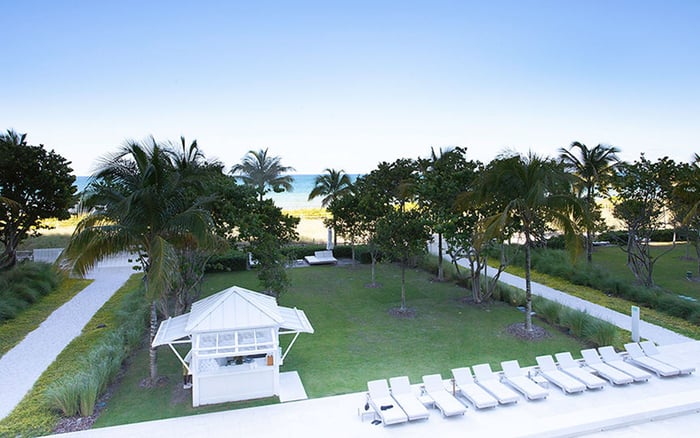
In luxury buildings, amenity areas add another layer of exposure. A pool deck, spa area, outdoor lounge, fitness terrace, or beach service zone carries constant contact with moisture, sun, and salt air. These spaces are also where maintenance culture becomes visible. Clean grates, orderly storage, cared-for furniture, and well-kept exterior lighting all suggest a building that treats preservation as part of hospitality.
Buyers should resist treating amenities as purely emotional. The better question is: how are these spaces maintained between peak moments? In Surfside, the answer can say as much about ownership quality as the view itself.
A sophisticated buyer should build salt-air maintenance into the offer process. The inspection should be tailored to coastal conditions, with attention to exterior doors, windows, railings, terrace surfaces, mechanical systems, and any areas where moisture intrusion could become expensive if ignored.
Association documents should be read with the same seriousness as the floor plan. Look for clarity around reserves, planned work, rules for exterior modifications, maintenance responsibilities between owner and association, and procedures for contractors. If a residence includes outdoor features, confirm what the owner controls and what the association must approve.
The goal is not to create friction. It is to price certainty. A buyer who understands upcoming work, owner responsibilities, and recurring upkeep can make a cleaner decision. In competitive situations, that preparation can also make the buyer more credible, because questions are focused, professional, and relevant.
Salt-air maintenance should not be treated as an unpleasant surprise. It belongs in the ownership budget from the beginning, alongside insurance, association dues, property management, housekeeping, and seasonal preparation.
For a primary residence, the rhythm may be straightforward: regular cleaning, prompt attention to exterior hardware, consistent climate control, and periodic professional review. For a seasonal property, the plan should be more formal. Someone should open doors, run systems, monitor humidity, check terraces after storms, and confirm that small issues do not wait for the owner’s next visit.
A luxury property is not diminished by maintenance. It is elevated by it. The most desirable homes in Surfside are often those where care is invisible because it is constant. Buyers who understand this enter the market with a calmer eye and a stronger hand.
In 2026, the buyer who asks better maintenance questions can separate presentation from preservation. This is especially valuable in Surfside, where the emotional pull of the beach can make every residence feel rare during the first tour.
A disciplined buyer looks past staging and asks how the home will perform after closing. How does the terrace drain? How do the doors seal? How is exterior metal maintained? What is the building’s approach to preventive work? How responsive is management when owners report small issues? These are not minor questions. They are the difference between coastal glamour and coastal ownership done well.
The enduring appeal of Surfside lies in its quiet scale, beachfront setting, and residential composure. Salt-air maintenance is the practical counterpart to that appeal. When handled properly, it allows the architecture, the interiors, and the view to remain the focus.
Is salt-air maintenance different in Surfside than inland ownership? Yes. Coastal exposure requires more attention to exterior surfaces, mechanical systems, terrace areas, and routine cleaning than most inland settings.
What should I inspect first in a Surfside condo? Start with windows, sliding doors, balcony railings, thresholds, terrace drainage, and air-conditioning systems. These areas often show how well the residence has been maintained.
Should I worry about a balcony in a coastal building? A balcony is an asset when properly cared for. Review drainage, railing condition, door tracks, and any signs of deferred maintenance before making an offer.
How important are association records? Very important. Records can help a buyer understand the building’s maintenance rhythm, planned work, and the division of responsibility between owner and association.
Does a terrace require a different review than an interior room? Yes. A terrace should be evaluated for drainage, surface condition, railings, exterior fixtures, and any owner-installed features exposed to coastal weather.
Are mechanical systems more important near the ocean? They deserve close attention. Climate control, ventilation, and equipment condition are central to comfort and preservation in a salt-air setting.
What should seasonal owners plan for? Seasonal owners should arrange regular property checks, climate control, terrace review, and prompt service for small issues before they become larger ones.
Can good maintenance support resale value? Yes. Clear records, well-kept exterior elements, and consistent care can give future buyers greater confidence during resale due diligence.
Should amenity areas influence my decision? Yes. Pool decks, outdoor lounges, and service areas can reveal how seriously a building treats daily maintenance and long-term stewardship.
Is salt-air maintenance a reason to avoid Surfside? No. It is a reason to buy with discipline, ask better questions, and choose properties where coastal care is already part of the ownership culture.
For a discreet conversation and a curated building-by-building shortlist, connect with MILLION.
If branded residences are on your mind — as a home or as an allocation — we would be glad to share what we are seeing, privately.
Begin a quiet conversation