A discreet arrival is not a decorative amenity. This buyer’s guide frames the operational questions to ask about valet flow, guest handling, vehicle privacy, staffing, and seasonal pressure before choosing a South Florida residence.
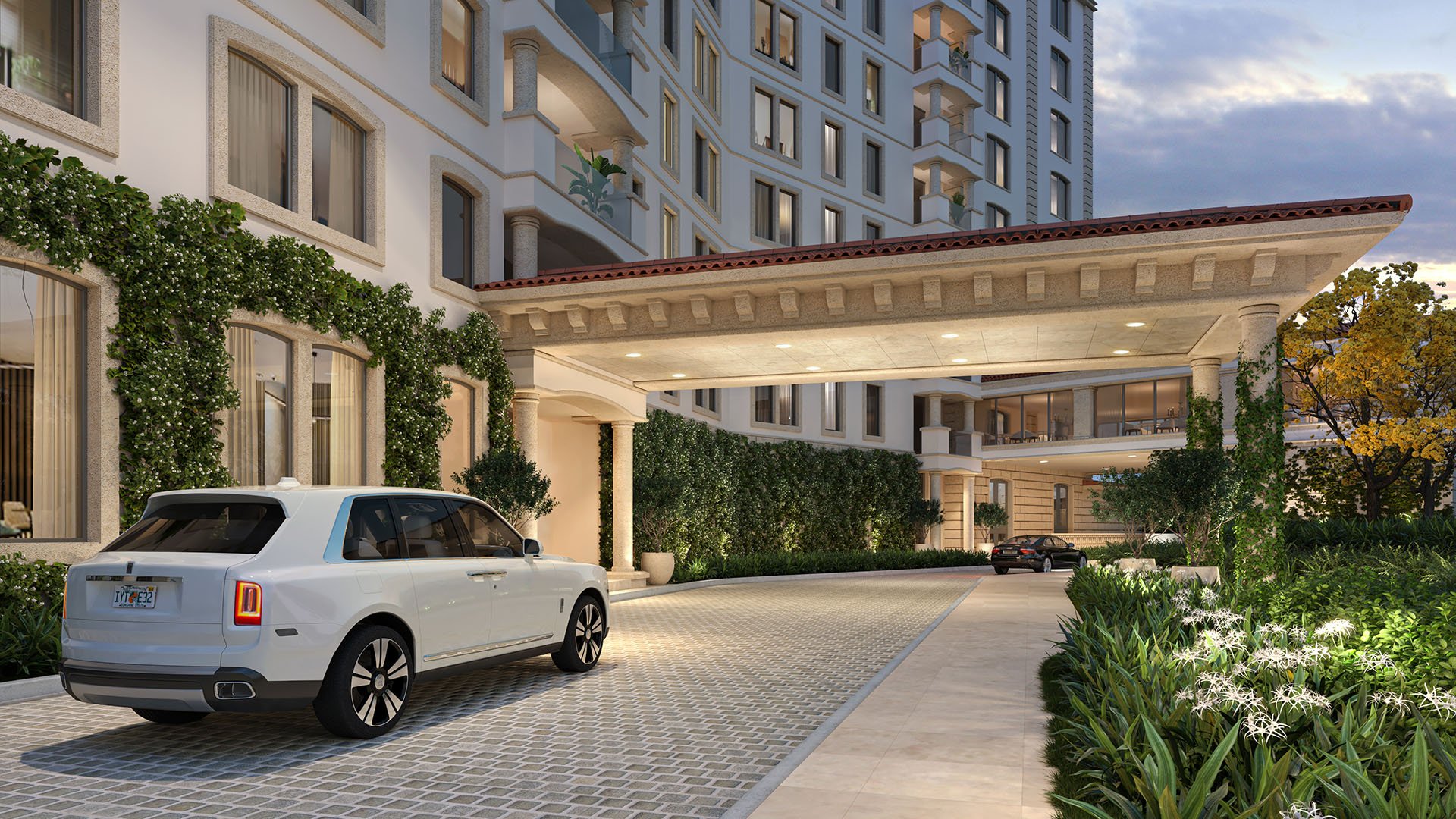
For a buyer planning around South Florida’s winter social season, the residence begins at the curb. A polished porte cochere may photograph beautifully, but privacy depends on operations: who recognizes a resident, who records a guest, where a driver waits, and how quickly a vehicle disappears from public view.
These details matter to anyone moving among dinners, benefits, gallery openings, private clubs, and home. They are especially relevant for a second-home owner who may arrive after an absence with luggage, staff, family, or guests. The objective is not theatrical secrecy, but a composed, predictable transition from street to residence.
Valet and arrival privacy should be treated as a practical part of lifestyle planning. Buyers should inspect the sequence personally rather than rely on a rendering, a brief daytime tour, or a general promise of white-glove service.
Begin outside the building. Identify the turn-in, stacking area, pedestrian crossings, rideshare position, service access, and path from vehicle handoff to elevator. Then repeat the exercise from the perspective of a guest, household employee, caterer, delivery driver, and chauffeur.
Ask whether residents and visitors share the same arrival lane. If they do, determine how staff manage simultaneous arrivals without announcing names, exposing unit information, or creating a visible queue. If the routes are separate, confirm when each is available and who controls access.
Apply the same discipline across markets. A buyer considering Shore Club Private Collections Miami Beach can use a tour to examine Miami Beach arrival conditions firsthand. In Brickell, The Residences at 1428 Brickell offers another setting in which to ask how curb activity and private residential movement are intended to coexist. These links are starting points for questions, not substitutes for verification.
Request a conversation with the person responsible for front-of-house operations. The most useful questions are precise:
Who operates the valet, and who supervises each shift? How are keys identified and stored? Does a ticket, app, text, plate number, or resident profile connect the driver to the vehicle? What information can attendants see, and how long is it retained? Buyers should also ask how access is revoked when an employee, contractor, or vendor leaves.
Next, test discretion. Do staff say a resident’s name or unit number within earshot of others? Can a guest obtain confirmation that someone is home? What happens when a driver asks for a resident, photographers appear near the entrance, or an unfamiliar vehicle waits at the curb? The answer should describe a protocol, not an improvised courtesy.
Vehicle care is distinct from information privacy. Ask about claim procedures, incident documentation, overnight key control, retrieval authorization, and the process for releasing a car to a family member or chauffeur. Owners with collectible, oversized, low-clearance, or frequently rotated vehicles should confirm compatibility in writing before purchase.
Schedule more than one visit. Arrive during a quiet period, then return when the entrance is active. Use your usual vehicle and, if relevant, a chauffeured car or rideshare. Time the interval from curb to private threshold, while paying equal attention to visibility and conversation.
Observe whether waiting guests face the resident elevator path. Notice where luggage pauses, whether delivery personnel cross the lobby, and whether a valet ticket or screen displays identifying details. Ask a companion to arrive separately and report exactly what staff requested, disclosed, and permitted.
Do not stage a security test or attempt to bypass procedure. A straightforward guest arrival is enough to reveal whether the experience feels rehearsed, respectful, and consistent. The most convincing service remains calm under ordinary pressure.
No single arrival arrangement suits every owner. A household that entertains often may value graceful guest processing. A public figure may prioritize minimal curb exposure. A family may care more about moving children, luggage, and multiple vehicles without confusion. A Palm Beach buyer could frame those needs while exploring Palm Beach Residences, then ask the same questions at every alternative.
Vehicle-centered buyers may also include Bentley Residences Sunny Isles in a comparison itinerary, while keeping the inquiry operational: What is promised? What is delivered? Who controls it? What happens during peak demand?
Create a concise priority statement before touring. It might specify silent recognition, direct elevator access, controlled guest confirmation, protected key custody, or a separate route for household staff. This sharpens comparisons and helps an adviser identify conflicts early.
Marketing language should not carry the full weight of a purchase decision. Review governing documents, management materials, rules, service terms, insurance responsibilities, and any available operating policies with appropriate advisers. Determine which features are fixed, which remain subject to staffing or management decisions, and which may involve fees or restrictions.
Seek clarification whenever answers differ among the sales team, concierge, valet, and property manager. Privacy is strongest when architecture, staffing, technology, and policy support the same experience.
Should I judge valet privacy from a sales-gallery visit? No. Whenever possible, visit the actual arrival environment at different activity levels.
What is the first valet question to ask? Ask who operates and supervises the service, then request the complete key-control process.
Should residents and guests have separate routes? Separation can be useful, but consistent access control and discreet staff behavior matter equally.
How can I test guest privacy? Have a companion arrive normally and note what information staff request or reveal.
What should I ask about vehicle retrieval? Confirm authorization methods, expected procedures, and how staff accommodate another approved driver.
Does a private elevator guarantee a private arrival? No. The curb, valet station, lobby path, and access controls all shape exposure.
Are rideshare arrivals part of the review? Yes. Confirm the pickup location, waiting rules, guest verification, and route to residential access.
What matters for household staff and vendors? Ask where they enter, how credentials are managed, and whether their route intersects resident areas.
Should owners of special vehicles seek written confirmation? Yes. Confirm dimensions, clearance, handling restrictions, storage, and release procedures before buying.
Can arrival protocols change after purchase? Operations may evolve, so distinguish documented obligations from policies management can revise.
For a discreet conversation and a curated building-by-building shortlist, connect with MILLION.
If branded residences are on your mind — as a home or as an allocation — we would be glad to share what we are seeing, privately.
Begin a quiet conversation